







Overview of Tasks in Outlook and Recovery Possibilities
What Are Tasks in Outlook and Why They Matter
Tasks in Outlook are a core feature designed to help users manage responsibilities, deadlines, and daily workflows efficiently. They allow you to create structured to-do lists, assign priorities, set reminders, and track completion progress. For business users especially, tasks often contain critical operational details that are difficult to recreate once lost.
When tasks disappear, it can lead to missed deadlines and workflow disruptions. Many users assume that once a task is deleted, it is gone permanently. However, Outlook includes several built-in mechanisms that make it possible to recover deleted tasks in Outlook under many circumstances.
If you are searching for ways to recover deleted task in Outlook, understanding how Outlook stores and manages data is essential. Deleted tasks typically move through multiple layers before being permanently erased, which creates recovery opportunities.
This article explores multiple proven methods to help you successfully recover deleted tasks in Outlook, whether the loss was caused by accidental deletion, system errors, or file corruption.
Why Tasks Disappear in Outlook
Common Reasons Behind Missing or Deleted Tasks
Before jumping into solutions, it is important to understand why tasks go missing. Identifying the cause helps determine the most effective recovery method and reduces the risk of repeated data loss.
Here are the most common reasons:
- Accidental deletion: Users may unintentionally remove tasks while organizing folders.
- Auto-archive settings: Older tasks can be automatically moved out of the main view.
- Synchronization issues: Conflicts between Outlook and mail servers may cause tasks to disappear.
- Incorrect folder placement: Tasks may be moved to another folder without notice.
- Corrupted PST or OST files: Damage to Outlook data files can lead to missing content.
Each of these scenarios affects how you approach how to recover deleted tasks in Outlook, making it important to evaluate your situation carefully.
⚠️ Warning: Continuing to use Outlook after noticing missing tasks may overwrite recoverable data.
Methods to Recover Deleted Tasks in Outlook
Method 1: Restore Tasks from the Deleted Items Folder
Test Environment: Outlook 365 on Windows 11 with Microsoft 365 account
The first and easiest way to recover deleted tasks in Outlook is by checking the Deleted Items folder. When a task is deleted, Outlook usually moves it there temporarily.
Steps to follow:
- Open Outlook and navigate to the Deleted Items folder.
- Search for the missing task manually or use the search bar.
- Right-click on the task item.
- Select Move > Other Folder.
- Choose the Tasks folder and confirm.
This method is ideal for users who want a quick solution for how to recover a deleted task in Outlook without using advanced tools.
⚠️ Warning: Items in Deleted Items may be automatically removed based on your mailbox retention policy.
Method 2: Recover Tasks from the Recoverable Items Folder
Test Environment: Outlook 2019 with Exchange Server account
If the task is no longer in Deleted Items, Outlook may still store it in a hidden system folder known as Recoverable Items. This feature allows you to recover deleted task in Outlook even after permanent deletion.
Steps to follow:
- Open the Deleted Items folder in Outlook.
- Click Recover items recently removed from this folder at the top.
- A new window will display all recoverable items.
- Locate and select the deleted task.
- Click Restore Selected Items to recover it.
This method is particularly useful for business environments and is one of the most effective ways to recover deleted tasks in Outlook after clearing Deleted Items.
⚠️ Warning: This feature is only available for Exchange and Microsoft 365 accounts.
Method 3: Recover Tasks Using PandaOffice Drecov
Test Environment: Windows 10, corrupted Outlook PST file scenario
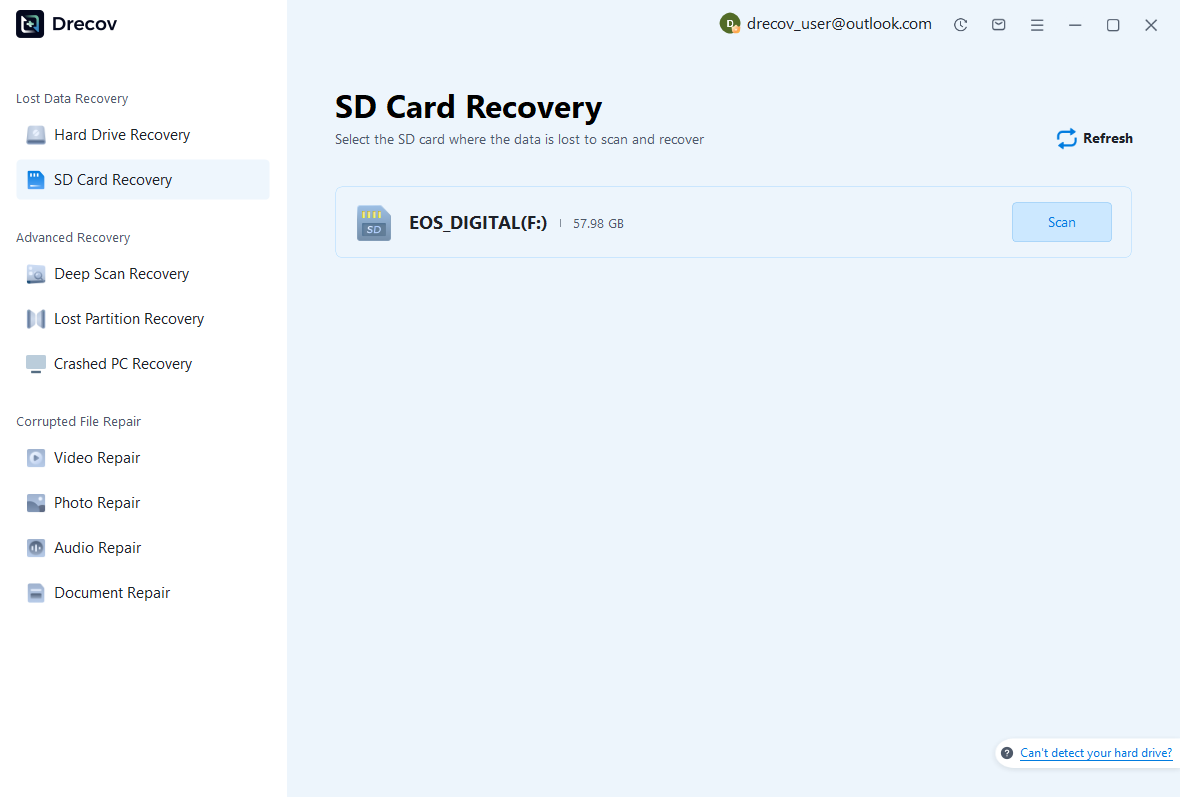
When Outlook’s built-in features fail, a specialized recovery tool becomes necessary. PandaOffice Drecov is designed to scan Outlook data files deeply and retrieve permanently deleted or inaccessible items, including tasks.
Steps to follow:
- Install and launch PandaOffice Drecov.
- Select the drive or folder where your Outlook data file is stored.
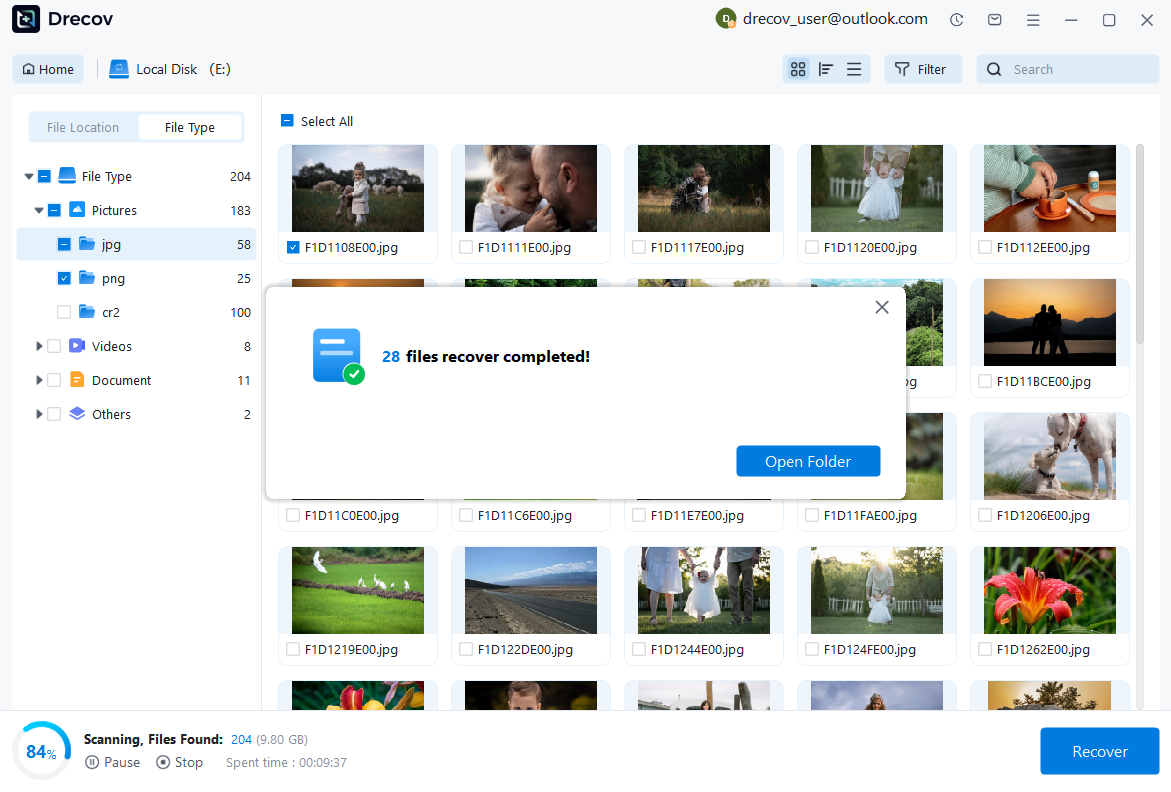
- Run a deep scan to locate lost or deleted data.
- Preview recoverable Outlook items, including tasks.
- Select the tasks you want and restore them safely.
This approach is especially effective if you need to recover deleted tasks in Outlook after file corruption or system failure.
Compared to manual methods, it provides a more comprehensive recovery capability and works even when Outlook cannot detect the lost data.

Why Choose PandaOffice Drecov Data Recovery Software?
When it comes to reliable data recovery, PandaOffice Drecov stands out as a powerful, all-in-one solution designed to handle a wide range of data loss scenarios. Whether you’re trying to perform TikTok deleted video recovery, restore files after formatting, or recover important documents, Drecov delivers fast and dependable results.
One of its biggest advantages is versatility. From format data recovery to lost partition recovery, the software can scan deeply and accurately locate files that other tools often miss. Even if your drive has been accidentally formatted or a partition has disappeared, Drecov uses advanced algorithms to reconstruct and retrieve your data with high success rates.
Drecov also supports specialized recovery needs. If you’ve lost important documents, its PDF recovery tool ensures that files retain their original structure and quality. For media users, the audio recovery feature helps restore music, recordings, and other sound files without corruption, making it ideal for both personal and professional use.
Ease of use is another key benefit. The intuitive interface allows beginners to recover files in just a few clicks, while still offering advanced options for more experienced users. Plus, it supports a wide range of storage devices, including HDDs, SSDs, USB drives, and memory cards.
In short, PandaOffice Drecov combines powerful recovery capabilities with user-friendly design, making it a trusted choice for anyone facing data loss.
Method 4: Restore Tasks from a Backup File
Test Environment: Outlook 2016 with locally stored PST backup
If you regularly back up your Outlook data, restoring tasks from a backup is one of the safest methods. It allows you to recover deleted tasks in Outlook without relying on system recovery limits.
Steps to follow:
- Locate your backup PST file on your system.
- Open Outlook and go to File > Open & Export.
- Select Open Outlook Data File.
- Load the backup file into Outlook.
- Navigate to the Tasks section inside the backup.
- Copy the missing tasks back into your active mailbox.
This method works best when backups are recent and intact, making it a reliable option for recover deleted task in Outlook scenarios.
Method 5: Check the Archive Folder for Missing Tasks
Test Environment: Outlook with AutoArchive enabled
In some cases, tasks are not deleted but automatically moved to the Archive folder. This can make it seem like they are lost when they are simply relocated.
Steps to follow:
- Open Outlook and locate the Archive folder.
- Browse through the stored task items.
- Identify the missing task.
- Move it back to the main Tasks folder.
This is a quick and often overlooked solution for users wondering how to recover deleted tasks in Outlook when the issue is actually caused by automatic archiving.
Method 6: Recover Tasks After Emptying Deleted Items
Test Environment: Outlook 365 on Windows 11 with Exchange account (retention enabled)
When the Deleted Items folder has already been emptied, many users believe recovery is no longer possible. In reality, Outlook still keeps a secondary storage layer for a limited time, allowing you to recover deleted tasks in Outlook even after permanent deletion.
Steps to follow:
- Open Outlook and go to the Deleted Items folder.
- Click Recover items recently removed from this folder.
- A recovery window will appear showing hidden items.
- Locate the deleted task.
- Select it and click Restore Selected Items.
This method is extremely effective for users trying to how to recover deleted tasks in Outlook after clearing their trash.
⚠️ Warning: This feature depends on server retention settings. If the retention period expires, recovery will no longer be possible.
Method 7: Repair Outlook Data File to Restore Tasks
Test Environment: Outlook 2019, corrupted PST file caused by improper shutdown
Sometimes tasks are not truly deleted but become inaccessible due to file corruption. In such cases, repairing the Outlook data file can help you recover deleted task in Outlook.
Steps to follow:
- Close Outlook completely.
- Locate the ScanPST.exe tool on your system.
- Open the tool and select your PST file.
- Click Start to scan for errors.
- Choose Repair if issues are detected.
- Reopen Outlook and check the Tasks folder.
This method is useful when tasks disappear unexpectedly without being deleted.
⚠️ Warning: Always create a backup of your PST file before running the repair tool.
Method 8: Recover Tasks via Outlook Web Access (OWA)
Test Environment: Outlook Web App (Microsoft 365, browser-based access)
If you are using an Exchange or Microsoft 365 account, your tasks may still be available through the web version of Outlook. This is helpful when desktop Outlook fails to display data.
Steps to follow:
- Log in to Outlook Web App using your browser.
- Navigate to the Tasks or To Do section.
- Check Deleted or Archive folders.
- Locate the missing task.
- Restore or move it back to the main list.
This method is effective when dealing with sync-related issues and is a practical way to recover deleted tasks in Outlook across devices.
Method 9: Re-add Outlook Account to Fix Sync Issues
Test Environment: Outlook 365 with Exchange Online (multi-device sync conflict)
Sometimes tasks appear deleted due to synchronization errors rather than actual deletion. Re-adding your account can refresh data and restore missing items.
Steps to follow:
- Open Outlook and go to File > Account Settings.
- Remove your current email account.
- Restart Outlook.
- Add the account again.
- Allow full synchronization to complete.
After re-syncing, check your Tasks folder. This method often resolves issues related to recover deleted tasks in Outlook caused by sync conflicts.
Method 10: Restore Tasks from System Backup or Previous Version
Test Environment: Windows 10 File History enabled
If Outlook data files were backed up at the system level, you can restore a previous version to retrieve lost tasks.
Steps to follow:
- Navigate to the folder where your PST file is stored.
- Right-click the file and select Restore previous versions.
- Choose a version before the deletion occurred.
- Restore the file.
- Open it in Outlook and retrieve tasks.
This method is highly effective for users looking to recover deleted task in Outlook when other recovery options are unavailable.
FAQ: Recover Deleted Tasks in Outlook
How to recover a deleted task in Outlook quickly?
The fastest way is to check the Deleted Items folder. If the task is still there, you can restore it instantly without using advanced tools.
Can I recover deleted tasks in Outlook after emptying Deleted Items?
Yes, you can use the Recoverable Items feature if your account supports it. However, this depends on the retention period set by your email server.
Why are my tasks missing but not deleted?
Tasks may be hidden due to archive settings, filters, or synchronization issues. Always check Archive folders and Outlook Web App before assuming data loss.
Is it possible to recover permanently deleted tasks without backup?
It is possible in some cases using recovery tools or server-side retention features, but success is not guaranteed.
Conclusion: Key Takeaways on Outlook Task Recovery
Final Thoughts on Managing and Recovering Tasks
Losing important tasks can disrupt productivity, but Outlook offers multiple recovery options depending on the situation. From simple folder restoration to advanced file repair, each method plays a role in helping users recover deleted tasks in Outlook effectively.
To summarize:
- Always start with basic recovery methods
- Use advanced solutions when necessary
- Maintain regular backups for safety
- Act quickly to increase recovery success
By understanding these techniques, you can confidently handle any situation involving lost tasks and ensure your workflow remains uninterrupted.






