







Understanding iCloud Deleted File Recovery
What Happens When Files Are Deleted from iCloud
When users try to recover files deleted from iCloud, it is important to understand how Apple handles deleted data. In most cases, iCloud does not erase files instantly. Instead, deleted items are moved to a temporary recovery area called “Recently Deleted,” where they remain for a limited time before permanent removal.
This built-in system allows users to perform iCloud deleted file recovery easily if they act quickly. However, once the retention period expires, files may no longer be available through standard recovery options.
Many users searching how to recover deleted files from iCloud assume deletion is immediate and irreversible, but in reality, Apple provides a short recovery window.
⚠️ Warning: Once the retention period ends, deleted iCloud files may become permanently unrecoverable without backups.
Why iCloud Data Loss Happens
There are several reasons why users need to recover deleted files from iCloud. Data loss can happen unexpectedly due to both user actions and system behavior.
Common causes include:
- Accidental deletion on iPhone, iPad, or Mac
- Sync errors between multiple Apple devices
- Storage cleanup or optimization settings
- iOS or macOS updates causing file misalignment
- Account login or iCloud sync issues
Users often only realize the need for iCloud deleted file recovery after important files disappear. In many cases, this leads to urgent searches for how to recover permanently deleted files from iCloud when standard recovery options are no longer visible.
Importance of Recovering Deleted iCloud Files
Why iCloud Data Recovery Is Essential
The ability to recover files deleted from iCloud is critical because iCloud is widely used to store essential personal and professional data. Losing access to these files can affect productivity, communication, and personal memories.
iCloud commonly stores:
- Photos and videos
- Documents and PDFs
- App data and backups
- Contacts and notes
When users attempt how to recover deleted files from iCloud, the goal is often to restore important data before it is permanently lost or overwritten.
Recovery Time Limits in iCloud System
Apple’s recovery system only keeps deleted files for a limited time. This is why timing is crucial when performing iCloud deleted file recovery.
General recovery behavior:
- Recently deleted files remain temporarily available
- Older deletions may require backup restoration
- Expired items may no longer be accessible
⚠️ Warning: Delaying recovery reduces the chance of successful file restoration significantly.
Preparation Before iCloud File Recovery
Check iCloud Sync and Backup Settings
Before attempting to recover files deleted from iCloud, users should confirm that their iCloud settings are properly configured. This increases the chances of successful recovery.
Key settings to check:
- iCloud Drive is enabled
- Automatic backup is active
- Device synchronization is completed
- Sufficient storage space is available
These settings are essential when learning how to recover deleted files from iCloud, especially across multiple Apple devices.
Prevent Data Overwriting on Your Device
When trying to perform iCloud deleted file recovery, avoiding new data writes is extremely important. Overwriting can permanently destroy recoverable data.
Recommended precautions:
- Stop using affected devices immediately
- Avoid installing or updating apps
- Do not save new files or media
⚠️ Warning: New data may overwrite deleted files and reduce recovery success.
Recover Lost Backup Files Using Pandaoffice Drecov
In some situations, users lose local backup files while preparing to restore iCloud data. This makes recovery tools useful as an additional safety layer.
Test Environment:
- Device: Windows 11 PC
- Scenario: Deleted local iCloud backup files
- Storage: External SSD drive
Steps:
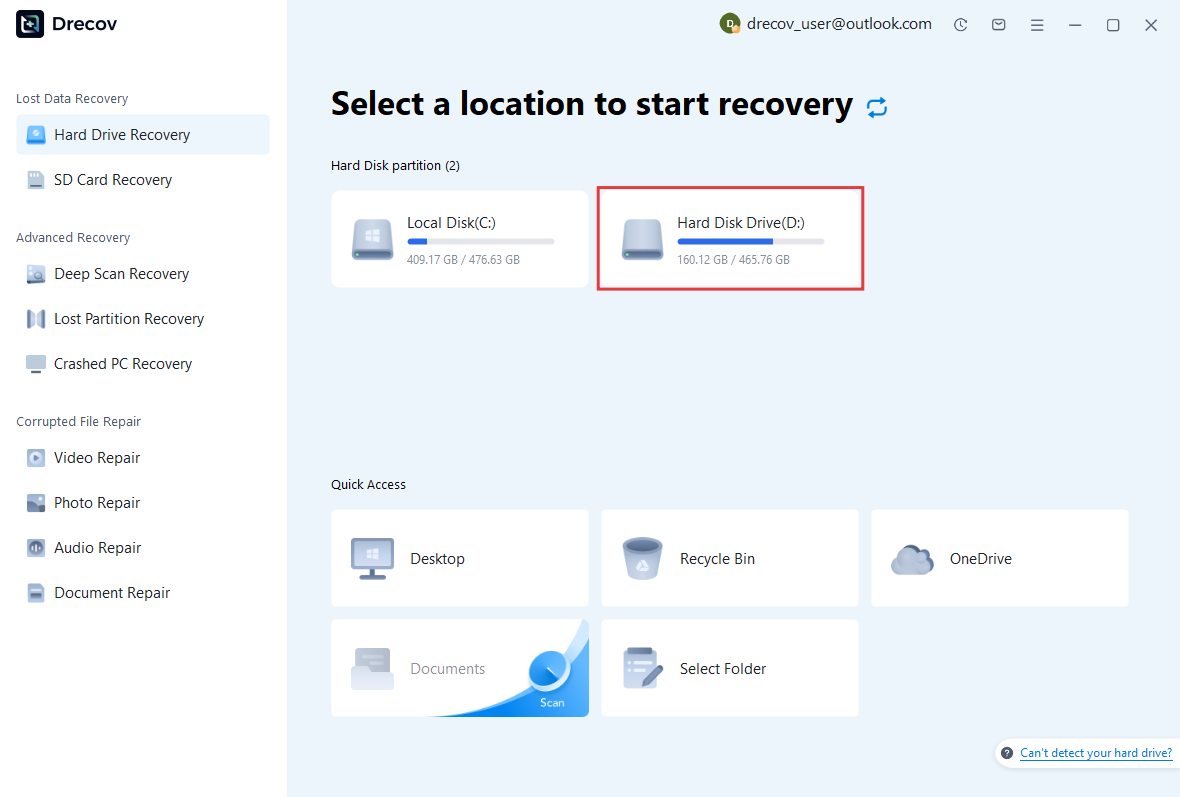
- Install Pandaoffice Drecov on the PC
- Select the drive where backup files were stored
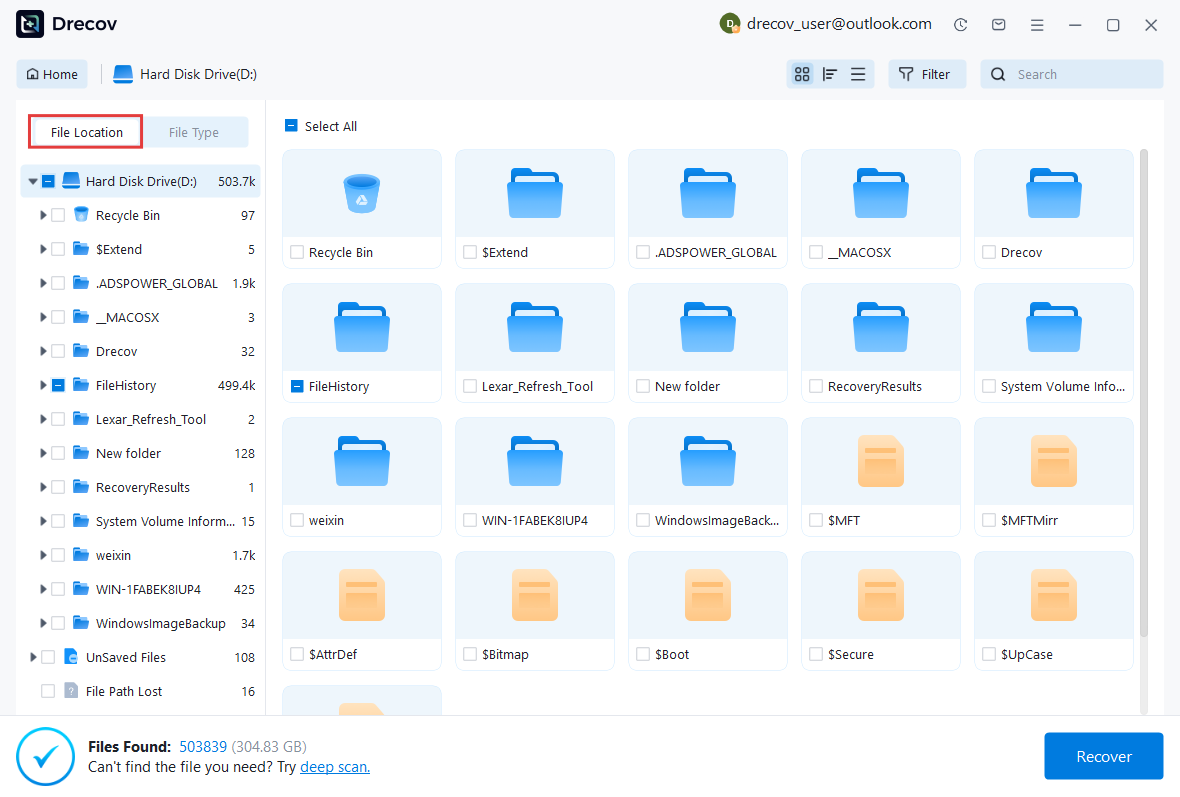
- Run a deep scan to detect lost data
- Preview recoverable backup files
- Restore selected items securely
This method supports users who need assistance during recover files deleted from iCloud, especially when local backups are accidentally removed.

Why Choose PandaOffice Drecov Data Recovery Software?
When it comes to reliable data recovery, PandaOffice Drecov stands out as a powerful, all-in-one solution designed to handle a wide range of data loss scenarios. Whether you’re trying to perform TikTok deleted video recovery, restore files after formatting, or recover important documents, Drecov delivers fast and dependable results.
One of its biggest advantages is versatility. From format data recovery to lost partition recovery, the software can scan deeply and accurately locate files that other tools often miss. Even if your drive has been accidentally formatted or a partition has disappeared, Drecov uses advanced algorithms to reconstruct and retrieve your data with high success rates.
Drecov also supports specialized recovery needs. If you’ve lost important documents, its PDF recovery tool ensures that files retain their original structure and quality. For media users, the audio recovery feature helps restore music, recordings, and other sound files without corruption, making it ideal for both personal and professional use.
Ease of use is another key benefit. The intuitive interface allows beginners to recover files in just a few clicks, while still offering advanced options for more experienced users. Plus, it supports a wide range of storage devices, including HDDs, SSDs, USB drives, and memory cards.
In short, PandaOffice Drecov combines powerful recovery capabilities with user-friendly design, making it a trusted choice for anyone facing data loss.
How to Recover Deleted Files from iCloud (Step-by-Step Methods)
Method 1: Restore Files from Recently Deleted Folder
Test Environment:
- Device: iPhone 14
- iOS Version: Latest update
- iCloud Drive enabled
The simplest way to recover files deleted from iCloud is through the Recently Deleted folder.
Steps:
- Open the Files app or iCloud Drive
- Navigate to “Recently Deleted”
- Browse available deleted files
- Select files to restore
- Tap “Recover”
This method is effective for recent deletions and is often the first step in iCloud deleted file recovery.
Method 2: Restore Data Using iCloud Backup
Test Environment:
- Device: iPad running iPadOS
- Backup: Automatic iCloud backup enabled
If files are no longer in Recently Deleted, restoring from backup may be required.
Steps:
- Open Settings
- Go to General > Reset
- Select “Erase All Content and Settings”
- Restart device setup
- Choose “Restore from iCloud Backup”
- Select the appropriate backup version
This method is commonly used for how to recover deleted files from iCloud when direct recovery is unavailable.
Method 3: Recover Files via iCloud Web Access
Test Environment:
- Device: Windows PC
- Browser: Chrome (latest version)
You can also recover deleted files from iCloud using the web portal.
Steps:
- Log in to iCloud.com
- Navigate to Data Recovery section
- Select file type (Photos, Files, etc.)
- Choose items to restore
- Confirm recovery
This method is useful for cross-device recovery scenarios involving iCloud deleted file recovery.
Method 4: Restore Files from App-Level Trash or Sync Data
Test Environment:
- Device: MacBook Air
- Apps: Notes, Mail, Pages
Some apps store deleted data separately, which can help during recovery.
Steps:
- Open the relevant app
- Check “Recently Deleted” or Trash folder
- Select files to restore
- Move files back to active storage
This method supports how to recover deleted files from iCloud when partial data still exists in app storage.
⚠️ Warning: Not all apps retain deleted file history.
Method 5: Recover Files from iCloud Account Data Archive
Test Environment:
- Device: Windows 11 PC
- Browser: Microsoft Edge
- Scenario: Files missing from Recently Deleted folder
When basic recovery options fail, you can still attempt to recover files deleted from iCloud using Apple’s official data archive system. This method allows users to download a complete copy of stored iCloud data, which may include previously deleted files.
Steps:
- Visit Apple Data & Privacy website
- Sign in with Apple ID
- Request iCloud data archive
- Wait for processing completion
- Download and extract the archive
- Search for missing files locally
This approach supports deeper iCloud deleted file recovery when files are no longer visible in standard folders.
⚠️ Warning: Large data requests may take several hours or days to complete.
Method 6: Restore iCloud Files by Re-Syncing Devices
Test Environment:
- Device: iPhone 13 Pro
- iOS Version: Latest stable release
- iCloud Drive: Temporarily disabled
Sometimes missing files are caused by sync issues rather than true deletion. Re-enabling iCloud sync can restore hidden or delayed data.
Steps:
- Open Settings
- Tap Apple ID > iCloud
- Turn iCloud Drive off and back on
- Restart device
- Wait for full synchronization
This method is useful when users think they need to recover deleted files from iCloud, but the data is simply not synced properly.
Method 7: Check Local Cache and App Storage on Mac
Test Environment:
- Device: MacBook Pro
- Storage: Local SSD cache enabled
Some iCloud files remain stored locally even after cloud deletion, especially in app cache or system directories.
Steps:
- Open Finder
- Navigate to iCloud Drive folder
- Check hidden or cached directories
- Restore available files manually
This method supports how to recover deleted files from iCloud when cloud recovery fails but local traces remain.
Recovering Permanently Deleted iCloud Files
Understanding Permanent File Deletion in iCloud
When users search for how to recover permanently deleted files from iCloud, they are dealing with the most difficult recovery scenario. Once files are removed from Recently Deleted and no backup exists, Apple may no longer retain them.
Permanent deletion usually occurs when:
- Retention period expires
- iCloud storage is overwritten
- Backups are disabled
- Files removed from all synced devices
At this stage, standard recover files deleted from iCloud methods may not be effective.
Method 8: Restore from Local or External Backups
Test Environment:
- Device: Windows 11 PC
- Scenario: Lost iCloud backup stored locally
If you previously exported or saved iCloud data, recovery may still be possible through local backups.
Steps:
- Locate backup folder on PC or external drive
- Search for iCloud export files
- Restore files manually
- Re-sync with iCloud if needed
This method is useful for advanced iCloud deleted file recovery cases where cloud restoration is no longer available.
Preventing Future iCloud Data Loss
Best Practices for iCloud File Protection
To reduce the need for recover files deleted from iCloud, users should maintain strong backup habits.
Recommended practices:
- Enable automatic iCloud backups
- Regularly export important files
- Store backups in multiple locations
- Monitor storage capacity
These habits reduce reliance on emergency iCloud deleted file recovery methods.
Strengthen iCloud Security Settings
Proper configuration helps prevent accidental loss and improves recovery chances.
Enable:
- Two-factor authentication
- iCloud Drive syncing
- Automatic backup scheduling
- Storage alerts
⚠️ Warning: Disabling backups significantly increases risk of permanent file loss.
FAQ About iCloud Deleted File Recovery
Can I Recover Permanently Deleted Files from iCloud?
Yes, but only under certain conditions. If backups exist or local copies remain, you may still complete how to recover permanently deleted files from iCloud using restoration methods or recovery tools.
Why Are My Deleted iCloud Files Not Showing?
Files may be missing because:
- Retention period expired
- Data was overwritten
- Sync issues occurred
- No backup was created






