







Understanding iCloud Email Recovery and Apple Account Access
How Apple’s iCloud Email System Stores and Protects Data
Apple’s iCloud Mail service is widely used across iPhone, iPad, and Mac devices for personal and professional communication. Losing access to an iCloud email account can disrupt workflows, especially when important messages, contacts, or documents are stored in the mailbox. For this reason, understanding icloud email recovery procedures is essential for users who rely on Apple’s ecosystem.
iCloud email accounts are connected to an Apple ID, which acts as the central identity for Apple services. When users sign in with their Apple ID, the system synchronizes email data across devices including iPhones, iPads, and Mac computers. This cloud-based design means that most emails remain stored on Apple’s servers even if they disappear from a device temporarily.
A key security feature involved in account restoration is the recovery email for icloud. Apple may send verification codes or password reset links to this secondary email address when users attempt to regain access to their account.
In situations where users forget login credentials, the icloud email password recovery process allows them to reset the password securely through Apple’s account management system.
⚠️Warning: Always perform account recovery through Apple’s official account recovery website to prevent phishing attacks or identity theft.
Understanding how Apple manages account security and email storage helps users perform successful icloud email recovery when access problems occur.
Why iCloud Emails or Accounts Become Inaccessible
Forgotten Apple ID Password or Login Credentials
One of the most common reasons users require icloud email password recovery is forgetting their Apple ID password. Apple encourages users to create complex passwords to improve security, but these passwords can become difficult to remember over time.
When a user cannot sign in due to password issues, Apple offers a secure password reset process that often uses the icloud password recovery email or other verification methods such as trusted devices.
In many cases, users still have access to their Apple devices but cannot log into the account on a new device or browser. Performing icloud email recovery through Apple’s account management system allows them to create a new password and regain full access.
Another scenario occurs when users change their password but forget the new one shortly afterward. In such situations, the account recovery system verifies the user’s identity through security questions or authentication codes.
⚠️Warning: Repeated incorrect login attempts may temporarily lock the Apple ID for security reasons.
Keeping recovery contact information updated significantly improves the success rate of icloud email recovery attempts.
Accidental Deletion or Mailbox Management Errors
Another frequent reason for missing emails is accidental deletion. While organizing their inbox, users may unintentionally remove important messages.
When this happens, the messages usually move to the Trash folder instead of being permanently removed immediately. This allows users to perform icloud deleted email recovery by restoring messages from the Trash folder within the retention period.
Mailbox filtering rules can also hide emails. For example, automatic sorting rules may send messages to different folders or mark them as archived. In these situations, users may believe emails have disappeared when they have simply been moved.
Synchronization issues between devices can also create confusion. Emails may appear missing on one device while still existing on another device connected to the same iCloud account.
Performing icloud email recovery often begins by checking the Trash folder, archived folders, or search results to locate misplaced messages.
Understanding these common causes helps users resolve many email loss problems quickly without advanced recovery procedures.
Methods for iCloud Email Recovery
Method 1: Recover Deleted Emails from the iCloud Mail Trash Folder
The simplest way to perform icloud deleted email recovery is by restoring messages from the Trash folder. iCloud Mail keeps deleted emails temporarily before permanently removing them.
Test Environment:
iPhone 14 (iOS 17), Safari Browser, iCloud Web Mail
Steps
- Open a web browser and sign in to your iCloud account.
- Navigate to iCloud Mail from the dashboard.
- Click the Trash folder in the left sidebar.
- Locate the email message that was deleted.
- Select the email and choose Move To.
- Move the email back to your Inbox or another folder.
Once restored, the message becomes accessible again across all synced devices.
This method works best when the email was recently deleted and has not yet been permanently removed by iCloud’s retention system.
⚠️Warning: Emails in the Trash folder may be automatically deleted after a certain period, depending on mailbox settings.
Method 2: Reset Apple ID Password for iCloud Email Access
If users cannot access their mailbox because they forgot their Apple ID password, they can perform icloud email password recovery through Apple’s official password reset process.
Test Environment:
MacBook Pro (macOS Sonoma), Safari Browser, Apple ID Account Page
Steps
- Visit the Apple ID account recovery website.
- Enter the Apple ID associated with the iCloud email account.
- Select the option to reset your password.
- Choose a verification method such as a trusted device or icloud password recovery email.
- Enter the verification code provided by Apple.
- Create a new password and confirm the change.
After completing these steps, users can sign back into their iCloud email account using the new password.
This process is one of the most reliable ways to complete icloud email recovery when login credentials are forgotten.
Method 3: Recover Lost iCloud Mail Files Using Pandaoffice Drecov
In some situations, users export or download iCloud emails to a computer for backup. If those files are accidentally deleted or lost due to system errors, recovering them may require specialized data recovery software.
Pandaoffice Drecov provides an effective solution for retrieving deleted email files stored locally on storage devices.
Download DrecovTest Environment:
Windows 10, NTFS File System, 1TB External Hard Drive, Local Email Backup Files
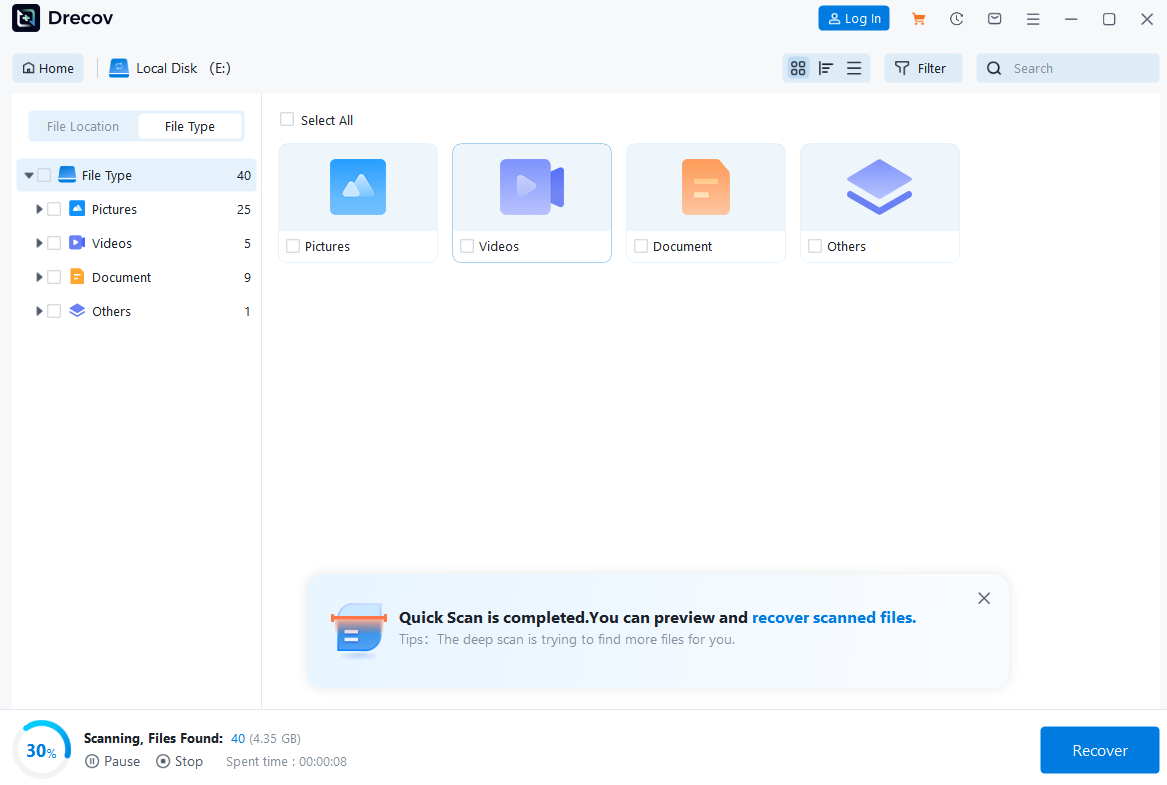
Steps
- Install Pandaoffice Drecov on your computer.
- Launch the software and select the storage drive where the email files were saved.
- Start a deep scan to locate deleted email backup files.
- Preview the scan results to identify the required files.
- Recover the selected files and save them to a secure location.


Why Choose Pandaoffice Drecov?
Data loss can occur unexpectedly due to accidental deletion, system crashes, formatting errors, or software failures. Whether you need to restore Windows previous date, perform recover Excel files,or handle deleted PowerPoint recovery, Pandaoffice Drecov provides a reliable and efficient solution designed to restore important documents quickly and safely.
Pandaoffice Drecov is a professional PowerPoint Recovery Software that supports recovery for multiple document types, including Excel spreadsheets, Word documents, and PowerPoint presentations. With advanced scanning technology, the software can detect and recover files even after deletion, formatting, or unexpected system shutdowns. This makes it an ideal tool for users who urgently need Document Recovery from hard drives, SSDs, USB drives, memory cards, and other storage devices.
One of the key advantages of Pandaoffice Drecov is its intelligent deep-scan engine. It carefully analyzes storage sectors to locate lost or hidden files that standard recovery tools often miss. Whether you accidentally deleted a presentation and require deleted PowerPoint recovery, or you lost critical spreadsheets and need to recover Excel files, the software provides fast scanning and high recovery success rates.
The software also features a user-friendly interface that allows beginners and professionals alike to complete recovery tasks in just a few steps. Users can preview recoverable files before restoring them, ensuring that only the needed data is recovered. In situations where files were lost due to system errors, the software can also help recover documents after attempts to restore Windows previous date.
After recovery, the restored files can be re-imported into compatible email applications for access.
⚠️Warning: Avoid installing recovery software on the same drive where the deleted files were stored to prevent overwriting recoverable data.
Method 4: Restore Emails Using iCloud Mail Search and Archive Folders
Sometimes users assume emails have been deleted when they are actually stored in another folder. iCloud Mail supports multiple mailbox folders such as Archive, Spam, and custom user-created folders. Messages may also be moved automatically due to filtering rules or manual organization.
Checking these folders can often resolve icloud deleted email recovery situations quickly without complex recovery procedures.
Test Environment:
MacBook Air (macOS Ventura), Safari Browser, iCloud Web Mail
Steps
- Sign in to your iCloud account through a web browser.
- Open the Mail application from the iCloud dashboard.
- Use the search bar to search for the sender, subject, or keywords related to the missing email.
- Review folders such as Archive, Spam, or other custom folders.
- If the email is located, select it and move it back to the Inbox.
This process helps recover emails that were misplaced rather than deleted. Mail filtering rules sometimes move incoming messages automatically, which can make them appear missing.
Performing a full mailbox search is an effective way to perform icloud email recovery when messages cannot be found in the main inbox.
⚠️Warning: Check spam or junk folders regularly because legitimate messages can occasionally be filtered incorrectly.
Method 5: Recover iCloud Email by Signing In From a Trusted Device
Apple uses trusted devices to verify account identity and improve security. If a user forgets their password but still has access to a device already signed into the Apple ID, that device can help complete icloud email password recovery.
Using trusted devices simplifies account recovery because Apple can confirm the user’s identity without requiring extensive verification.
Test Environment:
iPhone 13 (iOS 17), Apple ID Signed In, Apple Settings Menu
Steps
- Open Settings on the trusted Apple device.
- Tap your Apple ID profile at the top of the screen.
- Select Password & Security.
- Tap Change Password.
- Verify your identity using Face ID, Touch ID, or device passcode.
- Enter a new password for the Apple ID.
After resetting the password, users can sign in again to their iCloud email account on other devices.
This method works well when the user still owns a trusted Apple device connected to the account. It is one of the fastest ways to complete icloud email recovery without relying solely on email verification.
Managing Recovery Email for iCloud Accounts
Why Recovery Email for iCloud Is Important
The recovery email for icloud plays a critical role in account security. It acts as a backup communication channel used by Apple to send verification codes, security alerts, or password reset links.
During icloud email recovery, Apple may request identity verification through this secondary email address. Without an accessible recovery email, restoring account access can become significantly more difficult.
Keeping recovery contact information updated ensures that users can receive important account notifications and password reset instructions. If the recovery email becomes inactive or inaccessible, it may delay the recovery process.
Another benefit of maintaining a valid icloud password recovery email is receiving alerts when Apple detects suspicious login attempts. This helps users take immediate action to secure their accounts.
⚠️Warning: Always use a secure and frequently monitored email account as your recovery email.
Maintaining updated recovery details greatly improves the success rate of account restoration.
How to Change Recovery Email iCloud Settings
Updating recovery contact information is an important security step for Apple ID users. Learning how to change icloud recovery email ensures that verification messages always reach an accessible account.
Test Environment:
iPhone 14 (iOS 17), Apple ID Settings Menu
Steps
- Open Settings on your iPhone or iPad.
- Tap your Apple ID name at the top of the screen.
- Select Sign-In & Security.
- Locate the section related to recovery contact information.
- Add a new recovery email address or update the existing one.
- Confirm the new address using the verification code Apple sends.
Once verification is complete, the updated address becomes the new recovery email for icloud.
Users can also perform this process on the Apple ID account management website using a web browser.
Keeping the recovery email updated makes future icloud email recovery processes faster and more secure.
FAQ About iCloud Email Recovery
Can Permanently Deleted iCloud Emails Be Recovered?
In some cases, permanently deleted iCloud emails may still be recoverable if the deletion occurred recently. Apple temporarily stores deleted messages in the Trash folder before removing them permanently.
If the Trash folder has already been cleared, recovery may become more difficult. However, users should still check other folders or archived mailboxes before assuming the message is permanently lost.
Another possibility is restoring emails from a backup if the user previously exported or saved mailbox data locally.
Taking immediate action after noticing the missing email significantly improves the chances of successful icloud deleted email recovery.
Why Can’t I Receive Password Reset Emails From Apple?
Failure to receive reset emails during icloud email password recovery may occur for several reasons. The most common cause is an outdated or incorrect icloud password recovery email.
Another possibility is that the reset message was filtered into spam or junk folders. Users should always check these folders when waiting for verification emails.
Network issues or temporary server delays can also slow down email delivery. If the reset email does not arrive after several minutes, users can request a new verification code.
Ensuring the recovery email is active and correctly configured helps avoid these issues in the future.
Conclusion
Access problems with iCloud email accounts can occur due to forgotten passwords, accidental deletion of messages, mailbox management mistakes, or outdated recovery information. Fortunately, Apple provides several built-in tools to help users restore access through icloud email recovery procedures.
The simplest solutions often involve checking the Trash folder, searching other mailbox folders, or resetting the Apple ID password using trusted devices. When recovery contact information is available, the recovery email for icloud plays an important role in verifying identity and restoring account access.
In situations where email files stored locally are deleted or lost, recovery tools such as Pandaoffice Drecov can help retrieve backup files saved on storage devices.
Maintaining updated recovery information, regularly reviewing mailbox folders, and keeping secure backups of important emails are the best ways to prevent permanent data loss.
By following the recovery methods described in this guide, most iCloud email access problems can be resolved safely and efficiently.






