







A Steam backup is only complete when you know whether it protects the game installation, your personal save data, or both. Steam Cloud can synchronize supported game files, but not every game uses it in the same way. Before changing drives, reinstalling Windows, or accepting a cloud conflict, copy the local saves and confirm that the copies open in the game. Keep the backup on another device so a single disk failure cannot take out both versions.
steam backup: safe diagnosis
The installed game contains program files that Steam can generally download again. Copying those files may save download time, but it does not necessarily preserve a player’s progress. Save files are game-specific data and may live under Documents, AppData, Saved Games, a game folder, or Steam’s userdata tree. Steam Cloud is a synchronization service used by participating games. It is helpful, but synchronization is not a versioned archive you should trust as your only backup.
Those distinctions explain why a successful “back up game” operation can be followed by missing characters or campaign progress. The installer is intact, but the save folder was elsewhere. Similarly, a player may reinstall the game and see progress reappear from the cloud; that does not prove a local backup exists. A later sync conflict could replace the one cloud copy you relied on.
Make a short inventory for each important game: installation location, local save location, whether Steam Cloud is enabled, account used, and date of the last verified save. The Steam save-location reference helps start the search, but check the particular game’s documentation too. There is no universal save folder for every title.
Before a Move, Capture the Save That Actually Loads
Launch the game once while the current installation works. Identify the character, slot, campaign, or level you need to preserve. Create a distinct manual save if the game allows it, then exit normally. Wait for any Steam Cloud status to settle before copying. A running game may still be writing its save; copying during that process can produce an incomplete snapshot.
Find the local save directory by checking the game’s settings, developer support page, and likely Windows folders. Some games separate profile settings from world or character data. Copy the entire relevant folder, not just the one file with the newest date, when its internal relationships are unclear. Keep folder names and subfolders intact. If multiple Windows or Steam accounts have used the computer, record which account owns each candidate.
Place that copy on a healthy external drive or another independent storage location. Give the backup folder a date and game name. Do not rely on a second folder on the same physical disk: a drive failure will affect both. For a high-value campaign, keep another copy in a different location and record the game’s version. A save from a newer game build may not always load in an older installation.
Use Steam Features Without Mistaking Them for Save Insurance
Steam provides a game backup feature for installation content. It can be useful when transferring or restoring a large title, but its presence does not prove that every personal save location is included. Follow Steam’s official backup instructions for the current client interface, then verify your local save copy separately. The backup’s success message and the game’s in-game load screen answer different questions.
Steam Cloud can help move supported game data between machines. Check whether it is enabled for the game and whether synchronization completed. Do not assume that “Cloud Status: Up to date” means there is an older version to roll back to. If Steam asks you to choose between local and cloud files, stop before selecting either side. Copy the current local save folder and, if accessible, the cloud-held version to separate locations. Compare dates and, ideally, test each candidate offline before deciding which should become authoritative.
Do not merge individual files from two incompatible save sets without game-specific instructions. A profile file and a world file may refer to each other. A newer cloud profile combined with an older world can produce a state the game never created. Keep each candidate as a complete, labeled folder until one loads correctly.
Test a Backup Before You Need It
A backup is a recovery plan only after you have verified it. On a separate machine or a safe test account, copy the save into the game’s expected location and open the relevant slot. If you cannot test on another system, at least inspect the folder for plausible files and verify that the copied file sizes match the source. Do not overwrite your only working local save just to run a test. Keep the original and test copy distinct.
For game files, confirm Steam recognizes the installation after a restore rather than merely displaying an apparently complete folder. Updates, app manifests, and download validation can affect what Steam uses. If a game starts but progress is absent, troubleshoot the save path and Steam account before assuming the backup was empty. The Steam launch troubleshooting article covers a different failure: the client or game will not open at all.
After testing, retain at least one untouched backup. Copying the working save into the live folder should be a controlled operation: close the game, preserve the current live files under another name, place the verified candidate, and then start the game. If cloud sync prompts for a choice, compare the options with your labeled copies before accepting anything.
If Local Save Files Were Deleted
Sometimes neither Steam Cloud nor an independent backup contains the missing progress. First check the Recycle Bin, other Windows accounts, and the game’s own backup folder. If the local save was deleted from a stable Windows drive, stop installing games or downloading updates to that source. Large Steam updates can quickly reuse the space once occupied by deleted files. A separate Steam disk-read-error diagnosis matters when the storage reports a fault rather than a simple deletion. On an SSD, TRIM may sharply reduce recovery prospects. A clicking or repeatedly disconnecting disk needs imaging or professional help, not a series of software scans.
PandaOffice Drecov is Windows data recovery software for PCs, HDDs, SSDs, USB devices, SD cards, and external drives. Its read-only recovery mode can search for deleted local save files on a stable source. Quick Scan and Deep Scan provide different search passes; filtering and preview help narrow candidates before export. It supports documents, photos, video, audio, email, and archives, and offers Lost Partition Recovery when a partition has disappeared. It cannot repair a failing disk, reverse an overwritten save, or resolve a cloud conflict by itself.
⚠ Warning: Install it on a drive different from the one where your data was lost to prevent overwriting.
Prepare another healthy drive for recovered output and do not install software on the partition holding the lost save. If the lost data lives on the Windows system drive and safe separate installation is not available, seek help before making more writes. Begin from the Drecov home page only after you have identified the original local storage location and assessed its health.
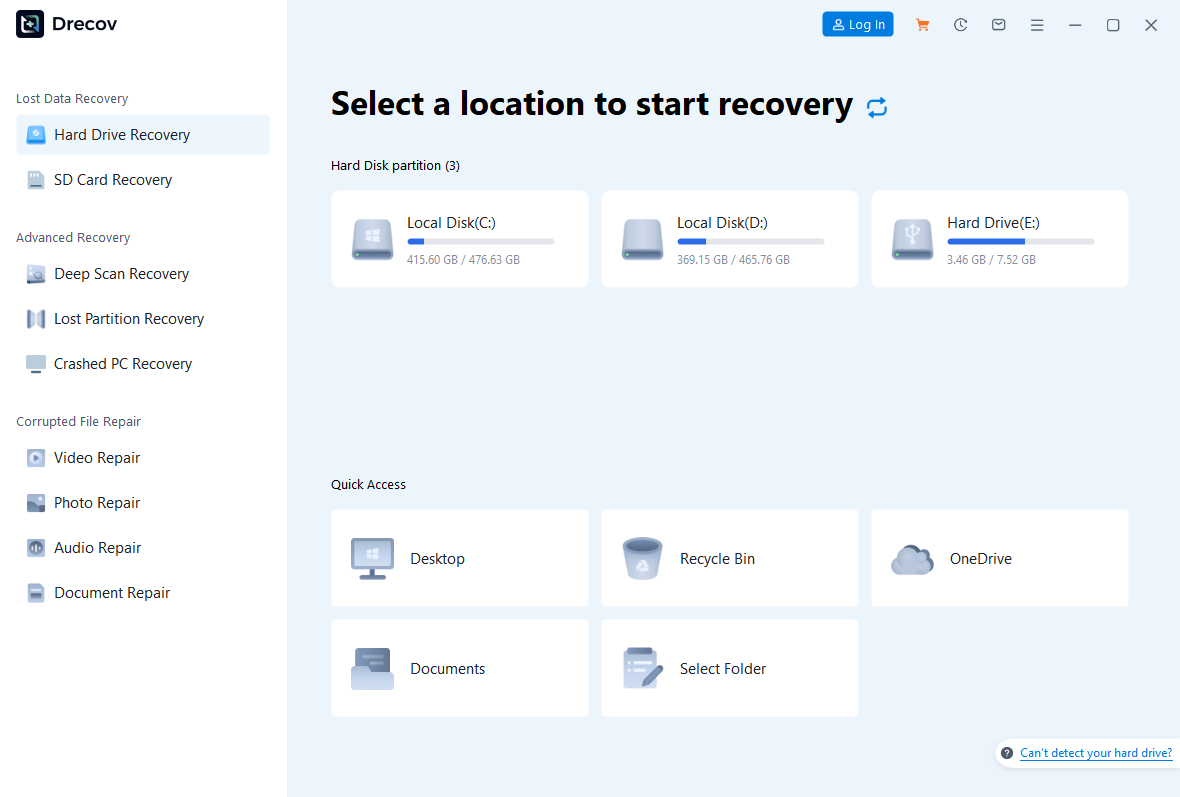
Step 1: Open Drecov and select the old save location
This check is especially useful for steam backup. Choose the drive that contained the game’s local save folder before deletion. Do not select the backup destination or assume the Steam installation folder is the source; many games store saves elsewhere. If the original partition vanished but the disk remains stable and detectable, consider Lost Partition Recovery. Record the former path and file extensions if you know them.
Step 2: Run Quick Scan
Start Quick Scan and look for game-specific save names, dates, or folder paths. A result with the right extension is only a candidate. If the drive develops read errors or disconnects, stop rather than continuing toward a deeper pass. A stable source is the condition for this workflow.
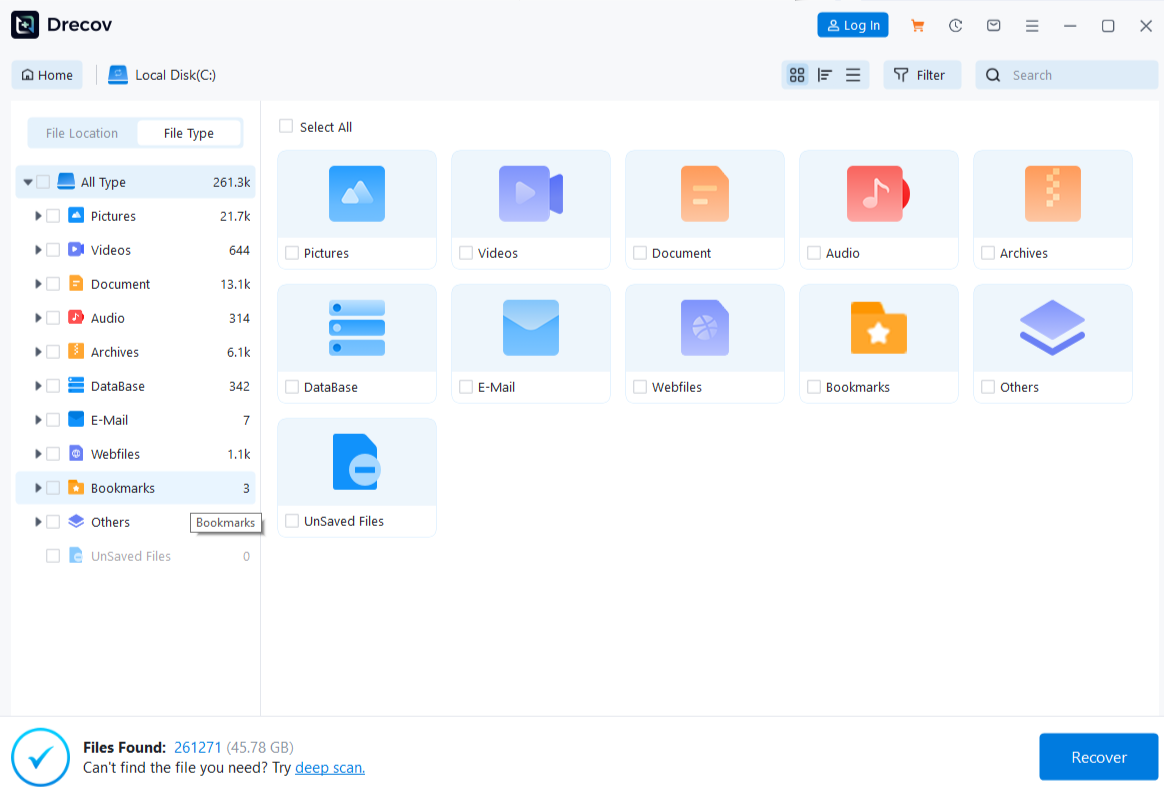
Step 3: Use Deep Scan if needed
When the first pass misses important files and the medium remains healthy, run Deep Scan. Some candidates may lose original folder names. Compare sizes and dates with any known saves. Do not expect a deep scan to reconstruct a file whose blocks were overwritten by a later game update.
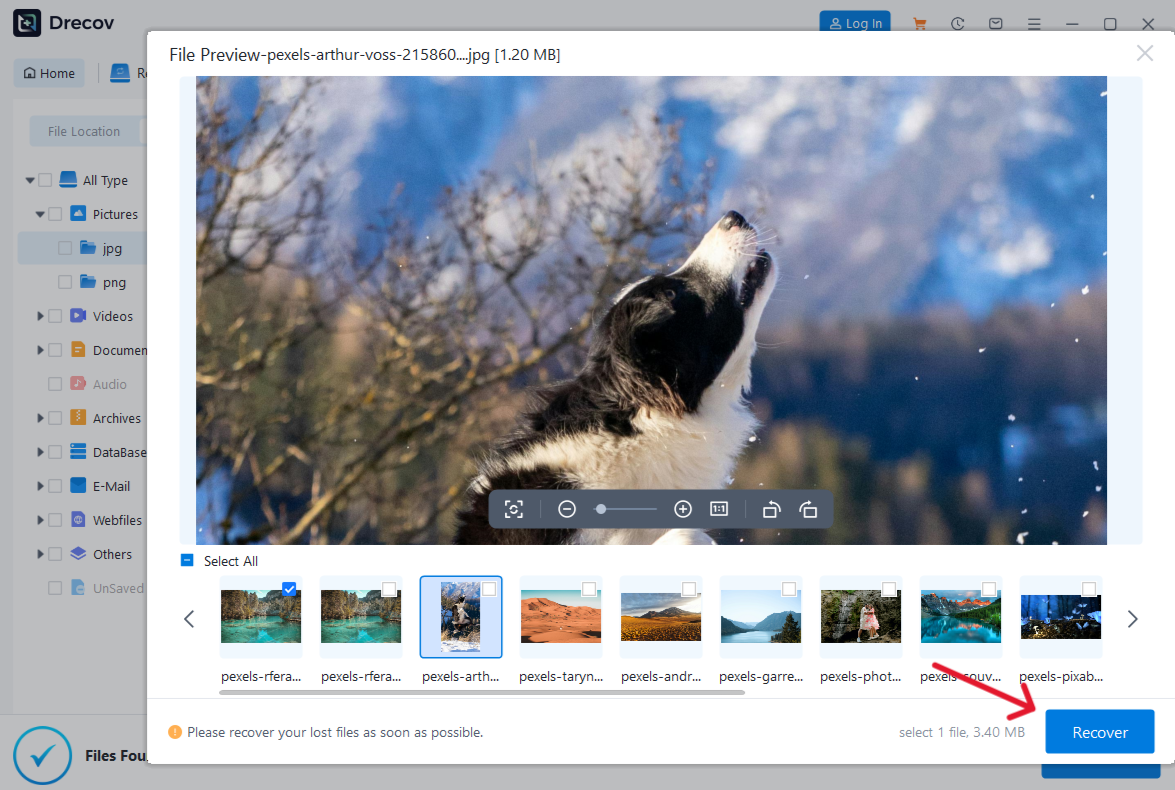
Step 4: Filter and preview candidates
Filter by the game’s file type, original folder, or filename where possible. Preview supported files, but many proprietary save formats cannot be meaningfully previewed outside the game. In that case, export several plausible candidates and test them one at a time in a safe, labeled copy of the save folder. Do not claim a valid game state merely from an extension match.
Step 5: Export to another drive and verify in-game
Recover files to the healthy destination, never to the source. If output is absent from the expected location, check the Drecov folder or Recovery folder. Keep the recovered candidates separate from the current live save. Close the game, back up the live folder, and test a candidate. Confirm the correct character, level, inventory, and recent progress. Only after that verification should you repair the source disk or allow sync to propagate the chosen version.
⚠ Warning: Install it on a drive different from the one where your data was lost to prevent overwriting.
Steam backup FAQs
Does Steam automatically back up every save?
No universal promise covers every title. Games choose whether and how they use Steam Cloud, and local files can live outside Steam’s installation folder. Verify the game’s cloud status and make an independent copy of the actual save data.
Can a game-file backup restore my character?
It may restore the installation while leaving personal progress absent. Keep the local save folder and any account-linked cloud copy as separate items in your backup plan. Test the restored game with the expected profile before declaring success.
What should I choose in a cloud conflict?
Do not guess from “newer” alone. Copy both local and cloud candidates first, identify the one that loads the correct progress, and then choose deliberately. A mistaken sync can replace a good save with a stale one.
Will recovery software search Steam Cloud?
No. Drecov scans supported local storage or a connected source. Check Steam’s cloud interface and game support resources for cloud-held data. A local scan is relevant only when a local file was deleted or its partition was lost.
How many backup copies are enough?
At least one independent copy is better than none, but two copies in different locations protect against more failures. Label versions and test that one loads. The point is not the count alone; it is whether you can restore the desired progress without sacrificing the current state.
Conclusion
A useful Steam backup separates reinstallable game files from local progress and cloud-synced data. Copy the real save folder, preserve both sides of a sync conflict, and test a restore before changing the live version. If a local save was genuinely deleted from stable Windows storage, Drecov can search the original location and export candidates to another drive. Open the game and verify the right progress before you treat any file copy or scan result as a completed recovery.
⚠ Warning: Install it on a drive different from the one where your data was lost to prevent overwriting.





