







My laptop(Windows 11) was stuck on system updates. When my kid restarts my computer, it was mistakenly factory reset with removing everything. I tried to use ‘R studio’ to scan, but with no luck. Only scanned out some disk system files. I understand it’s hard to really cleaning a mechanical hard drive. Is there any opportunity I can restore my data?—from Microsoft Store
Understanding Data Loss After a Factory Reset
What Happens During a Factory Reset
Performing a factory reset restores your device to its original system settings, removing personal files, applications, and configurations. Many users wonder how to restore data after factory reset when they realize important files have disappeared.
A factory reset may erase data from the system partition, but it does not immediately overwrite all storage areas. As a result, deleted files can still exist on the disk until new data replaces them. Understanding this principle is crucial before attempting any recovery steps.
⚠️Warning: Avoid using your device immediately after a factory reset to maximize the chances of successful data recovery after factory reset.
Why Data Is Lost and How It Can Be Recovered
Data loss occurs because the system removes references to files rather than completely erasing them. This is why tools designed for recovering files after factory reset Windows 10 can locate and restore lost files.
When a factory reset happens, the operating system marks storage sectors as available, but the actual data remains until overwritten. By acting quickly, users can improve the probability of retrieving important files such as documents, photos, and videos.
This principle underpins most recover factory reset data solutions, highlighting the importance of stopping new data writing immediately after reset.
Common Scenarios Leading to Factory Reset Data Loss
Accidental Reset by Users
Many users inadvertently trigger a factory reset while troubleshooting or performing system maintenance. Accidental resets can result in the loss of essential files, leading users to search for how to recover data after factory reset.
Understanding the common triggers, such as clicking “Reset” unintentionally or misinterpreting system prompts, can help prevent future data loss.
System Errors and Crashes
Sometimes a factory reset is initiated after a system crash, virus infection, or boot failure. While intended to restore normal operation, this process also wipes user data, creating a situation where recover files after factory reset becomes necessary.
Hardware issues, corrupt OS files, or malware infections often precede factory resets, highlighting the importance of backing up data regularly.
Device Handover or Sale
Before selling or donating a device, users may perform a factory reset to clear personal information. Occasionally, files are deleted unintentionally during this process. Recovering these files requires understanding methods to restore data after factory reset effectively.
⚠️Warning: Overwriting the device after reset reduces the chances of successful recovery.
Effective Methods to Recover Data After Factory Reset
Method 1: Use Pandaoffice Drecov for File Recovery
Download DrecovTest Environment: Windows 10, SSD storage, device post-factory reset, various file types including photos, documents, and videos.
When standard methods fail, Pandaoffice Drecov offers a reliable solution for data recovery after factory reset. The software scans the storage device deeply to identify deleted files that have not yet been overwritten.
Users can perform a full or selective recovery, preview files before restoration, and save recovered data to a safe location. The tool supports multiple storage types, including HDDs, SSDs, and external drives.
This method is particularly effective for recovering photos, videos, and documents lost during a reset. Using Pandaoffice Drecov ensures a high success rate while maintaining the integrity of recovered files.
Why Choose PandaOffice Drecov?
When it comes to reliable file data recovery, PandaOffice Drecov offers a balanced combination of performance, ease of use, and broad compatibility. Whether you’ve lost important business files or personal memories, it provides an efficient way to restore data from various loss scenarios, including system crashes, accidental deletion, and formatted drives.
For users looking for advanced Photo Data Recovery Software, PandaOffice Drecov supports a wide range of image formats and storage devices. It can recover high-quality photos from SD cards, cameras, and internal drives while preserving original resolution and file structure. This makes it especially useful for photographers and everyday users alike.
If you are dealing with storage device issues, its external hard drive recovery capability ensures that data can be retrieved from USB drives, HDDs, and SSDs with minimal effort. The software performs deep scans to locate hidden or lost files, even in complex situations like partition loss.
In addition, PandaOffice Drecov excels in Document Recovery, helping users restore essential files such as Word, Excel, and PDFs. It also supports powerpoint recovery, allowing you to retrieve unsaved or deleted presentation files quickly—ideal for professionals working under tight deadlines.
With an intuitive interface, preview functionality, and powerful scanning modes, PandaOffice Drecov simplifies the recovery process while maintaining high success rates.

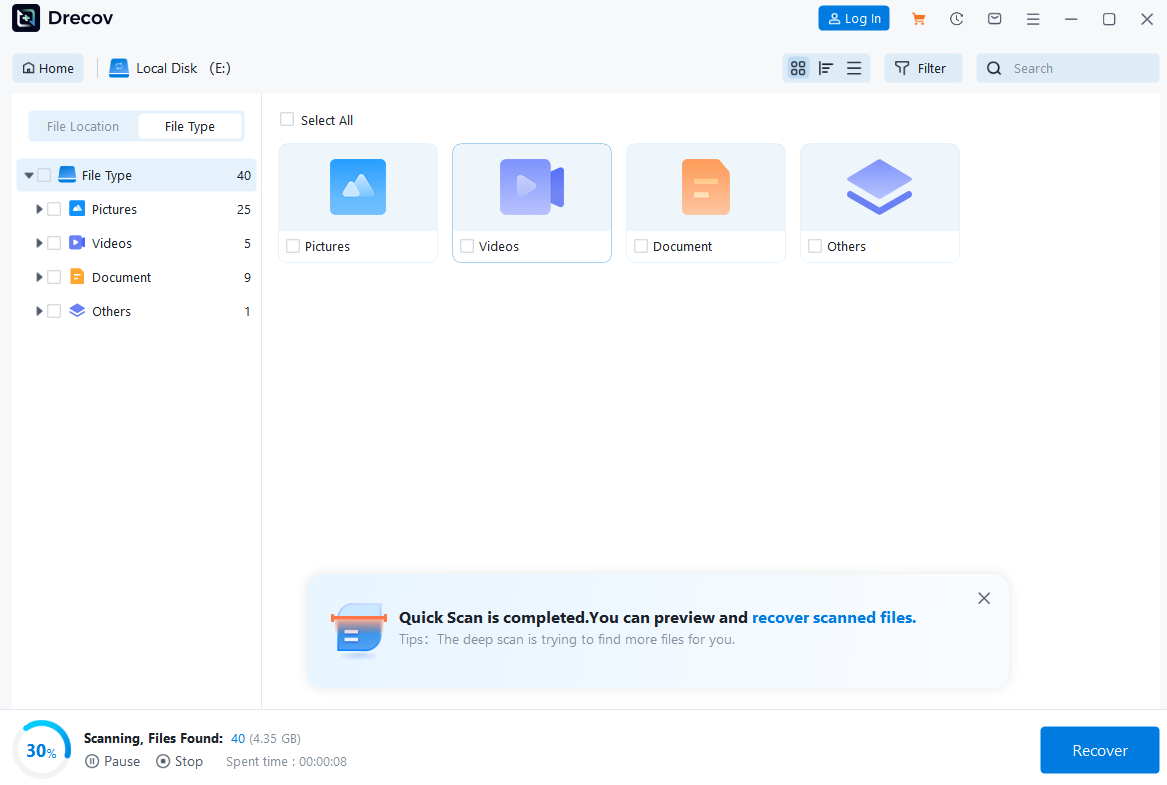

⚠️Warning: Install the recovery software on a different drive than the one you want to restore to avoid overwriting deleted data.
Method 2: Restore Files from Cloud Backup
Test Environment: Windows 11, OneDrive enabled, Internet connection available.
Many users rely on cloud storage services like OneDrive for automatic backups. If cloud backup is active, you can recover files after factory reset by restoring files from your account.
Log in to your cloud service, navigate to the folder containing lost files, and restore them to your device. Cloud backups are particularly useful for recovering documents, photos, and spreadsheets without additional software.
This approach is effective for users who regularly sync files and want a quick solution for how to recover data after factory reset.
Method 3: Recover from Local Backup
Test Environment: Windows 10, external hard drive backups created prior to reset.
If you maintain local backups using tools like Windows Backup or File History, restoring lost data is straightforward. Simply connect the backup drive, open the backup utility, and select files to restore.
This method allows users to recover factory reset data safely and ensures that important documents, photos, and system settings are recovered efficiently.
Regular backup practices significantly reduce the need for advanced recovery tools.
Method 4: Use Temporary Files for Recovery
Test Environment: Windows 11, documents recently created, system temporary files enabled.
Windows sometimes stores unsaved versions of files in temporary directories. Users searching for recovering files after factory reset Windows 10 may find lost files in these folders.
Navigate to C:\Users\YourUsername\AppData\Local\Temp and check for recently modified files. Copy and restore relevant files to a secure location.
This method is particularly useful for recovering documents or work in progress immediately after a reset.
Method 5: Check Recycle Bin for Remaining Data
Test Environment: Windows 10, system not fully reset yet, recycle bin active.
In some cases, minor resets may leave files in the Recycle Bin. Users attempting to restore data after factory reset should check the Recycle Bin before pursuing advanced recovery methods.
Right-click files to restore them to their original locations. While limited in scope, this method is fast and safe.
Method 6: Recover Data from Previous Versions
Test Environment: Windows 10, System Protection enabled, files stored on NTFS partitions.
Windows automatically creates restore points and keeps previous versions of files if System Protection is enabled. This can help recover factory reset data by restoring an earlier version of a folder or file.
To access previous versions, right-click the folder or file, select “Properties,” and navigate to the “Previous Versions” tab. Choose the version you wish to restore and click “Restore.”
This method is particularly effective for users who need to recover files after factory reset without third-party software.
⚠️Warning: Ensure that you restore files to a separate location to avoid overwriting other data.
Method 7: Recover Deleted Files Using Disk Partition Recovery
Test Environment: Windows 11, SSD/HDD, factory reset performed on primary drive.
If your factory reset caused partition issues, some files may not be visible through normal file access. Using disk partition recovery tools allows users to recovering files after factory reset Windows 10 by scanning the entire drive for lost partitions.
Once a lost partition is detected, you can recover all files stored within it. This is especially useful for retrieving large amounts of data or files from previously deleted partitions.
Method 8: Restore Specific File Types
Test Environment: Windows 10, varied file formats including photos, documents, and PowerPoint presentations.
Certain file types may require targeted recovery strategies:
- Photos: Deep scan your storage device for image files using supported recovery software.
- Documents: Use file-type filters to recover Word, Excel, or PDF files quickly.
- PowerPoint Recovery: Scan specifically for
.pptand.pptxfiles to restore presentations lost during the reset.
This method ensures that users can selectively recover important files without scanning unnecessary data, improving efficiency for how to recover data after factory reset.
Method 9: Use Pandaoffice Drecov for Comprehensive Recovery
Test Environment: Windows 11, SSD and external drives, multiple file types including photos, videos, and documents.
For situations where standard recovery methods fail, Pandaoffice Drecov provides a complete solution to recover files after factory reset. The software performs a deep scan to locate lost or deleted files, even if they are not immediately visible on the storage device.
Users can preview recoverable files before restoring them to a safe location, ensuring selective recovery of essential documents and media. This method is especially helpful when you need to restore data after factory reset across multiple storage devices.
⚠️Warning: Avoid installing the recovery tool on the drive that experienced data loss to prevent overwriting recoverable files.
FAQ About Data Recovery After Factory Reset
Can I Fully Restore Files After a Factory Reset?
Yes, it is often possible to recover factory reset data, but the success rate depends on how much new data has been written to the drive since the reset. Immediate action increases the chances of full recovery.
How Long Does It Take to Recover Files After Factory Reset?
The recovery time varies depending on the storage device size, number of files, and method used. Deep scans with professional software may take longer but provide a higher recovery success rate for recovering files after factory reset Windows 10.
Is It Safe to Use Third-Party Recovery Software?
Using trusted tools like Pandaoffice Drecov is generally safe. They scan for recoverable files without modifying other data. Always install the software on a different drive than the one being recovered to avoid overwriting files.
What Should I Do Immediately After a Factory Reset?
To maximize the chances of how to recover data after factory reset, stop using the device immediately to prevent new data from overwriting deleted files. Then, choose the most suitable recovery method based on your setup (cloud backup, local backup, or recovery software).
Conclusion: Best Practices for Recovering Data After Factory Reset
Losing data during a factory reset can be stressful, but multiple recovery options are available. From built-in backups, previous versions, and cloud recovery to professional solutions like Pandaoffice Drecov, users can restore data after factory reset efficiently.
Key steps to remember:
- Avoid using the device immediately to prevent overwriting lost data.
- Check cloud backups and previous versions first.
- Use deep scanning tools for comprehensive recovery if necessary.
- Focus on critical files first (documents, photos, PowerPoint).
Following these practices ensures that you can recover essential files effectively, minimizing data loss and making recovering files after factory reset Windows 10 or other systems straightforward and reliable.






