







Losing your open browser sessions can disrupt your workflow and cause significant stress. Whether a sudden system crash, an accidental click, or an unexpected update wiped out your workspace, learning how to restore chrome pages is essential for recovering your active research and history. Many users rely on standard browser functions, but severe data corruption or hard drive issues require professional recovery tools.
When native browser fixes fall short, PandaOffice Drecov data recovery software provides an advanced solution to retrieve lost browser files, application cache data, and system profiles. This guide covers everything from instant keyboard hotkeys to deep data recovery techniques to ensure you never lose your important web sessions again.
Understanding the Basics of How to Restore Chrome Pages
Google Chrome manages active sessions by continuously writing temporary state files to your local storage drive. When you seek to learn how to restore web pages in chrome, you are essentially instructing the browser to read its last known stable session state file.
However, several common challenges can block this automatic process:
- Sudden power outages that corrupt the user profile folder
- Accidental deletion of the local application data directory
- Operating system crashes that overwrite the browser cache
- Malware infections targeting system files
Meanwhile, users working on Chrome OS face unique challenges where local storage is highly volatile. Knowing how to restore chromebook sessions often depends on cloud synchronization, but if local state files are wiped before syncing, standard methods will fail.
This is where PandaOffice Drecov data recovery software proves invaluable. It scans your local storage media for deleted or fragmented Current Session or Last Tabs files, allowing you to rebuild your browser environment even after a major system failure.
Solutions to How to Restore Chrome Pages Issues
Method 1: Utilizing Built-In Browser Recovery Functions
Google Chrome features native built-in mechanisms designed to handle sudden closures. If your browser closed unexpectedly, you can leverage simple shortcuts and menu pathways to recover your workspace.
- Step 1: Open a fresh Google Chrome window.
- Step 2: Press the primary recovery hotkey combination. For Windows users, press Ctrl + Shift + T. For macOS users, press Cmd + Shift + T.
- Step 3: If the hotkey fails, navigate to the top-right corner and click the three vertical dots menu. Hover over History to reveal the Recently Closed section, then click Restore Window to open your entire previous tab group.
Method 2: Advanced Recovery Using PandaOffice Drecov Data Recovery Software
When your system suffers severe data corruption, formatting, or accidental deletion of app data folders, Chrome cannot find the session files to read. In these deep data loss scenarios, PandaOffice Drecov data recovery software offers a reliable approach to scan your drive and extract the missing profile database files.
⚠ Warning: Install it on a drive different from the one where your data was lost to prevent overwriting.
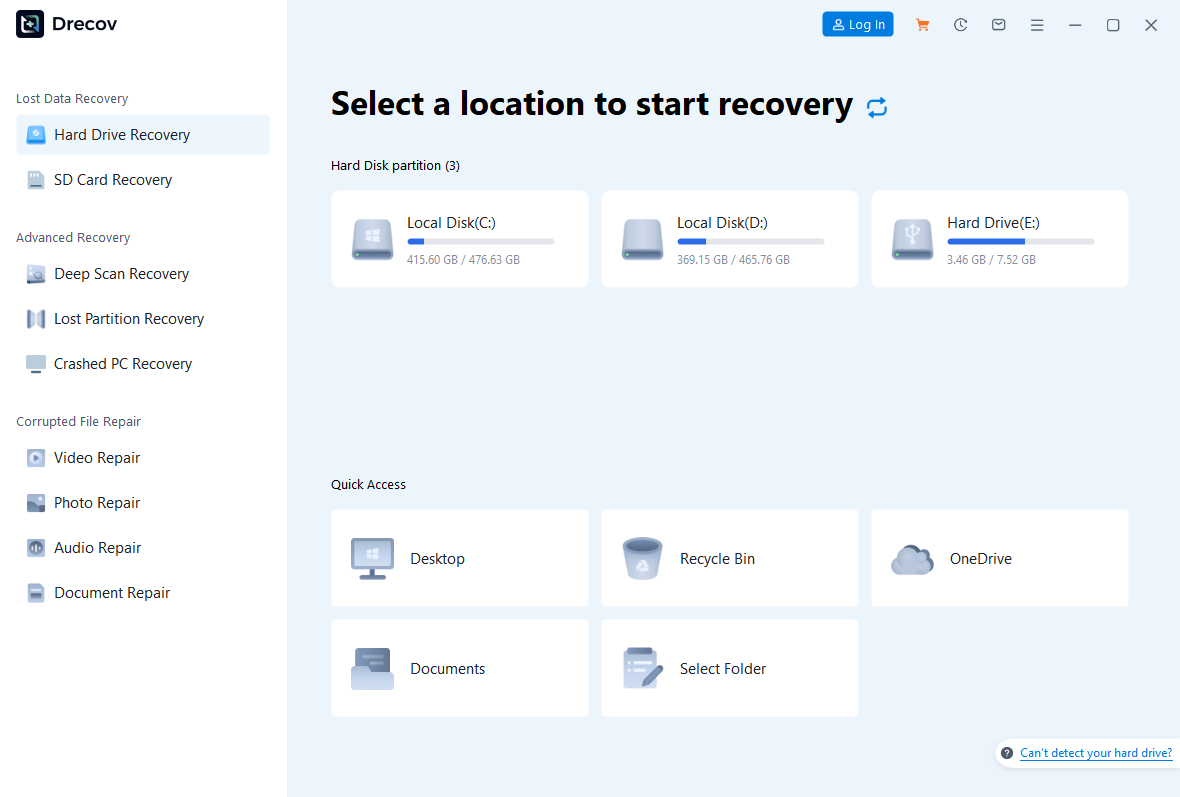
- Step 1: Launch the application and select the local drive where your operating system is installed, which is typically the C: drive for Windows users. Click Scan to initiate a deep search for deleted browser cache files and session states.
- Step 2: Navigate to the folder path:
%LOCALAPPDATA%\Google\Chrome\User Data\Default\
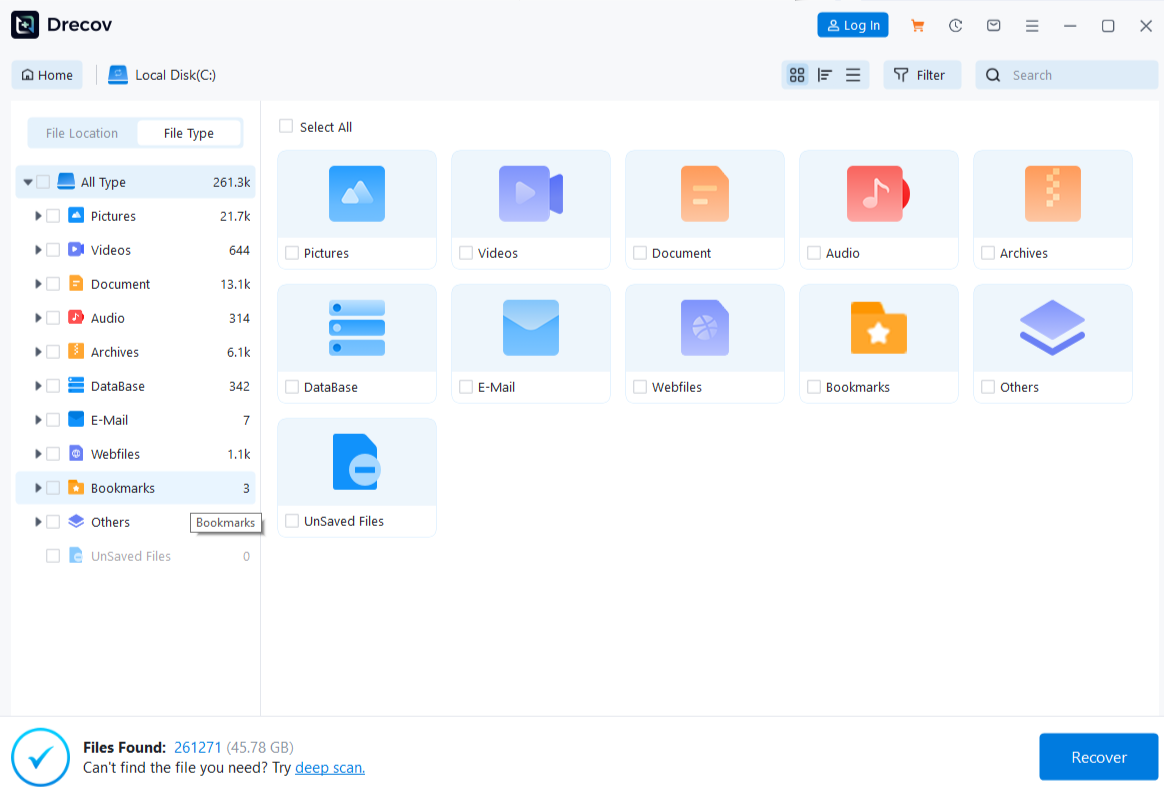
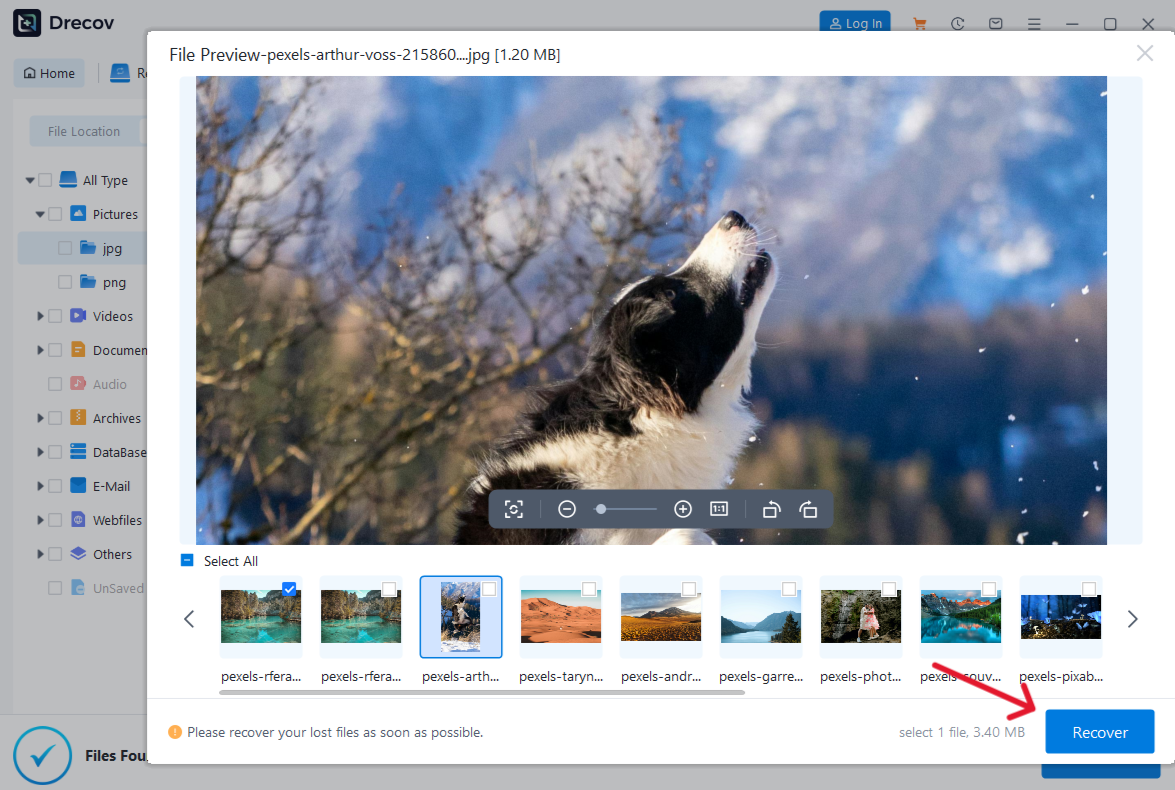
- Step 3: Locate the files named Current Session, Current Tabs, Last Session, or Last Tabs. Select these files and click Recover to save them to a secure external storage device.
- Step 4: Copy the recovered files back into your active Chrome profile directory while the browser is closed, then relaunch Chrome to view your restored pages.
For further details regarding bookmark recovery, you can review the Official Chrome Bookmarks Recovery Documentation to manage your browser assets effectively.
Alternative or Complementary Methods
Beyond built-in shortcuts and professional data recovery tools, you can deploy manual system-level workarounds to restore your browsing environment.
| Recovery Method | Pros | Cons |
| Windows Previous Versions | Free built-in tool, requires no third-party software installation. | Relies entirely on pre-configured system restore points. |
| Chrome Sync History | Accesses browsing data across multiple devices seamlessly. | Will not work if the user was browsing in an Incognito window. |
| Manual Cache Extraction | Allows precise targeting of specific lost URLs. | Requires technical knowledge of hex editors and file pathing. |
Furthermore, if you are attempting to address how to restore chromebook systems after a local factory reset, your best option is logging back into your primary Google Account to trigger cloud synchronization. This automatically pulls down your synced history, bookmarks, and open tabs from the Google cloud servers.
Tips & Best Practices for Data Integrity
Maximizing your data recovery success requires a careful approach to handling system files. In addition, practicing proactive data habits ensures that future browser crashes do not result in permanent work loss.
- Avoid Writing New Data: The moment you realize your pages are missing, close all unnecessary applications. Writing new files to your hard drive can overwrite the hidden session files that PandaOffice Drecov data recovery software needs to extract.
- Configure Startup Settings: Open Chrome Settings, click On startup in the left sidebar, and select Continue where you left off. This enforces persistent session saving.
- Deploy Session Managers: Install reputable extension tools from the Chrome Web Store that automatically schedule backups of your open tab states every hour.
How to restore chrome pages FAQs
How do I use the shortcut key to restore web pages in chrome?
You can press Ctrl + Shift + T on Windows or Cmd + Shift + T on macOS to immediately reopen the last closed tab or window.
Can I find out how to restore chromebook pages after a complete power wash?
Yes, after a power wash, you must connect to the internet and log into your Google Account to automatically download your synced browser history and open tabs.
Where does Google Chrome store active tab sessions on Windows?
Chrome saves active session details locally in the user data profile directory, which is found at the path %LOCALAPPDATA%\Google\Chrome\User Data\Default\Session Storage\.
Is it possible to recover Incognito tabs using PandaOffice Drecov data recovery software?
No, Chrome intentionally avoids writing Incognito browsing sessions to your local hard drive, meaning no physical files exist for data recovery tools to scan or retrieve.
Why did my Chrome history completely disappear after an update?
Browser updates can sometimes conflict with corrupt user profile folders, causing Chrome to generate a brand new, empty default profile folder.
Conclusion
Losing critical browser pages can feel overwhelming, but mastering the steps on how to restore chrome pages ensures you can recover quickly from unexpected technical glitches. For simple accidents, native keyboard shortcuts and history menus provide an instant fix. However, when system crashes wipe out local profile data, relying on professional tools like PandaOffice Drecov data recovery software remains the most reliable strategy to secure your digital workspace.






