







Whenever I turn on my pc, my computer screen just turn green after a few minutes and it’s frozen and I can’t press anything or do anything on my pc. I tried win + shift + Ctrl + b and it does nothing. And it’s not my monitor causing the issue cause when I unplug my HDMI wire and plug it back in the screen is still green and frozen.—from Microsoft Store
Understanding the Computer Green Screen Crash
What Is a Green Screen on Computer Monitor?
A computer green screen crash is a system error where your display suddenly turns green, often accompanied by a system freeze or forced restart. Unlike the traditional Blue Screen of Death (BSOD), the green screen typically appears on preview builds of Windows, but it can also occur in standard environments due to system or hardware issues.
The green screen on computer monitor may show error codes, system messages, or simply a blank green background. In many cases, users report that the issue happens randomly while gaming, streaming videos, or updating drivers.
This problem is not always catastrophic, but it indicates that your system encountered a critical failure that it could not recover from automatically. The causes range from minor driver conflicts to serious hardware malfunctions.
Understanding this issue is the first step toward resolving it effectively. Whether you are a casual user or a professional, knowing what triggers the error can help prevent future occurrences.
Why Does My Screen Turn Green Instead of Blue?
Many users ask, “why does my screen turn green?” instead of showing a blue error screen. The answer lies in how Windows differentiates between system environments.
Green screens are primarily used in Windows Insider or testing versions to distinguish them from stable release errors. However, even in non-preview systems, similar visual glitches can occur due to GPU rendering issues, corrupted system files, or incompatible drivers.
Another reason could be hardware-level display problems. If your graphics card or monitor fails to render colors correctly, it may result in a green overlay or full green display.
In some cases, software conflicts—especially with video playback tools or outdated drivers—can trigger a computer green screen crash unexpectedly.
⚠️Warning: If the green screen appears frequently, it may indicate deeper hardware instability that requires immediate attention.
Common Causes of Green Screen on Computer Monitor
Graphics Driver Problems and Compatibility Issues
One of the most common causes of a green screen on computer monitor is outdated or incompatible graphics drivers. Drivers act as a bridge between your operating system and hardware. When they are corrupted or not updated, display errors can occur.
Users who recently updated Windows or installed new GPU drivers may notice that their system becomes unstable. This is especially common when using beta drivers or unsupported versions.
Driver conflicts can also happen when multiple display-related programs are installed. For example, screen recording tools, GPU tuning software, and streaming applications may interfere with each other.
Keeping drivers updated and properly configured is essential to maintaining system stability.
Hardware Malfunctions and GPU Overheating
Another major cause of a computer green screen crash is hardware failure, particularly related to the GPU. Overheating can cause the graphics card to malfunction, leading to display corruption or system crashes.
Dust accumulation, poor ventilation, or failing cooling systems can significantly increase GPU temperature. When the temperature exceeds safe limits, your system may shut down or display a green screen to prevent damage.
Additionally, faulty RAM or a damaged motherboard can also contribute to this issue. These hardware problems are harder to diagnose but should not be ignored.
⚠️Warning: Continuous overheating can permanently damage your GPU, leading to costly replacements.
System File Corruption and Software Conflicts
Corrupted system files are another reason why users encounter the question, “why does my screen turn green?”. When essential Windows files are damaged, the operating system may fail to function correctly.
This can happen due to improper shutdowns, malware infections, or failed updates. Software conflicts can also trigger green screen issues, especially when multiple applications attempt to access system resources simultaneously.
Programs that rely heavily on graphics processing, such as video editors or games, are more likely to expose these issues.
Regular system maintenance, including updates and scans, can help reduce the risk of file corruption.
Effective Methods to Fix Computer Green Screen Crash
Method 1: Update or Reinstall Graphics Drivers
Test Environment: Windows 10/11, NVIDIA GTX/RTX GPU, 16GB RAM, latest Windows updates installed.
Updating or reinstalling your graphics drivers is often the first step in resolving a computer green screen crash. Outdated drivers can cause compatibility issues that lead to display errors.
Start by opening Device Manager and locating your display adapter. Right-click and choose “Update driver.” If the issue persists, uninstall the driver and restart your computer to allow Windows to reinstall a clean version.
You can also download the latest drivers directly from the GPU manufacturer’s official website for better compatibility.
This method is particularly effective if the issue began after a system or driver update.
⚠️Warning: Installing incorrect drivers may worsen the issue. Always verify compatibility before installation.
Method 2: Check and Repair System Files
Test Environment: Windows 10 Pro, Intel i5 processor, SSD storage, command-line access enabled.
If corrupted system files are causing the green screen on computer monitor, running built-in repair tools can help. Use the System File Checker (SFC) and Deployment Image Servicing and Management (DISM) tools.
Open Command Prompt as an administrator and run:
sfc /scannowDISM /Online /Cleanup-Image /RestoreHealth
These tools will scan and repair damaged files automatically. The process may take some time but is highly effective in resolving system-related errors.
This method is recommended when the issue occurs randomly without any clear hardware trigger.
Method 3: Recover Lost Files After a Computer Green Screen Crash
Test Environment: Windows 11, SSD system disk, system crash leading to inaccessible data.
A computer green screen crash can sometimes lead to unexpected data loss, especially if the system shuts down abruptly or becomes unbootable. Before applying deeper fixes, it’s a smart step to recover important files to avoid permanent loss.
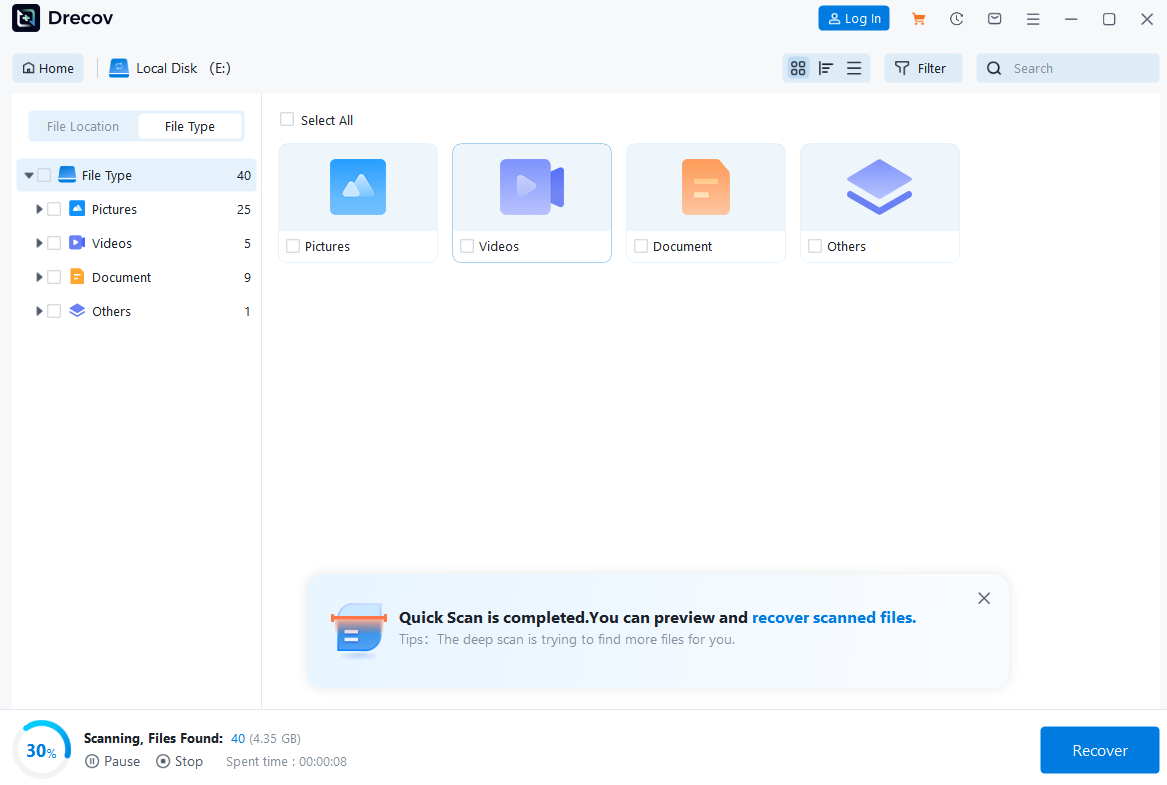
In this case, Pandaoffice Drecov is a practical solution for retrieving lost or inaccessible data. It supports recovery from crashes, formatted drives, and damaged partitions, making it suitable for situations where files disappear after a system failure.
To get started, install the software on a different drive and scan the affected disk. The program provides both quick and deep scan modes, allowing you to locate files efficiently. You can preview recoverable data and restore only what you need to a secure location.
This approach helps protect critical documents, photos, videos, and other files while you continue troubleshooting the green screen on computer monitor issue.
Why Choose PandaOffice Drecov?
When it comes to reliable file data recovery, PandaOffice Drecov offers a balanced combination of performance, ease of use, and broad compatibility. Whether you’ve lost important business files or personal memories, it provides an efficient way to restore data from various loss scenarios, including system crashes, accidental deletion, and formatted drives.
For users looking for advanced Photo Data Recovery Software, PandaOffice Drecov supports a wide range of image formats and storage devices. It can recover high-quality photos from SD cards, cameras, and internal drives while preserving original resolution and file structure. This makes it especially useful for photographers and everyday users alike.
If you are dealing with storage device issues, its external hard drive recovery capability ensures that data can be retrieved from USB drives, HDDs, and SSDs with minimal effort. The software performs deep scans to locate hidden or lost files, even in complex situations like partition loss.
In addition, PandaOffice Drecov excels in Document Recovery, helping users restore essential files such as Word, Excel, and PDFs. It also supports powerpoint recovery, allowing you to retrieve unsaved or deleted presentation files quickly—ideal for professionals working under tight deadlines.
With an intuitive interface, preview functionality, and powerful scanning modes, PandaOffice Drecov simplifies the recovery process while maintaining high success rates.


⚠️Warning: Do not install recovery software on the same drive where data was lost, as this may overwrite recoverable files.
Method 4: Disable Hardware Acceleration
Test Environment: Windows 10, Chrome browser, integrated graphics system.
Hardware acceleration can sometimes trigger a green screen on computer monitor, especially during video playback or browsing. Disabling this feature can help resolve the issue.
In applications like Chrome, go to Settings → System and turn off “Use hardware acceleration when available.” Restart the browser afterward.
This method is particularly useful if the problem occurs while streaming videos or using web-based applications.
Method 5: Run Windows Memory Diagnostic Tool
Test Environment: Windows 10 Home, 8GB RAM, standard desktop configuration.
Faulty memory can contribute to a computer green screen crash, especially when your system struggles to process tasks reliably. RAM issues may not always be obvious, but they can trigger unexpected crashes and visual errors.
To diagnose this, use the built-in Windows Memory Diagnostic tool. Press Windows + R, type mdsched.exe, and choose to restart and check for problems. The system will reboot and perform a memory scan automatically.
If errors are detected, you may need to reseat or replace your RAM modules. This method is especially helpful when crashes occur randomly without a clear pattern.
Addressing memory issues can significantly improve system stability and reduce the likelihood of display-related errors.
Method 6: Check GPU Hardware and Cooling System
Test Environment: Windows 11, dedicated GPU (RTX series), mid-tower PC with air cooling.
A malfunctioning GPU is a leading cause of the green screen on computer monitor problem. If your graphics card is overheating or failing, it can result in system crashes and abnormal display output.
Start by monitoring GPU temperature using system tools or BIOS. If temperatures exceed safe limits, clean dust from fans and ensure proper airflow inside your case.
You can also reseat the GPU or test it in another system to confirm whether it is defective. If the issue persists, replacing the GPU may be necessary.
⚠️Warning: Avoid running high-performance tasks on an overheating GPU, as it may lead to permanent damage.
Method 7: Update Windows and Install Patches
Test Environment: Windows 10 Pro, automatic updates enabled, stable internet connection.
Outdated operating systems can lead to compatibility issues that trigger a computer green screen crash. Microsoft frequently releases updates to fix bugs and improve system stability.
Go to Settings → Update & Security → Windows Update, and check for updates. Install all pending updates and restart your system.
This method is particularly effective if the issue started after a major system update or if your system has not been updated for a long time.
Keeping your system up to date ensures better compatibility with drivers and applications, reducing the chances of encountering display errors.
Method 8: Disconnect External Devices
Test Environment: Windows laptop with multiple USB peripherals (keyboard, mouse, external drive).
External devices can sometimes interfere with system operations and cause a green screen on computer monitor. Faulty USB devices or incompatible drivers may lead to system instability.
Disconnect all non-essential peripherals and restart your computer. Then reconnect devices one by one to identify the problematic hardware.
This process helps isolate the root cause and ensures that only stable devices are connected to your system.
Method 9: Reset or Reinstall Windows System
Test Environment: Windows 11, SSD storage, system experiencing repeated crashes.
If none of the previous methods resolve the computer green screen crash, resetting or reinstalling Windows may be the final solution. This process removes corrupted files and restores the system to a clean state.
Go to Settings → Recovery → Reset this PC. You can choose to keep your files or remove everything for a fresh start.
Before proceeding, ensure that all important data is backed up. A clean installation often eliminates deep-rooted system issues.
⚠️Warning: Reinstalling Windows will remove installed applications, so prepare accordingly.
FAQ About Computer Green Screen Crash
Is a Green Screen Error More Serious Than a Blue Screen?
A computer green screen crash is not necessarily more severe than a blue screen. It serves a similar purpose—indicating a critical system failure. The difference lies mainly in the environment where it appears.
Green screens are often used in testing or preview builds, but the underlying issues—such as driver errors or hardware failures—are comparable to those causing blue screens.
However, frequent green screen occurrences may signal persistent instability that should not be ignored.
Why Does My Screen Turn Green While Watching Videos?
If you are wondering, “why does my screen turn green” during video playback, the issue is often related to hardware acceleration or graphics driver problems.
Video players and browsers rely heavily on GPU resources. When there is a compatibility issue, it can result in a green overlay or flickering screen.
Disabling hardware acceleration or updating drivers usually resolves this problem. In some cases, switching to a different browser or media player can also help.
Can a Green Screen on Computer Monitor Damage My PC?
A green screen on computer monitor itself does not physically damage your PC. However, it may indicate underlying issues such as overheating or hardware failure.
Ignoring these warning signs can lead to more serious problems over time, including permanent hardware damage or data loss.
Taking immediate action to diagnose and fix the issue is essential to maintaining system health.
How Can I Prevent Computer Green Screen Crash in the Future?
Preventing a computer green screen crash involves regular system maintenance. Keep your drivers updated, install Windows updates, and monitor hardware performance.
Avoid installing unverified software and ensure your system is protected against malware. Regularly cleaning your PC and maintaining proper airflow can also prevent overheating.
By following these practices, you can significantly reduce the risk of encountering green screen errors.
Conclusion: Fixing Green Screen on Computer Monitor Effectively
A computer green screen crash can be alarming, but it is usually manageable with the right approach. From driver updates to hardware checks, there are multiple ways to identify and resolve the issue.
Understanding why does my screen turn green helps you take targeted action rather than guessing the cause. Whether the problem stems from software conflicts, corrupted files, or hardware failure, each solution plays a role in restoring system stability.
Start with simple fixes like updating drivers and disabling hardware acceleration, then move to advanced methods if needed. Tools like Pandaoffice Drecov can also help safeguard your data during system failures.
By staying proactive and maintaining your system regularly, you can minimize disruptions and ensure a smoother computing experience.






