







EaseUS Todo Backup review based on official documentation, covering backup types, restore dependency, editions, boot media, and recovery limits. A documentation-based review of EaseUS Todo Backup workflows, edition boundaries, restore testing, and when file recovery remains a separate need. Begin with restore one older document, preserve irreplaceable local data, and change one condition at a time so the result remains meaningful. This guide explains “easeus todo backup review” with practical checks that protect important files before system or storage changes.
Define the Restore Outcome Before Choosing a Backup
EaseUS Todo Backup is Windows backup and restore software. Its official materials describe file, disk, partition, and system backup workflows, scheduled plans, image-based restore, and edition-dependent features. This review uses published documentation rather than invented speed tests or recovery-rate claims. removable backup planning The fact behind restore one older document is documented in the official source for this topic.
| Evidence | Meaning | Next decision |
|---|---|---|
| Restore one older document | Versioned file backup | Confirm version browsing |
| Recover an unbootable PC | System image and boot media | Test that media sees the image |
| Replace a system disk | Disk or system migration branch | Check edition and hardware support |
| Open files without the application | Native file copy may be simpler | Choose readable storage format |
| Recover a file never backed up | Backup cannot supply it | Use file recovery on the source |
| Protect against ransomware | Offline rotation | Do not leave every copy writable |
Evidence-Based Diagnostic Walkthrough
Each observation below narrows one decision for restore one older document. Retest the original symptom after the matching action before escalating, with restore one older document used as the comparison point.
Restore one older document
Read this result in context: versioned file backup. Confirm version browsing and record the new timing, message, or detection state. For restore one older document, preserve readable data before any test that writes, removes access, changes boot behavior, or places sustained load on the device.
Recover an unbootable PC
Treat this observation as a branch: system image and boot media. Test that media sees the image and record the new timing, message, or detection state. For recover an unbootable pc, preserve readable data before any test that writes, removes access, changes boot behavior, or places sustained load on the device.
Replace a system disk
Use this evidence to narrow the cause: disk or system migration branch. Check edition and hardware support and record the new timing, message, or detection state. For replace a system disk, preserve readable data before any test that writes, removes access, changes boot behavior, or places sustained load on the device.
Open files without the application
Let this finding limit the next action: native file copy may be simpler. Choose readable storage format and record the new timing, message, or detection state. For open files without the application, preserve readable data before any test that writes, removes access, changes boot behavior, or places sustained load on the device.
Recover a file never backed up
Connect this symptom to the safest test: backup cannot supply it. Use file recovery on the source and record the new timing, message, or detection state. For recover a file never backed up, preserve readable data before any test that writes, removes access, changes boot behavior, or places sustained load on the device.
Protect against ransomware
Interpret this state before changing anything: offline rotation. Do not leave every copy writable and record the new timing, message, or detection state. For protect against ransomware, preserve readable data before any test that writes, removes access, changes boot behavior, or places sustained load on the device.
Understand Image Dependency and Edition Boundaries
A backup image is useful only when the software can locate, validate, and restore it. Confirm current Free and Home features on the official comparison before relying on cloning, cloud storage, app-data backup, or dissimilar-hardware restore. Avoid treating marketing tables as permanent promises. separate-device principle Define success for understand image dependency and edition boundaries and identify the condition that ends DIY work. A changed message alone does not prove the underlying device, file, application, or Windows installation is healthy, with restore one older document used as the comparison point.
Use Drecov When No Usable Backup Contains the File
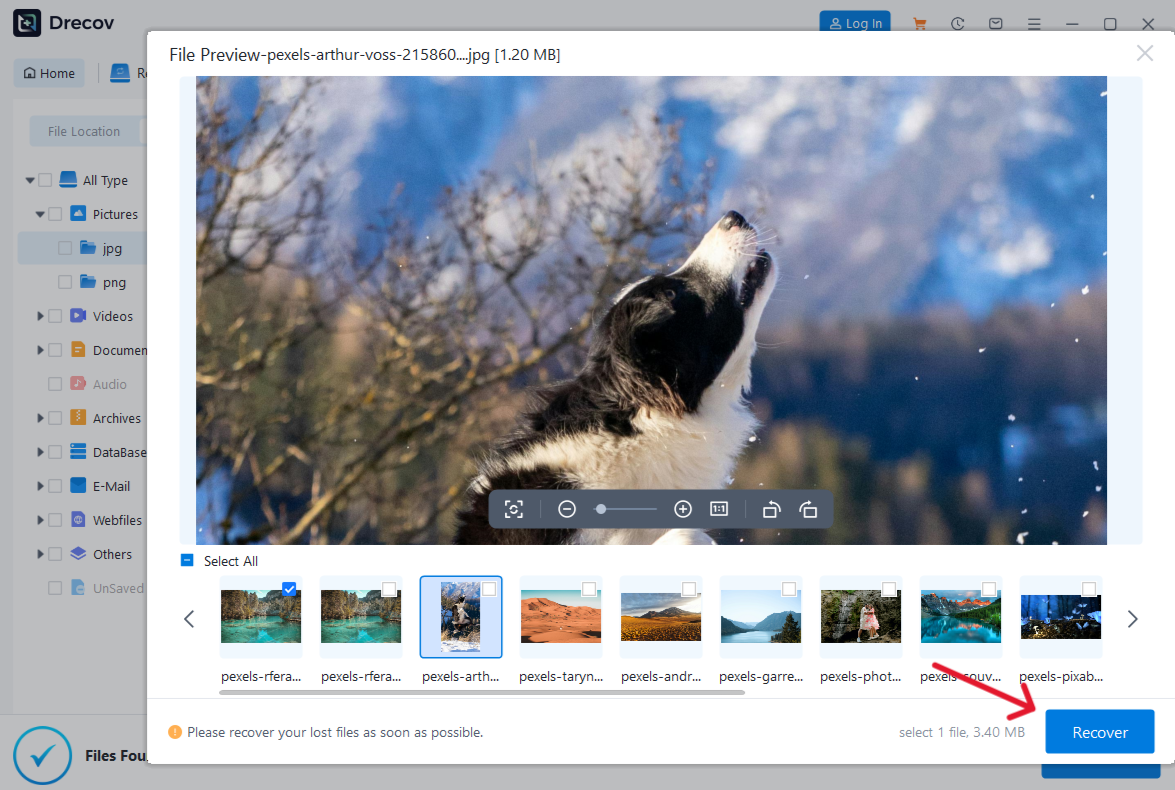
Drecov addresses local file loss, while Todo Backup restores data that was captured in a backup set. For this restore one older document situation, PandaOffice Drecov provides a read-only Windows recovery workflow with Quick Scan, Deep Scan, filters, supported-file preview, Lost Partition Recovery, and a selectable healthy destination. It cannot repair hardware or recreate overwritten data.
⚠ Warning: Install it on a drive different from the one where your data was lost to prevent overwriting.
Step 1: Launch With the Original Loss Location
Open PandaOffice Drecov from healthy Windows and select the stable original disk or removable device where the unbacked file was lost. Install and run the software away from the partition that lost data, with restore one older document used as the comparison point. A source showing recover a file never backed up or severe instability should be imaged or referred to a professional instead of scanned repeatedly.

Step 2: Search From Quick Scan to Deep Scan
Use Quick Scan for recent deletion or a newly missing path. Continue to Deep Scan only if replace a system disk leaves required data absent and the device stays stable. Choose Lost Partition Recovery when a partition entry vanished; do not create a replacement volume first, with restore one older document used as the comparison point. Search by original path, file category, filename, and date associated with the missing version.

Step 3: Validate With Preview and a Separate Destination
Preview files that represent the important result set, including the types central to this topic, with restore one older document used as the comparison point. Save the selection to another healthy physical device rather than the source, with restore one older document used as the comparison point. When original paths cannot be reconstructed, review the Drecov folder or Recovery folder, with restore one older document used as the comparison point. Compare recovered content with any available backup version before returning it to production folders.
Evaluate the Workflow From Backup to Restore
Create a Source Inventory
List user folders, application data, boot partitions, encryption keys, and files outside the profile. A system image and a file backup answer different restore questions. Before create a source inventory, note the starting condition and expected result. If that specific method leaves the symptom unchanged, avoid repeating it and use the new evidence to select a narrower branch, with restore one older document used as the comparison point. Keep a log or harmless test item for create a source inventory so the outcome can be compared after restart.
Choose a Separate Destination
Do not store the only image on the protected disk. Plan capacity for full and incremental chains, retention, and future growth. Before choose a separate destination, note the starting condition and expected result. If that specific method leaves the symptom unchanged, avoid repeating it and use the new evidence to select a narrower branch, with restore one older document used as the comparison point. Keep a log or harmless test item for choose a separate destination so the outcome can be compared after restart.
Configure Schedule and Retention Together
A frequent schedule without space management can fail silently or remove useful history. Review logs and the age of the newest successful point. Before configure schedule and retention together, note the starting condition and expected result. If that specific method leaves the symptom unchanged, avoid repeating it and use the new evidence to select a narrower branch, with restore one older document used as the comparison point. Keep a log or harmless test item for configure schedule and retention together so the outcome can be compared after restart.
Create and Test Emergency Media
Boot media matters only if it starts the intended computer and can see the backup destination. Test recognition before an emergency. Before create and test emergency media, note the starting condition and expected result. If that specific method leaves the symptom unchanged, avoid repeating it and use the new evidence to select a narrower branch, with restore one older document used as the comparison point. Keep a log or harmless test item for create and test emergency media so the outcome can be compared after restart.
Perform Representative Restores
Restore an old document, a large file, and a folder to a temporary location. Open them and verify permissions, dates, and content. Before perform representative restores, note the starting condition and expected result. If that specific method leaves the symptom unchanged, avoid repeating it and use the new evidence to select a narrower branch, with restore one older document used as the comparison point. Keep a log or harmless test item for perform representative restores so the outcome can be compared after restart.
Decide Who Should Use It
Todo Backup can suit Windows users who want image-based system and file protection and accept its restore workflow. Users needing directly browsable copies may prefer a simpler file-copy layer as well. Keep an offline copy regardless of product. file verification Repeat the original low-risk action tied to decide who should use it. Keep the protected copy until results remain consistent and representative recovered files pass their content checks, with restore one older document used as the comparison point.
- Assuming a completed job guarantees a usable restore
- Saving the image on the source disk
- Depending on a feature without checking the current edition
- Never testing boot media
- Confusing backup restore with scanning deleted source data
EaseUS Todo Backup Questions
Is EaseUS Todo Backup data recovery software?
Its main role is backup and restoration from created backup sets. Deleted-file scanning is a different workflow.
Is every feature in the free edition?
No. Verify the current official edition comparison because availability can change.
Can an image be opened without Todo Backup?
Image-mode backups depend on compatible restore or browsing tools; native-format file backup is different.
Should I test a backup?
Yes. Restore representative files and test emergency media.
Where does Drecov fit?
It can recover files absent from usable backups when the original stable storage still offers recoverable data.
When troubleshooting “easeus todo backup review”, begin with the least invasive step and verify recovered files before attempting repairs.
Conclusion
EaseUS Todo Backup is best assessed by the restore result you need, the current edition, destination design, retention, and successful test restores. It protects future states through backups. When a needed local file was never captured or the backup is unusable, Drecov offers a separate read-only scan, preview, and recovery workflow to another healthy device.






