







Dell OS Recovery Tool downloads a recovery image for a supported Dell service tag and writes bootable recovery media. Its purpose is operating-system restoration, not personal-file backup or undelete. Creating the USB formats the selected flash drive. Meanwhile, using recovery media to reinstall Windows can remove applications, settings, and data depending on the chosen workflow. Back up both the USB and the affected PC before accepting an erase or reinstall prompt.
Identify the 0xc0000005 Scope First
Start with the current state, not the most dramatic possible cause for this an access-violation crash threatens local work case. Protect irreplaceable files, note exact messages and recent changes, and confirm which disk or folder is involved for this an access-violation crash threatens local work case. boot-drive recovery precautions To confirm the platform behavior for an access-violation crash threatens local work, consult the official documentation.
| What you observe | What it means | Safest next move |
|---|---|---|
| Need Dell factory drivers and apps | Dell image may match the supported model | Use the correct service tag |
| Only startup repair is needed | A full reinstall may be excessive | Try WinRE or SupportAssist repair first |
| USB contains personal files | Media creation will erase them | Copy them to another device |
| Internal drive is unstable | Software restoration may worsen access | Image or seek professional recovery |
| Files are already backed up | Reinstallation risk is controlled | Verify the backup before proceeding |
Choose Dell Media for the Correct Service Tag
Use Dell’s official download and enter the service tag of the computer being restored. The available image reflects the supported factory operating system and device configuration. Do not assume that media created for another Dell model contains the right drivers or license path.
Write down the result and compare it with the previous state before proceeding for this an access-violation crash threatens local work case.
Treat USB Creation as a Destructive Format
Dell states that creating recovery media formats the selected USB. Disconnect other removable drives, identify the target by capacity, and copy every needed file elsewhere before proceeding. The recovery tool is not a way to preserve existing USB contents alongside boot files.
Use that evidence to stay on this branch; do not combine unrelated repairs in one attempt for this an access-violation crash threatens local work case.
Compare SupportAssist, Dell Media, and Windows Tools
SupportAssist OS Recovery may be available on supported computers, Dell OS Recovery Tool creates external media. Also, Microsoft installation media provides a more general Windows path. Choose by the desired outcome: targeted repair, Dell factory environment, or a clean Microsoft installation. None replaces a personal backup.
Choose a reversible check where possible and define what a successful result should look like for this an access-violation crash threatens local work case.
Recover Personal Files Before Factory Restoration
If Windows does not boot, first determine whether the internal disk is stable. Copy accessible files from another safe environment or recover them to a separate drive. Do not repeatedly scan a clicking or disconnecting disk, and do not let a reinstall initialize an uncertain drive before data is secured.
Keep the source and the verified backup separate so a later action cannot overwrite both for this an access-violation crash threatens local work case.
Validate the Reinstall Plan Before Booting From USB
Check the service tag, image choice, BitLocker key, edition, target disk, power supply, and network requirements. Boot from the USB and review every confirmation screen. Stop if the installer lists an unexpected disk or partition; resolve identity before deletion or formatting.
Retest the original symptom once, then stop if the device becomes less stable for this an access-violation crash threatens local work case.
Preserve Crash Evidence Before Reinstalling
A Dell recovery image and a personal system image solve different problems. The Dell image supplies a supported operating-system baseline for the service tag. it does not capture the current user’s documents, installed applications, license files, or custom configuration. A Windows recovery drive also is not automatically a personal backup. Keep a separate file backup that can be browsed and verified without booting the failed computer.
USB selection deserves a deliberate pause. Capacity alone can be ambiguous when several flash drives are connected, and the tool will format its target. Disconnect backup disks and unrelated removable media, label the intended USB, and verify its contents have been copied. After creation, confirm that the expected boot and source folders exist. Do not store the only backup on the same USB, because later recreation of the recovery key will erase it again.
Following a reinstall, apply Dell and Windows updates from official sources, restore personal files into a clean user profile. Also, inspect the recovered set before deleting the safety copy. If the original failure may involve storage, do not immediately reuse that disk for the only copy. A factory-state desktop is not evidence that every personal file returned. Check documents, photos, email stores, browser data, project folders, and any application-specific databases separately.
A Practical Checkpoint
Recovery media should be treated as controlled infrastructure rather than an everyday storage stick. Keep its creation date, supported service tag, architecture, and hash or Dell verification result with it. Periodically confirm the USB is readable without beginning a reinstall. When the computer returns to service, create a current personal backup and recovery plan; the factory image can restore Dell software. However, only a separate backup protects work created after the factory configuration.
- Use the correct service tag; confirm the observed condition was need dell factory drivers and apps before using that action.
- Try WinRE or SupportAssist repair first; confirm the observed condition was only startup repair is needed before using that action.
- Copy them to another device; confirm the observed condition was usb contains personal files before using that action.
- Image or seek professional recovery; confirm the observed condition was internal drive is unstable before using that action.
- Verify the backup before proceeding; confirm the observed condition was files are already backed up before using that action.
Recover Files Before the Repair Changes Storage with Drecov
Drecov is useful before Dell recovery when personal files were deleted, became inaccessible, or remain on a stable disk that may be reformatted. It supports Windows recovery and Lost Partition Recovery, but it does not create Dell images, restore factory applications, repair hardware, or guarantee overwritten data. When an access-violation crash threatens local work, PandaOffice Drecov provides Windows data recovery for PCs, HDDs, SSDs, external disks, USB drives, SD cards, and memory cards. For an access-violation crash threatens local work, the supported recovery set includes photos, video, documents, email data, audio, and archives. That an access-violation crash threatens local work recovery path combines Quick Scan, Deep Scan, filters, preview, a healthy destination, and Lost Partition Recovery.
⚠ Warning: Install it on a drive different from the one where your data was lost to prevent overwriting.
Step 1: Stabilize the Source and Select the Original Location
Close software that saves into the loss folder. If broad crashes accompany severe read errors, end direct scanning and escalate. Prepare a separate healthy target for an access-violation crash threatens local work, keep the Drecov installation off the loss volume, then open PandaOffice Drecov. Also, select the stable internal Dell drive, lost partition, or USB that originally held the missing files.

Step 2: Start With Quick Scan
For deleted crash-era projects, run Quick Scan before deciding whether a stable disk warrants Deep Scan. Do not initialize, format, repartition, or create a replacement volume for this an access-violation crash threatens local work case. If the required files are absent and the source remains stable, continue with Deep Scan for this an access-violation crash threatens local work case. Use Lost Partition Recovery when the partition entry itself has disappeared rather than treating formatting as a recovery method for this an access-violation crash threatens local work case.

Step 3: Filter, Locate, and Preview Candidates
Filter by Windows user folder, filename, type, date, former partition, and the documents or media that cannot be replaced. Preview representative supported files before selecting the entire set for this an access-violation crash threatens local work case. A preview is evidence for that sample, not a promise that every page, frame, archive member, or related project asset is intact for this an access-violation crash threatens local work case.
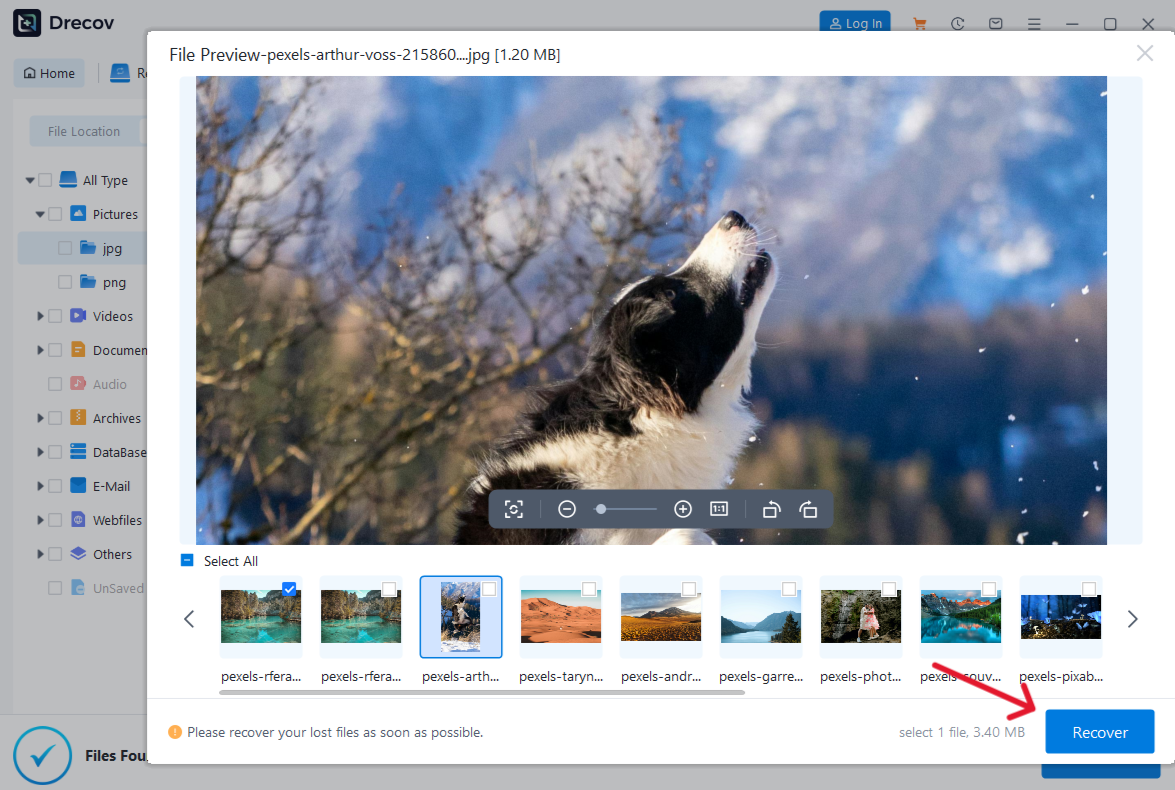
Step 4: Recover Elsewhere and Confirm the Output
Recover projects to the alternate device and keep application repair away from the loss volume. If the output for this an access-violation crash threatens local work case is not where expected, inspect Drecov Folder or Recovery Folder before scanning again. Open recovered documents, inspect photos, play media, test archives, and compare the result with cloud or external backups. Keep the original source unchanged until the an access-violation crash threatens local work checks pass and the result has a second verified copy.
Step 5: Repair Only After Verification
Complete recovery and verification before creating recovery media on a reused USB, deleting partitions, factory restoration, clean installation, initialization, or formatting. Drecov does not repair physical damage, remove malware, fix Windows or applications, or guarantee recovery of overwritten data for this an access-violation crash threatens local work case. Those boundaries determine when repair tools or a specialist should take over for this an access-violation crash threatens local work case.
Retest the Faulting Application Safely
Open recovered documents, inspect photos, play media, test archives, and compare the result with cloud or external backups. Use separate recovery destination when exact identity matters. Retain the recovered set and any disk image until the original problem has remained stable through normal use for this an access-violation crash threatens local work case.
0xc0000005 Questions Worth Answering
Does Dell OS Recovery Tool back up personal files?
No. Its primary job is creating recovery media and supporting operating-system restoration.
Will creating the USB erase it?
Yes. Dell warns that the selected USB is formatted.
Is SupportAssist OS Recovery the same tool?
They are related Dell recovery paths, but availability and workflow differ by system.
Can Drecov create Dell recovery media?
No. Drecov recovers files before the Dell restoration process.
Should I reinstall on a clicking disk?
No. Stop and pursue imaging or professional recovery first.
For a related safeguard in the an access-violation crash threatens local work branch, review verify recovered files.
Conclusion
Dell OS Recovery Tool downloads a recovery image for a supported Dell service tag and writes bootable recovery media. Protect important local data before broad repair, follow the evidence toward the narrowest suitable action, and verify the outcome for this an access-violation crash threatens local work case. When files are genuinely missing while an access-violation crash threatens local work, Drecov supplies Quick Scan, Deep Scan, preview, and Lost Partition Recovery. Also, recovery to another healthy destination.






