







For cannot lock current drive chkdsk, protect the original data first. When CHKDSK says it cannot lock the current drive, Windows is often using the volume you asked it to repair. That is common for C:. A repair pass needs exclusive access and may offer to run at the next restart. Do not press Y automatically if important files are not backed up or the disk has been dropping offline. First decide whether the problem is merely an in-use volume or a storage device whose data should be recovered before further repair writes.
Cannot lock current drive chkdsk: safe diagnosis
Microsoft’s CHKDSK command documentation explains that the /f option fixes errors and must lock the drive. If Windows has open files there, CHKDSK can offer to schedule the check for the next restart. That prompt is not proof that the disk is broken. It is a request for a time when the volume is not actively in use. On the system partition, that usually means before Windows fully starts.
Record the command you entered, the drive letter, and the exact output. `chkdsk C: /f` is different from a status-only `chkdsk C:` and from a more intensive `/r` pass. If you omitted the drive letter, the current working drive might not be the one you intended. Do not repeat commands with extra switches until you know which volume is being targeted and whether you have protected its contents.
A different message, such as “Cannot open volume for direct access,” may involve another driver or service holding the volume. Severe read errors, disconnects, or a disk that disappears from firmware point toward hardware trouble instead. The I/O device error triage addresses that separate evidence. Grouping these cases under one generic “CHKDSK failed” label leads to unsafe advice.
Two Questions Before You Schedule a Check
Are the important files already safe?
CHKDSK with repair switches modifies file-system structures. If the affected volume holds the only copy of valuable data, first copy accessible files to another healthy drive. Verify several of those copies, not just the folder names. If normal copying fails because the disk is unstable, stop and consider an image or professional recovery. A scheduled repair can change the evidence that file-recovery software might otherwise use.
Is the storage stable enough to repair?
Check whether the drive appears consistently at its expected capacity and reads without repeated disconnects. A clicking HDD, sudden zero-capacity report, or escalating I/O errors is not a good target for repeated CHKDSK attempts. Power it down when appropriate and ask a specialist about controlled imaging. Software repair does not fix failing heads or electronics. A healthy drive with a busy C: volume is a very different case.
If the issue is a removable drive held open by an application, close file browsers, backup software, and programs that use the volume. Safely eject when possible. Avoid forcing a dismount while applications may have unsaved work. Even if closing the app releases the lock, back up important files before running a modifying repair pass.
When Scheduling CHKDSK Is Reasonable
After needed data is backed up or recovered and the drive is stable, a scheduled check may be appropriate for logical file-system errors on the system volume. At the prompt asking whether to check the volume at the next restart, answer Y only after reviewing the target and risk. Save other work, close applications, and restart at a time when the check can finish. Do not cut power because progress appears slow on a large volume. If the disk shows hardware symptoms during the process, seek professional guidance rather than repeatedly restarting it.
For a non-system volume, closing applications may allow CHKDSK to obtain the lock without a reboot. A forced dismount option invalidates open handles, which can disrupt work. Treat that as a deliberate administrative action, not a shortcut for a drive whose health is unknown. If the target is a shared or managed volume, coordinate with the responsible administrator first.
After the check, inspect the reported findings and confirm that important files still open. A cleaner file-system report does not demonstrate that every document is intact or that the physical drive is reliable. Make a verified backup, then investigate any repeated storage errors separately. The existing read-only CHKDSK issue is related but different: it concerns a check that cannot proceed in a non-repair mode, not the ordinary exclusive-lock request for /f.
Recover Files Before a Risky Repair
If a stable Windows-readable volume contains missing or inaccessible files, PandaOffice Drecov provides a file-recovery path before CHKDSK changes the source. It supports Windows PCs, hard drives, SSDs, USB devices, SD cards, and external drives. Its read-only recovery mode, Quick Scan, Deep Scan, filtering, and preview help search and assess candidates. Lost Partition Recovery can find files from a missing partition; it does not repair hardware or guarantee a partition-table rebuild. Neither Drecov nor CHKDSK can restore fully overwritten bytes.
⚠ Warning: Install it on a drive different from the one where your data was lost to prevent overwriting.
Start by checking backups and stopping new writes to the affected partition. Do not install recovery software there. Prepare another healthy drive for output. If the source clicks, disconnects, or reports severe read errors, do not keep scanning it; imaging or a specialist is safer. For a stable source, use the Drecov home page to obtain the current Windows application before following the workflow below.
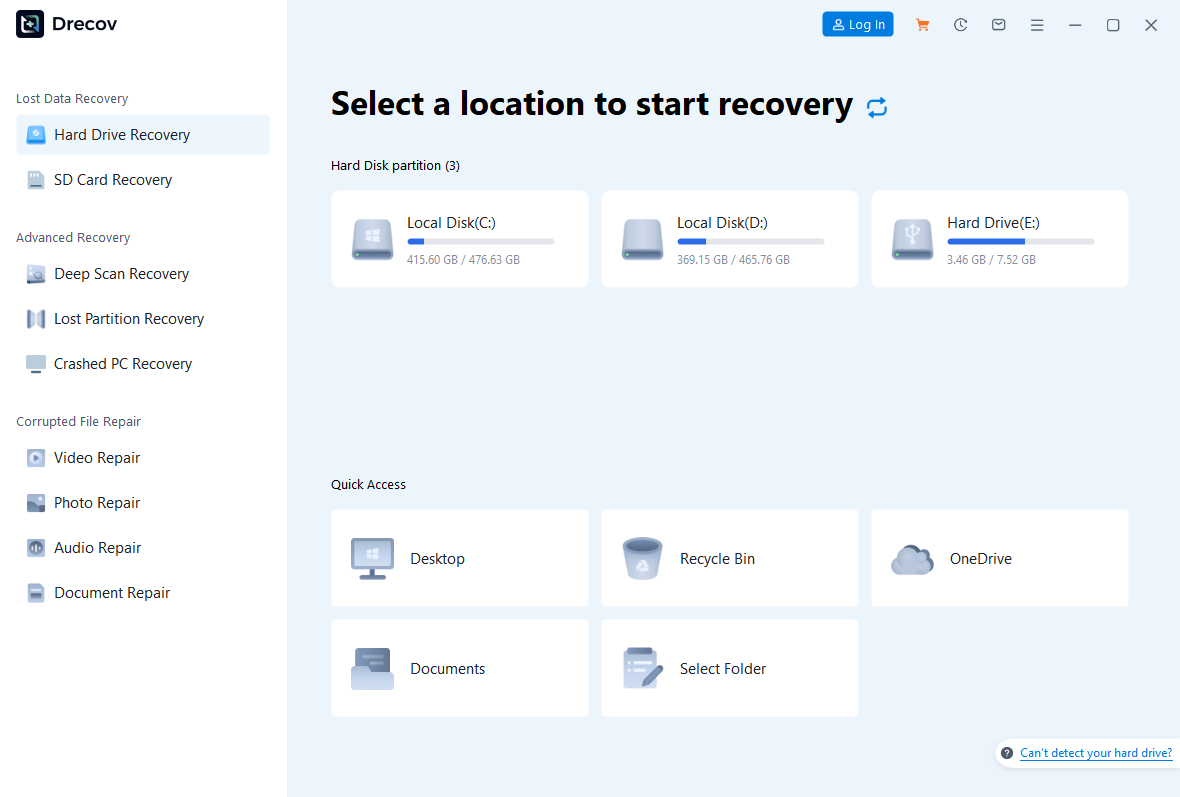
Step 1: Open Drecov and select the affected volume
Choose the drive named in the CHKDSK command, after verifying its size and identity. If the partition is missing but the physical disk is stable and recognized, select the appropriate Lost Partition Recovery route. Do not initialize, format, or create a new volume to make it appear. If the loss is on C:, keep installation and output off the affected partition where practical.
Step 2: Start Quick Scan
Run Quick Scan and inspect recognizable folder paths and file types. If the original file system is damaged, names may be incomplete. Note which critical files appear, but do not treat a result count as a finished recovery. Stop if the device begins stalling or disconnecting.
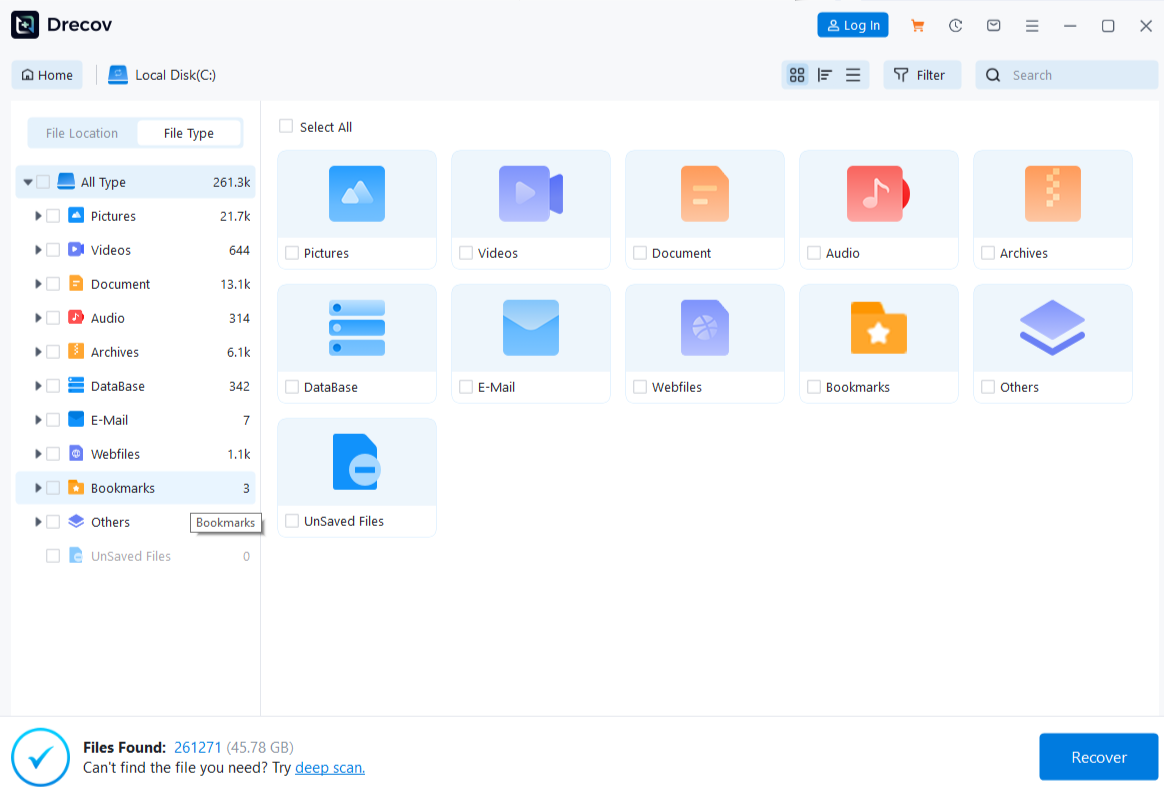
Step 3: Deep Scan only while the disk remains stable
It helps diagnose cannot lock current drive chkdsk without changing the source data. If essential files are missing after the first pass, use Deep Scan on the same stable device. Broader findings can include generic names or duplicates. On a drive with fresh read errors or physical symptoms, do not make Deep Scan the next default action; obtain an image or specialist assessment instead.
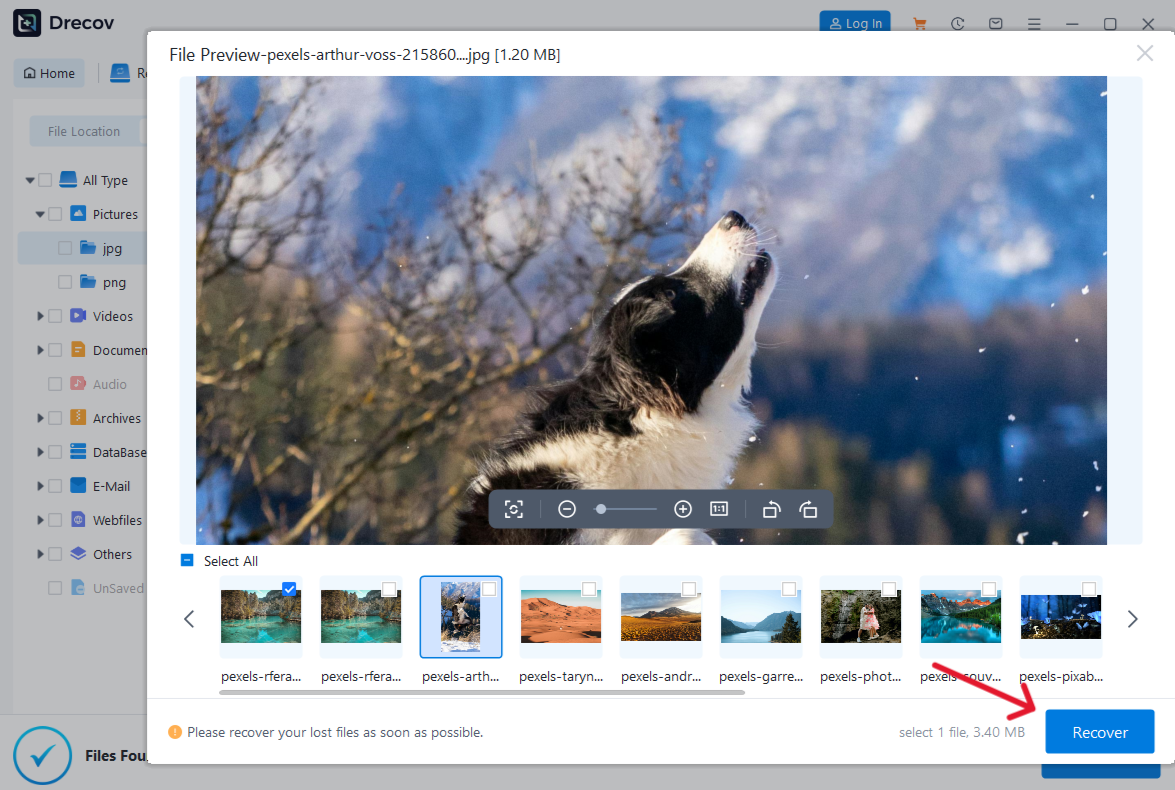
Step 4: Filter and preview meaningful samples
This check is especially useful for cannot lock current drive chkdsk. Narrow by path, name, and file type where available. Preview documents, photos, and video that matter to you. A first-page preview does not certify a whole document, and a thumbnail does not prove the full image is intact. Choose a small representative set to export and test before selecting a large recovery batch.
Step 5: Export to another disk and verify
Recover files to the separate healthy destination, never to the CHKDSK target. If the export folder seems empty, inspect its Drecov folder or Recovery folder before rescanning C:. Open a sample across important file types and make another backup if possible. Only after verification should you schedule CHKDSK, force a dismount, or attempt other file-system repair.
⚠ Warning: Install it on a drive different from the one where your data was lost to prevent overwriting.
Why More CHKDSK Switches Are Not a Diagnosis
The `/r` switch includes repair behavior and analyzes physical disk errors at the file-system level. It is not a cure for mechanical failure and can impose substantial reading on a weak device. `/x` forces a dismount and invalidates open handles. Neither is a harmless way around uncertainty. Choose switches only after confirming the drive, understanding the reported fault, and protecting data.
Likewise, a read-only status check on an active partition can produce confusing reports because it cannot lock the drive. Do not panic over one message or assume the file system needs rewriting. Compare the command, event logs, and actual file access. If files open normally and no errors recur, investigate whether the initial command was simply run against a busy system volume.
For broader NTFS repair context, the NTFS command-line safety explanation separates access repair from data extraction. The ordering remains the same: protect what matters, evaluate hardware, then repair a stable source if needed.
Answers to Common Lock Questions
Why does CHKDSK keep naming C:?
If no target is specified, the command may operate on the current drive. Windows also uses C: continuously, making an exclusive repair lock unlikely while the system is running. Confirm the drive letter in the command and the prompt before scheduling anything.
Does the lock message mean files are damaged?
No. It says CHKDSK cannot get exclusive access at that moment. The volume may be healthy and simply busy. Assess real symptoms, backups, and disk stability rather than treating the lock message as a diagnosis.
Can I answer N and come back later?
Yes. If you have not backed up important data or are unsure which drive was selected, decline the scheduled check. You can investigate and run an appropriate check later. Do not let the prompt force a rushed decision.
Should I run the repair from recovery media?
An offline environment may make a volume available, but it does not remove repair-write risks or physical failure. Recover or image important data first. Use a correct, trusted environment and verify the target before any modifying command.
What if the problem returns after a completed check?
Repeated corruption may indicate software, power, connection, or hardware issues. Preserve current files, review the device’s health, and avoid cycling through repair commands. Replace a suspect drive rather than relying on a temporarily clean report.
Choose the Next Action, Not the Fastest Prompt
“Cannot lock current drive” commonly reflects an in-use Windows volume, and a scheduled restart can be sensible once data is protected and the disk is stable. It is not an instruction to force a dismount or run more intensive switches. For missing local files on a readable source, Drecov can search and export candidates to another healthy device before repair. A clicking or disconnecting drive needs imaging or professional help instead. The safe decision follows the drive’s evidence, not the urgency of the Y/N prompt.
⚠ Warning: Install it on a drive different from the one where your data was lost to prevent overwriting.





