







Losing precious photos can feel devastating. Whether it’s family memories, wedding pictures, travel albums, or professional photography files, accidental deletion or storage corruption happens more often than most people expect. Fortunately, a reliable photo recovery program can help restore lost images from hard drives, SSDs, memory cards, USB flash drives, and even smartphones.
In this comprehensive guide, we will explore everything you need to know about choosing the best photo recovery program, how photo recovery software works, essential features to look for, and tips to maximize your recovery success.
What Is a Photo Recovery Program?
A photo recovery program is specialized software designed to recover deleted, lost, corrupted, or formatted image files from digital storage devices. These programs scan storage media for recoverable photo data and restore files that may no longer be visible through the operating system.
Most modern photo recovery tools support common image formats such as:
- JPG / JPEG
- PNG
- RAW (CR2, NEF, ARW, etc.)
- TIFF
- GIF
- BMP
- PSD
- HEIC
Advanced recovery software can also retrieve videos, documents, and audio files alongside photos.
Common Causes of Photo Loss
Photos can disappear for many reasons. Understanding the cause helps determine the chances of successful recovery.
1. Accidental Deletion
Many users unintentionally delete important images while cleaning up storage devices or emptying the Recycle Bin.
2. Formatting Errors
Formatting an SD card or hard drive without backing up files can instantly erase thousands of photos.
3. Virus or Malware Attacks
Malicious software may corrupt image files, encrypt data, or hide files completely from your view.
4. Corrupted Storage Devices
Memory cards, USB drives, and hard disks may become unreadable due to physical wear or logical file system corruption.
5. System Crashes
Unexpected operating system failures or sudden power outages can result in inaccessible or lost photo files.
6. Partition Loss
Deleting or damaging disk partitions during disk management tasks may make entire photo collections disappear.
How Does a Photo Recovery Program Work?
When photos are deleted, they are not immediately erased from the storage device. Instead, the operating system marks that specific storage space as available for new data. Until that space is overwritten by new files, a photo recovery program can scan the raw storage sectors and reconstruct the deleted files.
Most recovery programs use two primary scanning methods:
- Quick Scan: This method searches recently deleted files by reading the file system index. It is exceptionally fast but less thorough.
- Deep Scan: This mode analyzes the entire storage structure sector by sector. It increases recovery chances for older, fragmented, or formatted files.
Deep scanning is especially useful for:
- Corrupted memory cards
- RAW image recovery
- Formatted drives
- Lost partitions
Features to Look for in the Best Photo Recovery Program
Not all recovery tools offer the same capabilities. Here are the most important features to consider before choosing software.
- User-Friendly Interface: A simple and intuitive interface makes recovery easier, especially for beginners who dislike complex commands.
- Multiple File Format Support: Choose software that supports both standard consumer images and professional RAW file formats.
- Preview Function: Previewing recoverable photos before restoration helps confirm file quality and ensures you download the right items.
- Deep Scan Technology: Deep scanning improves recovery success for severely damaged or formatted devices.
- Cross-Platform Compatibility: The best programs provide flexible support for both Windows and macOS systems.
- External Device Support: Ensure compatibility with SD cards, CF cards, USB drives, external hard disks, digital cameras, and drones.
- Safe Recovery Process: Reliable software performs read-only scans to avoid overwriting existing data during the analysis.
⚠ Warning: Install it on a drive different from the one where your data was lost to prevent overwriting.
Best Situations to Use a Photo Recovery Program
Photo recovery software can be extremely useful in several situations.
Recover Deleted Vacation Photos
Accidentally deleting travel photos from an SD card is common. A photo recovery program often restores them quickly.
Restore Wedding Photography Files
Professional photographers frequently use recovery tools after memory card corruption to save irreplaceable commercial work.
Recover Smartphone Images
Some programs support Android and iPhone photo recovery via direct storage scanning.
Retrieve Photos from Damaged Drives
Advanced software can scan partially corrupted storage devices and extract recoverable images safely.
Why Professional Photographers Need a Photo Recovery Program
Professional photographers rely heavily on digital storage devices during shoots and editing sessions. Losing RAW files can mean losing hours of work and valuable client projects.
A reliable photo recovery program provides:
- Emergency recovery during critical commercial projects.
- Native RAW image support for top camera brands.
- Large-capacity storage scanning for massive multi-terabyte drives.
- Faster recovery processes to meet tight client deadlines.
- Backup restoration options for corrupted database files.
Photographers using DSLR or mirrorless cameras should always keep recovery software available as part of their daily workflow.
Tips to Increase Photo Recovery Success
If you lose photos, taking immediate action can significantly improve recovery results.
- Stop Using the Device Immediately: Continuing to use the storage device may overwrite deleted data permanently.
- Avoid Saving New Files: Do not copy new images, videos, or documents to the affected device.
- Use Trusted Recovery Software: Low-quality tools may damage recoverable files further or complicate the storage logical structure.
- Create a Disk Image: Some advanced recovery programs allow disk imaging before scanning to secure a bit-by-bit backup copy.
- Perform Deep Scans: Deep scans detect hidden and fragmented image files more effectively than basic checks.
Best Devices Supported by Photo Recovery Programs
High-quality recovery software supports a wide range of devices.
Memory Cards
- SD cards
- microSD cards
- CF cards
- XD cards
Storage Drives
- HDDs
- SSDs
- External hard drives
Portable Devices
- USB flash drives
- Smartphones
- Tablets
Digital Equipment
- DSLR cameras
- Drones
- Camcorders
Free vs Paid Photo Recovery Programs
Many users wonder whether free software is sufficient or if paid tools are worth the investment.
Free Photo Recovery Software
- Advantages: No upfront cost; suitable for small recovery tasks; basic scanning features.
- Limitations: File recovery limits; slower scan speeds; limited file format support.
Paid Photo Recovery Software
- Advantages: Advanced deep scan technology; better recovery rates; technical support; RAW file compatibility; large storage support.
For important memories or professional work, paid solutions are often more reliable.
Advanced Image Restoration Using PandaOffice Drecov Data Recovery Software
When native system tools fail, you need a professional photo recovery program to dig deeper. The PandaOffice Drecov data recovery software features an advanced parsing engine that can reconstruct over 3,000 file types from complex storage devices. It achieves a 99.8% recovery success rate across various data loss scenarios while operating in a secure, read-only mode.
⚠ Warning: Always install the software on a healthy drive (like your C: drive) and never on the drive or SD card that holds your lost photos, or you risk overwriting them permanently.
Follow these clear, non-technical steps to safely retrieve your lost images:
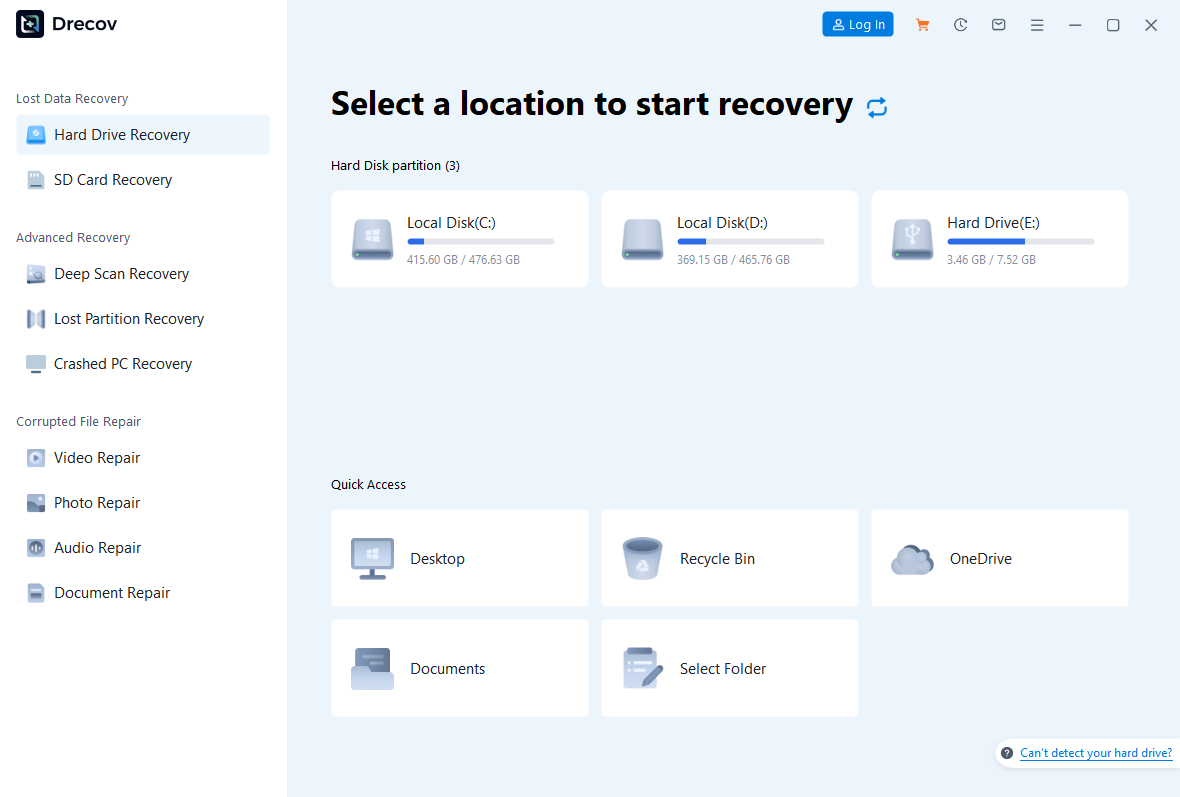
- Step 1: Connect and Select Your Target Storage Media. Device Selection.
Insert your external storage device, such as an SD card or USB flash drive, into your computer if needed. Launch the program to view the clean graphical dashboard. Look under the local disks or external drives section, click on the specific drive letter or partition where your photos used to live, and prepare to begin.
- Step 2: Initiate the Automated Scan Process. Scanning Phase.
Click the Scan button to begin looking for missing data. The program automatically deploys an optimized scanning engine, starting with a fast analysis before executing a thorough sector-by-sector scan. You can monitor the progress bar or pause the scan at any time if you see your files appear early.

- Step 3: Filter and Preview Your Found Photos. Verification Phase.
Once the scan completes, look at the sidebar menu to filter your results by file type, size, or modification date. Click on individual image files to generate a free, unlimited preview. This key operation point allows you to confirm file health and image quality before finalizing the restoration process.
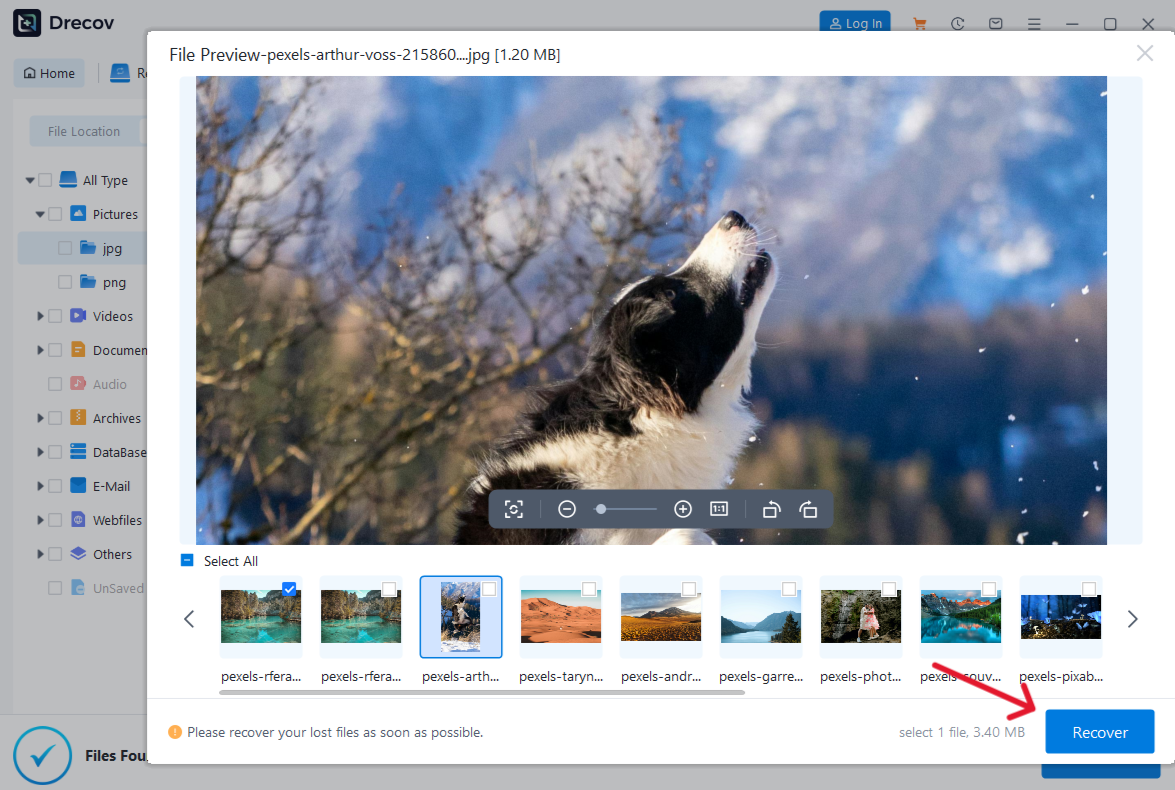
- Step 4: Execute Secure Photo Recovery. Final Restoration.
Mark the checkboxes next to the photos you wish to retrieve, then click the Recover button at the bottom right.
Critical Warning: Choose a completely separate storage destination, such as an external hard drive or a different local partition, to save your recovered files. Saving them back to the original drive can corrupt the remaining data.
Internal Resources for System Restoration and Storage Upkeep
Data management often involves more than just recovering individual images. You may need to handle compressed backup archives, restore system checkpoints, or format mobile media properly. After completing your photo recovery steps, check out these helpful guides to master related storage tasks:
- Learn how to unzip a file on Windows and recover lost data to handle compressed photographic archives smoothly.
- Discover how to restore computer to an earlier date on Windows to fix systemic configuration errors that hide your local files.
- Read the complete guide to PandaOffice Drecov to get an in-depth review of this data suite’s features, performance evaluations, and comprehensive capabilities.
How to Restore Photos with Native Windows Tools
Before using a paid photo recovery program, you can try built-in system tools. These options work best if your files were recently deleted or if you maintain system backups.
Method 1: Recovering from the Windows Recycle Bin
When you delete a photo on Windows, it usually goes to the Recycle Bin first.
- Step 1: Double-click the Recycle Bin icon on your desktop.
- Step 2: Locate your deleted photos or type the file name in the search bar.
- Step 3: Right-click the selected photos and click Restore. This returns the files to their original folder.
Method 2: Restoring via Windows File History
If you enabled File History before losing your photos, you can restore previous versions of your folders.
- Step 1: Open the Start menu, type Control Panel, and press Enter.
- Step 2: Navigate to System and Security > File History.
- Step 3: Click Restore personal files in the left menu.
- Step 4: Browse the backups by date, select your photo folder, and click the green Restore button.
Common Mistakes During Photo Recovery
Avoiding these tactical mistakes can drastically improve your recovery success rates.
Installing Software on the Same Drive
This remains the number one mistake made by casual users. Downloading or installing any file onto the damaged partition can overwrite the deleted images before the scan even starts.
Interrupting the Scan Process
Deep scans require significant time when dealing with large external drives. Do not stop the engine prematurely, as fragmented files require complete sector mapping to stitch back together.
Ignoring Regular Backup Strategies
A photo recovery program is an excellent emergency safety net, but it should never replace a structured 3-12 backup system. Always keep copy variations across physical and cloud storage networks.
Are Photo Recovery Programs Safe?
Most reputable recovery tools are perfectly safe when downloaded directly from trusted official sources. However, users should strictly avoid cracked software, pirated torrents, or suspicious utility downloads. Malicious entities often disguise trojans or keyloggers as free data utilities.
Safe recovery software typically offers:
- Read-only scanning operations that never write data to the target disk.
- Verified installation packages free of malware or unwanted adware bundles.
- Secure recovery methods that protect user privacy during local processing.
- Real-time file preview features that run within a sandbox container.
Always verify software digital signatures before completing an installation on your workstation.
Best Practices to Prevent Future Photo Loss
Using preventive measures reduces the risk of losing important images again.
- Maintain Multiple Backups: Store photos on external drives, cloud storage, and local NAS systems simultaneously.
- Use High-Quality Memory Cards: Avoid cheap, unbranded storage devices, which are prone to sudden flash memory controller failures.
- Safely Eject Devices: Always use the “Safely Remove Hardware and Eject Media” option in your system tray before pulling out a USB drive or SD card.
- Update Antivirus Software: Keep your security definitions up to date to block malicious ransomware from locking your media folders.
- Regularly Check Storage Health: Use diagnostic tools to monitor SMART data attributes on your SSDs and HDDs to catch failing hardware early.
Conclusion
A dependable photo recovery program can rescue irreplaceable memories and valuable professional work after accidental deletion, formatting, corruption, or unexpected device failure. Whether you are a casual smartphone user or a seasoned professional commercial photographer, investing in reliable recovery software provides immense peace of mind and increases the chances of successfully restoring lost photos.
The ultimate key to successful photo recovery is acting quickly, avoiding any further data overwriting, and using trusted recovery tools equipped with advanced scanning capabilities. Combined with disciplined backup habits and proper device handling, professional recovery applications become an essential, foundational part of modern digital asset management.






