







Understanding Data Recovery on Windows Systems
Why Data Recovery Is Important for Windows Users
Modern computers store enormous amounts of data, from personal documents and photos to business files and system information. However, data loss can occur unexpectedly due to accidental deletion, hardware failure, formatting errors, malware attacks, or system crashes. When this happens, reliable data recovery windows solutions become essential.
Windows data recovery refers to the process of retrieving lost or inaccessible files from storage devices running the Windows operating system. These devices may include internal hard drives, external drives, USB flash drives, memory cards, and SSDs. Using the right data recovery software for windows, users can scan damaged storage devices and restore deleted files that may still exist in hidden sectors of the drive.
Many people assume that deleting a file permanently removes it from the system. In reality, Windows usually marks the storage location as available while leaving the actual file data intact until new data overwrites it. Because of this behavior, a reliable data recovery tool for windows can often retrieve files even after they have been removed from the recycle bin.
The importance of data recovery windows 10 tools has increased as digital storage continues to grow. Businesses rely on these tools to restore critical data after system failures, while individuals may use them to recover family photos, videos, or important documents.
⚠️ Warning: When data loss occurs, avoid saving new files to the affected drive. New data may overwrite the deleted files and reduce recovery success rates.
Common Causes of Data Loss in Windows
Understanding Why Files Disappear
Before selecting a data recovery program windows, it is helpful to understand why files become lost in the first place. Data loss can occur in many situations, and identifying the cause often determines the most effective recovery approach.
One of the most common causes is accidental deletion. Users may mistakenly delete files while organizing folders or cleaning their systems. When files are removed from the recycle bin, they may appear permanently deleted even though the data might still be recoverable through recovery data windows tools.
Another major cause is disk formatting. Formatting a storage device erases its file system structure, making stored files inaccessible. However, many data recovery programs for windows can scan the raw disk sectors and reconstruct lost files after formatting.
System crashes and operating system corruption also contribute to data loss. For example, a failed update or sudden shutdown may damage system partitions. In these cases, windows data recovery software may be required to extract files before repairing the system.
Hardware issues are another significant factor. Hard drive failures, damaged SSD controllers, or faulty USB drives can prevent the operating system from reading stored data.
Virus or ransomware infections may also delete or encrypt files. Some malware deliberately removes user files or damages file systems.
⚠️ Warning: Continuing to use a failing drive may cause permanent damage. If unusual noises or slow performance occur, stop using the device immediately.
Key Features of Effective Windows Data Recovery Software
What Makes a Good Data Recovery Tool
Choosing the right data recovery softwares for windows can significantly improve the chances of retrieving lost files. Not all tools provide the same level of functionality, so understanding the key features of a reliable recovery solution is important.
One of the most important features is deep scanning capability. A powerful data recovery tool for windows should be able to scan both the file system and raw disk sectors. This allows the software to locate files even when the file system is damaged or missing.
Another important feature is file preview support. Many windows data recovery software tools allow users to preview files such as images, documents, and videos before restoring them. This ensures that the correct files are selected for recovery.
Compatibility with multiple storage devices is also essential. Effective data recovery program windows tools should support internal hard drives, SSDs, USB drives, memory cards, and external storage devices.
Recovery speed is another factor. Modern recovery software often uses advanced scanning algorithms to detect files quickly while maintaining accuracy.
Support for multiple file types is equally important. Professional data recovery programs for windows typically support hundreds of file formats, including documents, photos, audio files, archives, and videos.
Finally, user-friendly interfaces make the recovery process accessible to beginners. Many programs provide step-by-step recovery workflows so users can recover files without advanced technical knowledge.
Solutions: Methods to Perform Data Recovery on Windows
Method 1: Restore Deleted Files from the Recycle Bin
One of the simplest ways to recover deleted files is by restoring them from the Windows recycle bin. When users delete files using standard deletion methods, Windows temporarily moves them to the recycle bin instead of removing them permanently.
Test Environment
Operating System: Windows 10 Pro (22H2)
Storage Device: 512GB SSD
User Account: Administrator
Steps
- Open the Recycle Bin from the Windows desktop.
- Browse through the list of deleted files.
- Locate the file or folder that needs to be restored.
- Right-click the file and select Restore.
- The file will return to its original location.
This method works well for recently deleted files that have not yet been permanently removed. It is the fastest recovery option and requires no additional data recovery software for windows.
However, if the recycle bin has been emptied or the file was deleted using the Shift+Delete shortcut, this method will not work.
In those situations, specialized data recovery programs for windows may be required to retrieve the missing files from disk sectors where the data still exists.
Method 2: Restore Previous File Versions in Windows
Windows includes a built-in feature called Previous Versions, which can restore earlier copies of files or folders if system protection or file history was previously enabled.
Test Environment
Operating System: Windows 11 Home
Storage Device: External hard drive backup
Backup Feature: File History enabled
Steps
- Navigate to the folder where the deleted file was originally located.
- Right-click inside the folder and select Properties.
- Open the Previous Versions tab.
- Select an earlier version of the folder from the available restore points.
- Click Restore to recover the file.
This method allows users to retrieve older versions of files without installing additional windows data recovery software.
The Previous Versions feature relies on restore points or backup snapshots created by the system. If no restore points exist, this recovery method may not be available.
While convenient, this solution works best for documents and files that were previously backed up or modified multiple times.
⚠️ Warning: Restoring previous versions may overwrite current files if they share the same name.
Method 3: Use Windows File History for Data Recovery
Another built-in recovery option in Windows is the File History feature. This backup system automatically saves copies of files stored in important folders such as Documents, Pictures, and Desktop.
Test Environment
Operating System: Windows 10 Home
Backup Device: 1TB external hard drive
Backup Feature: File History enabled
Steps
- Connect the backup drive used for File History.
- Open Control Panel and select File History.
- Click Restore personal files.
- Browse through the available backup snapshots.
- Select the file or folder to restore.
- Click the Restore button.
File History works as a built-in data recovery tool for windows that protects personal files from accidental deletion.
Because it stores multiple versions of files, users can restore earlier copies even if the current version becomes corrupted.
However, File History must be enabled before the data loss occurs. If the feature was never activated, it cannot retrieve lost files.
⚠️ Warning: Ensure the backup drive remains connected during restoration to prevent incomplete recovery.
Method 4: Recover Lost Files Using Professional Windows Data Recovery Software
When built-in Windows recovery features cannot restore missing files, specialized data recovery software for windows becomes necessary. These programs scan storage devices at a deeper level and can detect files that no longer appear in the file system.
A professional solution such as Pandaoffice Drecov can help retrieve files lost due to deletion, formatting, partition errors, or system crashes. Unlike basic recovery methods, advanced windows data recovery software analyzes disk sectors and reconstructs file structures that Windows can no longer detect.
Test Environment
Operating System: Windows 10 Pro (22H2)
Storage Device: 1TB internal HDD
File Loss Scenario: Permanently deleted files using Shift + Delete
Recovery Tool: Pandaoffice Drecov (latest version)
Steps
- Download and install Pandaoffice Drecov on the computer.
- Launch the program and choose the drive where the files were lost.
- Start a quick scan to locate recently deleted files.
- If necessary, run a deep scan to search hidden disk sectors.
- Preview the detected files to confirm they are intact.
- Select the files you want to recover.
- Save the recovered files to a different storage device.
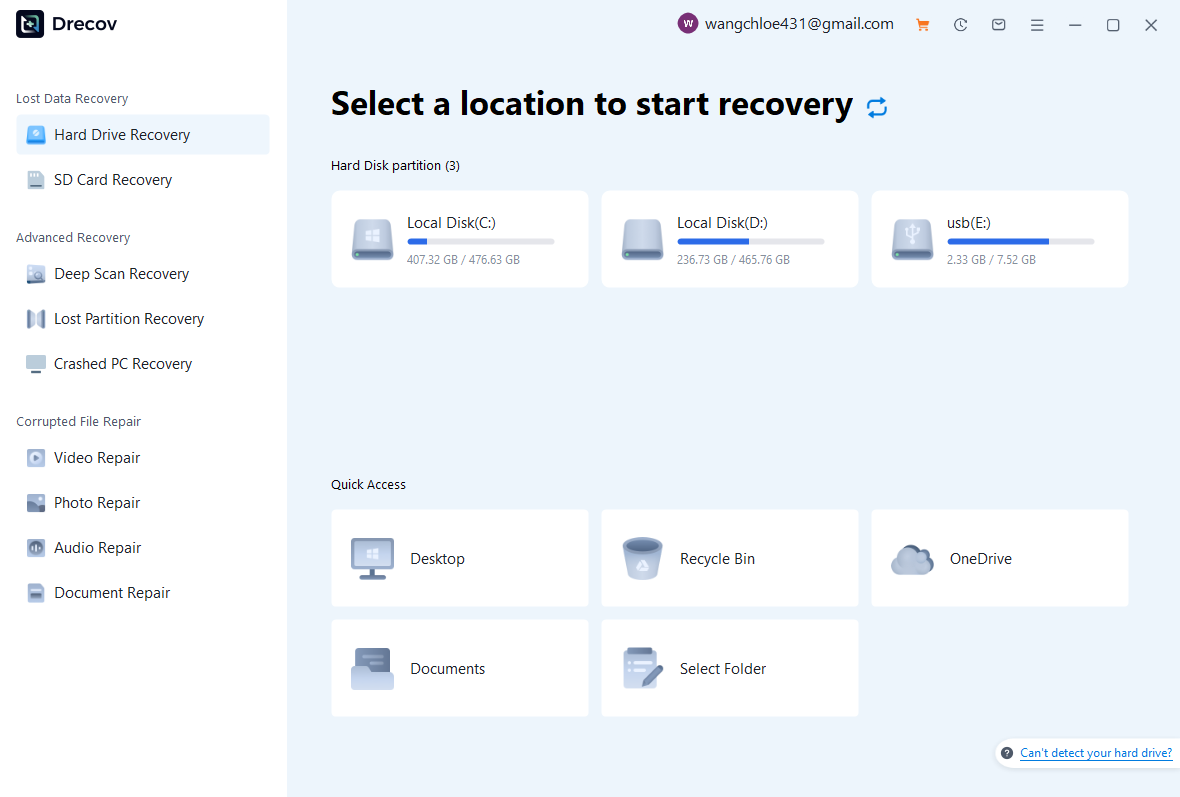
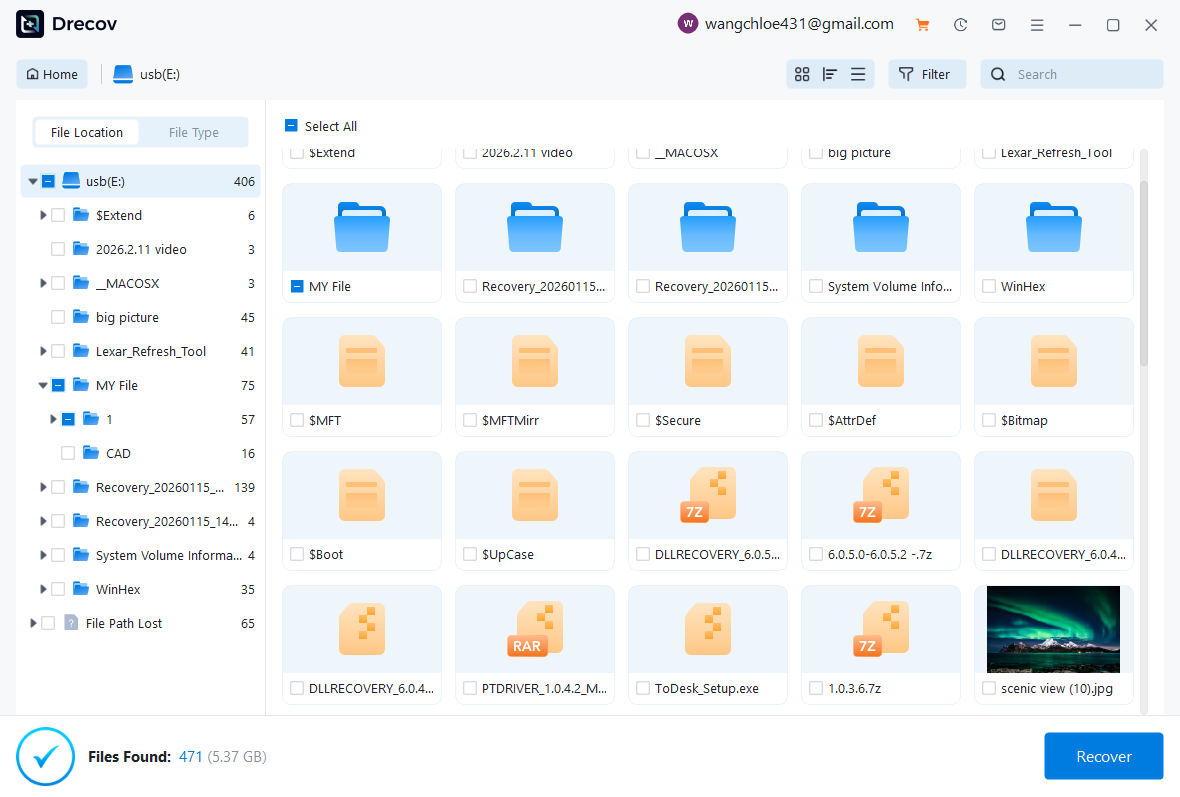

This approach works effectively for many data recovery windows 10 scenarios. By analyzing the disk structure directly, the software can retrieve documents, photos, videos, and other file types that standard recovery tools cannot locate.
⚠️ Warning: Always recover files to a separate drive to prevent overwriting recoverable data.
Method 5: Recover Data from Formatted Drives
Formatting a storage device often appears to erase all stored files. However, in many cases the formatting process simply removes the file system structure while leaving the actual data sectors intact. With the right data recovery program windows, it is sometimes possible to retrieve files from formatted drives.
Test Environment
Operating System: Windows 11 Pro
Storage Device: 256GB USB flash drive
File Loss Scenario: Accidental quick format
Steps
- Connect the formatted drive to the computer.
- Launch a data recovery tool for windows capable of scanning formatted disks.
- Select the formatted storage device from the list of available drives.
- Start a full scan to detect previously stored files.
- Wait for the scan to analyze the disk sectors.
- Preview recoverable files.
- Restore the files to another storage location.
Many data recovery programs for windows support recovery after quick formatting because the underlying data remains on the drive until it is overwritten.
This recovery method is commonly used for USB drives, memory cards, and external hard drives. It can also work for internal partitions that were accidentally reformatted during operating system installation.
⚠️ Warning: Avoid copying new files to a formatted drive before performing recovery. New data may overwrite recoverable sectors.
Method 6: Recover Data from a Corrupted or Unreadable Drive
Sometimes a storage device becomes inaccessible due to file system corruption or partition damage. Windows may display messages such as “Drive needs to be formatted before use” or “File system not recognized.” In these cases, specialized data recovery softwares for windows may still retrieve files from the damaged drive.
Test Environment
Operating System: Windows 10 Home
Storage Device: External 2TB HDD
Issue: File system corruption after unexpected power failure
Steps
- Connect the corrupted drive to the computer.
- Open a windows data recovery software application capable of raw disk scanning.
- Select the inaccessible drive as the scan target.
- Run a deep scan to analyze all sectors.
- Wait until the scanning process identifies recoverable files.
- Use the preview feature to confirm file integrity.
- Restore selected files to a healthy storage device.
Corrupted file systems often hide data from the operating system even though the actual files still exist on the disk. Advanced recovery data windows tools can reconstruct file fragments and rebuild folder structures.
This method can recover files from partitions damaged by power failures, improper device removal, or software errors.
⚠️ Warning: Do not attempt to format the drive before recovery unless absolutely necessary.
FAQ About Windows Data Recovery
Can Windows Recover Deleted Files Without Software?
Yes. Windows provides several built-in recovery options such as the Recycle Bin, Previous Versions, and File History. These features can restore recently deleted files or earlier file versions. However, if the files were permanently deleted or the recycle bin has been emptied, a specialized data recovery tool for windows may be required.
Is Free Data Recovery Software for Windows 10 Reliable?
Many free data recovery software for windows 10 tools provide limited recovery capabilities. They may allow users to recover small amounts of data without payment. However, full recovery functionality and advanced scanning features are often included in professional software versions.
Can Data Be Recovered After Formatting a Drive?
Yes, in many cases. If the drive was quick formatted and new files have not overwritten the storage sectors, data recovery windows solutions can often restore lost files. Deep scanning methods are typically required for this process.
What Types of Files Can Be Recovered?
Most data recovery programs for windows support a wide range of file types including documents, photos, videos, audio files, compressed archives, and email files. Some advanced tools also recover application data and system files.
Conclusion: Choosing the Right Windows Data Recovery Solution
Losing important files can be stressful, especially when the cause is unclear or unexpected. Fortunately, a variety of data recovery windows methods are available to help retrieve lost information from storage devices.
Simple situations such as accidental deletion can often be resolved through the recycle bin or built-in backup features. However, more serious cases—such as formatting errors, system crashes, or corrupted drives—usually require advanced windows data recovery software.
Professional recovery tools are designed to scan disk sectors and reconstruct lost files that the operating system can no longer detect. These tools are especially useful when files have been permanently deleted or when the storage device becomes unreadable.
For users facing serious data loss situations, solutions like Pandaoffice Drecov provide an effective way to recover documents, photos, and other critical files from damaged drives.
Whether you are using data recovery windows 10, searching for reliable data recovery softwares for windows, or exploring data recovery programs for windows, the key to successful recovery is acting quickly and avoiding further damage to the affected drive.
Preparing a recovery strategy and using trusted recovery tools can significantly improve the chances of restoring lost files and protecting valuable digital information.






