







In the modern digital classroom, the canvas chrome extension has transitioned from a luxury to an absolute necessity for students and educators alike. As educational ecosystems become more complex, the need for tools that bridge the gap between basic functionality and high-level productivity has never been greater. Whether you are looking to overhaul your dashboard’s aesthetics or seeking a robust canvas chrome extension to automate your grueling assignment schedule, understanding how to navigate this landscape is vital.
However, with great power comes the responsibility of managing your digital footprint. As you integrate these tools into your academic life, you may encounter technical glitches, accidental deletions, or synchronization errors. This guide not only explores the best tools available but also serves as a comprehensive manual for data recovery, ensuring your hard work remains safe.
What Is a Canvas Chrome Extension?
Definition and Core Functionality
A canvas chrome extension is a specialized browser add-on designed to enhance, modify, and optimize the Canvas Learning Management System (LMS). While the base Canvas platform provides a sturdy foundation for course management, it often lacks the granular customization that power users crave. By installing a canvas chrome extension, you are essentially injecting custom JavaScript and CSS into the browser’s rendering of the site, allowing for real-time changes to the interface and functionality.
These extensions act as a layer between your browser and the Canvas servers. When you load a page, the canvas chrome extension identifies specific elements—such as the grade book, the assignment list, or the dashboard—and applies enhancements. This could range from simple color changes to complex data extraction algorithms that help you manage your workload more effectively.
How Chrome Extensions Work with Canvas LMS
The synergy between a canvas chrome extension and the LMS is based on the Document Object Model (DOM). When you navigate to your school’s Canvas URL, the extension scans the page’s structure. If it detects a match, it triggers its programmed features. For instance, a high-quality canvas chrome extension can scrape your “To-Do” list and export it to an external calendar without you ever leaving the page.
Furthermore, these tools often use the Canvas API to pull data more reliably than simple screen scraping. This deep integration is why a canvas chrome extension can provide such a seamless user experience. However, because they interact so closely with your browser’s local storage and the site’s data, understanding how to manage that information is crucial for preventing data loss.
Why Students Use Canvas Chrome Extensions
Limitations of Native Canvas LMS
Despite its global adoption, the native Canvas interface can feel restrictive. Students often complain about the lack of a “dark mode,” the inability to see weighted grades easily, or the cluttered nature of the dashboard. The default system is designed for broad institutional stability, which often means it moves slower than the individual needs of a tech-savvy student. This is precisely where a canvas chrome extension fills the void, providing the agility that the native platform lacks.
Benefits of Browser-Based Enhancements
The primary draw of a canvas chrome extension is personalization. When you use an extension, you are no longer a passive user of a rigid system; you become the architect of your own learning environment.
- Time Management: Automate the tracking of deadlines.
- Visual Comfort: Reduce blue light exposure during late-night cram sessions.
- Efficiency: Access hidden data points, like true grade percentages, with a single click. By utilizing a canvas chrome extension, you effectively reduce the “cognitive load” required to navigate your courses, allowing you to focus entirely on the content of your studies.
Types of Canvas Chrome Extensions
Productivity and Organization Tools
These are the heavy hitters of the canvas chrome extension world. They focus on the “logistics” of being a student. From calculating what score you need on a final exam to pass a class, to merging multiple course calendars into one view, these tools are designed to save you hours of manual planning.
Visual and Accessibility Enhancements
Accessibility is a major factor in modern education. A canvas chrome extension dedicated to visual changes can implement high-contrast modes, font adjustments for dyslexia, and the much-coveted dark mode. These enhancements ensure that the platform is usable for everyone, regardless of their physiological needs.
Writing and Editing Tools
Canvas discussion boards are notorious for their basic text editors. A canvas chrome extension focused on writing can integrate advanced spell-checkers, citation generators, and AI-driven clarity improvements directly into the Canvas text box, ensuring your submissions are always top-tier.
AI-Powered Study Assistants
The newest generation of the canvas chrome extension utilizes machine learning to summarize long lecture notes or generate practice quizzes based on your course modules. These tools represent the cutting edge of educational technology.
Best Canvas Chrome Extensions in 2026
Canvas+
As we move through 2026, Canvas+ remains the gold standard. This canvas chrome extension offers a comprehensive suite of features including a “Quick Nav” sidebar and custom themes that make the dashboard look like a modern app rather than a 2010-era website.
Canvas Assistant
This canvas chrome extension is the ultimate organizer. It specializes in data visualization, showing you exactly how your grades are trending over time and highlighting upcoming deadlines that might have been buried in the “Announcements” tab.
Dark Reader
While not exclusive to Canvas, Dark Reader is the best canvas chrome extension for eye health. It perfectly inverts the bright whites of the LMS without breaking the layout of your quizzes or modules.
Grammarly
By acting as a canvas chrome extension, Grammarly ensures that every peer review and discussion post you write is grammatically sound and professional.
Kami
Kami turns Canvas into an interactive whiteboard. It is the go-to canvas chrome extension for students who need to annotate PDF assignments directly in the browser without downloading and re-uploading files.
Advanced Data Management: Protecting Your Academic Progress
While using a canvas chrome extension can vastly improve your life, it also introduces new variables into your technical setup. Updates to Chrome, the extension itself, or the Canvas platform can sometimes lead to data synchronization issues. This is why mastering data recovery is just as important as mastering the extensions themselves.
How to export data from canvas chrome extension
If you have spent months customizing your tasks and settings within a canvas chrome extension, losing that data during a browser crash would be devastating. Knowing how to export data from canvas chrome extension settings is the first step in a pro-active data strategy.
- Step 1: Click on the “Extensions” puzzle piece icon in your Chrome toolbar and select the specific canvas chrome extension you are using.
- Step 2: Navigate to the “Settings” or “Options” menu within the extension’s popup interface.
- Step 3: Look for a section labeled “Data Management,” “Backup,” or “Sync.”
- Step 4: Click on the “Export” button. This will usually generate a
.jsonor.csvfile. - Step 5: Save this file to a secure cloud storage location like Google Drive or Dropbox.
By following these steps, you ensure that your personalized configurations are safe even if you switch computers.
Backup canvas tasks and assignments extension
Many students use a specialized backup canvas tasks and assignments extension to keep a local copy of their syllabus and deadlines. This is a brilliant move for offline studying.
- Step 1: Install a reputable backup-focused canvas chrome extension from the Chrome Web Store.
- Step 2: Grant the extension “read access” to your Canvas courses.
- Step 3: Initiate a manual sync to pull all current assignment data into the extension’s local database.
- Step 4: Use the extension’s “Download” feature to save a hard copy of your task list.
- Step 5: Set an automated weekly reminder to perform this backup, especially before midterms and finals.
Recovering From the Unexpected: A Data Recovery Masterclass
Sometimes, despite our best efforts, things go wrong. An update might wipe your settings, or you might accidentally delete a crucial folder of downloaded course materials. In these scenarios, standard browser tools might not be enough.
Recover lost canvas data after extension update
It is a common frustration: you open your browser to find your canvas chrome extension has updated, and all your custom tasks are gone. To recover lost canvas data after extension update, you need to act quickly.
- Step 1: Check if the canvas chrome extension has a “Sync with Google Account” feature. Often, re-logging into your Google account will restore the settings.
- Step 2: Inspect your “Downloads” folder for any automatic backup files the extension might have created before the update.
- Step 3: If the data was stored as a local file on your hard drive that has since disappeared, stop using the drive immediately to prevent data overwriting.
- Step 4: Employ a professional-grade recovery solution to scan for the lost configuration files.
PandaOffice Drecov data recovery software
When the situation is dire—such as a hard drive failure or a major OS crash that wiped your local extension data—PandaOffice Drecov data recovery software is the most reliable tool for the job. This software is designed to dig deep into the file system to retrieve lost .json, .db, and .config files that your canvas chrome extension relies on.
⚠ Warning: Install it on a drive different from the one where your data was lost to prevent overwriting.
How to use PandaOffice Drecov for Extension Data Recovery
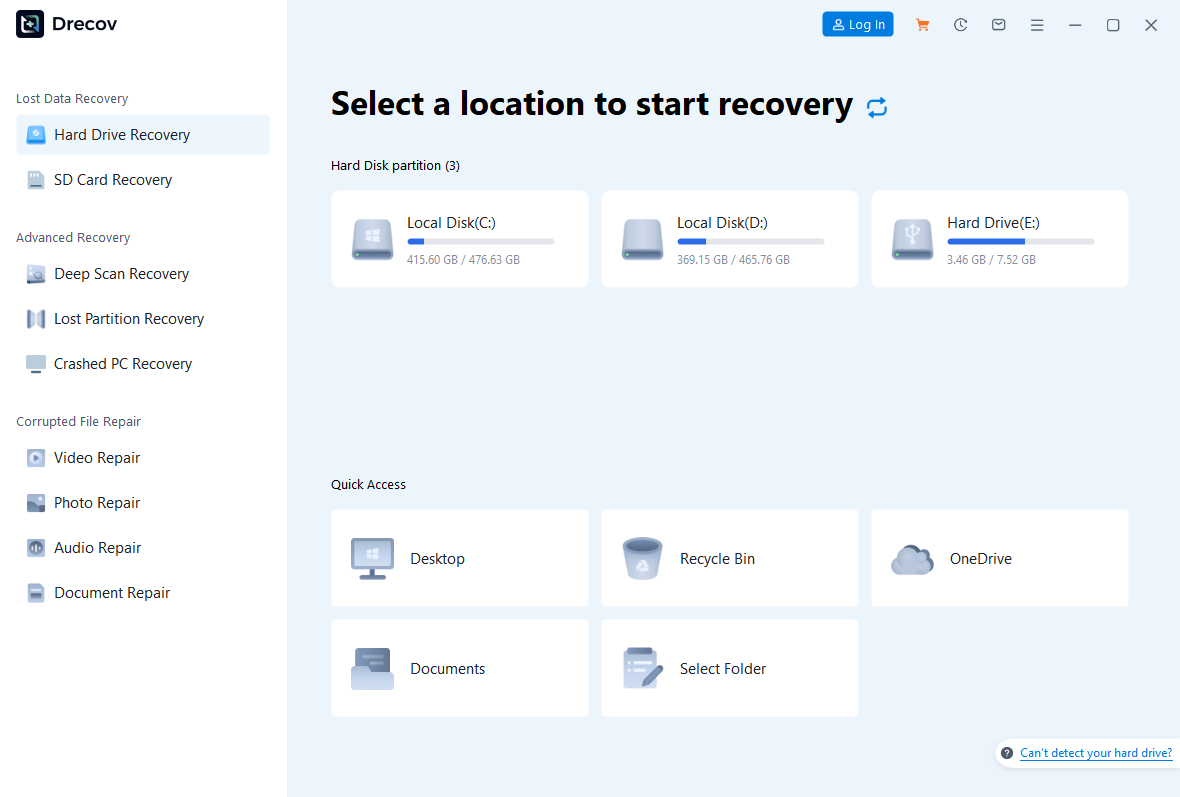
- Step 1: Select the Scan Location. Open the software and select the drive where your Chrome user profile is stored (usually the C: drive). Navigate specifically to the
User Datafolder path:C:\Users\[YourName]\AppData\Local\Google\Chrome\User Data\Default\Local Extension Settings.
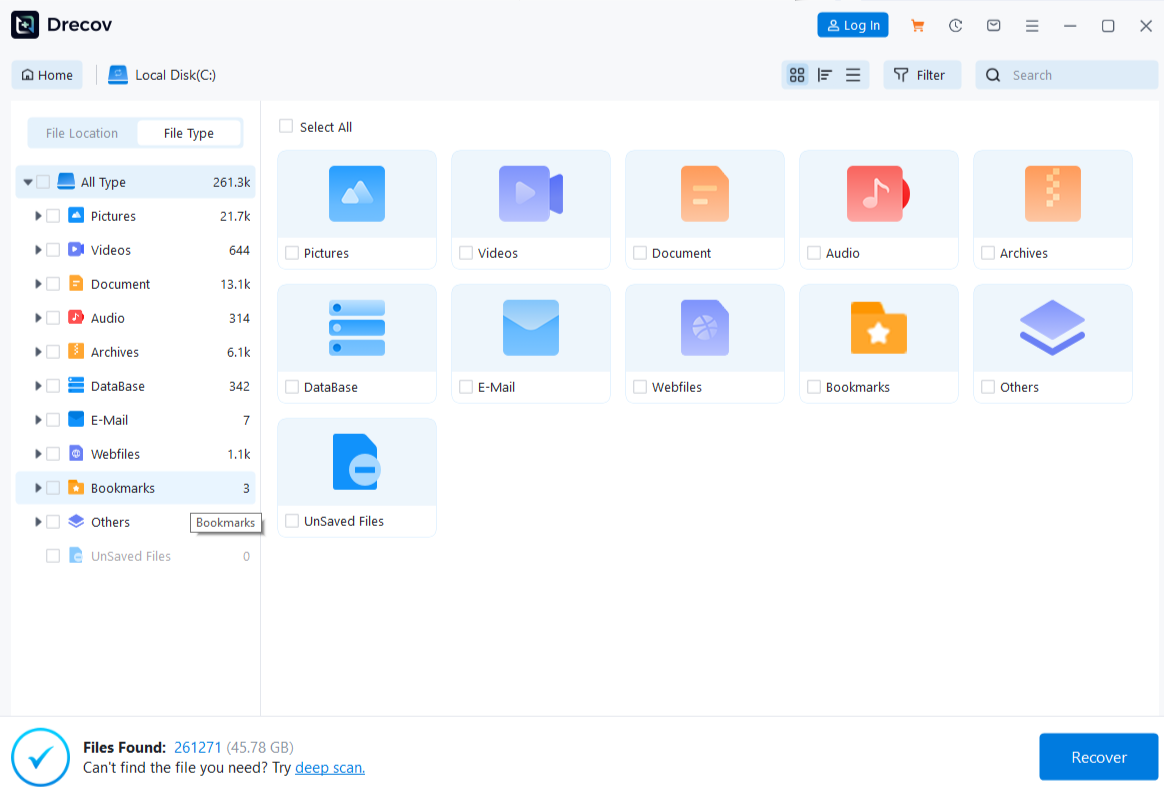
- Step 2: Deep Scan Execution. Click the “Scan” button. PandaOffice Drecov data recovery software will perform a sector-by-sector analysis. This might take some time, but it is necessary to find fragmented extension data.
- Step 3: Filter and Preview. Use the filter sidebar to search for specific file extensions like
.jsonor filenames associated with your canvas chrome extension. The preview feature allows you to see the text within the files to confirm they contain your missing tasks or settings.
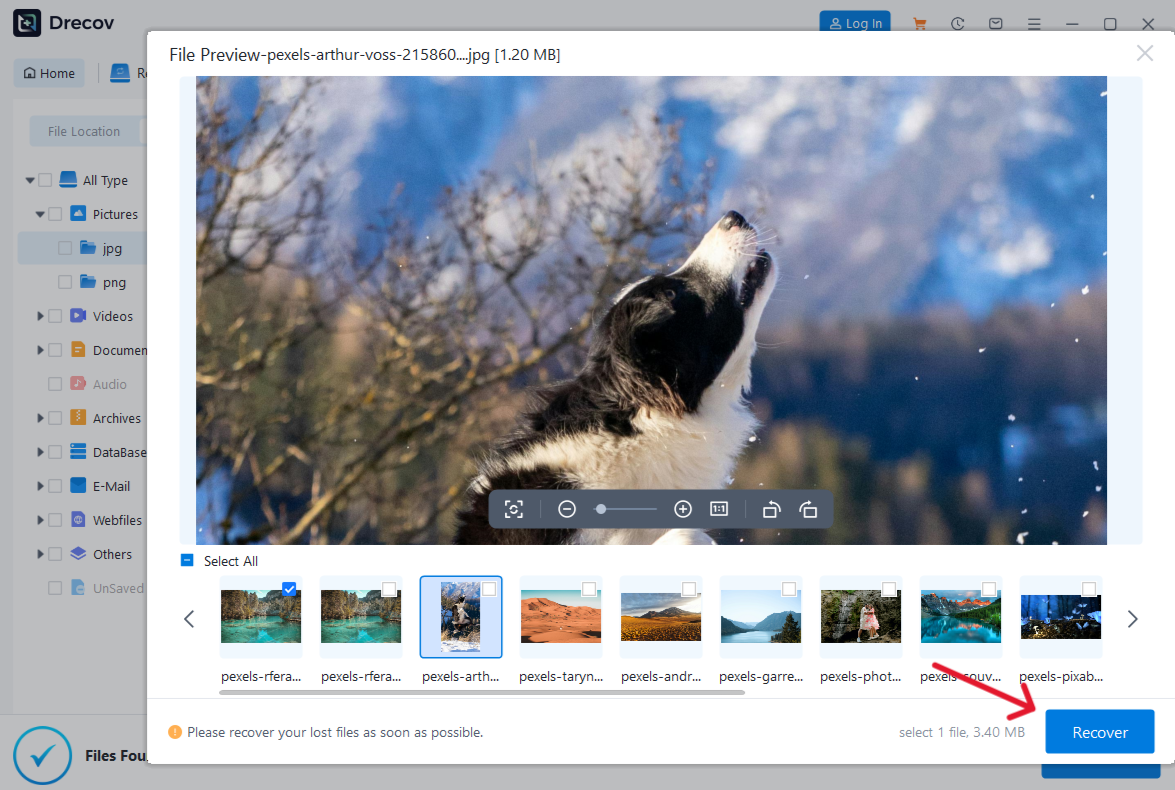
- Step 4: Secure Recovery. Select the files and click “Recover.”
Warning: Always save the recovered data to an external USB drive or a different partition to prevent data corruption.
After successfully retrieving your files, you can simply drop them back into the Chrome profile folder to restore your canvas chrome extension to its former glory.
- How to get your Google Chrome bookmarks back
- Where are Firefox bookmarks stored on your PC
- How to download video from browser Firefox 2026 guide
Features to Look for in a Canvas Extension
Performance Optimization
A poorly coded canvas chrome extension can lag your entire browser. Look for tools that mention “lazy loading” or “minimal API calls.” You want an extension that makes Canvas faster, not one that turns your tab into a resource-heavy nightmare.
Privacy and Security
Since a canvas chrome extension reads your school data, privacy is paramount. Always check the “Privacy” tab in the Chrome Web Store. Ensure the extension does not sell your data to third parties. The best extensions are often open-source, allowing the community to vet their code.
Ease of Use
If you need a 50-page manual to understand your canvas chrome extension, it’s not the right tool. The best extensions offer an intuitive UI that feels like a natural extension of the Canvas design language.
Pros and Cons of Canvas Chrome Extensions
Advantages
The benefits of using a canvas chrome extension are clear: increased productivity, better organization, and a personalized aesthetic. They allow you to bypass the “one size fits all” approach of institutional software.
Potential Risks
However, there are downsides. Dependency on a canvas chrome extension can be risky if the developer stops updating it. Additionally, if you use an extension to automate quizzes or exams, you might run afoul of academic integrity policies. Always use these tools to manage your work, not to do your work.
Comparison Table of Popular Extensions
| Extension Name | Primary Function | Ideal User | Data Recovery Ease |
| Canvas+ | UI Overhaul | Aesthetic seekers | Moderate (Cloud Sync) |
| Canvas Assistant | Task Management | Busy students | High (Local Export) |
| Dark Reader | Visual Comfort | Night owls | Low (Settings only) |
| Kami | Annotation | STEM/Arts students | High (Saves to Drive) |
| Grammarly | Writing Support | Humanities students | High (Cloud-based) |
How to Install and Use Canvas Extensions Safely
Step-by-Step Installation Guide
- Step 1: Navigate to the Chrome Web Store.
- Step 2: Type the name of the canvas chrome extension into the search bar.
- Step 3: Verify the developer and read recent reviews to ensure the extension is compatible with the latest version of Chrome.
- Step 4: Click “Add to Chrome” and review the permissions popup.
- Step 5: Once installed, pin the extension to your toolbar for easy access during study sessions.
Tips for Safe Usage
To ensure your canvas chrome extension doesn’t cause issues, regularly clear your browser cache. This prevents old data from conflicting with new extension updates. Furthermore, if Canvas starts behaving strangely, try disabling your extensions one by one to identify the culprit.
Are Canvas Chrome Extensions Safe and Detectable?
The question of detectability is common among students. While a canvas chrome extension that changes the background color or organizes your calendar is generally invisible to instructors, extensions that modify the “Quiz” environment are a different story.
Canvas has built-in “Log” features that track when a student leaves the tab or if the page loses focus. Some advanced proctoring tools can even detect unauthorized scripts running in the browser. Therefore, it is essential to use your canvas chrome extension ethically. Use it to enhance your learning experience, but never to circumvent the rules of your institution.
FAQs
1. Can a chrome extension steal my password?
While rare, it is possible if you install an extension from an unverified source. Always stick to well-reviewed tools on the official Chrome Web Store and check the permissions they request.
3. Do canvas chrome extensions work on mobile?
Standard Chrome extensions do not work on the mobile Chrome app for iOS or Android. However, some mobile browsers like Kiwi or Yandex support them, though stability varies.
4. How do I fix a canvas chrome extension that stopped working?
First, try updating Chrome to the latest version. If that doesn’t work, uninstall and reinstall the extension. Often, a fresh installation clears out corrupted local data.
5. Is there a chrome extension for offline access?
Yes, tools like “Canvas Downloader” allow you to save entire modules and files for offline viewing, though you will need to reconnect to the internet to submit assignments.
Conclusion
Mastering the use of a canvas chrome extension is about more than just changing a few colors on a screen; it’s about taking ownership of your digital education. By choosing the right tools, you can transform a standard learning platform into a powerhouse of productivity.
However, as you’ve learned in this guide, the technical side is just as important. Knowing how to export data from canvas chrome and having a recovery plan using tools like PandaOffice Drecov data recovery software ensures that your academic journey is never interrupted by technical failure. Stay organized, stay secure, and let your extensions do the heavy lifting so you can focus on what truly matters: your education.






