







USB flash drives feel almost magical, don’t they? You plug them in, drag files over, and everything just works—until it doesn’t. Suddenly, your files vanish, the drive becomes unreadable, or worse, it asks you to format before accessing anything. That’s where usb flash memory recovery programs step in as digital lifesavers.
Recent 2026 data shows that modern recovery tools can handle scenarios like accidental deletion, formatting, corruption, and even virus attacks. This means your photos, documents, or videos might still be sitting quietly on your USB, waiting to be rediscovered. Think of it like removing a book from a library catalog. The book still exists on the shelf—you just need the right tool to find it again. And that’s exactly what recovery software does: it rebuilds the map to your lost data.
What Is USB Flash Memory Recovery?
When we talk about usb flash memory recovery programs, we are referring to specialized software designed to communicate with the storage controller of a thumb drive. These programs bypass the standard operating system limitations to see “invisible” data. Because USB drives use NAND flash memory, the way they store data is unique compared to traditional spinning hard drives.
How USB Data Loss Happens
Data loss doesn’t just “happen.” It’s usually triggered by specific events, and understanding them can help you avoid disaster in the future. Common causes include:
- Accidental Deletion: The most frequent culprit. A simple “Shift + Delete” bypasses the Recycle Bin.
- Formatting Errors: Choosing the wrong drive letter while setting up a new disk.
- File System Corruption: Pulling the drive out without “Safely Removing” it can corrupt the FAT32 or exFAT table.
- Malware Attacks: Some viruses hide files or turn folders into shortcuts.
- Physical Wear: USB drives have a limited number of write cycles.
Can Deleted Files Really Be Recovered?
Yes—and this is the part most people underestimate. As long as the data hasn’t been overwritten by new files, recovery software can scan the raw memory and reconstruct files. The key is speed. The longer you continue using the USB drive, the higher the risk of overwriting those recoverable sectors.
When you delete a file, it’s usually not gone immediately. Instead, the system simply removes its reference, leaving the actual data intact until it gets overwritten. That’s why recovery is often possible—if you act quickly.
How USB Recovery Software Works
You might wonder—how does a program magically find files that no longer exist? It’s not magic; it’s clever engineering. Recovery software works by scanning the storage device at a low level. It looks beyond what your operating system can see and digs into the raw data blocks. Even if the file system is corrupted, many tools can still identify file signatures and reconstruct usable files.
File System Scanning Explained
Most usb flash memory recovery programs begin with a quick scan, analyzing the file system structure (like FAT32, NTFS, or exFAT). This method is fast and effective for recently deleted files because the metadata (file names, timestamps, and folder structures) is still intact.
Deep Scan vs Quick Scan
- Quick Scan: Fast, ideal for recently deleted files where the directory structure is still healthy.
- Deep Scan: Slower but more powerful. It ignores the file system entirely and searches for recognizable patterns—like JPEG headers or document signatures ($raw$ recovery).
Advanced tools often combine both methods, maximizing recovery success by rebuilding files from the ground up even when the “map” is missing.
Top USB Flash Recovery Programs in 2026
Choosing the right software can feel overwhelming. There are dozens of tools out there, all promising miracles. But some consistently stand out in 2026 due to their advanced algorithms and high success rates.
PandaOffice Drecov
A leader in user-friendly, professional recovery. Reports suggest incredibly high success rates in optimal conditions. PandaOffice Drecov excels at automating the recovery process, making it ideal for users who want a simple, “one-click” style solution for accidental deletion, formatting issues, and partition loss. It specializes in usb drive recovery on both Windows and macOS, featuring unique file repairing capabilities.
PhotoRec
This is a legend in the data recovery world and remains one of the most powerful usb flash memory recovery programs available in 2026. PhotoRec is free, open-source software that ignores the file system entirely, focusing purely on raw data carving (Deep Scan). It’s exceptional at finding over 480 different file formats, making it a definitive tool for severe corruption or formatted drives. You can find more about its capabilities and download it from the official CGSecurity site.
TestDisk
Often paired with PhotoRec, TestDisk is also an open-source powerhouse. While PhotoRec focuses on files, TestDisk focuses on usb disk recovery at the partition level. It can repair partition tables, recover deleted partitions, and fix boot sectors, which is essential when your USB drive suddenly shows up as “Unallocated” or “RAW.”
Recuva
If you’re looking for something that bridges the gap between powerful scanning and a standard Windows interface, Recuva (often in its freemium model in 2026) is a solid, lightweight choice. It’s especially useful for beginners and simple recovery tasks like recently deleted files.
Free vs Paid Recovery Tools
Not all recovery software is created equal. Some are free (like open-source tools), others use a freemium model, and some require payment—and the difference matters more than you might think.
Key Differences
Free and open-source tools (like PhotoRec) often provide full, unrestricted recovery capability but come with a steep learning curve, often lacking a graphical user interface (GUI). Paid versions (like Drecov) unlock advanced scanning, automated file repair, and dedicated technical support, wrapped in an easy-to-use interface.
When Free Tools Are Enough
If you are technically proficient and need to recover data from a severely corrupted drive where file system metadata is gone, an open-source tool like PhotoRec is often the best choice. However, for a user who needs a guaranteed path to recover important, possibly corrupted Word documents or Family photos with minimal fuss, investing in a polished solution often pays off.
Features to Look for in Recovery Software
When selecting from various usb flash memory recovery programs, don’t just look at the price tag. Focus on these critical features:
File Type Support
A good recovery program should support a wide range of file types, including photos (JPG, PNG, HEIC), videos (MP4, MOV), documents (DOCX, PDF), and archives (ZIP, RAR). Some tools can recover over 2,000 file formats.
Preview Capability
Previewing files before recovery is a game-changer. It allows you to verify that the file is intact (not just a corrupted ghost) before restoring it, saving both time and storage space. Polished commercial tools like Drecov specialize in this.
Using PandaOffice Drecov for Professional Recovery
If you are looking for a highly efficient and modern solution, PandaOffice Drecov is an excellent choice. It is a powerful tool designed specifically for high-success-rate data retrieval with an intuitive design.
Preparation Before Recovery
First things first—stop using the USB drive immediately. This is critical. Writing even one small file to the drive can overwrite the space where your deleted files are currently hiding.
⚠ Warning: Install it on a drive different from the one where your data was lost to prevent overwriting.
Step-by-Step USB Drive Recovery Walkthrough
To perform a standard usb drive recovery, follow these logical steps:
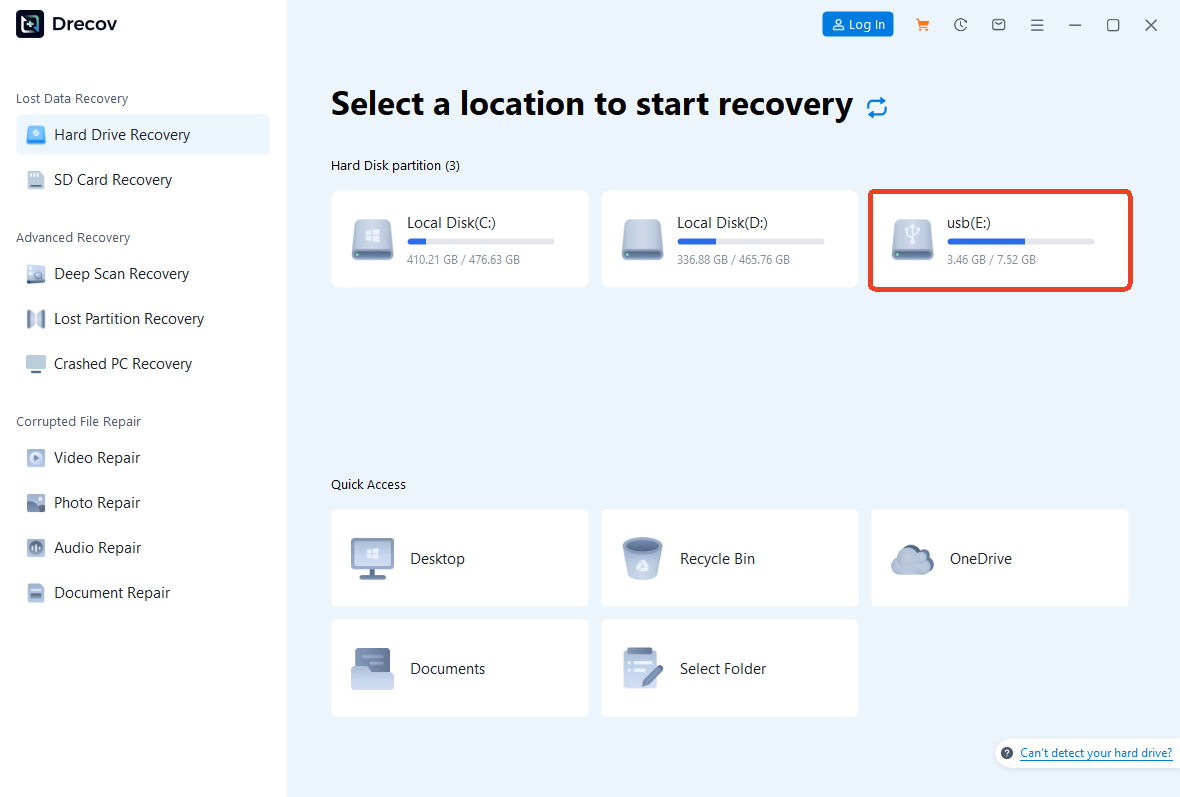
- Step 1: Launch the program and select your USB drive from the list of available disks.
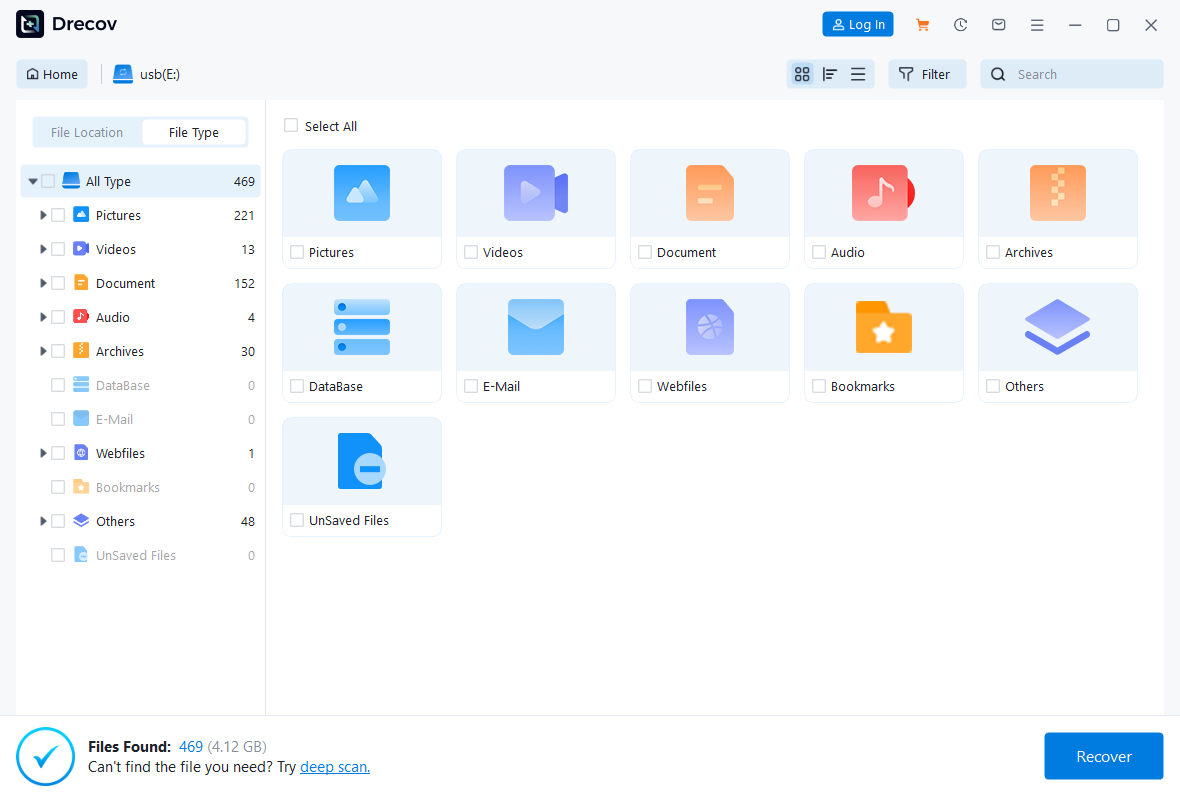
- Step 2: Initiate a scan. Start with a “Quick Scan” to save time. If your files don’t appear, switch to “Deep Scan.”
- Step 3: Browse the results. Use the filter or search bar to find specific file names or extensions (like
.jpgor.pdf).
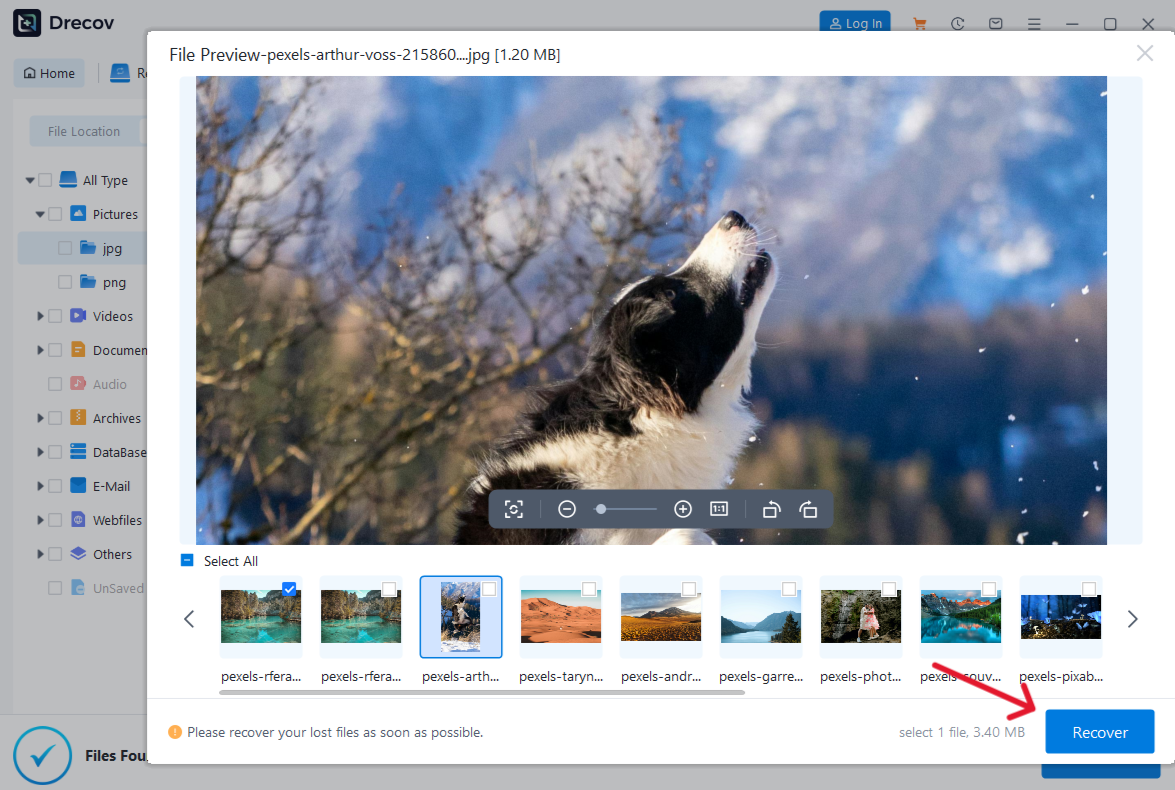
- Step 4: Preview the files to ensure they are readable.
- Step 5: Select the files and click “Recover.” Save them to a different drive—never back onto the same USB.
After you have successfully retrieved your data, you might want to look into further optimization or repair for your drive. You can find more specific guides here:
- How to recover deleted files from USB effectively
- How to repair corrupted USB flash drive without losing data
- The ultimate 128GB fix for formatting USB to FAT32
- Recover deleted files from USB flash drive: A complete guide
Common Mistakes to Avoid
Many people unknowingly sabotage their own recovery efforts. Avoid these pitfalls to keep your data safe:
- Continuing to Use the Drive: This is the #1 reason for recovery failure. New data replaces the old.
- Installing Software on the USB: This acts as “new data” and can overwrite the lost files.
- Recovering Files Back to the Same USB: If the recovery process fails midway, you might corrupt the very data you were trying to save.
- Running CHKDSK First: While
chkdskis great for fixing errors, it often deletes “orphaned” file fragments during the repair process, making data recovery harder. Always recover data first, then repair the drive.
Tips to Increase Recovery Success Rate
- Act Fast: The “Golden Hour” of data recovery is immediately after the loss occurs.
- Use a Reliable Cable/Port: Sometimes a “dead” USB is just a bad port on your PC case. Try the ports directly on the motherboard (at the back of the PC).
- Check the Write-Protect Switch: Some older USB drives have a physical switch. If it’s on, recovery software might not be able to “talk” to the drive properly.
- Run as Administrator: Always right-click your recovery software and select “Run as Administrator” to give it the necessary permissions to scan deep sectors.
Comparison Table of Top Tools
| Software | Best For | Type | Key Feature |
| PandaOffice Drecov | High Success & Ease of Use | Professional | Auto-repair for corrupted files |
| PhotoRec | Severely corrupted drives | Open Source | Massive file format support (data carving) |
| TestDisk | USB Disk Recovery (Partitions) | Open Source | Fixes partition tables and boot sectors |
| Recuva | Beginners | Freemium | Lightweight, simple GUI |
USB flash memory recovery programs FAQs
1. Can USB files be recovered after formatting?
Yes, as long as you performed a “Quick Format” and not a “Full Format.” A quick format only clears the index, while a full format (often used in 2026 for security) might wipe the sectors with zeros.
2. Is free recovery software safe to use?
Generally yes, provided you download it from the official developer. Avoid “cracked” versions of paid software, as these often contain malware that could further damage your data.
3. How long does USB recovery take?
For a 64GB drive, a Quick Scan takes about 1-2 minutes. A Deep Scan can take anywhere from 30 minutes to 2 hours depending on the speed of the USB interface (USB 2.0 vs USB 3.2).
4. Can a physically broken USB be recovered?
If the computer doesn’t recognize the drive at all (no “ding” sound when plugged in), software cannot help. You would need to contact a professional hardware recovery service that can perform a “chip-off” recovery.
Conclusion
Losing data from a USB flash drive can feel like a nightmare—but it’s often not the end of the story. With the right usb flash memory recovery programs, you can retrieve files that seemed gone forever. The key takeaway? Act quickly, choose a tool that supports your specific scenario (e.g., Drecov for user-friendliness, PhotoRec for raw power), and never save recovered files back to the affected drive.
In a world where our personal and professional lives are stored on tiny chips of silicon, having a reliable recovery strategy isn’t just helpful—it’s essential. Whether you’re using an open-source tool for a quick fix or a professional suite like PandaOffice Drecov for critical work documents, your chances of success are higher than ever in 2026.





