







Pictures on a USB stick can disappear after accidental deletion, formatting, file system damage, or a failed transfer. The fastest safe move is to stop using the USB and recover the photos before saving anything new.
This guide is for users dealing with deleted photos, formatted USB storage, corrupt folders, unreadable flash drives, or pictures missing after transfer. It explains what to check first, what actions to avoid, and how PandaOffice Drecov can help recover files from a USB stick, USB flash drive, camera USB backup, external USB folder, Windows PC, or memory card copied to USB.
If you are searching for how to recover picture files from usb stick, focus on protecting the storage device before trying another format, image burn, transfer, or repair attempt.
Why USB Stick Pictures May Still Be Recoverable
how to recover picture files from usb stick should start before the original device is changed again. Deleted or hidden data may remain recoverable until new saved content overwrites old file records.
The practical rule is simple: stop using the affected device, identify where the loss happened, and recover files to another healthy drive. Repair can wait until the important files are safe.
For how to recover picture files from usb stick, Drecov is useful because it scans common Windows storage devices in a read only way, supports Quick Scan and Deep Scan, and lets users preview files before saving them.
Check the USB Stick Before Running Photo Recovery
- Do not copy new photos or downloads to the USB stick.
- Check Recycle Bin only if the photos were deleted from a local Windows folder.
- Try another USB port if the stick disconnects or loads slowly.
- Prepare another drive to save recovered pictures.
- Start how to recover picture files from usb stick before running destructive fixes or copying new data to the same device.
What to Do in Common Recovery Situations
| Situation | Safer Action |
|---|---|
| Deleted or missing files | Stop using the device and scan the original location first. |
| Format prompt appears | Cancel the prompt until important data is recovered. |
| Device is slow or unstable | Avoid repeated repairs and copy recoverable files out first. |
| Many files appear in scan results | Use preview, file type filters, and modified dates to choose the right files. |
Recover Picture Files With Drecov Step by Step
PandaOffice Drecov is a Windows recovery tool for users who need to restore lost photos, videos, documents, emails, archives, audio files, and other common file formats. Its official product page says it supports more than 3000 file types and more than 2000 storage device types, including USB drives, SD cards, memory cards, HDDs, SSDs, and external hard drives.
For USB stick photo recovery, Drecov is useful because it scans in a read only way and lets users preview recoverable pictures before saving them. Quick Scan can help with recently deleted photos, while Deep Scan is better for formatted USB drives, corrupt folders, RAW storage, or older missing image files. This makes it suitable when the goal is to recover picture files before formatting or repairing the USB stick.
⚠ Warning: Install it on a drive different from the one where your data was lost to prevent overwriting.
- Step 1. Open PandaOffice Drecov and choose the location or path where the files were lost. Select the original USB drive, folder, external device, card, or partition rather than a random nearby location.

- Step 2. Start scanning that location. Let Quick Scan finish first for recently deleted files, then continue with Deep Scan when the loss involves formatting, corruption, image creation, interrupted transfer, or older missing files.

- Step 3. Review scan results by file type, original path, size, and modified date. Use preview when available so you can confirm whether each file is usable before recovery.
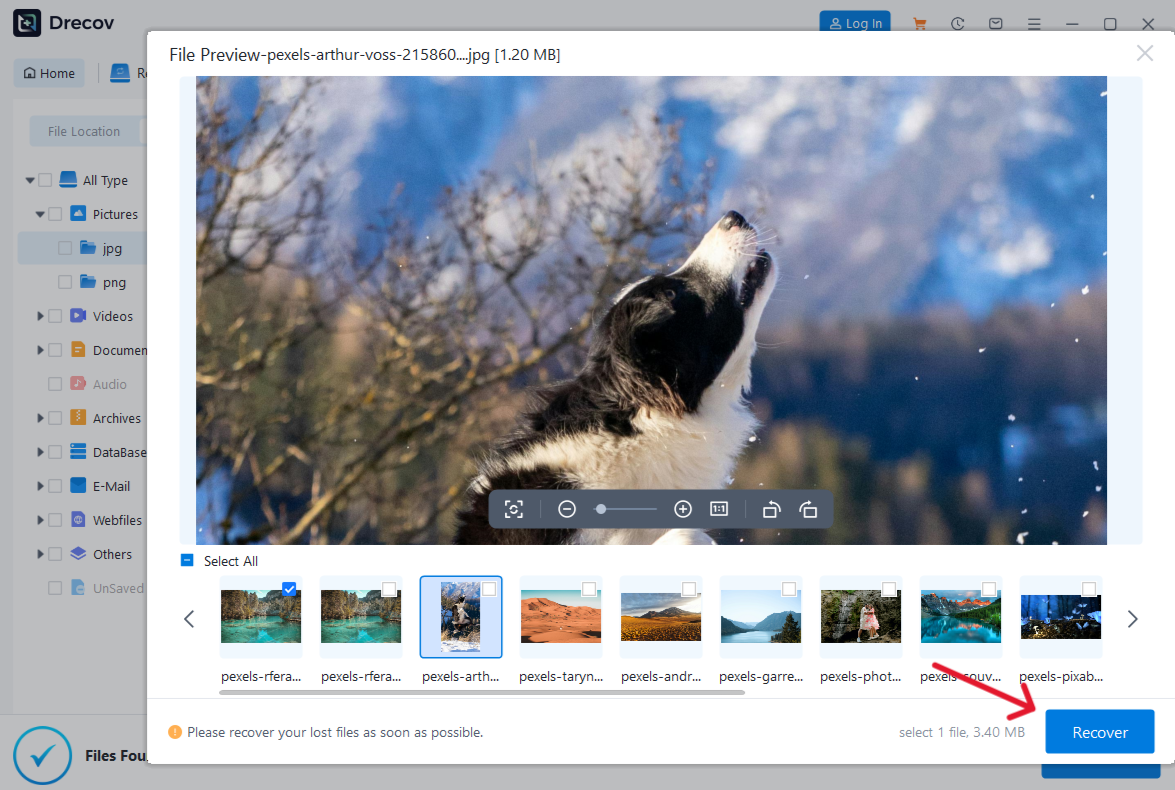
- Step 4. Select the files you need and recover them to another healthy drive. Do not save recovered files back to the same device that lost data.
- Step 5. Open several recovered files after saving them. If the expected folder is missing, check the selected destination for a Drecov or Recovery folder.
Useful Photo and USB Recovery Resources
Start with PandaOffice Drecov for the main recovery workflow. Related Drecov guides can also help: recover recently deleted photos, retrieve deleted photos, and transfer photos to USB.
For another recovery perspective, see this RAW SD card recovery guide.
Common USB Photo Recovery Mistakes to Avoid
- Do not format a device before recovering important files.
- Do not install recovery software onto the same drive that lost data.
- Do not recover files back to the original problem device.
- Do not keep testing fixes if the device disconnects, slows down, or shows the wrong capacity.
- Do not delete scan results until recovered files have been opened and checked.
Review Recovered Files Before Reusing the Device
When the scan finishes, do not recover everything blindly. Sort by file type, path, size, and modified date. Preview important files first, then recover a small verified set if the result list is large.
After recovery, open several restored files from different folders. For photos and videos, check multiple dates. For documents, confirm the content is readable. For archives, test that the compressed file opens.
For how to recover picture files from usb stick, it is better to recover a smaller verified set first than to rush through a large list of uncertain files. Once the critical data is safe, you can format, rebuild, reconnect, or replace the device with less risk.
Match the USB Photo Loss Case to the Right Action
If the pictures were deleted recently from a Windows folder, check Recycle Bin first. If the photos were deleted directly from the USB stick, lost after formatting, or disappeared from a corrupt folder, use how to recover picture files from usb stick as a recovery workflow before making changes.
When you need to recover photos from usb drive storage, scan the original USB stick instead of a copied folder. Drecov can help locate picture files by type, path, size, and modified date, which is useful when original folder names are missing.
If the USB stick came from a camera, printer, old laptop, or shared family archive, recover pictures from usb drive storage to a modern device before organizing them. This keeps how to recover picture files from usb stick focused on saving the original images first, then sorting them later.
USB Stick Picture Recovery FAQ
Can Drecov help with how to recover picture files from usb stick?
Yes. Drecov can help with how to recover picture files from usb stick by scanning the original location, showing recoverable files, supporting preview, and restoring selected files to a different drive.
Should I format first if Windows recommends it?
No. Formatting can make a device usable again, but it can also reduce the chance of recovering older files. Recover important data first.
Where should I save recovered files?
Save them to another healthy drive with enough free space. Saving to the same device may overwrite files that have not been recovered yet.
What if file names or folders look different?
Check preview, file type folders, reconstructed folders, file size, and modified date. Some recovery cases preserve content even when original names are incomplete.
Conclusion
USB photo loss is often recoverable when the stick is protected quickly. Stop using the device, scan the original USB location, preview pictures, and save recovered files to another drive. Drecov gives users a clear way to recover picture files from USB storage before format or repair steps reduce recovery chances.





