







Transferring your digital memories from a device to physical storage is one of the most effective ways to ensure your data remains safe and accessible for years to come. Whether you are clearing space on a smartphone or creating a redundant backup of your professional portfolio, knowing how to transfer photos to usb drive is a fundamental digital skill.
In this comprehensive 2026 guide, we will explore every method available—from simple “drag-and-drop” techniques on Windows and Mac to direct transfers from mobile devices. Furthermore, because data accidents happen, we will cover advanced recovery steps using professional tools like PandaOffice Drecov to ensure no photo is ever truly lost.
Why You Should Transfer Photos to a USB Drive
Before diving into the “how,” it is important to understand the “why.” While cloud storage is convenient, it relies on internet connectivity and monthly subscriptions. A USB flash drive offers:
- Offline Accessibility: Access your photos anywhere without needing Wi-Fi.
- Privacy: Keep your private images off third-party servers.
- One-Time Cost: Pay once for the hardware rather than a recurring cloud fee.
- Physical Portability: Easily hand a “digital photo album” to a friend or family member.
Method 1: The Classic Drag-and-Drop
For most users, the simplest way to learn how to transfer photos to usb drive involves using a Windows computer. This method is highly reliable and requires no extra software.
Step 1: Connect Your Hardware
Insert your USB flash drive into an available USB-A or USB-C port on your computer. Within seconds, Windows should recognize the device. You might see a small notification in the bottom-right corner of your screen.
Step 2: Open File Explorer
Press the hotkey Windows Key + E to open File Explorer. In the left-hand sidebar, look for “This PC.” Your USB drive will appear here, often labeled as “USB Drive,” “Removable Disk,” or a brand name like “SanDisk.”
Step 3: Locate Your Photos
Navigate to the folder where your photos are stored. This is usually the “Pictures” folder or a specific folder on your Desktop.
Step 4: Execute the Transfer
Select the photos you wish to move.
- To select all: Press
Ctrl + A. - To select specific files: Hold
Ctrlwhile clicking individual images.Once selected, right-click and choose Copy (or pressCtrl + C). Navigate to your USB drive window, right-click an empty space, and select Paste (or pressCtrl + V).
Warning: Do not unplug the USB drive while the progress bar is still visible. Abruptly removing the drive can lead to file corruption.
Method 2: How to Transfer Photos from Computer to USB Memory Stick (Mac)
Apple’s macOS handles file management through the Finder. If you are using a MacBook or iMac, follow these steps to master the transfer photos to usb drive process.
Step 1: Plug in the Drive
Connect your USB drive. If your Mac only has USB-C ports and your drive is USB-A, you will need a dongle or adapter. The drive icon will appear on your Desktop.
Step 2: Open Finder
Click the “Smiley Face” icon in your Dock to open Finder. Locate your photos—usually found in the “Pictures” folder or within the Photos App.
Step 3: Use the Photos App Export Feature
If your photos are managed inside the Apple Photos App, you cannot simply drag them out.
- Open the Photos App.
- Select the images you want.
- Go to File > Export > Export Unmodified Originals.
- Select your USB drive as the destination and click Export.
Step 4: Eject Safely
On a Mac, you must always “Eject” before unplugging. Right-click the USB icon on the Desktop and select Eject [Drive Name].
Method 3: Direct Mobile Transfers (iPhone & Android)
In 2026, most smartphones support “OTG” (On-The-Go) technology, allowing you to learn how to transfer photos to usb drive without even touching a computer.
For iPhone Users:
- Connect: Use a Lightning-to-USB or USB-C-to-USB adapter to plug your drive into your iPhone.
- Select: Open the Photos App and tap Select. Pick your photos.
- Share: Tap the Share icon (the square with an up arrow).
- Save: Scroll down and select Save to Files.
- Target: Choose your USB drive from the list of locations and tap Save.
For Android Users:
- Plug in: Connect the USB drive via the USB-C port.
- Files App: Open the “Files by Google” app or your phone’s native “My Files” manager.
- Find Images: Navigate to Internal Storage > DCIM > Camera.
- Move: Long-press the photos, tap the three dots (menu), and select Copy to. Choose the USB drive as the destination.
Troubleshooting: What to Do if Photos Disappear?
Sometimes, during the process of learning how to transfer photos to usb drive, files can go missing. This might happen due to:
- Accidental deletion.
- A “Cut and Paste” failure where the power went out.
- The USB drive being pulled out too early.
If this happens, do not panic. The data is often still on the drive or the computer, just marked as “free space” by the system. This is where professional data recovery tools come into play.
Introducing PandaOffice Drecov
PandaOffice Drecov is a premier data recovery utility designed for 2026 hardware. It is specifically optimized to handle the high-density NAND flash memory found in modern USB 3.2 and USB 4.0 drives. Whether you accidentally formatted your stick or deleted the wrong folder, Drecov can usually find it.
⚠ Warning: Install it on a drive different from the one where your data was lost to prevent overwriting.
How to Recover Lost Photos with PandaOffice Drecov:
- 1. Launch: Open the PandaOffice Drecov application on your PC or Mac.
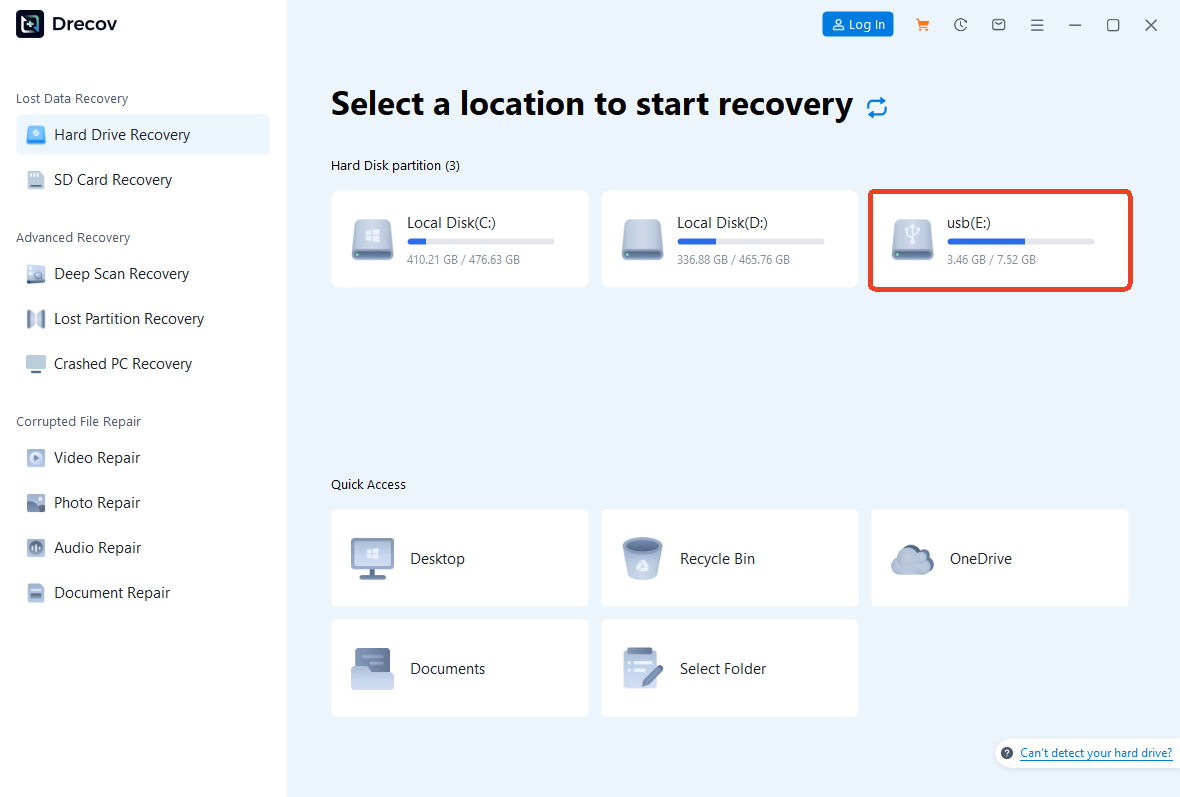
- 2. Select Location: On the main home screen, you will see a list of drives. Click on your USB Flash Drive.
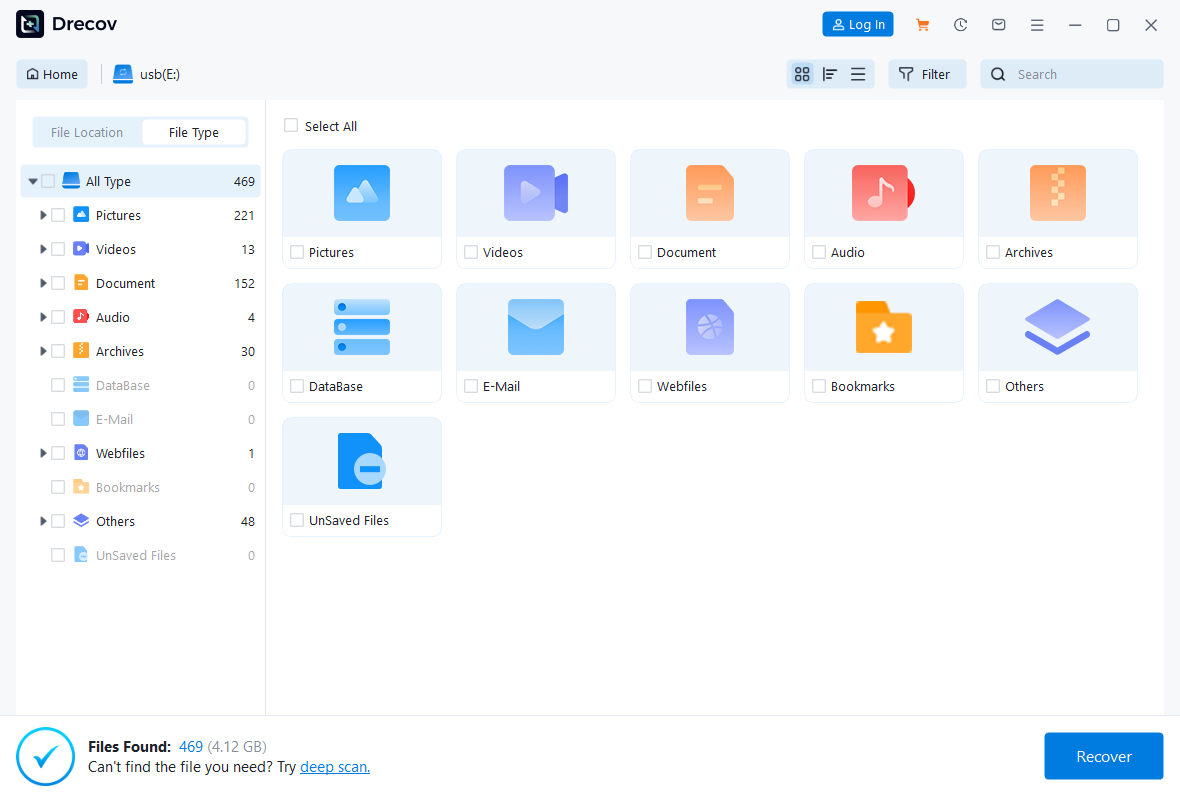
- 3. Scan: Click the Scan button. The software will perform a “Quick Scan” followed by a “Deep Scan” to find fragmented photo files (JPEGs, HEIC, RAW).
- 4. Preview: One of the best features of Drecov is the preview mode. You can actually see the photos before you decide to recover them.
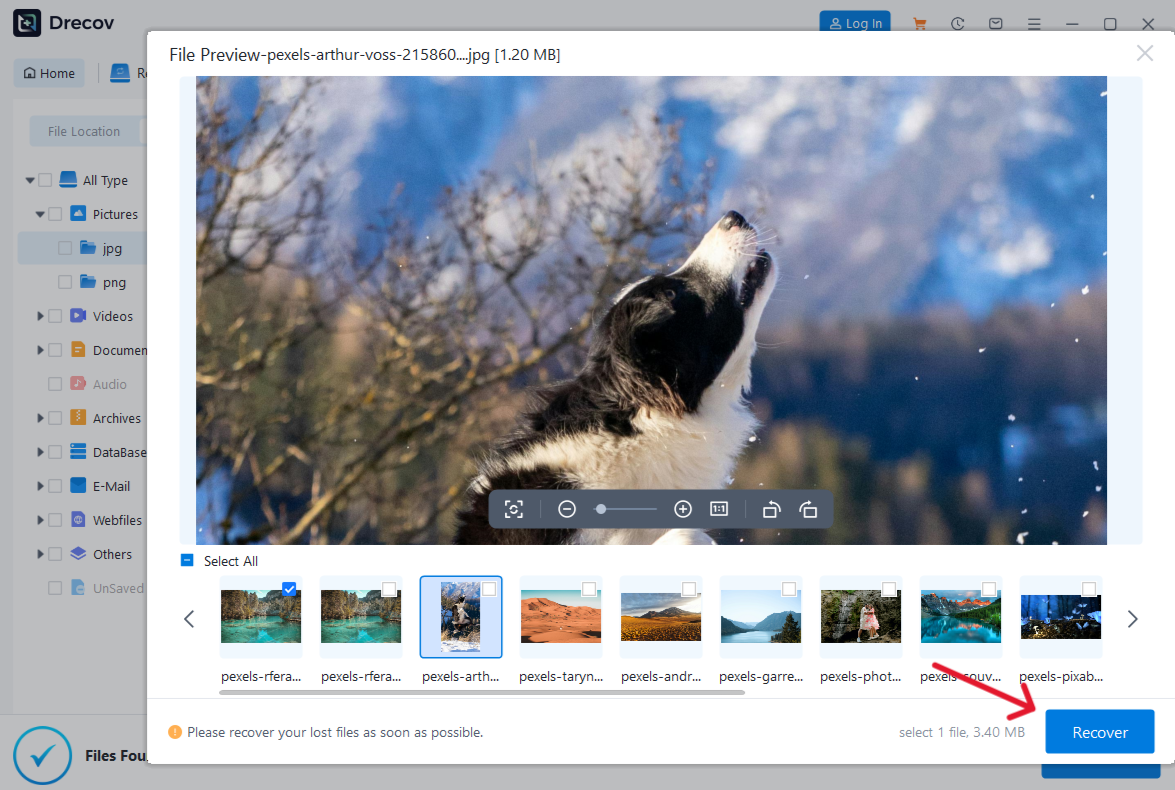
- 5. Recover: Check the boxes next to your missing photos and click the Recover button.
Key Tip: Always recover your files to your Computer’s Hard Drive first—not back onto the same USB drive. Saving to the same drive can overwrite the very data you are trying to rescue!
For more detailed guides on specific USB issues, check out these resources:
- Recover Deleted Files from USB Flash Drive: A Complete Guide
- How to Repair Corrupted USB Flash Drive Without Losing Data
Advanced Management: Formatting for Compatibility
A common hurdle when figuring out how to transfer photos to usb drive is the file system. If your drive works on your PC but not your TV or Mac, it is likely a formatting issue.
| File System | Best For | Pros | Cons |
| FAT32 | Older devices, Car stereos | Universal compatibility | 4GB individual file limit |
| exFAT | Photos & Videos | Works on Windows & Mac; no file size limit | Slightly more prone to corruption |
| NTFS | Windows Only | Extremely stable; great for large backups | Read-only on Macs without extra software |
If you need to change your drive’s format to make it work across all your devices, follow this guide:
How to Format USB to FAT32: The Ultimate 128GB Fix 2026
Best Practices for Data Safety
Mastering how to transfer photos to usb drive is only half the battle; keeping them there is the other half.
- The 3-2-1 Rule: Keep 3 copies of your data, on 2 different types of media, with 1 copy stored off-site (or in the cloud).
- Label Your Drives: Use a physical label or rename the drive digitally (Right-click > Rename) so you know what is on it.
- Avoid High Temperatures: Flash drives are sensitive to heat. Don’t leave your photo backups in a hot car.
- Check Every 2 Years: Flash memory can “leak” charge over many years if not plugged in. Every few years, plug your drive in to ensure the data is still readable.
If you ever find yourself in a situation where a drive becomes unreadable, remember that tools exist to help:
Transfer Photos to USB Drive FAQs
1. Why does my computer say the “file is too large for the destination” when I try to transfer photos?
This error typically occurs because your USB drive is formatted using the FAT32 file system. While FAT32 is highly compatible with older devices, it cannot handle individual files larger than 4GB. Even if you have 100GB of free space, a single high-resolution video or a large batch of RAW photos may trigger this error. To fix this, you should learn how to transfer photos to usb drive using the exFAT format, which supports much larger file sizes.
2. Can I transfer photos directly from iCloud or Google Photos to a USB drive?
You cannot move them directly from the cloud server to the physical drive without a “middleman” device. You must first download the photos to your computer’s local storage or your smartphone’s internal memory. Once the files are physically on your device, you can then follow the standard steps to transfer photos to usb drive. For bulk transfers from Google Photos, using “Google Takeout” is the most efficient way to download your entire library before moving it to a stick.
3. Why are my photos showing up as “HEIC” files on my USB drive?
HEIC is a high-efficiency format used by iPhones. While it saves space, some older Windows PCs or smart TVs cannot open them. When you are figuring out how to transfer photos from computer to usb memory stick, you might want to convert these to JPEGs first. On a Mac, you can do this during the “Export” process by selecting “JPEG” as the file type. On Windows, you can use the “Photos” app to “Save As” a standard JPEG.
4. Will transferring photos to a USB drive delete them from my original device?
No, the standard “Copy and Paste” method creates a duplicate. The original photos stay on your computer or phone. However, if you use the “Cut and Paste” command (Ctrl + X then Ctrl + V), the files are moved, meaning they are deleted from the source once the transfer is successful. For safety, we recommend copying first and only deleting the originals manually after you have verified the photos are safe on the USB drive.
5. My USB drive is plugged in, but it isn’t showing up in File Explorer. What should I do?
First, try a different USB port. If it still doesn’t appear, the drive might not have a “Drive Letter” assigned, or it might be uninitialized. You can check this by right-clicking the Start button and selecting Disk Management. If the drive appears there but not in File Explorer, you may need to right-click the drive partition and select “Change Drive Letter and Paths.” If the drive is corrupted and won’t mount, using a tool like PandaOffice Drecov can often help you see the “invisible” partition and rescue your data.
Conclusion
Learning how to transfer photos to usb drive is an essential part of digital literacy in 2026. Whether you choose the simplicity of Windows File Explorer, the specialized export functions of macOS, or the convenience of a mobile OTG transfer, you are taking a proactive step in preserving your history.
Always remember to eject your drives safely and keep a recovery tool like PandaOffice Drecov in your digital toolkit just in case things go sideways. By following the steps outlined in this guide, your photos will remain safe, organized, and ready to be shared for years to come.





