






Lenovo OneKey Recovery can return a supported computer’s system partition to a factory state or to a backup created earlier. Before selecting either option, find out which image is available and whether your personal files have a separate, verified copy. A restore can replace the Windows installation and data on the affected partition. It will not search for a deleted document inside the current drive. If you only need one lost file, a full-system restore may solve the wrong problem while putting the remaining data at risk.
Find out which “recovery” you actually need
People arrive at OneKey Recovery for very different reasons: Windows no longer starts, a recent change broke an application, or a folder seems to have disappeared. The same restore button should not answer all three. Begin with the result you need. Do you want the computer to boot again, return it to a known system image, or retrieve specific personal files?
If Windows works, inspect the missing item before restoring Windows
Use File Explorer to check the original folder, Recycle Bin, and any cloud or external backup. If a single presentation has been deleted, OneKey is an unusually broad response. It can change much more than that file. Check whether the account currently signed in is the one that created the data. Also confirm that the document was not moved to another partition or user profile. If the file is genuinely missing from local storage, use a file-recovery path rather than assuming a factory image contains it.
If Windows will not boot, separate system repair from file protection
A PC that stops before sign-in may still hold intact personal files. OneKey can restore Windows on supported models, but its first question is not “How do I press the button?” It is “Can I still get my files?” Check an existing backup from another device. If you can access the original storage safely from a working Windows environment, copy or recover important data before allowing an image restore to change the system partition. If the storage device is not detected consistently, makes unusual noises, or disconnects, stop repeated attempts and seek professional imaging or recovery.
Identify the OneKey image and model-specific entry route
Lenovo describes OneKey Recovery as a backup-and-restore system on supported devices. Its exact entry method and interface vary by model and age. Some machines use a Novo button or a recovery key at startup; others expose a different recovery environment. Do not assume that a keyboard shortcut shown for another Lenovo laptop applies to yours. Use the model name on the case or Lenovo support page to find the matching manual. Lenovo’s OneKey Recovery explanation distinguishes restoring the system partition from its initial backup and from a backup you created earlier.
Factory image and personal backup are not interchangeable
The initial image represents a system state prepared for the machine. It is not a snapshot of the report you edited last week. A user-created system backup represents the computer at the time that backup was made; it may still be older than your latest files. Look for the image date, location, and description before selecting a restore point. If an external device holds the backup, verify that it is the expected device and remains connected. Do not choose a vaguely named image merely because it is the only visible option.
Check whether the recovery area is still present
A missing or changed recovery partition can prevent the built-in environment from opening. That does not mean your personal documents have vanished, and it does not justify creating a new partition on the same device. Avoid DiskPart clean, repartitioning, or formatting while data matters. If Windows still starts, inspect the available recovery options and the backup location without changing the disk layout. If it does not start, follow your model’s manual for a safe way to access the storage or ask a technician to help. A guide to the Lenovo boot menu can help you distinguish a startup menu from the OneKey image restore itself.
Secure the personal files that the image might replace
Before restoring, list what you cannot recreate: current documents, photos, browser exports, project folders, license information, and local application data. Check whether the same files exist in a backup, a synced account, or another computer. Open sample files from that copy. A folder name alone is not proof that the files inside are complete. Save the backup to a separate healthy device, not to the partition OneKey may overwrite.
When you can still sign in
Copy the needed folders to an external device and confirm the copy by opening a few varied files. Include Desktop and Documents if you used them, but do not assume those are the only locations. Some applications keep projects under Pictures, Videos, or a custom workspace. Export browser data or application settings when they are not already synced. If you use BitLocker, save the recovery key as well; a changed startup or recovery workflow may ask for it later.
When the computer cannot reach the desktop
First check whether your cloud or external backup already contains the required data. If not, the source drive must be readable through another safe route before recovery software can help. A removable, stable drive may be connected as a secondary device to a working Windows computer. Make sure that computer boots from its own system disk. Do not initialize the attached drive if Windows prompts you. For a soldered SSD or a computer you cannot open safely, use a qualified service instead of improvising disassembly. This is a data-access decision, not a OneKey setting.
Where Drecov fits before an image restore
Drecov is Windows data-recovery software for files missing from a stable, readable source. Its read-only recovery approach, Quick Scan, Deep Scan, file filtering, and preview help you search for candidate files before saving them elsewhere. Lost Partition Recovery is available when the actual loss involves a missing partition. For this Lenovo, the practical use is retrieving local files before a system-image restore. The software cannot restore the Lenovo factory image, fix a failed storage device, or repair Windows boot files. Those are different jobs.
Have another healthy destination ready before scanning. Do not install software on the source partition containing missing files. If the drive repeatedly vanishes, makes mechanical noises, or produces severe read errors, stop direct scans; an image or professional service is safer. If the Lenovo drive is stable and accessible from Windows, use the following file-focused path rather than guessing what a factory reset might preserve.
⚠ Warning: Install it on a drive different from the one where your data was lost to prevent overwriting.
Step 1: Open Drecov and choose the original Lenovo location
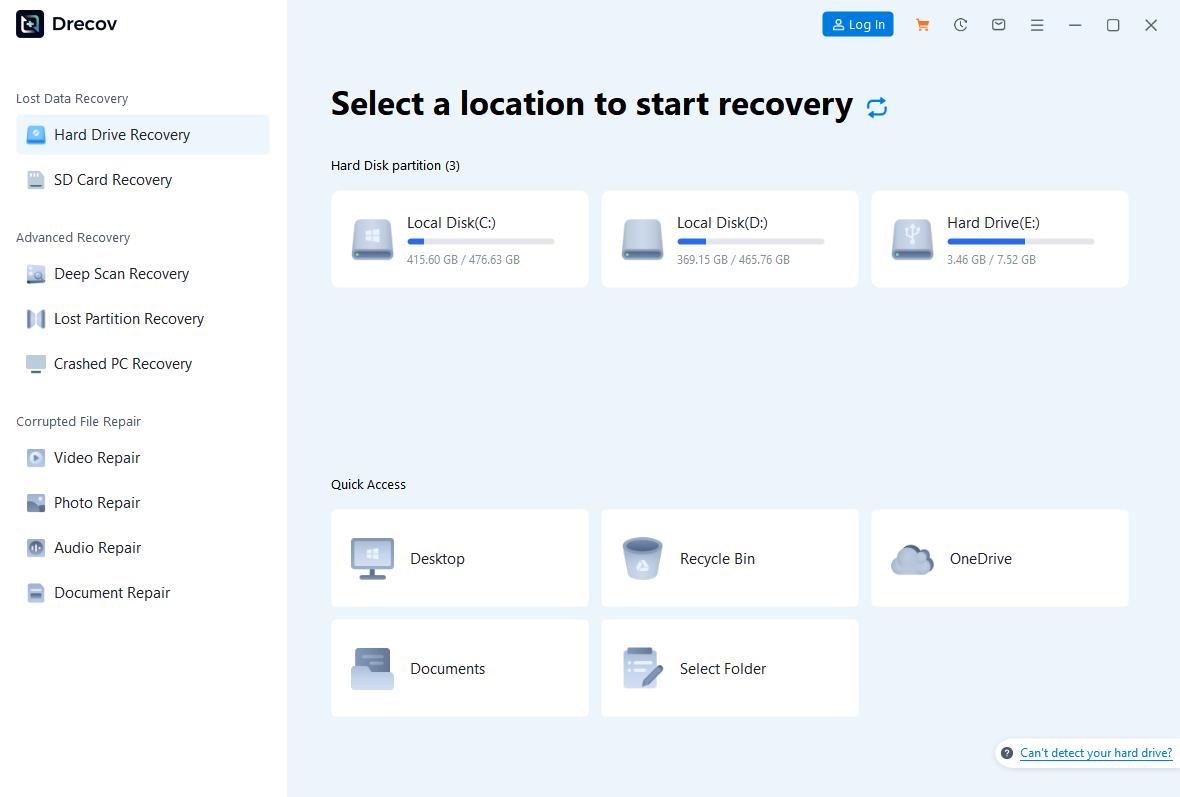
Open Drecov on the healthy Windows environment. Select the original partition, or the original drive if the partition is not listed. Do not select the empty destination for recovered files. If the entire partition disappeared, consider the dedicated lost-partition mode; if only a folder was deleted, begin with the normal file-recovery route. Record the original folder names you hope to find, such as a coursework directory or a photo library.
Step 2: Use Quick Scan and inspect likely matches
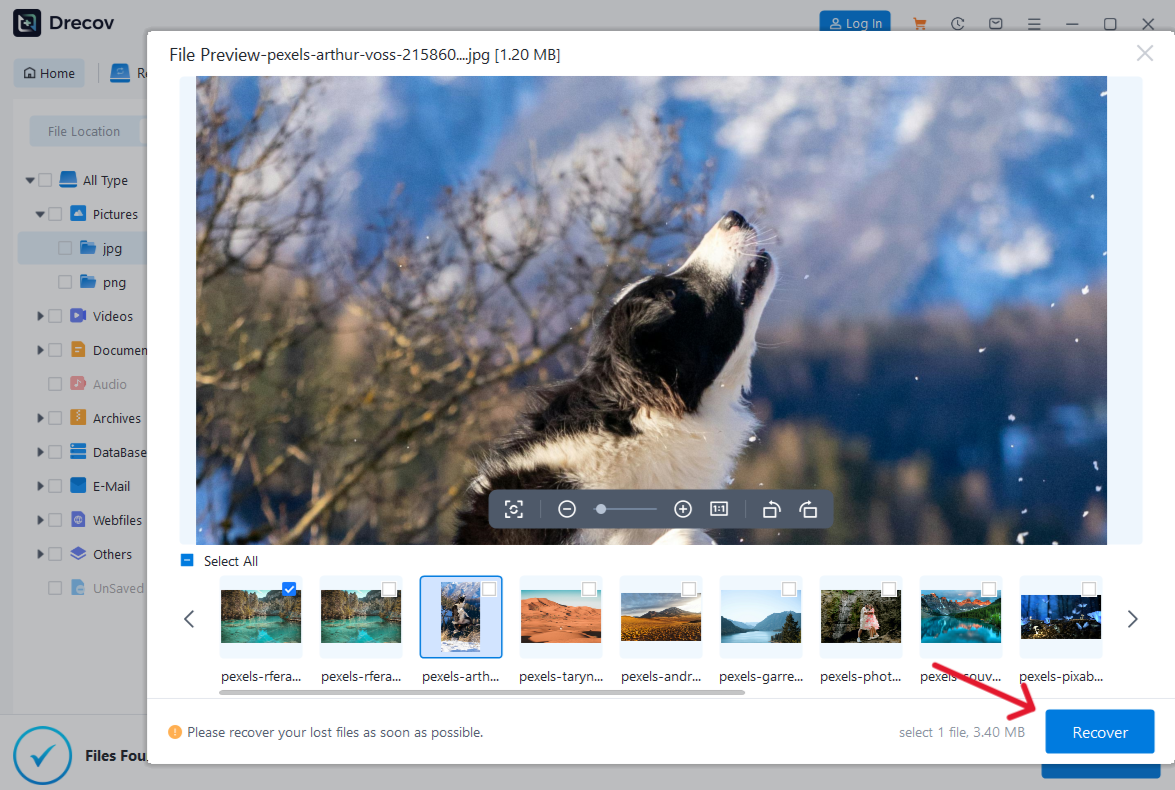
Start Quick Scan. Check familiar folder paths and file types before selecting everything the scan finds. If the needed documents or photos appear, preview several representative items. A filename or thumbnail may be encouraging, but it cannot certify every page or frame. Keep a short list of the items most important to recover first.
Step 3: Try Deep Scan only on a stable source
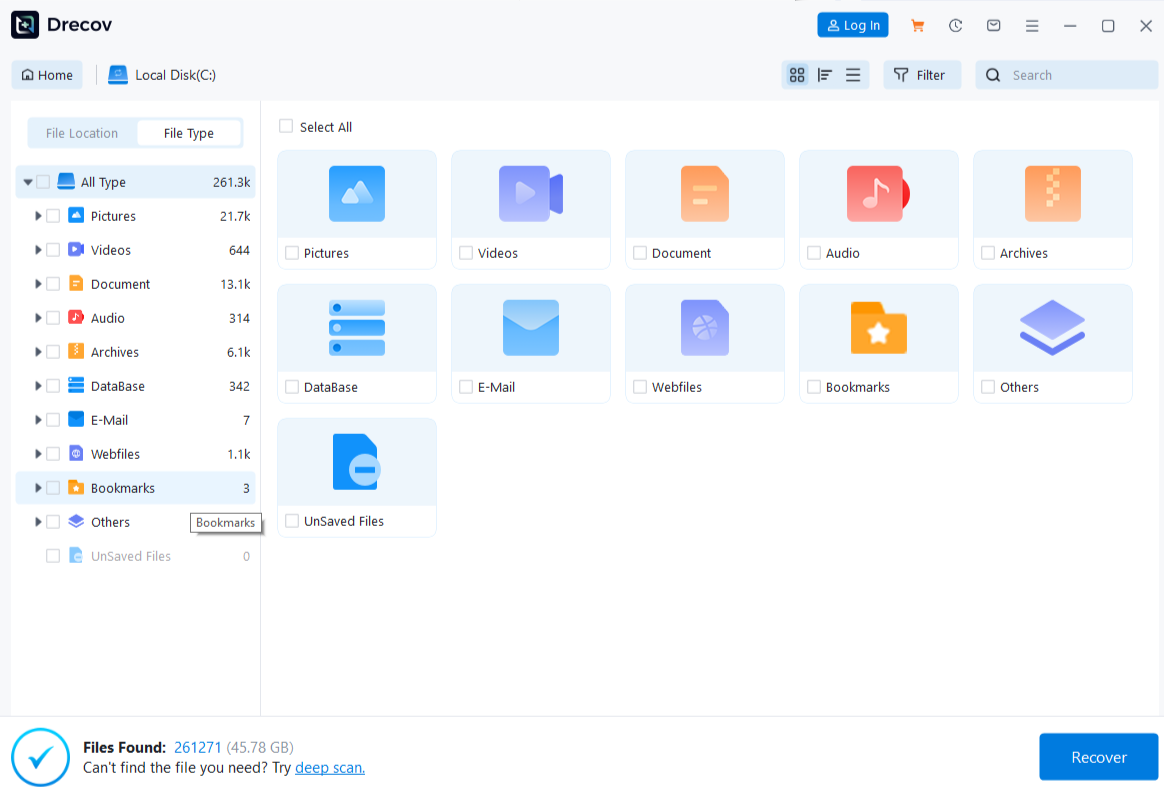
If Quick Scan misses the target files and the device continues to read steadily, use Deep Scan. Search or filter by name, former path, and file type where available. If the device becomes unstable, stop; more scanning does not repair hardware. A deeply scanned result may lack its original folder structure, so verify content rather than trusting names alone.
Step 4: Recover elsewhere and test the copies
Save selected files to the separate healthy device, never back to the Lenovo source. If you do not see the output where expected, check the Drecov folder or Recovery folder before starting again. Open a range of recovered files, including larger projects and images. Compare them with any known good versions. Only after the essential items work from the new destination should you decide whether OneKey’s system restore is still needed. For a fuller explanation of the file-focused route, see the file recovery steps.
⚠ Warning: Install it on a drive different from the one where your data was lost to prevent overwriting.
Run OneKey only when the chosen image matches your goal
With personal files safe, follow the instructions for your exact Lenovo model to enter OneKey Recovery. Read the screen that names the restore source and target partition. Select a factory image only if returning the system to that original state is truly the goal. If a verified personal system backup is available and its date is appropriate, that may be a better choice. Confirm the warning about what will be replaced before you proceed.
What a successful restore should look like
The computer should complete the image operation and start into the expected Windows state. It may need normal setup steps or updates afterward. Reconnect the separate file backup only after Windows starts and you know the destination is safe. Open representative restored files rather than copying everything back at once. If the restore fails, record its exact message and avoid repeating the same write-heavy operation without checking the device and image source.
What to do if the image is absent or the restore fails
Do not invent a recovery partition or download a random image claiming to match your PC. Verify the exact model and follow Lenovo’s official recovery-media route if applicable. An absent image and a failing disk are different problems: the first is about a missing source for the system restore; the second threatens the data still on the drive. If the device is unstable, prioritize specialist advice. If it is stable and your personal files are safe, you can investigate supported Windows repair or reinstallation options without treating them as data recovery.
FAQs
Does Lenovo OneKey Recovery keep my personal files?
Do not assume it will. The effect depends on the selected restore option and partition. Make an independent copy of the files you need and verify that copy before accepting a restore warning.
Is OneKey Recovery the same as Windows Reset this PC?
No. They are different recovery mechanisms with different image sources and choices. Read the screen on your particular model instead of applying instructions for a different tool.
Can Drecov recover a lost OneKey factory image?
Drecov is intended to recover files from a readable Windows source. A lost partition may be searchable, but that does not guarantee a usable factory image or rebuild Lenovo’s recovery environment.
What if the Lenovo drive is not detected reliably?
Stop repeated restores and software scans. A device that disconnects, clicks, or reports severe read failures needs imaging or professional attention before further writes.
Conclusion
Lenovo OneKey Recovery is a way to restore a supported computer’s system state, not a search tool for one missing file. Identify the available image and its date, then protect any personal data that the restore could replace. When a stable Lenovo drive holds missing local files, Drecov can scan the original location, preview candidates, and save verified copies to another healthy device before OneKey changes the system partition. If the storage is unstable, stop software attempts. Once your files are secure, choose the Lenovo restore option that actually matches the result you need.
⚠ Warning: Install it on a drive different from the one where your data was lost to prevent overwriting.