






Before reinstalling Windows, refreshing Firefox, or moving to another PC, back up the Firefox profile that is actually in use. It holds more than bookmarks: settings, history, extensions, and other browser data live there. In Firefox, open about:profiles, identify the profile marked as in use, and open its root directory. Close Firefox completely before copying that folder to a separate healthy drive. Then verify the copied folder and keep it until the new browser setup works. A bookmark export or an account that syncs some data is useful, but neither is automatically a complete replacement for a tested profile backup.
Know what you are protecting
A Firefox profile is the collection of files that describes your particular browser environment. Bookmarks are only one part. Depending on what you use, the profile can also hold history, preferences, extension data, open-session information, and stored sign-in data. Not every component will transfer perfectly to a different installation or computer, so the goal is a recoverable copy of the profile, not a promise that every extension and login will work forever.
Decide why you are making this backup. Before a Firefox refresh, you may want a copy of the existing state in case a setting or extension matters later. Before replacing a PC, you need the files on a device that will remain available after the old machine is erased. For routine protection, you need more than a copy on the same drive, because a drive failure would take both the browser and the backup. Put the backup on another healthy drive and, if it contains sensitive history or credentials, protect that destination appropriately.
Sync, built-in backup, and manual copy are different
Firefox Sync can bring selected information across devices when you sign in to the right account, but its purpose is synchronization. A change or deletion may propagate. Firefox also offers backup features whose availability and contents can depend on the version and platform. A manual copy of the active profile folder gives you an offline snapshot of those files at a particular moment. Mozilla’s profile backup instructions describe that folder-copy method. If you use another backup feature as well, test what it actually restores instead of assuming all three methods are interchangeable.
A bookmark-only export is simpler and useful when bookmarks are all you want to move. The existing Firefox bookmark export steps handle that narrower task. This article is for the full profile. Saving every browser file is especially worthwhile before a reset, where you may not remember which extension or setting mattered until afterward.
Find the profile Firefox is using now
Open Firefox and type about:profiles in the address bar. Look for the profile that Firefox identifies as being in use. Use its root-directory control to open the corresponding folder in File Explorer. Do not guess from several similarly named folders under AppData. An old test profile, a profile from a different Windows account, and the active one can all have plausible names. Record the folder path and the Windows username before making a copy.
On a typical Windows installation, Firefox profile folders are under the user’s roaming AppData area, often reached through %APPDATA%\Mozilla\Firefox\Profiles. Treat this path as a way to find the folder, not as proof that the first directory you see is the active profile. The browser’s profile page is the stronger clue. If the current Firefox window belongs to a different Windows account from the one you intend to back up, switch accounts and repeat the check.
Close the browser before copying
After confirming the path, close all Firefox windows. Wait for the browser process to exit before copying the folder. Profiles contain databases and session files that may change while Firefox runs; a copy taken mid-write can be inconsistent. If a file remains locked, do not force an incomplete copy and declare success. Verify that Firefox really closed, then try again. Avoid deleting or renaming the original profile as part of this step.
Copy the whole active profile folder to a dated directory on another healthy drive. Keep the folder structure and filenames intact. Do not move it instead of copying it: a move would take away the current browser’s working profile. Give the destination a descriptive name such as the Windows account and backup date, but do not alter the files inside merely to make them look tidy. If the destination is a USB device, eject it properly after the copy finishes and keep it away from the computer you plan to reset.
Check the backup while the old setup still works
A copied folder is only the beginning of verification. Compare the source and destination folder sizes and check that the copied folder is not empty. Look for a reasonable spread of files and subfolders rather than a single exported bookmark file. A size match is useful evidence but not a complete integrity check; it cannot prove that every database opens. Keep the original profile untouched while you inspect the backup.
For a stronger test, use a separate Firefox profile or another test Windows account. Follow Mozilla’s restore guidance to place a copy of the backed-up data into that test environment. Do not overwrite the only working profile just to see whether the backup works. Confirm that a few distinctive bookmarks, a known preference, and the expected history or extension settings appear. Stored sign-ins may depend on associated profile files and the surrounding environment; verify them only on a trusted test system and avoid exposing credentials during the test.
Make the restore plan before the reset
Write down which Windows account owns the backup and where you stored it. Save any separate browser sign-in or recovery information in a secure place. If you are moving to a new PC, install Firefox first, create or open a profile, then use the official restore method on a copy of the backup. Do not paste an old folder over a running profile. Reopen Firefox and check the browser state before disposing of the old computer or formatting its drive.
It is reasonable to keep both a profile copy and a simple bookmark export. The export gives you a fast fallback if the full profile cannot be imported cleanly. It does not replace history, settings, and other profile contents. When the backup is on the same USB device as other important files, verify those files too; a backup you cannot read on another computer is not much protection.
What if the old profile has already disappeared?
First make sure Firefox has not merely switched to a new profile. Revisit about:profiles and look for the old one. Search the expected Windows user folder and any backup location before treating it as deleted. A Firefox refresh may leave an Old Firefox Data folder on the desktop; inspect it without changing the active profile. The separate guide to missing Firefox bookmarks helps when only bookmarks appear gone. Do not scan a disk just because the browser opened with an empty toolbar.
When the old local profile folder really was deleted and no usable backup exists, Drecov can search the stable Windows storage that held it. Drecov is file-recovery software, not a Firefox migration feature. Its read-only recovery mode, Quick Scan, Deep Scan when needed, filtering, preview, and separate-destination recovery can help retrieve profile files. It cannot recreate cloud-only data, fix a Firefox account, repair physical damage, or promise that every recovered database or saved login will work. The file recovery overview explains the broader deleted-file route.
⚠ Warning: Install it on a drive different from the one where your data was lost to prevent overwriting.
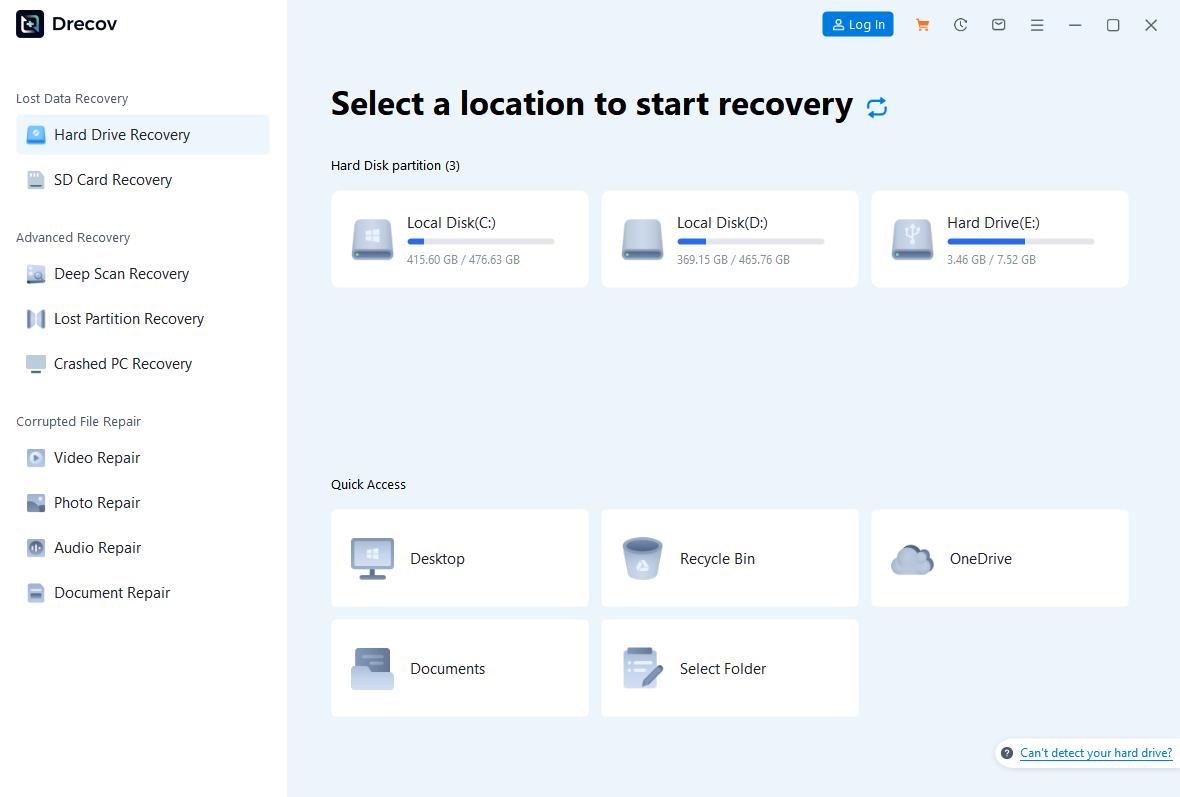
Step 1: Select the old profile’s Windows volume
Stop writing new browser data to that volume if possible. Prepare another healthy drive for results and do not install Drecov on the affected partition. Open Drecov and select the Windows volume where the former profile folder lived. If the device disconnects, makes unusual sounds, or reports severe read errors, stop direct scanning. Imaging or professional recovery is safer for an unstable source.
Step 2: Search with Quick Scan
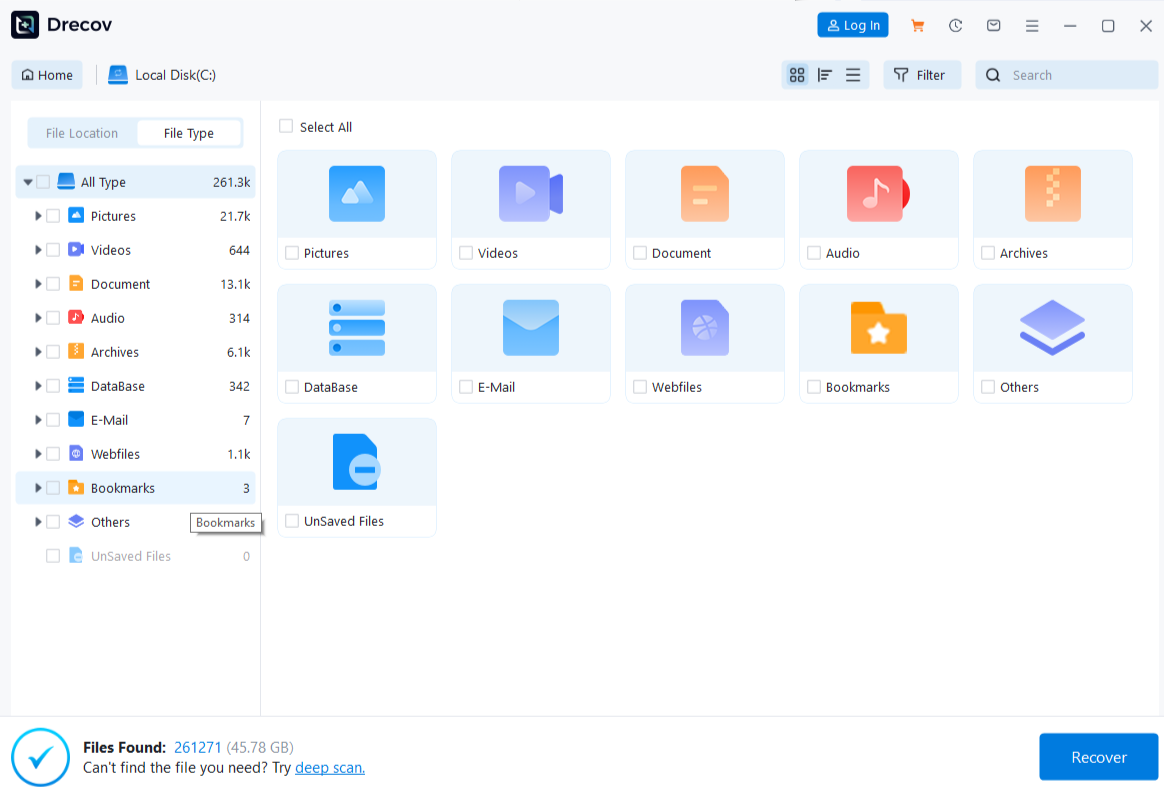
Run Quick Scan and navigate toward the old user’s AppData profile area. Search for the former folder name and recognizable profile files if the results permit. A profile is a collection, not one document. Recovering only a bookmark file may not restore extensions, preferences, or stored sign-ins. Note which folder and files seem to belong to the same date and account.
Step 3: Deepen the search only if the source is stable
If Quick Scan misses the needed folder and the storage remains stable, try Deep Scan. Keep the original volume idle during the search. A deeper scan cannot reconstruct bytes that have been fully overwritten. Stop if the device begins to fail rather than repeating direct scans until it disappears.
Step 4: Preview and recover to another drive
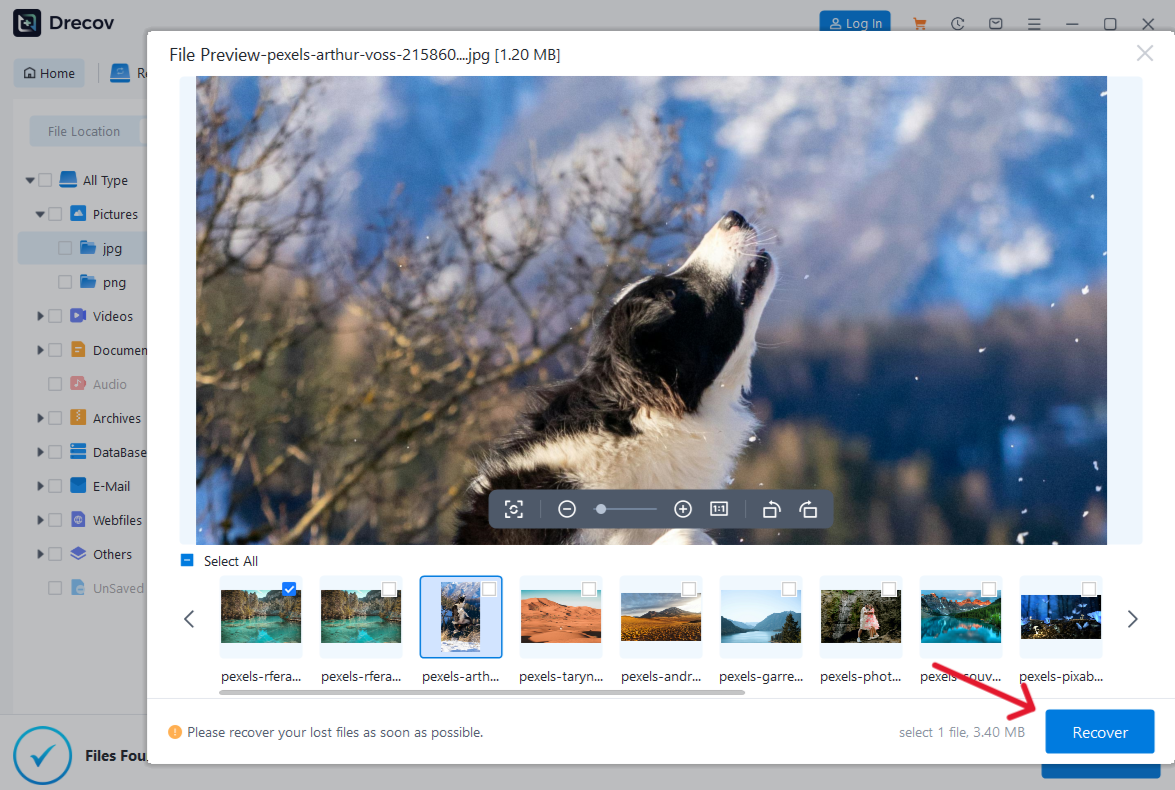
Filter for likely file types and inspect representative results, understanding that a preview does not prove a browser database is complete. Recover candidate profile files and folders to the prepared healthy drive, never onto the original volume. If the output is not where expected, check the Drecov Folder or Recovery Folder at the destination. Preserve the relative folder structure where possible; scattered files are harder to test as one profile.
Step 5: Test a recovered copy, not the live profile
Use a separate Firefox test profile and follow Mozilla’s restoration instructions with a duplicate of the recovered folder. Check bookmarks, history, settings, and any other data you needed. Do not overwrite the active browser profile until the recovered copy passes this test. A recovered file listing is not proof that Firefox can read the database. Once the important data is safe, you can decide whether to refresh or reinstall the browser.
⚠ Warning: Install it on a drive different from the one where your data was lost to prevent overwriting.
FAQs
Does Firefox Sync count as a full backup?
Sync can restore selected information, but it is not the same as an offline snapshot. Changes may travel between devices. Keep a separately stored profile copy when you need a dated fallback.
Can I copy the profile while Firefox is open?
Close Firefox first. Databases and session files can change during a live copy, making the result inconsistent. If a file is locked, wait for the browser process to exit.
Is exporting bookmarks enough?
It is enough if bookmarks are the only data you need. A full profile may include additional settings, history, extension state, and other browser files.
Should I replace the new profile folder immediately?
No. Work with a separate test profile or a duplicate first. Confirm that Firefox opens and the important data appears before replacing a working environment.
Can Drecov restore every saved password?
No such guarantee is possible. It can search for deleted local profile files on stable Windows storage. Whether Firefox can use recovered sign-in data depends on the completeness of the relevant files and environment.
Conclusion
To backup a Firefox profile, identify the active folder through the browser, close Firefox, copy the entire folder to another healthy drive, and test a duplicate before changing the old setup. Sync and bookmark exports remain useful, but each protects a different set of data. If the original local profile was deleted before you made a backup, Drecov can search its stable Windows volume and save candidate files elsewhere. Verify those files in a separate Firefox profile before trusting them or resetting the browser.
⚠ Warning: Install it on a drive different from the one where your data was lost to prevent overwriting.