






If you need to know how to get into a password protected Word document, first read the exact prompt. A password required before any text appears is different from a file that opens but prevents editing. A third case is a document that will not open because it is damaged or blocked. Keep the original file unchanged and use only documents you own or are authorized to access. The right next step may be entering the known password, asking the document owner, using a permitted earlier version, or recovering a missing unprotected copy—not trying a tool that promises to remove any lock.
Identify which barrier Word is showing
Open a copy of the document rather than experimenting on the only file. Record the wording of the message and whether you can see the contents. Also note where the file came from: an email attachment, a shared folder, a cloud drive, or your own computer. Those facts quickly narrow the problem. Do not change the extension from `.docx` to another format in the hope that Word will ignore encryption; a new name does not change the protection inside.
Word asks for a password before opening
This is the most restrictive case. If the document was encrypted with a password to open, Word needs the correct password before it can show the contents. Check the message from the sender, your password manager, and any secure team record where the owner may have shared the password. Try ordinary typing checks such as keyboard layout and Caps Lock. Avoid repeated guesses if the file came through a managed work system; an administrator or the owner may have a documented access path.
The document opens but you cannot change it
Read the banner or status message. Word can limit editing without hiding the text, and a file can also be marked read-only by its storage location. If you have permission, ask the owner for an editable version or the restriction password. You may be able to make a separate copy for review, but do not present that as a way to override the owner’s restrictions. If a cloud file is locked by another editor, check its sharing and version features rather than treating it as a forgotten opening password.
The file fails to open for another reason
A corruption message, blocked attachment warning, or zero-byte file is not evidence that the password is wrong. Check the file size and try a known good Word document in the same installation. Save the suspect original before any repair attempt. If only this file fails, look for a prior version or an intact attachment from the sender. If every document fails, troubleshoot Word or the account before searching for a password-recovery method.
Use the legitimate access route for the lock you have
When you know the opening password, enter it in Word’s own prompt. After the file opens, make a working copy to a healthy location and confirm that it contains the expected pages. If you need to remove protection from a document you control, use Word’s protection settings while the file is open and authorized. Keep an encrypted original if your organization requires it. Do not email an unprotected copy to yourself simply because it is convenient.
Ask the owner or administrator before hunting for tools
If a colleague created the document, ask for the password or a permitted export. A company may keep credentials in a managed vault or hold a recent backup. The owner may also know whether you were meant to have edit access or view-only access. This is often faster than searching the internet for a program that makes broad claims about encrypted files. Use a secure channel for the password and avoid putting it into an untrusted website.
Check version history for a usable earlier copy
If the file is yours and stored in OneDrive, SharePoint, or another service with version history, inspect earlier versions through that service’s normal interface. Compare dates and document contents before restoring anything over the current file. An older version might lack recent edits, so download or copy it separately first. Local File History or an external backup may hold another copy as well. This path retrieves a different file; it does not unlock the encrypted copy in front of you.
Know the limit of a forgotten opening password
Microsoft states that a Word document protected by a lost opening password cannot be recovered by Word. Its password-loss guidance is an important reality check. Do not confuse that limit with a read-only banner or an editing restriction, which may allow you to view the text. Likewise, a deleted file may be recoverable even though a surviving encrypted file cannot be decrypted without its password.
Search for a legitimately accessible earlier copy instead of making unsupported promises about cracking encryption. Check sent attachments, shared folders, exported PDFs, backups, and version history. Ask whether the original author still has the source document. If you find a copy, open it and compare its contents with what you expected. Do not overwrite the protected file until you know the alternative contains the needed information.
Recover a missing earlier copy from Windows storage
If you once had an unprotected or accessible Word file on a Windows PC and it was deleted, formatted away, or lost with a partition, software recovery may help locate that older file. This is a different task from opening the currently encrypted document. First check Recycle Bin and backups. Stop creating new files on the affected partition, since new writes can replace recoverable data. A stable, consistently detected source is required for a sensible software scan.
Drecov is Windows data-recovery software that can search a readable source for lost documents. Its read-only recovery approach, Quick Scan, Deep Scan, filtering, and preview help you assess candidate copies before saving them to a separate healthy location. The Word document recovery page covers lost-file cases rather than password removal. Lost Partition Recovery is available when the original partition itself disappeared. Drecov cannot decrypt a password-protected Word file, bypass permissions, or repair physical storage. Its role here is to retrieve a different, previously accessible copy when that copy truly went missing.
⚠ Warning: Install it on a drive different from the one where your data was lost to prevent overwriting.
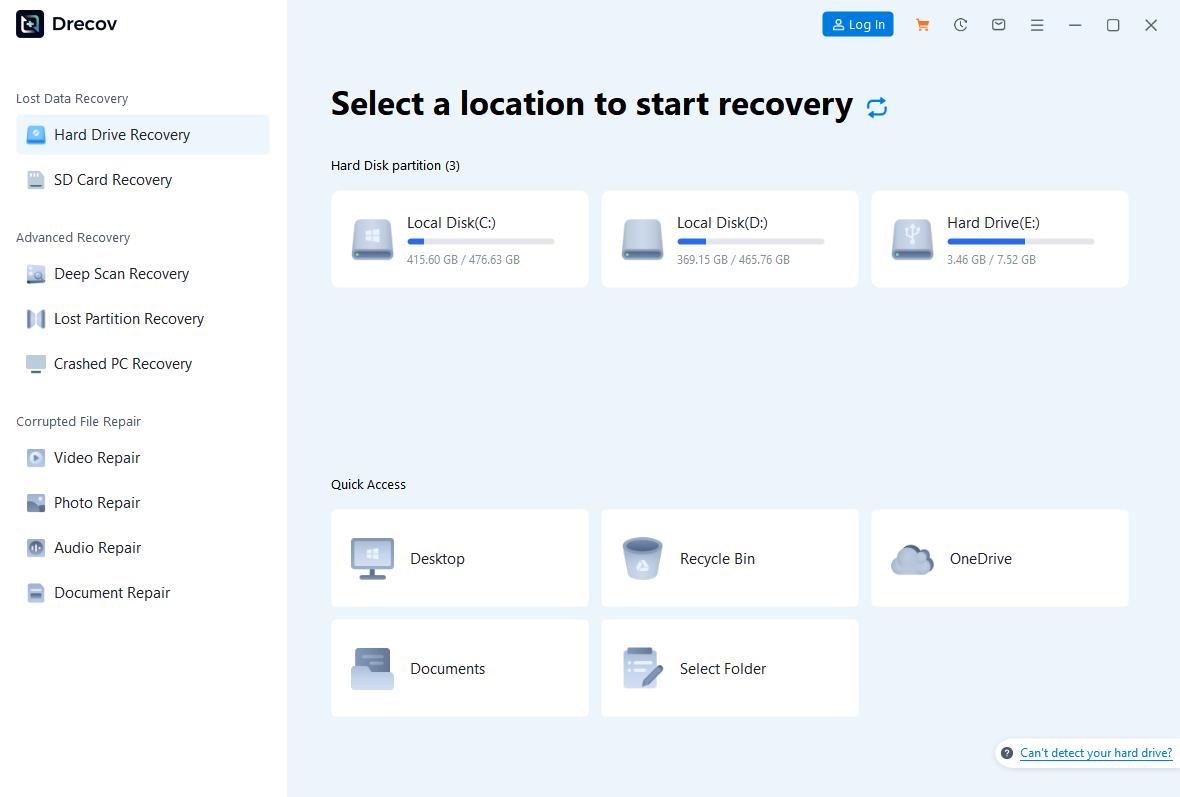
Step 1: Open Drecov and select where the old file lived
Prepare another healthy drive for recovered files. Do not install the software on the partition that held the missing document. Open Drecov on a working Windows system and choose the original location, such as the Documents partition or the USB device that held the old copy. If the source drive is unstable, clicking, or repeatedly disconnecting, stop direct scans and seek imaging or professional help.
Step 2: Run Quick Scan for likely Word copies
Start Quick Scan. Use the remembered filename, folder, or document type to narrow the results where possible. Look for more than one candidate if you kept several drafts. A familiar filename does not prove that the file is the unprotected version you need. Preview supported results when available and compare visible text or dates with your recollection.
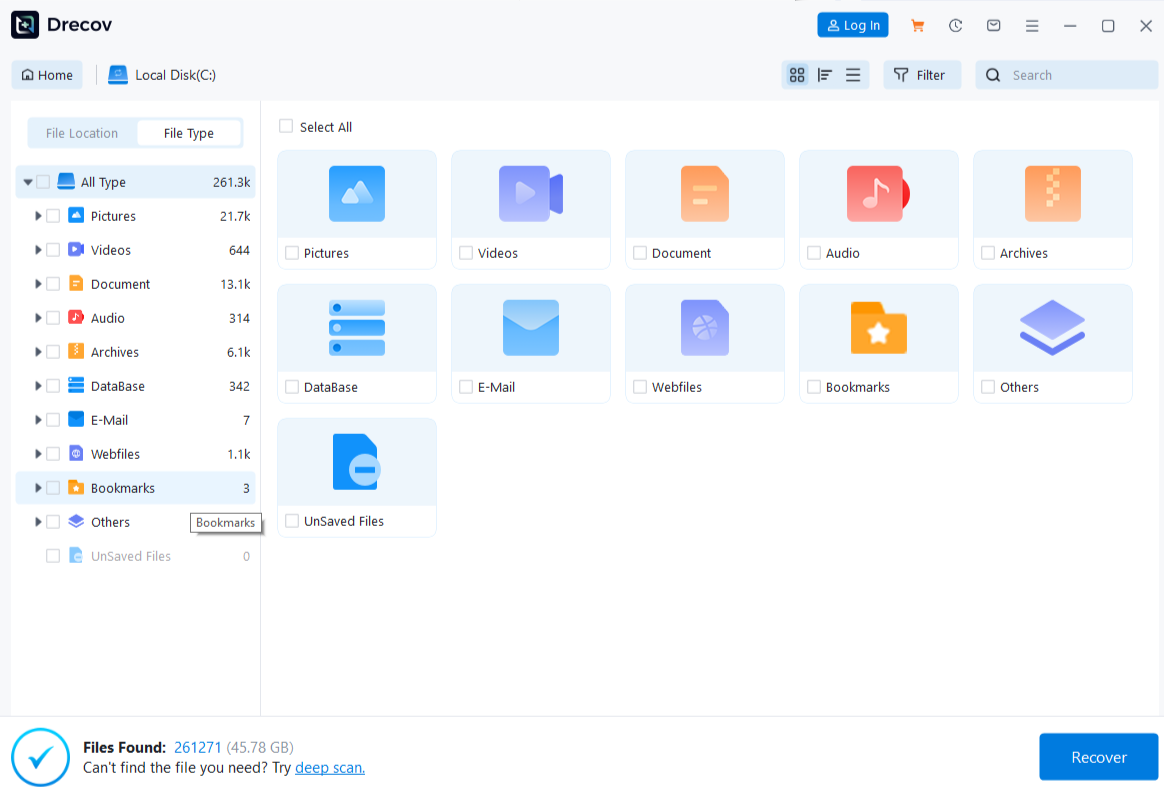
Step 3: Use Deep Scan only if the source stays stable
If Quick Scan finds nothing useful and the storage remains reliably readable, continue with Deep Scan. Search by file type and examine candidates from the original work area. A deeper search can return files without their previous paths or names. Do not assume that a large list means the desired version still exists. Stop if the source develops severe errors or disappears.
Step 4: Save elsewhere and test the recovered document
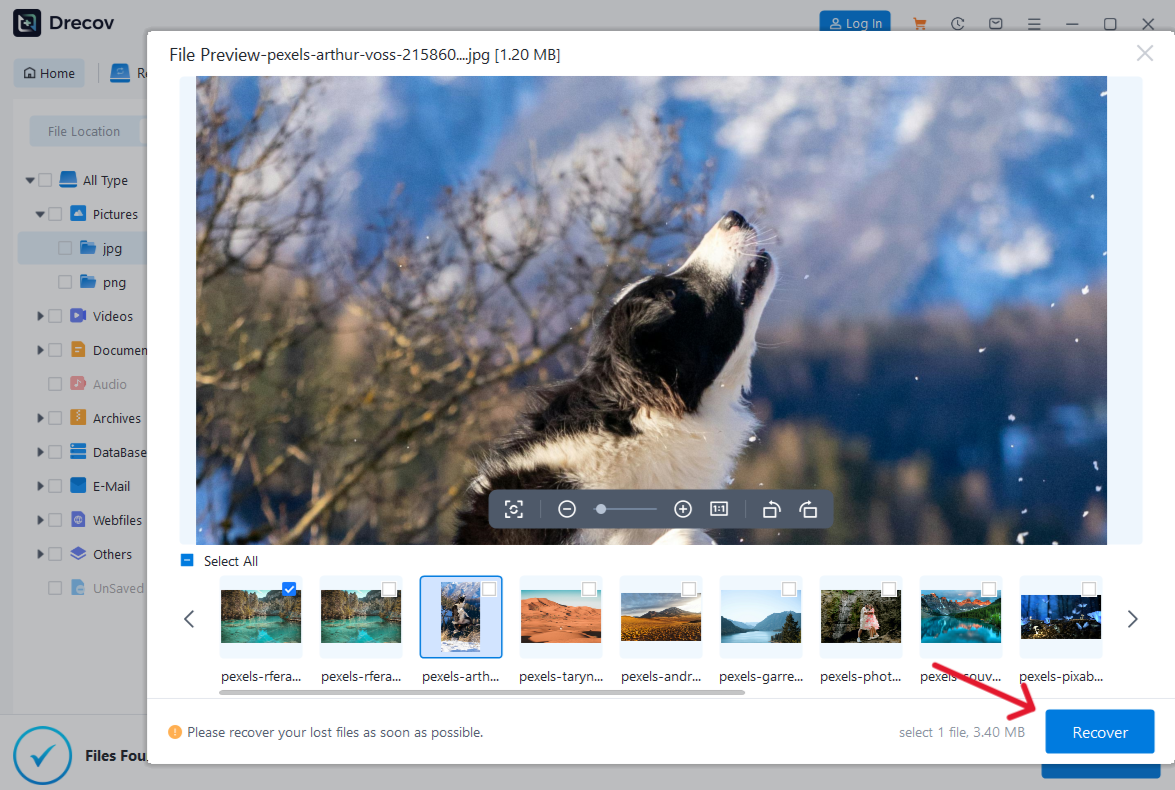
Recover selected files to the separate healthy drive, never the source partition. If the output is not where expected, check the Drecov folder or Recovery folder before rerunning the scan. Open each candidate in Word and confirm that the required pages, tables, and recent edits are present. If Word still asks for an unknown opening password, recovery has retrieved the file but has not removed its encryption. The file recovery overview explains why recovering a copy and repairing or unlocking its contents are separate operations.
⚠ Warning: Install it on a drive different from the one where your data was lost to prevent overwriting.
Keep the right copy without creating a new problem
Once you have access to an authorized version, save a separate working copy with a clear date or version name. Open it again from its final location. If it is a shared document, tell collaborators which version is current before anyone edits an older one. Keep the encrypted original if records or policy require it. For an important document, store a backup in a different location and verify that it opens. The goal is not simply to make a prompt disappear; it is to preserve the correct content and the access rights around it.
FAQs
Can I open a Word file if I forgot its opening password?
Word cannot retrieve a lost opening password for a protected document. Ask the owner, check an authorized password record, or look for a separate accessible version.
Is read-only mode the same as encryption?
No. Read-only or editing restrictions may still let you view the text. An opening password protects the document before its contents appear.
Will changing `.docx` to `.zip` remove the password?
No. Renaming the extension does not decrypt the file. Keep an untouched original and use authorized access or another legitimate copy.
Can Drecov remove protection from a Word document?
No. Drecov may recover an earlier lost file from stable Windows storage. It cannot unlock the current encrypted document or guarantee that an unprotected version exists.
Conclusion
To get into a protected Word document, identify whether you face an opening password, an editing limit, or an ordinary file error. Use the password or permissions supplied by the owner and check authorized versions before trying any tool. If a separate unprotected copy was lost from a stable Windows device, Drecov can search the original location, preview candidates, and save them to another healthy drive. It cannot decrypt a file whose opening password is unknown. The successful outcome is access to the correct, permitted document—not merely the disappearance of a warning.
⚠ Warning: Install it on a drive different from the one where your data was lost to prevent overwriting.