






To copy user profile windows 10 data safely, start with the files you actually need, not a wholesale copy of C:\Users\OldName. Create and sign in to the destination account first. Then transfer Documents, Desktop, Pictures, Downloads, and other known work folders, checking OneDrive and application-specific data separately. Open representative files from the new account before you remove the old one. Copying every hidden profile file can bring over broken settings, account-specific permissions, or temporary caches without making installed programs work.
Decide whether you are moving to a new account or a new PC
The destination changes the method. A new account on the same Windows 10 computer can read an existing local drive, subject to permissions. A new PC needs a transfer route such as an external drive, approved network location, or a cloud service. Neither case makes the old account’s registry settings and installed applications magically portable. Treat the profile as several groups of data, not one folder that can be pasted over an active account.
| What you want to keep | Typical location or method | What to verify |
|---|---|---|
| Documents, photos, videos | Named user folders or chosen work paths | Open files from destination account |
| OneDrive content | Sign in and check cloud sync state | Files are actually available offline if needed |
| Browser and app settings | App’s export or account sync | Bookmarks and data appear in the app |
| Installed programs | Reinstall or use vendor migration process | Program launches with license intact |
| Local-only app projects | Documented export or project folder | Project opens with its linked assets |
Before making a copy, list the account names on both sides. A Windows display name is not always identical to its folder name under C:\Users. Check the actual path in File Explorer. Also note whether Desktop, Documents, and Pictures point to OneDrive. A cloud placeholder that appears in Explorer may not be stored locally. If you are leaving a work or school account, confirm what company policy allows you to transfer. Permissions and ownership matter as much as file paths.
Prepare a verified copy before changing accounts
Sign in to the old account while it still works and make a separate backup of important files. Use a healthy external drive or another approved destination with enough free space. Copy, rather than move, the folders you need. Include any custom project paths outside the default user folders, such as a separate work drive or a program’s export folder. Do not empty the old profile to make room before the new copy has passed inspection. If a disk clicks, repeatedly disconnects, or shows serious read errors, stop the transfer attempts and consider an appropriate image or professional help.
Record a few reference points: the number of major folders, approximate sizes, and names of recent important files. For a photo library, pick an old image and a recent one. For spreadsheets, choose files with formulas and linked assets. A sample should challenge the copy, not merely confirm that an empty folder exists. If the old PC is unreliable, favor protecting the data before account repair, reset, reinstallation, or disk maintenance. Those actions can change access and write new data.
Do not rely on a single cloud icon as proof of backup. Open the OneDrive web view or its account status, check that the relevant folders and latest changes are present, and identify items that exist only locally. Microsoft describes several ways to move files to a new Windows PC, including OneDrive and external storage. The page is about moving files, not cloning an entire profile. The distinction matters because applications, saved sign-ins, and some settings need their own setup.
Copy personal folders into a new Windows account
Create the destination first
On the same computer, open Settings, Accounts, then Family & other users or Other users, depending on the Windows 10 build. Add the new account you intend to use, or ask the administrator to create it on a managed PC. Sign in once so Windows creates its own profile folders. Then sign out. Do not paste the old profile over C:\Users\NewName as a whole; Windows may have already created files and permissions tied to the new account. Copy selected user files into matching folders instead.
From an account permitted to read both locations, open the old profile in File Explorer. Copy the contents of Documents, Desktop, Pictures, Videos, Music, and relevant Downloads into the new account’s corresponding folders. Do the same for any clearly identified work folders. If Windows asks for permission to read an old folder, confirm that you own the data and use an authorized administrator account when appropriate. Do not change permissions on the entire system drive to solve one folder. The guide to files missing after profile repair addresses the separate case where a prior repair changed which profile Windows opens.
Leave hidden system and application data alone at first. AppData contains settings, caches, and app-specific files; some may be useful, while others are tied to the old account or should be regenerated. For a program that stores local projects there, consult its own export or backup process and transfer only the documented data. Copying the entire AppData tree can reproduce a broken setting from the old profile. It also cannot install software on the new PC. Keep the old account available until each critical application has been tested.
Handle OneDrive, browsers, and applications separately
If Documents or Desktop appears under OneDrive, sign in to the right Microsoft account on the destination. Wait for synchronization and check the folder on the web as well as in File Explorer. Cloud-only files may show a name but require downloading before they work offline. Do not delete an old OneDrive folder while the new account is still synchronizing, because a deletion may propagate. If items disappear after unlinking or switching accounts, the article on OneDrive files after unlinking follows that specific branch.
Use browser sync or export tools for bookmarks and passwords rather than dragging internal profile databases between accounts. For email, check whether messages are on the server or stored in local PST archives. For games and creative applications, look for their documented save and project locations. Some apps keep working files outside Documents, and linked media may remain on a different drive. Open a project from the destination account and check its assets. A folder that contains only the project file is not a complete transfer if images or clips were stored elsewhere.
Installed programs need reinstallation or the vendor’s supported migration process on a new PC. Copying Program Files or an application shortcut does not carry all components, permissions, and licenses. On the same PC, some programs remain installed for all users, while others were installed only for the old user. Test each important program while the old profile is intact. Note the license details through the vendor’s legitimate account tools, not by copying hidden credential files. If the work PC is managed, ask the administrator before moving licensed or sensitive material.
Verify the new profile before you remove the old one
Sign in as the destination user and open representative files from the new folders. Check one recent and one older document, a photo, a video, and any specialized project that matters. Try editing and saving a harmless copy to confirm write access. Count major folders and compare their sizes with your notes. If a file has a cloud icon, test its availability when offline if offline access is part of your goal. A list of filenames proves little if the content cannot be opened.
Check the Recycle Bin and the backup drive only if something expected is missing. Search the old and new user folders by exact filename before assuming a deletion. Also examine whether Windows logged you into a temporary profile or a different account. If the old account was removed too early, the article about a deleted Windows profile discusses that higher-risk recovery situation. Here the aim is prevention: keep the source account and backup until the new one has passed the checks.
When the transfer is to a new computer, perform the verification there, not just on the external drive. Applications may use different paths, and the new machine may have a different drive letter. Open the copied project in its normal app. If it reports missing linked files, locate those assets in the old profile or backup and copy them into a stable project folder. Do not delete a source folder merely because its total size matches the destination. Test the files that the reader actually needs to use.
When files were lost during the profile move
First determine whether the data is elsewhere rather than deleted. Check the old account’s Documents and Desktop, OneDrive’s web view, Recycle Bin, File History or other backups, and the destination account. If a local file really vanished from a stable drive, stop writing to that source. Avoid reinstalling Windows, resetting the PC, cleaning the old account, or running destructive disk repair until you have protected or recovered the data. Prepare another healthy drive for any recovered output. Never install recovery software on the partition where the missing files were stored.
Drecov is Windows file-recovery software for lost local files on a stable, recognized PC drive or connected device. Quick Scan gives an initial pass; Deep Scan may search further when the first scan misses the target and the device remains stable. Filters and supported previews help identify the right documents, photos, videos, or project files. Recover to another healthy location and open samples from there. Lost Partition Recovery is available for a missing partition, not for making a copied profile log in correctly. Drecov cannot recreate cloud-only OneDrive data, reinstall apps, or repair a physically failing disk.
If the original drive clicks, disconnects, or has major recurring read errors, do not keep rescanning it. Consider a suitable image or professional assistance. If a file was overwritten by new profile data, no tool can promise its return. Recovery is a branch for actual local loss, not a routine step in every account migration. Preserve the original drive and backup while deciding whether software scanning is safe.
Find the missing files from the old profile
⚠ Warning: Install it on a drive different from the one where your data was lost to prevent overwriting.
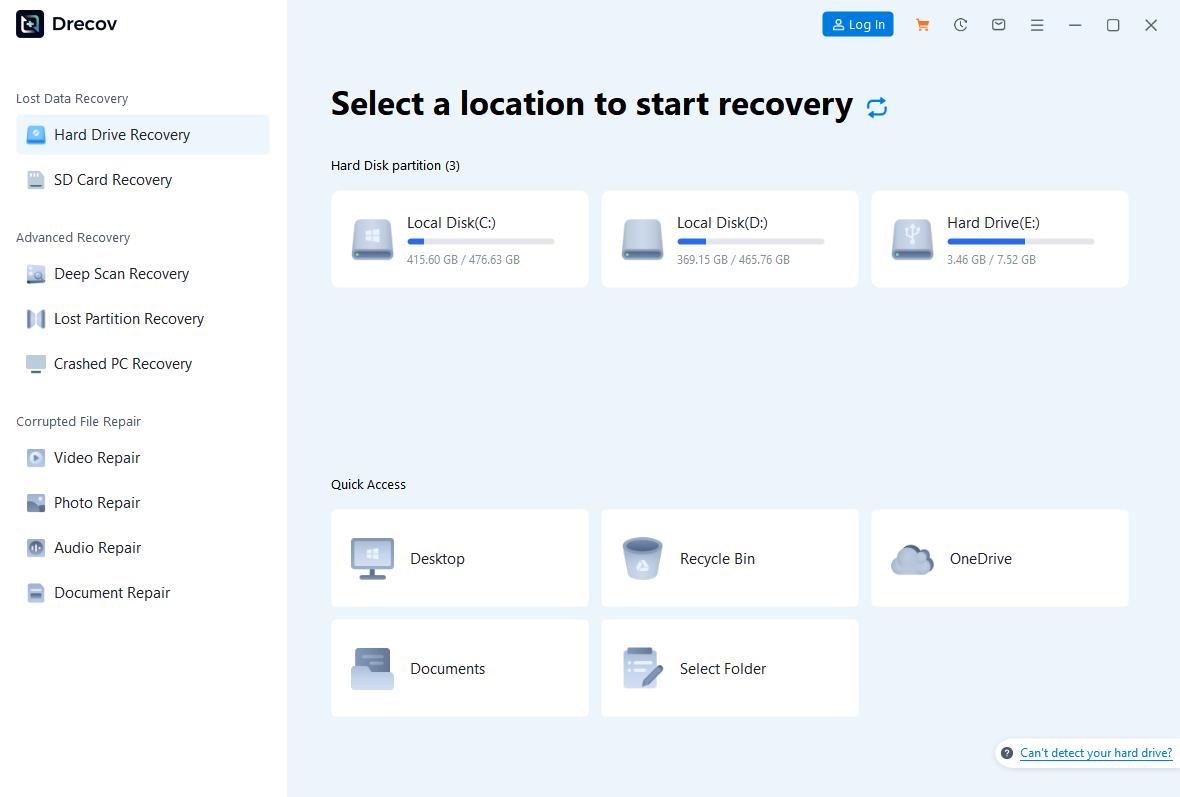
Step 1:
Open Drecov and select the original stable disk or old profile partition where the files last existed.
Step 2:
Run Quick Scan. If the expected folders are absent and the drive remains stable, run Deep Scan; stop on new signs of hardware trouble.
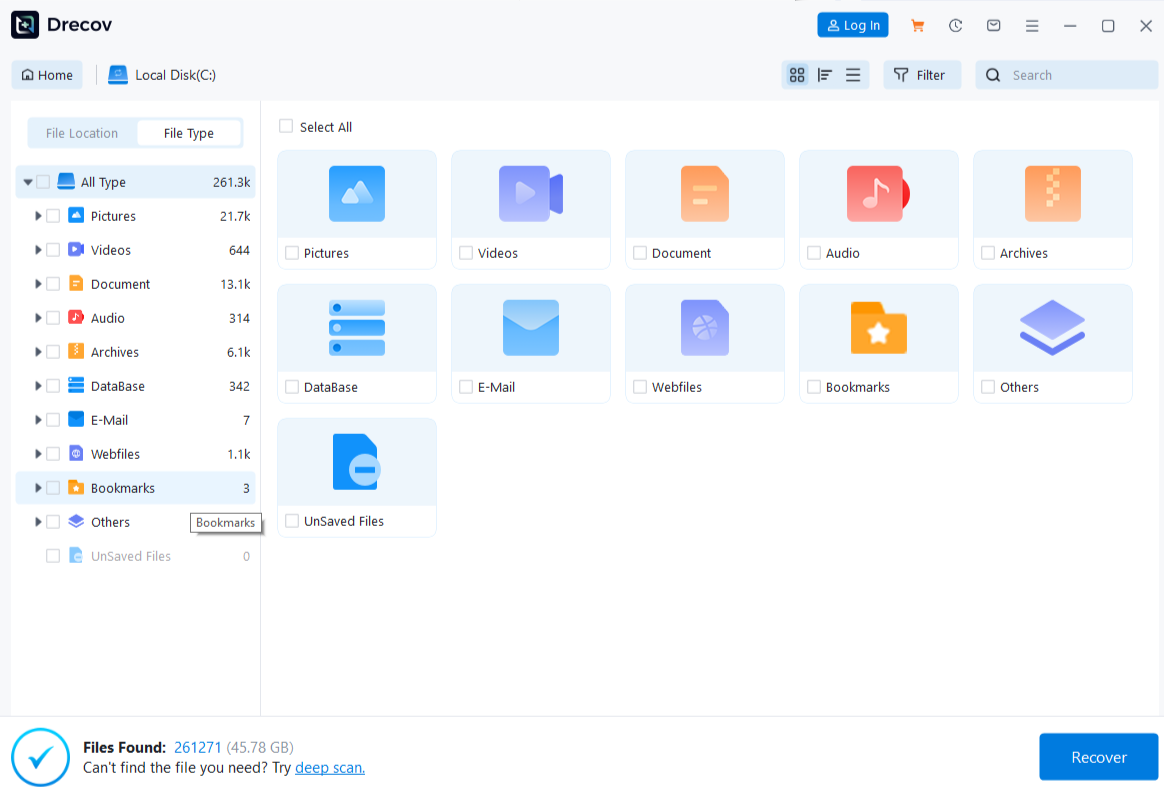
Step 3:
Filter by old path, filename, and file type. Preview representative supported documents and media. A successful preview of one file does not confirm every linked project asset.
Step 4:
Recover candidates to another healthy drive, not to the old profile partition. If output is not in the folder you expected, check Drecov Folder or Recovery Folder on the destination.
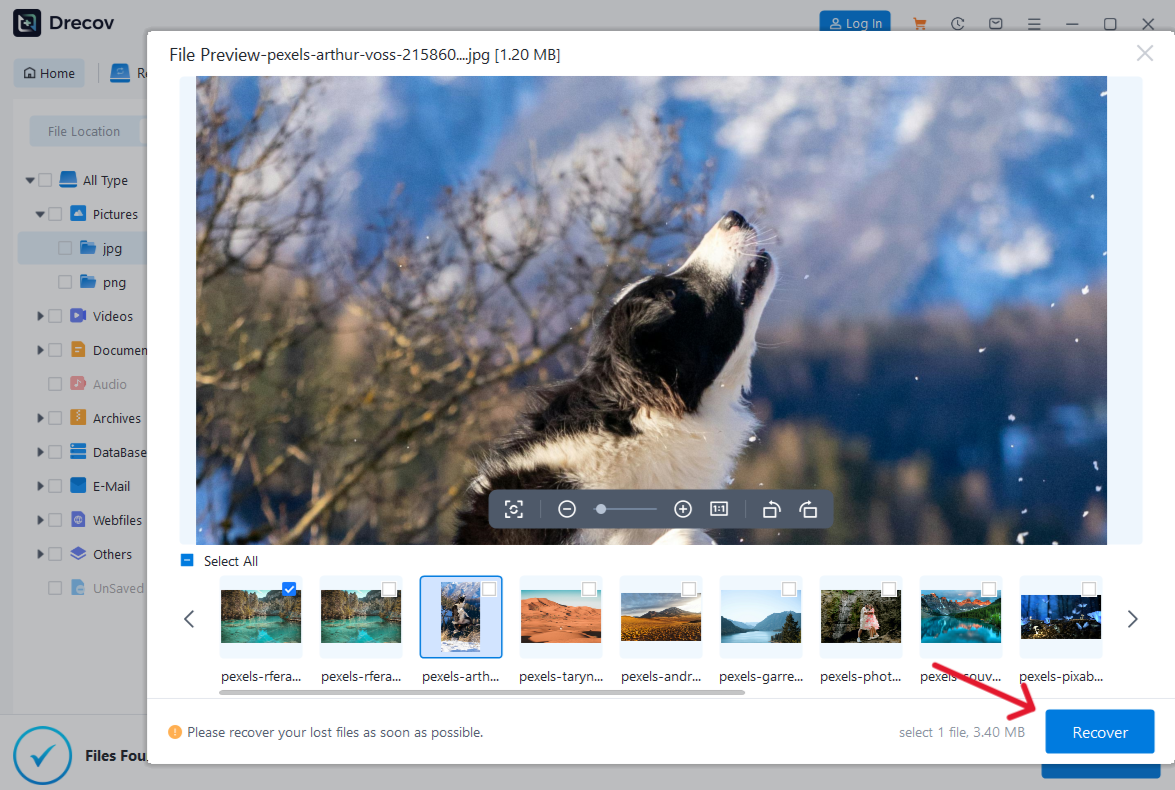
Step 5:
Open recovered files, verify dates and project links, and only then consider deleting the old account or reinstalling the system. The Drecov home page describes the general local-recovery scope; the transfer checklist above remains the first line of defense.
⚠ Warning: Install it on a drive different from the one where your data was lost to prevent overwriting.
FAQs
Can I copy the entire C:\Users folder to a new PC?
Not as a reliable migration method. Personal files can be copied, but installed apps, account permissions, credentials, and many settings require separate setup. Create the destination account first and test each important category.
Should I copy AppData?
Only when a specific application documents the files you need. AppData includes caches and account-specific settings that may not work elsewhere. Prefer the application’s own export or sync function, and keep the old profile until the app works.
Are OneDrive files already on the new computer?
Not necessarily. Sign in to the right account, check synchronization, and confirm whether files are cloud-only or available offline. A visible filename is not proof that its content has been downloaded.
Can I remove the old account after copying folders?
Wait until you have opened representative files and projects from the new account, checked linked assets and application data, and kept a separate backup. Removing the old account too early can make recovery harder.
Will Drecov recreate my old Windows settings?
No. It searches for missing local files on a suitable stable drive. It is not an account-cloning or application-migration tool. Use Windows and each application’s supported setup steps for settings.
Conclusion
To copy user profile windows 10 data without surprises, create the new account first, transfer selected personal files, handle OneDrive and app data separately, and test the result before removing anything. A copied profile folder is not a working replacement for the account or installed programs. When a local file genuinely disappears during the move, Drecov can scan its stable original location and restore candidates to another drive. Open the recovered files and verify linked work before you clean or reset the old system.
⚠ Warning: Install it on a drive different from the one where your data was lost to prevent overwriting.