







Bootrec not recognized usually tells you that the command is unavailable in the command window you opened; it does not by itself prove that your disk is damaged. First confirm whether you are in the normal Windows desktop, Windows Recovery Environment, or installation media. Do not run substitute boot commands from a search result until you know which disk contains Windows and whether its files are safe. The wrong repair target can make recovery harder.
Read the exact message and identify the command window
Write down the full error, including whether it says “not recognized as an internal or external command” or that a path cannot be found. Note what you typed and where you opened Command Prompt. A window launched from the Start menu in a running Windows session is not the same as Command Prompt under Advanced options in Windows Recovery Environment. Bootrec is a recovery utility, so an ordinary desktop prompt may not expose it.
Look at the screen behind the prompt. Recovery options such as Startup Repair, System Restore, and Command Prompt indicate WinRE. An installation USB can also offer Repair your computer. If you see your normal desktop, stop trying variations of the bootrec command there. The immediate task is to enter the right repair environment, not to download a random replacement executable.
Check the keyboard layout if characters in your command appear unexpected. Type the command name carefully, without a preceding web-page bullet, quotation mark, or placeholder. Do not paste a command block that includes several repair operations. One mistyped command is easy to correct; a successful but inappropriate disk-writing command is not.
Choose the recovery route that matches the PC state
If Windows still opens normally
Back up important files before changing the startup configuration. Then open Settings > System > Recovery to review available recovery options for your Windows version. A normal boot means there is time to collect the model, Windows edition, BitLocker recovery information, and a separate file backup. You may not need bootrec at all. If the issue is only that a tutorial’s command will not run in desktop Command Prompt, stop at that diagnosis.
If Windows will not open
Use the Windows Recovery Environment offered by the PC, or boot from genuine Windows installation media and choose Repair your computer rather than Install. From Advanced options, inspect Startup Repair before manual command-line changes. If the PC cannot see the internal disk, shows the wrong capacity, clicks, or repeatedly loses the drive, do not continue with software repair. The problem may be physical or connection-related, and repeated boots can worsen access.
Windows may ask for a BitLocker recovery key before exposing a protected volume. Retrieve the correct key through the account or organization that manages the device. Do not erase or reformat the volume to bypass the prompt. A command that sees only the recovery environment but not the encrypted Windows volume cannot safely reconstruct your personal files.
Confirm the Windows disk before any boot command
Drive letters in WinRE may differ from what you saw in File Explorer. The Windows installation that was C: during normal use might have another letter in recovery. Identify the system disk and partitions by size, label, and the presence of the Windows folder before interpreting command output. If several drives are connected, disconnect only nonessential external devices when safe, while keeping any needed backup or recovery media available.
Do not assume that every PC uses an MBR boot layout. Modern Windows installations commonly use UEFI and GPT; older systems can use BIOS and MBR. A bootrec parameter that changes master boot code is not a universal cure for a missing UEFI boot entry. Microsoft’s Windows startup troubleshooting separates boot stages and explains that writing master boot code does not repair every partition-table problem.
Record the error before a repair attempt and take a photo of the disk and recovery-screen details if needed. If the Windows partition cannot be identified confidently, stop. A professional or administrator can work from that evidence; guessing the volume and pressing Enter repeatedly is not a plan. Even when bootrec becomes available, its success message does not prove that personal files remain intact.
Protect files before modifying boot structures
Startup Repair, BCD rebuilding, boot-sector changes, resetting, and reinstalling can alter how the PC starts. If the disk is readable and the files matter, preserve them before changing the boot structure. Check an existing cloud or external backup from another device. If you lack a trustworthy backup, consider removing the stable drive and attaching it to another Windows PC through suitable hardware, or using a verified recovery environment. Keep BitLocker information available where encryption applies.
Drecov is Windows data-recovery software, not a bootrec replacement. Its relevant role is extracting files from a stable, recognizable Windows source before a risky repair. It supports a Crashed PC Recovery mode as well as local-drive recovery, Quick Scan, Deep Scan, filtering, preview, and recovery to another healthy destination. The exact access method depends on whether you can enter Windows or connect the source drive to a working PC. Drecov cannot repair a failed controller, guarantee access to an encrypted volume without its key, or rebuild the boot configuration simply by recovering files.
⚠ Warning: Install it on a drive different from the one where your data was lost to prevent overwriting.
Step 1: Establish a readable source and separate destination
Do not install recovery software onto the affected Windows partition. If another Windows PC can read a stable source drive, attach the drive safely and prepare a second healthy destination for output. If you use Drecov’s Crashed PC Recovery workflow, follow the verified product interface for that mode and confirm that it recognizes the original storage. Stop if the drive clicks, repeatedly disappears, or reports severe read errors; imaging or specialist help is safer than direct repeated scans.
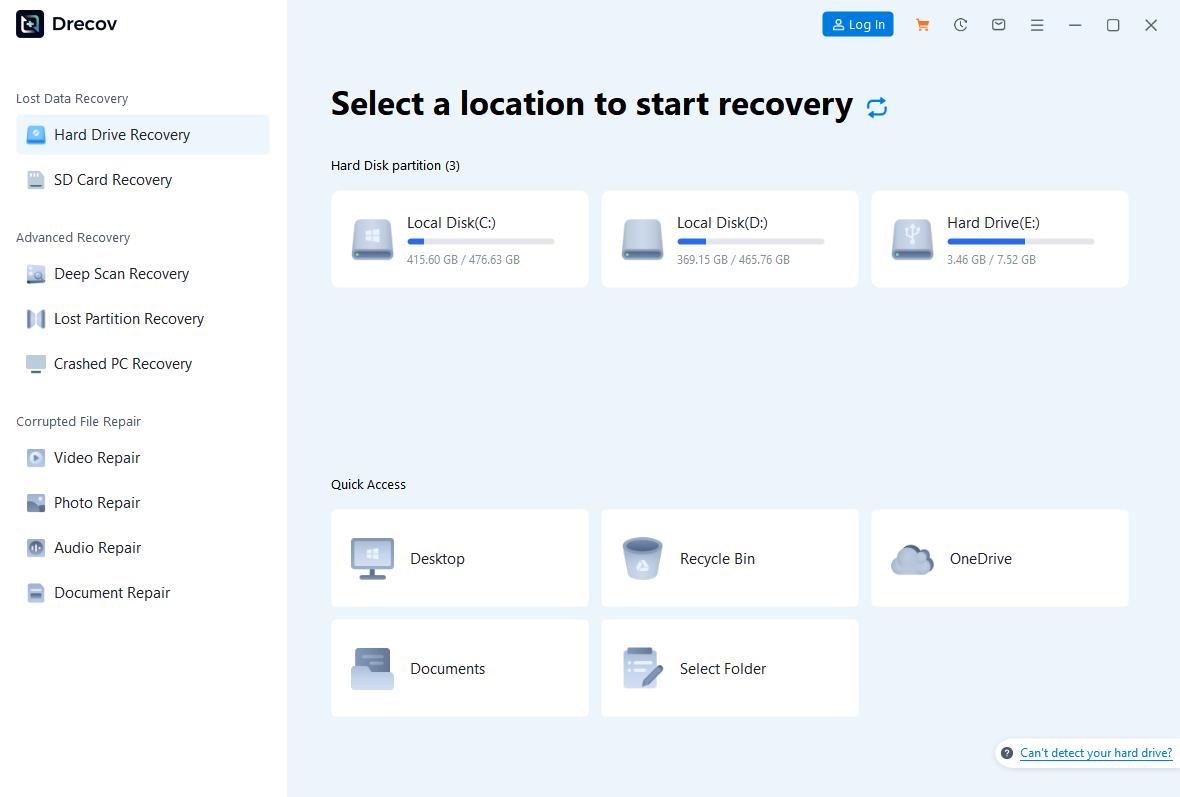
Step 2: Search the original user-data location
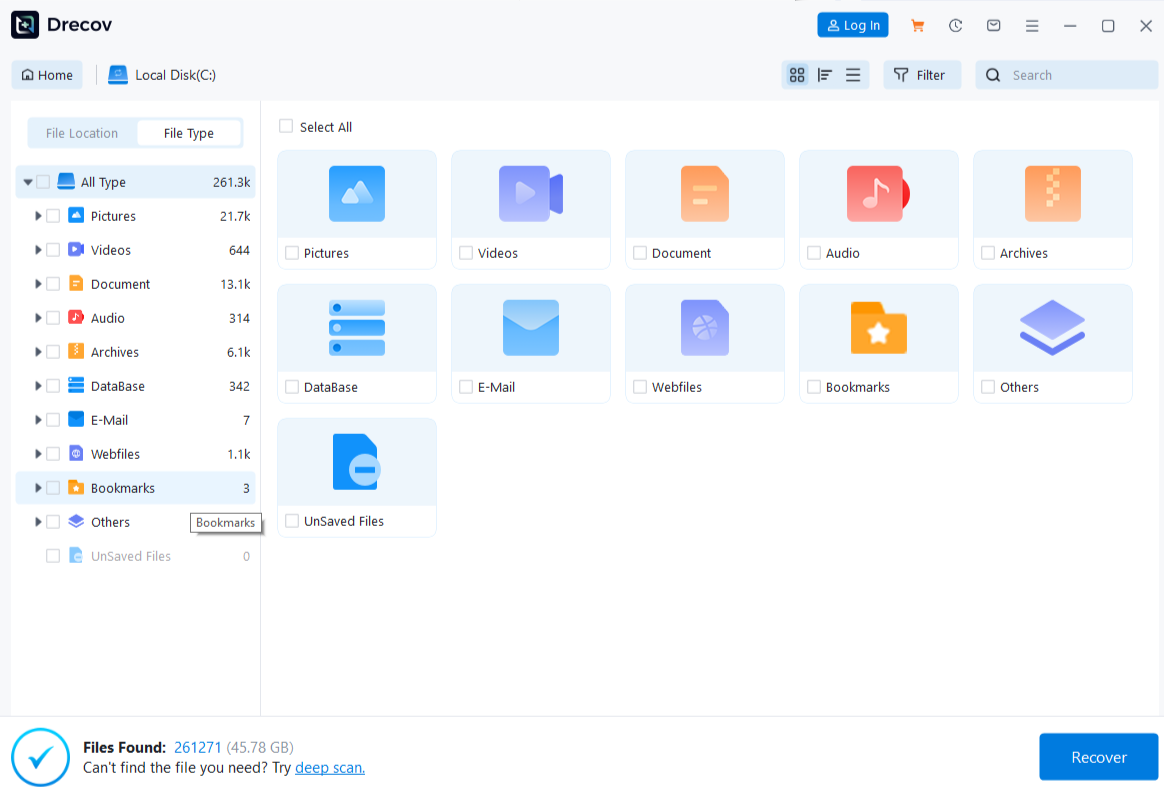
Open Drecov and select the original disk or partition that held the Windows user profile. Run Quick Scan first. Browse or filter for important Desktop, Documents, Pictures, and project folders. If the device remains stable and Quick Scan misses the targets, use Deep Scan. Preview representative supported files, but do not infer that every page or archive member is intact from one preview.
Step 3: Restore elsewhere, verify, then revisit repair
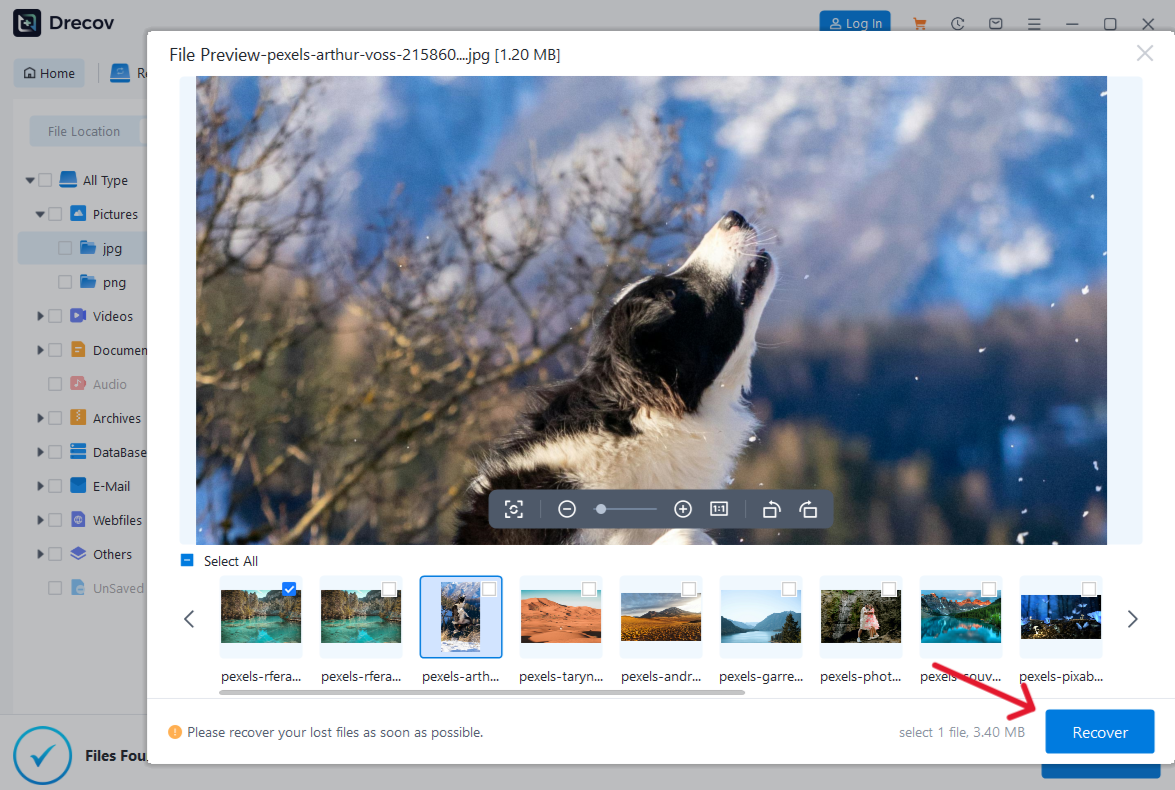
Recover selected files to the separate healthy destination, never to the source disk. If the output is not where expected, inspect the Drecov folder or Recovery folder associated with the destination. Open a sample of documents and images and check the content you need. Only then return to Startup Repair or a model-specific boot fix. For a wider treatment of inaccessible Windows files, see file recovery options.
⚠ Warning: Install it on a drive different from the one where your data was lost to prevent overwriting.
When bootrec appears, do not run every switch
The disappearance of “not recognized” solves only the command-availability question. It does not identify which repair, if any, your PC needs. Capture the wording if Startup Repair reports a particular failure. With a UEFI/GPT disk layout, a legacy MBR-focused command may be irrelevant. If the drive is missing from firmware, bootrec cannot make an absent device readable. Match the repair to the diagnosed boot stage and disk layout.
One common mistake is to run every command in a tutorial because each one looks short. They do different things. Some search for installations; others write boot information or rebuild configuration. The existing explanation of when BOOTREC /FIXMBR helps covers that specific command and its limits. This page’s job is earlier: establishing why bootrec was unavailable and whether command-line repair is even warranted.
After any authorized repair, restart once and observe the exact outcome. If Windows boots, open several important files and confirm the backup exists. If the error changes, record the new message before trying something else. A new error is diagnostic evidence, not an invitation to reset the PC. If the system remains inaccessible, return to data protection and manufacturer-supported recovery options.
FAQs
Why does bootrec work in one Command Prompt but not another?
The environments expose different tools. A desktop prompt and the recovery prompt are not interchangeable. Confirm where the prompt was opened before treating the command as missing from the installation.
Can I download bootrec.exe from a website?
Do not use an unofficial executable as a shortcut. Use genuine Windows recovery or installation media and verify the environment. A downloaded file does not diagnose the underlying boot problem.
Does bootrec recover personal files?
No. Its purpose concerns startup structures. If files are at risk, back them up or recover them to another device before modifying those structures.
What if the Windows drive is not visible in WinRE?
Check firmware recognition and the physical connection before command-line repairs. If the drive is unstable or absent, stop direct scans and seek imaging or specialist help.
Will Drecov make Windows boot again?
Drecov’s role is retrieving accessible data from a stable source. It does not replace Startup Repair or rebuild a BCD store. Verify recovered files separately from any later boot repair.
Conclusion
When bootrec is not recognized, first identify the command environment and the actual startup symptom. A valid recovery prompt, correct disk identification, and protected files matter more than finding another command to paste. Drecov can help save important files from stable, readable Windows storage before a risky repair, but it does not fix the boot configuration. Once the data is verified elsewhere, choose only the repair that matches the PC’s layout and observed error.
⚠ Warning: Install it on a drive different from the one where your data was lost to prevent overwriting.