







If 7 zip access is denied, do not immediately run the app as administrator or change ownership of a whole drive. First note exactly when the message appears: while opening the archive, during extraction, or when saving one particular file. Try reading the original archive from its current location, then extract a copy to a new folder you own. Comparing those two tests usually shows whether 7-Zip cannot read the source or Windows will not let it write the output.
Pinpoint the operation Windows denied
The phrase “access is denied” describes a blocked action, not a diagnosis. An archive may open and list its contents because reading its directory is allowed, yet fail while writing a file into a protected folder. By contrast, another archive may not open at all because the account lacks access to its source location. File locking offers a third explanation. Do not treat these as identical, and do not confuse them with CRC errors, wrong passwords, or a damaged 7z header. Those require different checks.
| What you observe | Most useful next test | What the result tells you |
|---|---|---|
| Archive will not open | Copy it to a folder you own, without deleting the original | If the copy opens, investigate source access |
| Archive lists files, extraction fails at once | Extract to a new folder under Documents | Success points toward the previous destination |
| Only one output file fails | Check whether that filename already exists or is open | The block may affect one file, not the archive |
| 7-Zip reports CRC, data, or header error | Keep the original and compare another copy | Integrity, not access, may be the main issue |
Write down the full path shown in the error dialog if there is one. Is it the path to the .7z or .zip file, or the path where a new file should appear? That small detail saves a great deal of guessing. If the archive is on a shared drive or removable disk, also confirm that the connection stays stable. A drive that drops out during reading is not a simple permissions problem. Stop repeated extraction attempts if the source begins disconnecting or reporting serious read errors.
When 7-Zip cannot read the source archive
Check the account and the archive’s location
In File Explorer, right-click the archive and inspect Properties. Confirm its path, size, and the account currently signed in to Windows. If it is inside another user’s profile, a restricted company share, or a folder restored from a different PC, your account may not have permission to read it. Do not take ownership of an entire user profile as a first step. Ask the owner or administrator for authorized access when the file is not yours. On a work PC, a security policy may be doing exactly what it was designed to do.
If you are authorized to use the file, try copying it to a new folder under your own Documents directory. Preserve the source intact. A successful copy and opening of the duplicate suggest that access to the original path caused the problem. A failed copy points back toward source permission, file locking, or device trouble. Check whether another application is synchronizing or holding the archive open; wait for that operation to finish rather than forcibly ending an unknown process. A copied archive is also safer for subsequent tests because the only original remains unchanged.
Separate permissions from damaged data
7-Zip’s documentation distinguishes cases where an archive lists files but reports data or CRC errors during a test or extraction. These messages are not the same as a Windows access denial. If the copy opens but testing reports an integrity error, compare it with the sender’s original or a known-good backup. For a multipart archive, check that all parts are present before making changes. A password prompt also means something different: 7-Zip cannot bypass encryption merely because you have permission to read the file.
Do not overwrite the archive with a “repaired” copy until you have preserved the original. If the archive lives on a USB drive that repeatedly disconnects, stop scanning and extraction attempts. A stable image made with appropriate tools or professional recovery may be safer than repeated reads. The article on a 7-Zip archive that will not open covers missing parts and header problems in more detail; this page focuses on the access-denied branch.
When the archive opens but the output folder refuses files
Open 7-Zip, select the archive and choose Extract. In the destination field, use a fresh folder under your own Documents directory, such as Documents\Archive Test. Create the folder first in File Explorer so you know it exists and can write there. Extract a small, non-sensitive file as a test. If it works, the old destination is the likely obstacle. A system directory, another user’s folder, a company-controlled location, or a read-only removable device can reject writes even while the archive itself is perfectly readable.
Do not solve this by weakening permissions on the whole drive. Instead, use a destination where your account has legitimate write access. If the extraction must ultimately go into a protected application folder, first extract to a normal user folder, inspect the files, and then follow that application’s own installation or import process. Copying an unknown executable or configuration file into a system folder without knowing what it does is risky. The successful test also tells you that a new recovery scan is unnecessary: the data is still accessible inside the archive.
If the test folder fails too, check that the destination drive has free space and remains connected. A very long nested path or a filename that collides with an existing locked file can cause a narrower failure. Try a short destination path and look at the exact output filename in the error. Do not rename files inside the only archive just to get a quick success. If you need the original names, preserve them and solve the destination issue instead. Extracting to a second healthy drive can distinguish a local disk problem from a restriction tied to one folder.
Investigate security protection without turning it off broadly
Windows Security can prevent an untrusted app from changing files in protected folders. If extraction fails specifically in Documents or another protected area, open Windows Security and review Virus & threat protection, Ransomware protection, and protection history. Look for a blocked action at the time of the 7-Zip failure. Microsoft explains that Controlled folder access can block an app from saving to a protected location. Do not disable protection just to make one archive extract.
First test a different destination you control. If a security alert clearly names the genuine 7-Zip executable and you trust both the installer and the archive, review the relevant allow-app option or ask your administrator. A fake or modified program should not gain access simply because its icon looks familiar. If the archive came from an unknown sender, scan it and avoid running extracted files until their origin is verified. Security blocking and archive corruption are separate questions; allowing an app does not repair damaged data, and a successful extraction does not make the contents safe to execute.
Sometimes the destination itself is managed by a cloud-sync application or company policy. Check whether your account is permitted to edit that folder. Rather than fighting the policy, extract to a location the organization approves, then move or import the files through its supported workflow. If a security product quarantined the original archive, find out why before restoring it. Drecov is not an antivirus and should never be used to evade malware protection.
One file fails: look for a conflict, not a global repair
If most files extract but one does not, inspect the one destination path and filename. An existing file may be open in another program, or its folder may differ from the rest. Close the application that is legitimately using the file, choose a clean destination folder, and repeat the extraction of that item. Do not delete the existing file until you know whether it is the version you need. Rename the output folder for a comparison, not the source archive. A test with only one file can make the error much easier to interpret.
Also check whether the archive is split into parts. Some items may extract from early volumes while a later file needs a missing part. When 7-Zip reports a missing volume or a data error, obtain the complete set from the sender. Changing Windows permissions will not recreate missing bytes. If you have two downloaded copies, compare their sizes and try the intact one. Keep a separate backup of any archive holding the only copy of valuable work before trying more intrusive fixes.
If the destination file exists but Windows will not let you replace it, save the extracted version to a different folder and inspect both. For documents, open each copy and compare its date and content. This avoids silently replacing a newer document with an older archive copy. When the failure concerns an executable, verify the archive’s source rather than repeatedly forcing the file into a protected path. A refusal may be a useful warning, not an inconvenience to bypass.
Use Drecov only if a local archive or output actually vanished
An access-denied message does not mean a file has been deleted. If the archive remains visible and opens, solve the read or write restriction first. Drecov becomes relevant when an authorized local archive, a previous extracted folder, or another needed file was actually deleted or went missing. Check the Recycle Bin and available backups before scanning; the file recovery overview explains the broader missing-file route. Stop writing new data to the original disk or USB drive. Do not install recovery software on the partition holding the lost file, and prepare a different healthy destination for recovered results.
Drecov is Windows file-recovery software for locally lost files on a recognized, stable PC drive or connected device. Quick Scan offers an initial search; Deep Scan can look further if the first pass misses the target and the device remains stable. File filters and supported previews help distinguish candidate archives and extracted files. Recover to another healthy location, then verify that the archive opens and its contents extract. Lost Partition Recovery addresses a missing partition; it does not grant folder permissions, bypass an archive password, repair hardware, or fix a CRC error in an existing damaged archive.
A drive that clicks, drops offline, or develops repeated severe read errors should not undergo repeated software scans. Consider a suitable image or professional help. The source may deteriorate with each attempt. If the archive is still present but damaged, the separate guide to a ZIP file that will not extract addresses integrity checks. File recovery cannot promise to reconstruct overwritten bytes or a broken archive header. The first decision remains whether a file is missing at all.
Recover a deleted local archive before retrying extraction
⚠ Warning: Install it on a drive different from the one where your data was lost to prevent overwriting.
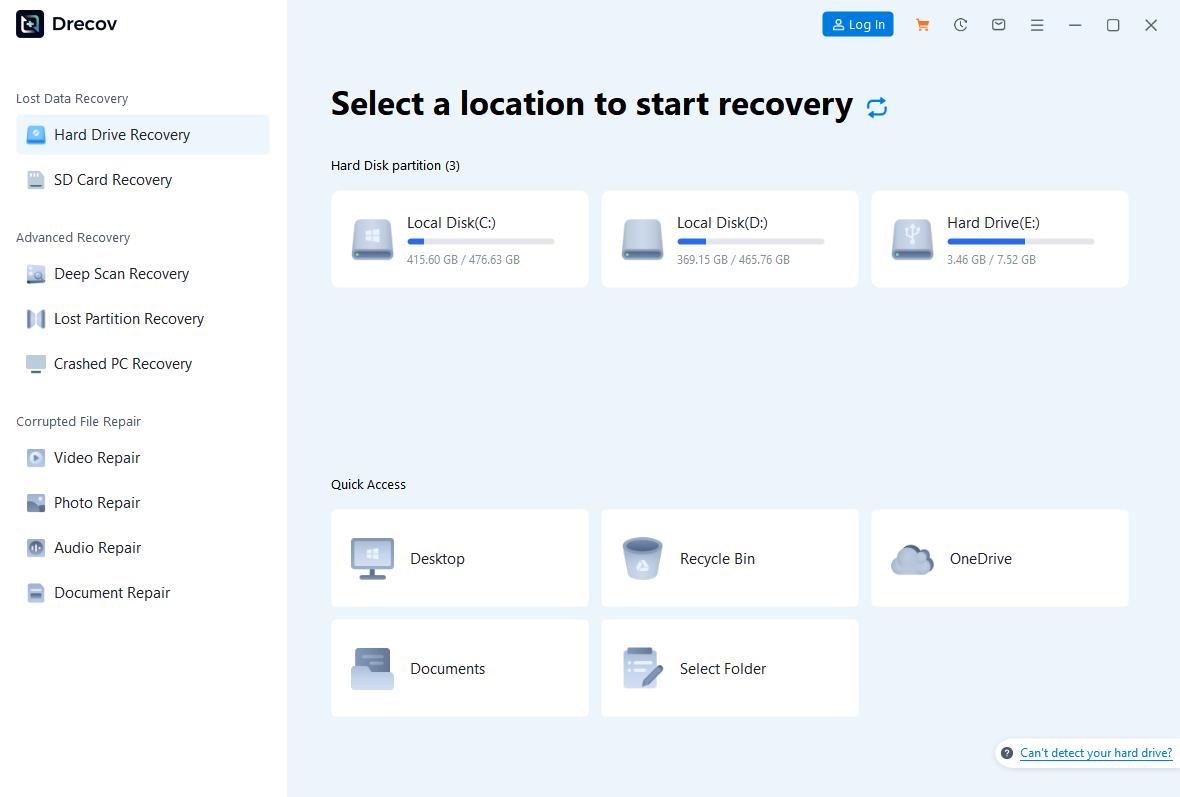
Step 1:
Open Drecov and select the original folder, partition, or stable USB device that held the missing archive.
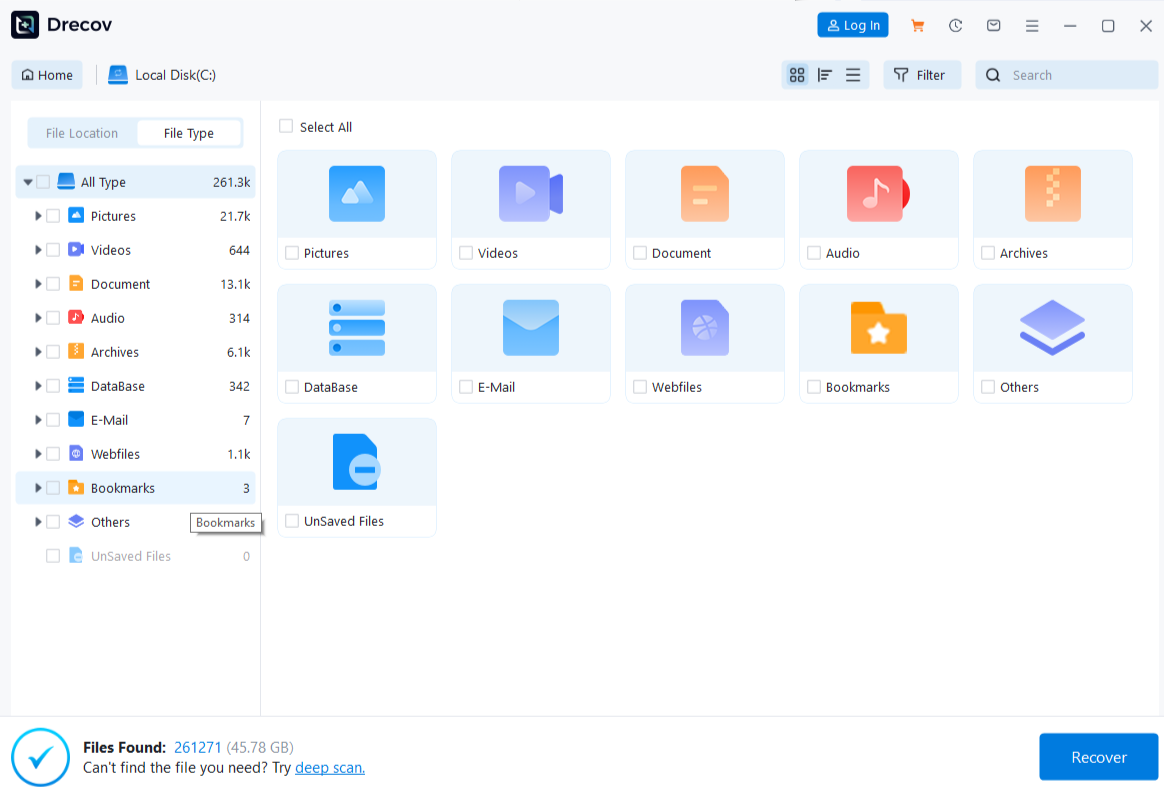
Step 2:
Run Quick Scan; if the file is absent and the source stays stable, use Deep Scan. New hardware errors are a reason to stop.
Step 3:
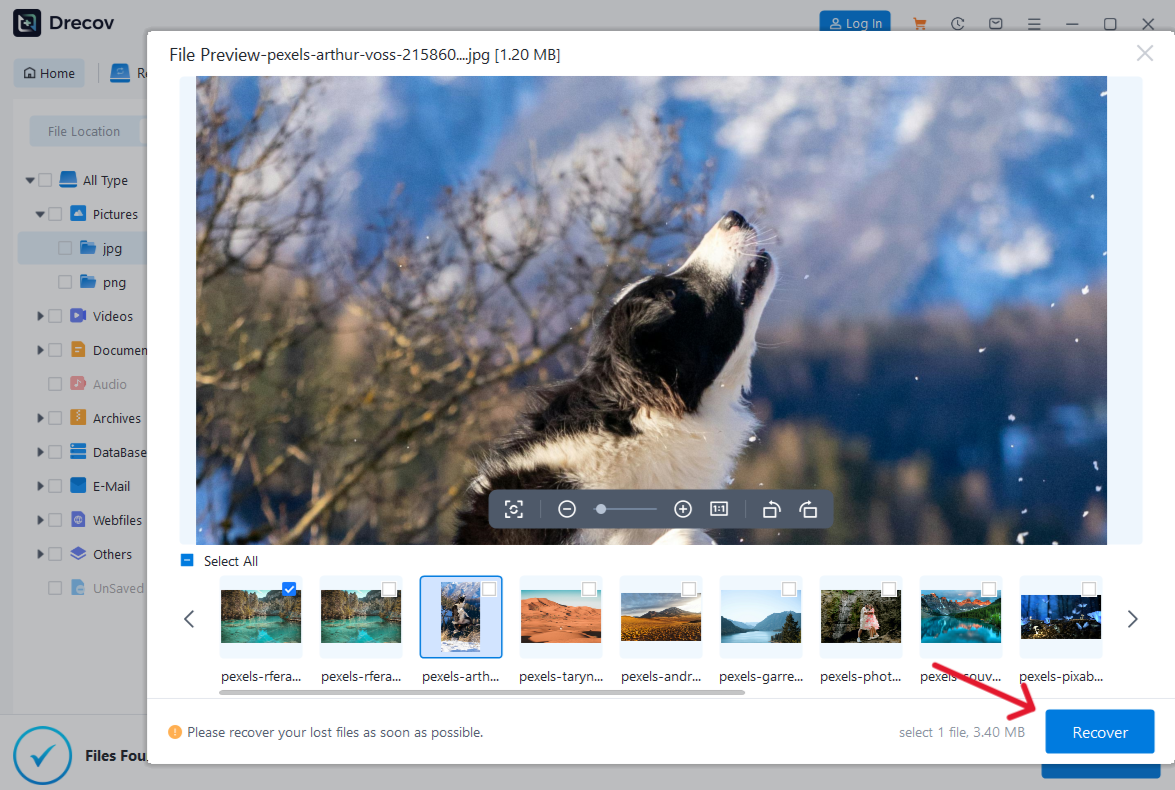
Filter by the old path, name, and archive type such as 7z or ZIP. Preview supported candidates where possible, but do not assume a thumbnail proves every item inside the archive is sound.
Step 4:
Recover the candidate to another healthy drive, never back to the source. If the output is not where you expected, look in Drecov Folder or Recovery Folder on the destination.
Step 5:
Open and test the recovered archive, then extract a sample into a clean folder. Verify representative documents before changing permissions or formatting the old device. The Drecov home page outlines its local recovery scope; it does not turn an access-denied warning into proof of deletion.
⚠ Warning: Install it on a drive different from the one where your data was lost to prevent overwriting.
FAQs
Should I run 7-Zip as administrator?
Not as the first response. Determine whether the blocked path is the source archive or the extraction destination. A clean folder under your own account is a safer test. Use elevated access only when a trusted workflow specifically requires it.
Why can I view the archive but not extract it?
Viewing a list may require reading the archive, while extraction also requires permission to create output files. Try a new folder you own. If 7-Zip instead reports CRC or data errors, investigate archive integrity rather than folder access.
Will changing ownership fix every denial?
No. It may be inappropriate on a managed PC and can affect more files than intended. A blocked security setting, disconnected drive, locked output file, or damaged archive needs a different response. Ask the legitimate owner or administrator when access is restricted.
Does a password error mean Windows denied access?
No. An encrypted archive needs its correct password. File-system permission cannot replace that password. Confirm the credentials with the sender and keep the original archive unchanged.
Can Drecov extract a file 7-Zip cannot write?
Drecov is not an extraction or permission-repair tool. Use it only if the local archive or prior output has actually gone missing from a stable device. For an existing readable archive, fix the output destination and test extraction normally.
Conclusion
When 7 zip access is denied, identify the exact blocked operation before making changes. Preserve the archive, test a destination you own, check a single failing filename, and review security alerts without disabling protection broadly. A data or CRC error calls for an integrity check, not a permission change. If the original archive was truly deleted, Drecov can search the stable source and restore a candidate elsewhere; open and test that copy before attempting further repairs. If nothing is missing, recovery software is not the answer.
⚠ Warning: Install it on a drive different from the one where your data was lost to prevent overwriting.