






If you want to backup an OST file before moving or resetting a PC, pause long enough to identify what that file represents. In many Outlook accounts, an OST is a local copy of mail stored on a server. Copying it to a USB drive is not the same as making a portable mailbox backup. First confirm which messages exist online, check for anything still only on this computer, and choose a backup method you can actually open later. Keep the existing file until that check is complete.
What an OST does—and why a copy can mislead you
Classic Outlook uses an offline Outlook Data File, or OST, for certain accounts that synchronize with a mail server. The file lets the program work with a local copy of messages and other items. Microsoft explains that the server remains the live source for those synchronized accounts. After setting up the account again, Outlook can normally download a new offline copy. That is why Microsoft’s guidance says an OST does not need the same kind of backup as a PST file.
The word “normally” matters. A mailbox may not have finished synchronizing. Outlook might be offline, an account might have errors, or a folder may contain an item that has not reached the server. A copied OST can preserve evidence of the old local state. It does not promise that another Outlook profile will open it or that it contains every server message. Treat it as a precautionary snapshot when you have a specific reason, not as the only backup you take before wiping a PC.
OST and PST solve different jobs
A PST is an Outlook Data File that can store exported mail, contacts, calendar items, or local archives. It has a different role from the synchronized OST. Microsoft documents a PST export and import path in supported Outlook versions, while an OST is tied to the cached account environment. A POP account or an older local archive may already rely on PST files. Check the account and file type instead of assuming every large Outlook file under AppData is the one you should carry to a new computer.
For a broader plan covering Outlook messages rather than this particular cache, our Outlook email backup guide explains the mailbox-level task. This page focuses on the misleading request to “back up the OST” and the decisions that follow from it. If you already have a separate PST archive, protect that file as well; the PST backup instructions handle that different file.
Find out what exists on the server before touching the cache
Start with the account type and the Outlook interface you actually use. A work or school Exchange mailbox, Outlook.com account, and other synchronized setups may have server copies, but their exact controls and policies differ. Sign in to the provider’s webmail or ask the mail administrator for a supported method. Compare a few recent messages, sent items, contacts, and important folders with what classic Outlook shows locally. Do not rely on seeing the inbox alone. A folder you created only recently may be the one that has not synchronized.
Pay attention to pending and local-only work
Check Outbox, Drafts, synchronization warnings, and any folder that appears only on the old PC. If a message is still waiting to send, the server may not have it yet. Avoid deleting the local file or recreating the profile until you understand that difference. Record the affected account, folder, and dates. In a managed workplace, ask the administrator to confirm server retention and export permissions. Bypassing policy can make the backup less trustworthy.
The online mailbox is also a useful cross-check for the export you plan to make. Some classic Outlook configurations keep only a recent window of mail in the local cache. Microsoft’s official export instructions warn that an export in Cached Exchange Mode includes only items currently present in the cache. If older messages appear in webmail but not Outlook, do not assume a quick PST export captured them. Review the sync window or use a provider-supported export route before declaring the archive complete.
Make a backup you can test, not just a file you can copy
In classic Outlook, the documented export path begins at File > Open & Export > Import/Export. Choose Export to a file, then Outlook Data File (.pst). Select the account or folder you want and include subfolders when the full hierarchy matters. Choose a healthy destination with enough room, finish the export, and wait for Outlook to complete its work. New Outlook uses a different interface. Follow Microsoft’s current instructions for the version on your screen rather than forcing classic steps into another app.
Exporting does not erase the original mailbox. It creates a copy of the included items, but not every property or Outlook setting is part of that copy. Rules and certain folder metadata require separate planning. If you need a complete organization-wide backup or retention archive, a manual PST export may not meet that requirement. Ask your administrator about approved mailbox protection rather than improvising with the OST. For a personal move, write down which account and folders you exported so you can compare them later.
Validate the PST before wiping the PC
Check that the destination file exists, has a plausible size, and can be opened in a trusted Outlook installation. Browse several folders and sample messages with attachments, not just the newest inbox item. Compare counts or recognizable subject lines with the source mailbox. Store another copy on a separate healthy device if the mail is important. A PST sitting beside the OST on the same failing drive does not protect against that drive’s failure.
Keep security in mind. Mailboxes may contain personal documents, customer data, and confidential attachments. Do not place a PST or copied OST on a shared, unprotected USB drive. Use an approved protected location and respect workplace policies. A backup that exposes private mail is not a successful outcome. Once the test copy works, retain the old computer’s data until the new account has synchronized and your selected messages are present.
When keeping a copy of the OST still makes sense
Sometimes preserving the existing OST as evidence is prudent. Outlook may have been offline for a long period, synchronization may be failing, or recent drafts may be absent online. An administrator might also request a copy. Close classic Outlook completely before copying the OST. On a typical Windows account, it is under %LOCALAPPDATA%\Microsoft\Outlook. Confirm the file associated with the account rather than guessing from filenames. Copy it to a different healthy drive without deleting or changing the source. Label the copy with account, date, and reason.
Do not confuse this preservation step with a supported import procedure. Microsoft describes an OST as a synchronized offline copy; simply moving it to another PC is not equivalent to opening a PST. If all important content is already on the server, the new Outlook profile should generally obtain a fresh cache. If content exists only in the old local state, avoid recreating the profile until an administrator or a qualified specialist has reviewed the options. This is especially important before a Windows reset, where a local-only clue may disappear.
What to compare before you remove the old profile
Build a small checklist from real mail, not a vague “looks fine.” Include a recent sent message, one older item, a contact, and a calendar event. Add any exceptional folder. Verify each in the web mailbox or exported archive. If one is missing, find out whether it belongs to another account, a PST archive, a shared mailbox, or the old OST’s unsynchronized state. Resolve that uncertainty before cleaning the disk. After the new PC is configured, repeat the same check there.
If the OST disappeared only after you created a new Outlook profile, the problem belongs to another path. Our article on an OST missing after profile recreation covers that event. Here the goal is to choose a sound backup before making such changes. Keeping the tasks separate prevents a recovery procedure from replacing the simpler, safer server and export checks.
If a local Outlook data file has already been deleted
First establish whether you need the deleted file at all. If the mailbox is complete on the server and a tested PST export exists, a new OST may be generated through normal account setup. If a local-only OST or PST might contain missing items, stop writing to the affected drive. Check Recycle Bin, File History, previous backups, and the other Outlook profiles before scanning. An unstable disk that clicks, disconnects, or reports severe read failures should not face repeated direct scans. An appropriate image or professional assessment takes priority.
Drecov is relevant only to the local file-loss branch. It is Windows data recovery software for PCs and connected storage. Quick Scan, Deep Scan, filters, preview where supported, and recovery to another healthy location can help retrieve a deleted OST or PST file. Lost Partition Recovery is for a missing partition, not for importing an OST or rebuilding a mailbox. Drecov cannot connect to the mail server or fix sync permissions. It does not turn an OST into a portable PST or guarantee that a recovered file will open in Outlook.
Prepare a separate healthy destination and do not install the software on the partition that held the missing data file. Keep the old Outlook profile information and account details available. If the affected source is an SSD, TRIM may sharply reduce prospects after deletion; avoid promising success based on file size or a scan preview.
Recover the file without confusing it with mailbox restoration
⚠ Warning: Install it on a drive different from the one where your data was lost to prevent overwriting.
Step 1:
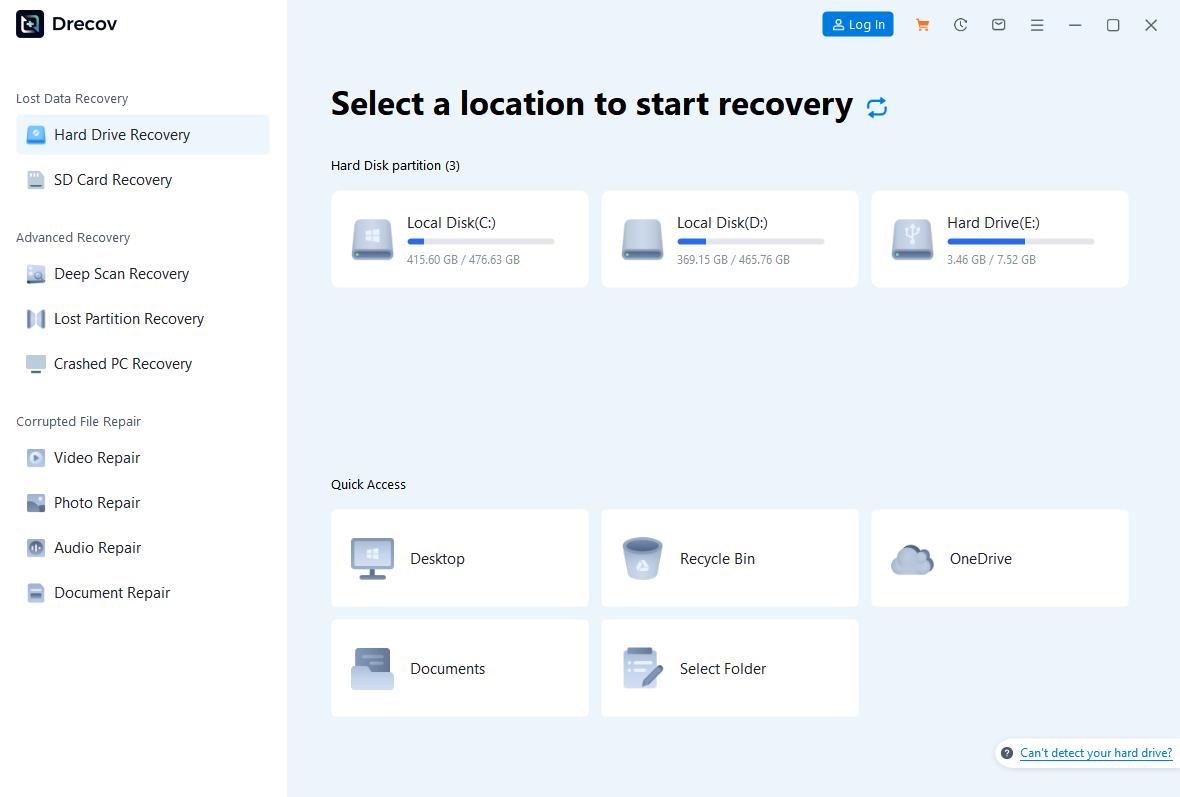
Open Drecov and select the original Windows location that held the Outlook file. For an OST, check the account’s local Outlook area; for a PST, use its actual archive location. Do not select a new backup USB drive as the source.
Step 2:
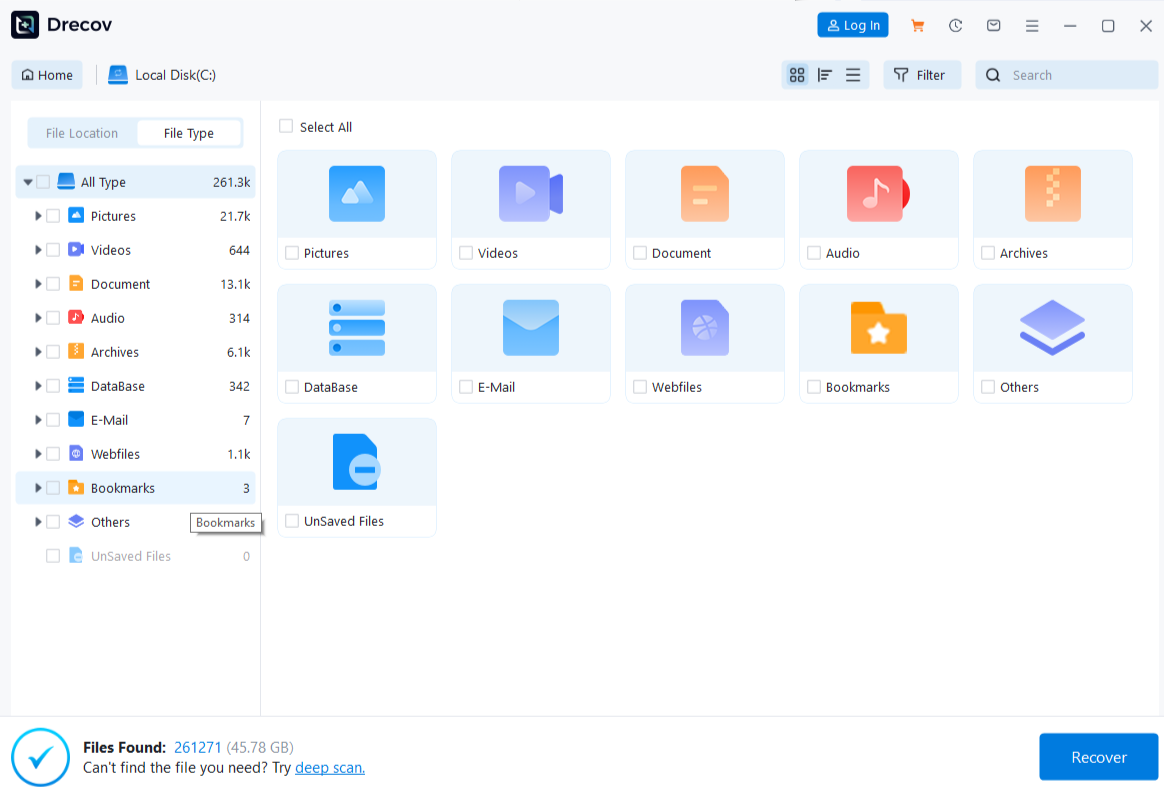
Run Quick Scan. If the expected file is absent and the device remains stable, run Deep Scan. Stop if serious read errors or disconnections begin.
Step 3:
Filter by former folder, filename, and the relevant OST or PST type. Preview supported results if possible, but remember that a file listing or limited preview cannot prove the mailbox contents are usable.
Step 4:
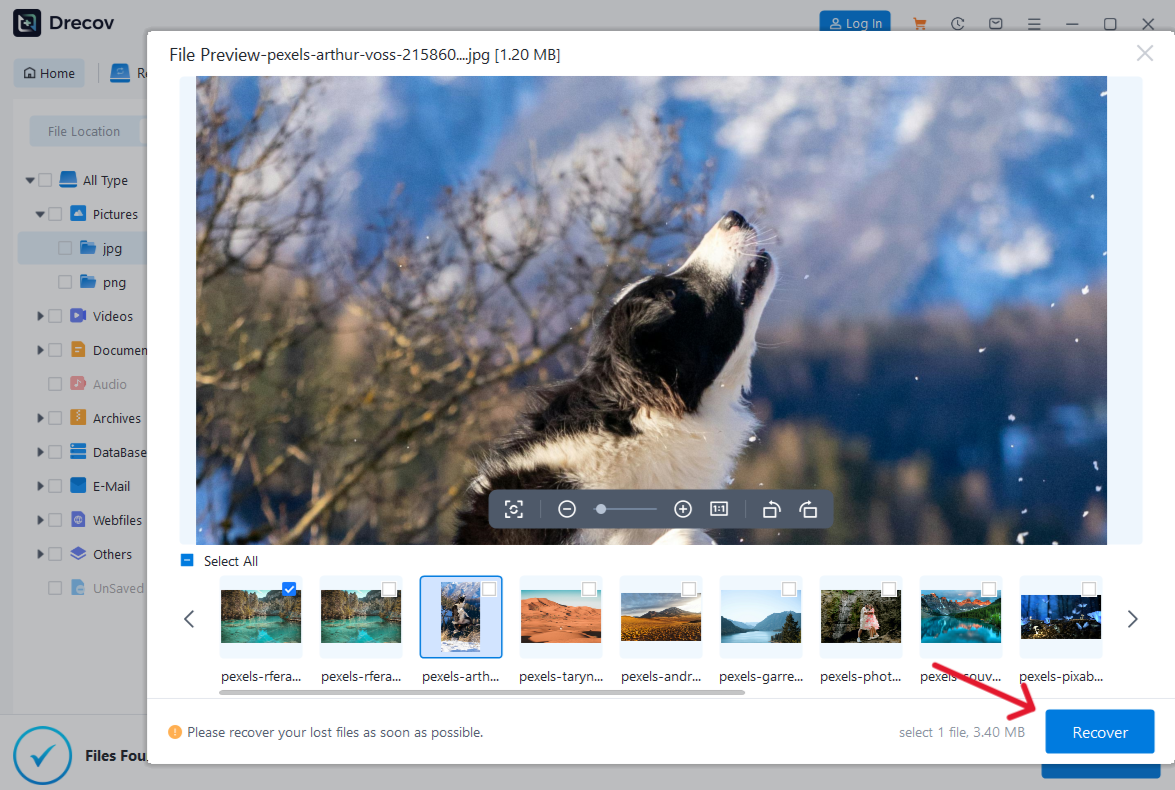
Recover candidates to the separate healthy device, never onto the source. If they are not where you expected, check Drecov Folder or Recovery Folder at the destination.
Step 5:
Verify the recovered files and consult the appropriate Outlook or administrator-supported path before changing the old profile. A recovered PST can be tested through supported Outlook file-opening methods; do not assume a recovered OST can simply be imported. The Drecov home page describes its broader local-file recovery role.
⚠ Warning: Install it on a drive different from the one where your data was lost to prevent overwriting.
FAQs
Is an OST itself a reliable mailbox backup?
Usually not. For a synchronized account, it is a local cache of server information. Preserve it when unsynced local items may matter, but use a tested export or provider-approved backup for a portable copy.
Can I copy an OST to a new computer and open it?
Do not plan a migration around that assumption. Reconfigure the account so Outlook can synchronize a new cache. If the old PC may hold data not on the server, preserve its file and seek the appropriate recovery advice first.
Why is my exported PST missing old messages?
Classic Outlook may export only items currently in its local cache. Compare older folders with webmail and review the sync window or a provider-supported export method before trusting the archive.
Should I delete a damaged OST to make Outlook work again?
Not before checking for local-only items and making a usable backup. Once the server copy and exceptions are accounted for, follow current Microsoft or administrator guidance for the affected account.
Conclusion
A plan to backup an OST file should begin with the mailbox, not the cache. Check what has synchronized, identify local-only exceptions, and make a PST or provider-supported backup that you can open and inspect. Keep an old OST separately when it may contain unsynced evidence, but do not treat copying it as a portable migration. If an important local Outlook file was already deleted from a stable Windows drive, Drecov may help recover that file to another device. Its contents still need verification through an appropriate Outlook or administrator-supported route.
⚠ Warning: Install it on a drive different from the one where your data was lost to prevent overwriting.