






To learn how to save emails to a flash drive, first decide what you need to reopen later. A single message can be saved as an email file or PDF; a whole Outlook folder may call for a PST export. Save the file to the computer, copy it to a healthy USB drive, safely eject the drive, and test the copy on another trusted PC. Do not erase the original mailbox merely because a filename appears on the USB stick.
Choose the result you need before touching the USB drive
The phrase “save my emails” can mean different things. Perhaps you need a readable copy of one receipt, a set of messages with headers and attachments, or a portable Outlook archive with folders. Picking the wrong format may leave you with an attractive PDF but no usable message file, or with a large archive you cannot open on the computer where you need it. Decide whether the copy is for reading, moving into a mail client, or protecting a whole mailbox.
| What you need later | Useful output | Check before relying on it |
|---|---|---|
| Read or print one message | Text, date, sender, and any attachments separately | |
| Keep one message as mail | EML or MSG where supported | Open it in a compatible client |
| Move many Outlook items | PST export where supported | Folders, older mail, and attachments |
| Keep a cloud mailbox protected | Provider-approved export or backup | Scope and restoration method |
A PDF is useful evidence of what the message looked like, but it may not preserve a separate attachment or all mail metadata in the form you expect. An EML is a message file that many desktop mail clients can read. Outlook may also save a message as MSG, depending on the version and command. A PST is an Outlook data file for a larger collection. None of these choices removes the need to test the result. The table is a starting point, not a guarantee that every app exports the same fields.
Save individual Outlook messages as files
In classic Outlook, double-click the message, open File > Save As, choose a folder on the computer, give the file a recognizable name, and select a supported format. Microsoft’s message-saving instructions distinguish the available options in classic and new Outlook. If you use new Outlook, follow the current Save command shown in that version rather than looking for a classic File tab that may not be present.
For a PDF record in classic Outlook, open the message and use File > Print, then choose Microsoft Print to PDF. Select a local folder and check the output. A PDF copy is convenient for a human reader, but make a separate plan for attachments. Open the original mail, download attachments you need, and place them alongside the PDF in a clearly named folder. Do not assume printing the message automatically collected those other files.
Give files names you can understand in six months
A useful naming pattern combines date, sender or project, and a brief subject. Avoid characters Windows does not allow in filenames. For sensitive mail, a subject in the filename itself may reveal private information to anyone who sees the USB drive. Use a neutral identifier when appropriate and keep a small index in a protected place. Work in a temporary folder on the computer first, so you can inspect the files before copying a confused mix of downloads to removable storage.
After saving one example message, reopen the saved file. Check the sender, date, body, and attachment handling. Only then process the rest. This sample-first approach catches a format choice that does not meet your needs while the original emails are still available. If your goal is a broad Outlook backup rather than a handful of records, the Outlook mailbox backup guide covers that larger task.
Download a Gmail message before copying it
On a computer, open Gmail and the message you want. Use the message’s More menu and select Download message. Google documents this route for saving an email as an EML file. Find the download in the browser’s Downloads location, then open it with a suitable desktop mail client to verify it. Do not expect a double-click to display the message correctly on a computer with no associated mail app.
For a small collection, repeat the action for each message and organize the EML files in a folder. If you need a whole Gmail account, individual downloads are tedious and easy to make incomplete. Use the provider’s supported account export or backup route instead of inventing a bulk procedure inside the message menu. Keep a record of which labels or date ranges you intended to include, then inspect the exported result. The method for one message and the method for an entire account should not be treated as interchangeable.
Remember attachments and linked files
Open a saved EML and inspect any attachments that matter to you. A link in the email may point to a cloud document rather than an embedded file. Download or preserve that document separately if you need it offline, subject to your permissions. Similarly, a message about an invoice is not the invoice if it merely links to a portal. Test what the USB copy can actually show when disconnected from the internet.
Export an Outlook folder or mailbox when one-by-one is impractical
Classic Outlook provides a PST export path: File > Open & Export > Import/Export, then Export to a file and Outlook Data File (.pst). Select the account or folder, include subfolders if you want them, and save the PST to a healthy local drive first. Once the export finishes, open the PST and inspect several messages before transferring it to USB. The exact route can differ in new Outlook, so use the provider’s current instructions for the version you have.
If the account uses Cached Exchange Mode, an export from classic Outlook can include only items currently in the local cache. Older messages might still be on the server. Compare a few older folders with webmail before declaring the PST complete. Exporting does not automatically capture every rule, view, or account permission. For work mail, check the organization’s policies and ask whether an approved backup already exists. A personal flash drive may not be an acceptable destination for confidential records.
An OST file sitting next to Outlook’s profile is not a substitute for this export. It is commonly a synchronized local cache, not a portable PST. Our separate explanation of the missing OST after profile changes concerns recovery after a different event. Keep the message-export and OST-cache tasks separate to avoid copying gigabytes without gaining a usable backup.
Move the files to a healthy flash drive and verify the move
Insert a flash drive that Windows recognizes consistently. Check its free space before copying. Open the local folder containing the tested EML, MSG, PDF, attachment, or PST files. Copy the folder to the USB drive; do not choose Move if it would remove your only local copy. Wait until File Explorer finishes. Eject the drive using Windows’ safe-removal control, then plug it back in. Open a sample of the files directly from the USB drive, not just from the original computer folder.
Test on a second trusted computer
A second machine reveals dependencies you might overlook. Does its mail client open the EML or MSG? Can Outlook open the PST, and are the selected folders there? Does the PDF show its full pages? Can you read a downloaded attachment without a cloud connection? If you cannot test elsewhere, at least disconnect the original computer from the network and reopen a copy from the USB drive. This does not prove every file is perfect, but it is more useful than trusting a completed progress bar.
Do not use one USB stick as the only remaining copy. Flash media can be lost, damaged, or overwritten. Keep the original mailbox when possible, plus another protected backup for important records. If the USB drive has begun disconnecting or reporting read errors, stop writing to it and switch to a stable device. The USB backup checklist covers the broader problem of building a restorable removable copy.
Protect privacy during transport. Messages may contain addresses, contracts, IDs, and financial information. Choose a destination with suitable access control, and follow workplace requirements before copying company mail. Avoid leaving a plain USB drive in a public place or sharing it casually. The format of the email file does not provide access protection by itself.
If the saved email files disappear from the PC or USB
First check whether the original email is still in the mailbox. If it is, download or export it again to a healthy location; that is often simpler than scanning a drive. If an EML, MSG, PDF, PST, or attachment existed only as a local file and has been deleted, stop writing to the affected device. Check Recycle Bin, prior backups, and another copy of the USB folder. A drive that clicks, repeatedly disconnects, or has severe read errors calls for an image or professional assessment rather than repeated direct scans.
Drecov can help in the local-file loss branch. It is Windows data recovery software for PCs and connected storage, with Quick Scan, Deep Scan, filtering, preview for supported files, and recovery to another healthy destination. Lost Partition Recovery applies when a partition disappears; it does not restore messages that were never saved from the online account. Drecov cannot sign in to Gmail or Outlook on your behalf, reconstruct an expired cloud link, or repair a physically failing flash drive.
Prepare a separate healthy drive for results. Do not install the software onto the partition that held the lost files, and never restore back to the same USB device. If the source becomes unstable, stop scanning. Recovery is not a substitute for the mailbox export method when the original messages remain online.
Recover a lost export, then prove it opens
⚠ Warning: Install it on a drive different from the one where your data was lost to prevent overwriting.
Step 1:
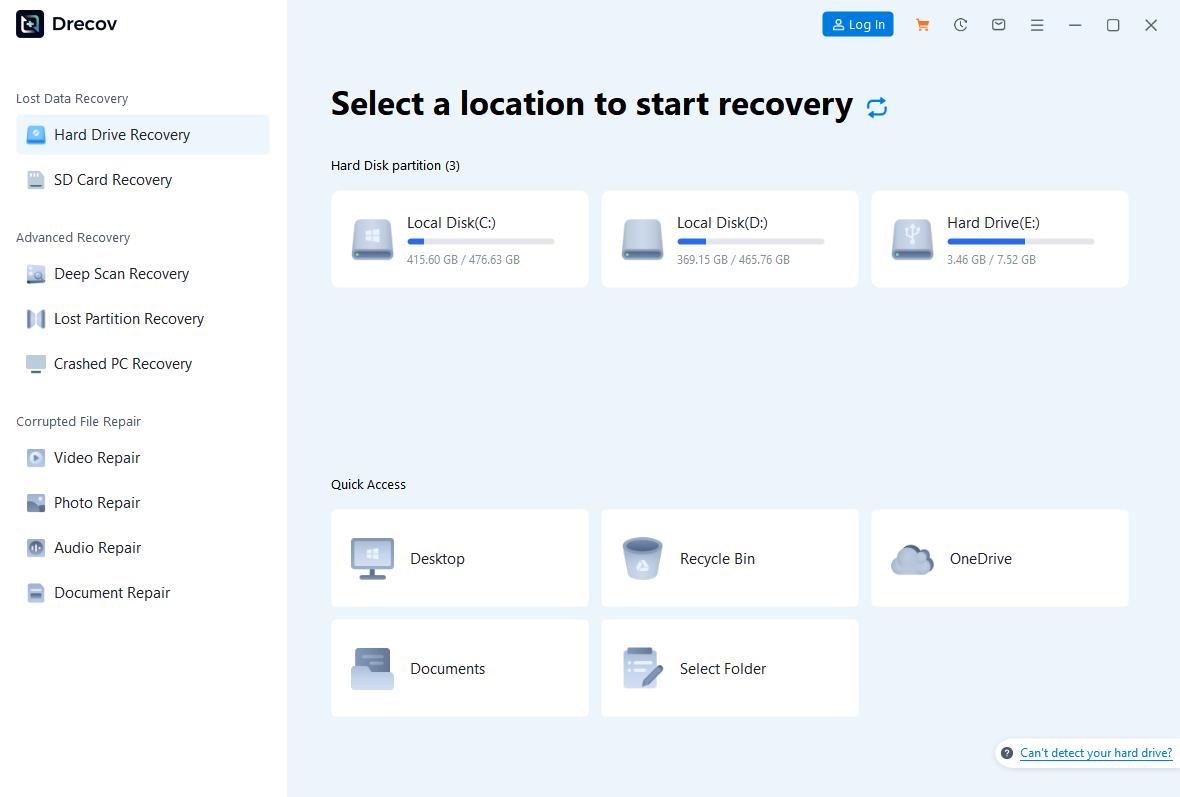
Open Drecov and select the original computer folder or stable flash drive that held the saved mail files. Use the former location, not the empty destination folder you planned to use next.
Step 2:
Run Quick Scan. If the expected EML, MSG, PDF, PST, or attachments are absent and the source remains stable, run Deep Scan. Stop when serious read faults or disconnections appear.
Step 3:
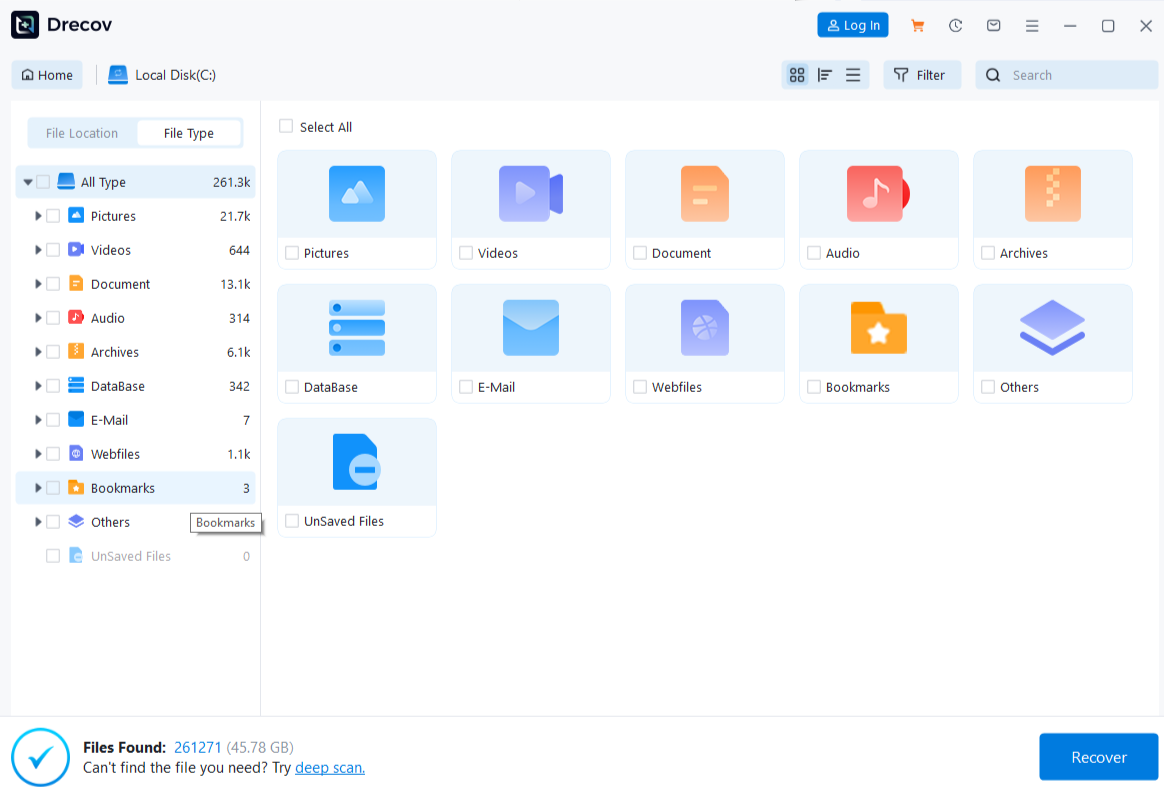
Filter by former folder, name, and file type. Preview representative supported results. A preview cannot certify that every message in a large PST is intact, so keep several candidates when versions differ.
Step 4:
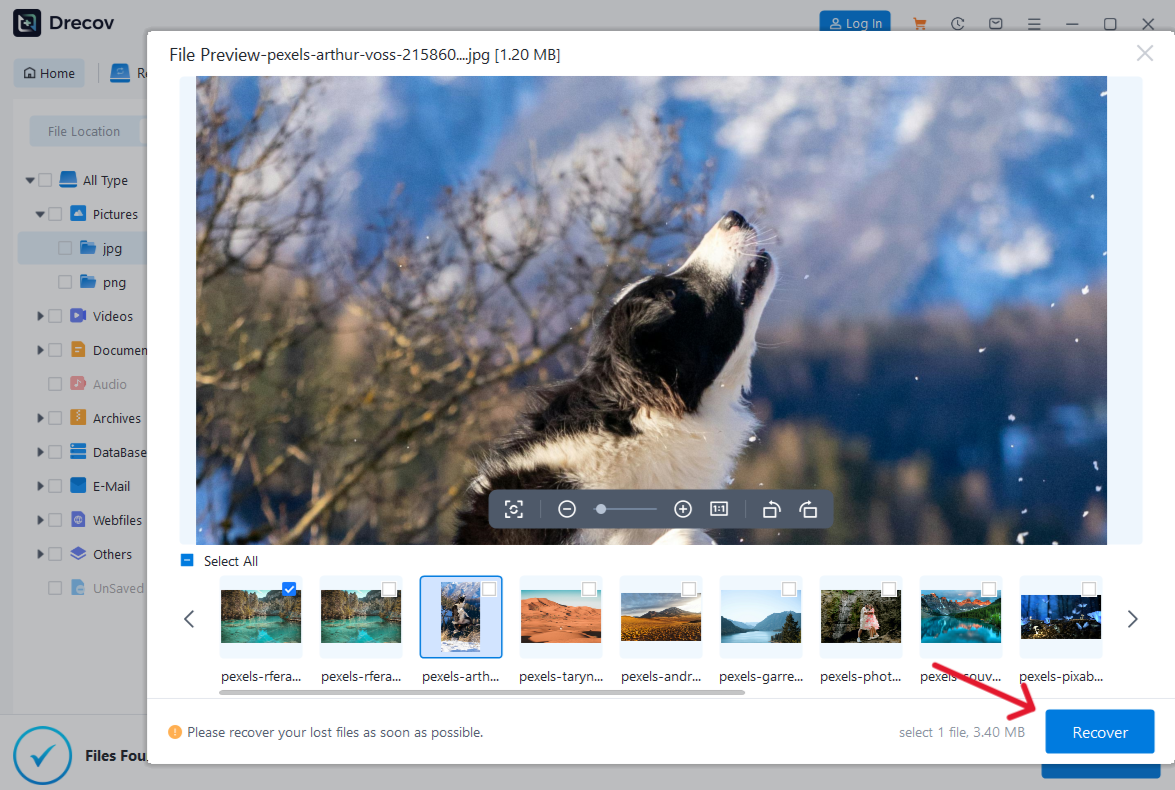
Recover selected files to another healthy device. If results do not appear where expected, check the Drecov Folder or Recovery Folder on that target. Do not write them to the source drive.
Step 5:
Open sample messages, attachments, and the PST in the relevant application before changing or reformatting the original USB drive. The Drecov home page explains its general local-file recovery scope.
⚠ Warning: Install it on a drive different from the one where your data was lost to prevent overwriting.
FAQs
Can I just drag an email from webmail onto a USB stick?
Not reliably across services. Use the provider’s download or export command to create an actual local file, verify it, and then copy that file to the drive.
Is a PDF or an EML better?
A PDF is easy to read and print. EML is useful when you need a message file for a compatible mail client. Choose by how you will reopen it, and handle attachments separately when necessary.
Does a PST export include every Outlook message?
Not automatically. With Cached Exchange Mode, it may include only locally cached items. Compare older messages with the server and test the resulting archive.
When can I erase the old computer?
Only after verifying the needed messages and attachments from the USB copy on a trusted device and confirming you have another suitable copy of important data.
Conclusion
To save emails to a flash drive safely, choose the output by what you need to reopen: a readable PDF, an EML or MSG message, or a tested Outlook PST archive. Transfer a copy to a healthy USB device, eject it, and check the files on another trusted computer before deleting anything. If the only local export later goes missing from stable Windows storage, Drecov may help retrieve it to a different drive. The original mailbox remains the easiest source when the messages are still available online.
⚠ Warning: Install it on a drive different from the one where your data was lost to prevent overwriting.