







In the rapidly evolving world of digital storage, the need for speed and portability has never been more critical. Whether you are a creative professional handling massive 4K video files or a student simply trying to keep your assignments organized, the hardware you choose matters. Enter the SanDisk Extreme Fit USB-C, a device that represents the pinnacle of “plug-and-stay” storage technology. This article serves as a comprehensive educational resource, exploring the technical nuances of this drive while providing expert-level guidance on data management and recovery.
What Is the SanDisk Extreme Fit USB-C
Key Features and Design Philosophy
The SanDisk Extreme Fit USB-C is not just another flash drive—it’s a tiny powerhouse built for speed, portability, and convenience. If you’ve ever wished your storage device could just “disappear” into your laptop without sticking out awkwardly, this is exactly what SanDisk had in mind. The design is ultra-compact, almost like a nano receiver you’d use for a wireless mouse, and that’s what makes it so appealing right out of the box.
What sets this drive apart is its combination of high-speed performance and minimal footprint. Many flash drives force you to choose between size and speed, but this one attempts to deliver both. With support for modern USB-C interfaces, it aligns perfectly with today’s laptops, tablets, and even smartphones. That’s especially important as more devices ditch traditional USB-A ports entirely.
From a usability standpoint, the philosophy is simple: plug it in and forget it’s there. You don’t need to carry bulky external drives anymore. This device is designed for people who want constant access to extra storage without the hassle. Whether you’re transferring files, backing up photos, or running portable applications, it quietly does its job in the background.
Why Ultra-Compact Drives Are Trending
Take a look around—devices are getting thinner, lighter, and more minimalist. So it’s no surprise that storage solutions are following the same trend. The demand for ultra-compact drives like the SanDisk Extreme Fit USB-C has skyrocketed because people want convenience without compromise.
Think about it: traditional USB drives stick out and can easily break if bumped. They’re also annoying to carry around. Ultra-fit drives eliminate that problem entirely. You can leave them plugged into your laptop all the time, almost like permanent storage expansion. Another reason for their popularity is the rise of mobile workflows. People are no longer tied to desktops. Students, freelancers, and professionals all need portable storage that works seamlessly across devices. A compact USB-C drive fits perfectly into this lifestyle.
Performance and Speed Explained
Read and Write Speeds
Speed is where the SanDisk Extreme Fit USB-C really earns its “Extreme” name. It offers high read speeds (often up to 400MB/s depending on the model), making file transfers incredibly fast compared to standard USB drives. That means moving a full HD movie or a large folder of photos takes seconds instead of minutes.
Write speeds, while slightly lower than read speeds, are still impressive for a device of this size. This balance ensures that both transferring and saving data feel smooth and efficient. For everyday users, this translates into less waiting and more productivity. Speed matters more than people realize. If you’re constantly transferring files, slow drives can become a bottleneck. It’s like having a sports car stuck in traffic—you know it can go fast, but something’s holding it back. With this drive, that bottleneck is significantly reduced.
Real-World Performance Use Cases
Numbers are great, but what does performance look like in real life? Imagine transferring a 10GB video project. On a basic USB drive, that could take several minutes. With the SanDisk Extreme Fit USB-C, it’s dramatically faster, allowing you to get back to work without interruptions. Gamers can also benefit by storing game files or mods, while photographers can quickly offload high-resolution images. Even casual users will notice the difference when backing up documents or moving files between devices.
Storage Capacities and Variants
Available Storage Options
The SanDisk Extreme Fit USB-C comes in multiple storage options, typically ranging from 64GB to 512GB or even higher. This flexibility allows users to choose a model that fits their needs without overspending. Whether you’re storing documents, media files, or software, there’s a version that works for you. Smaller capacities are great for everyday use, while larger ones cater to professionals dealing with heavy data.
Choosing the Right Capacity
Choosing the right storage size is like picking the right suitcase for a trip. Too small, and you’ll run out of space quickly. Too large, and you might be paying for capacity you never use. Here’s a simple guide:
| Usage Type | Recommended Capacity |
| Documents & Light Use | 64GB–128GB |
| Photos & Videos | 128GB–256GB |
| Professional Work | 256GB–512GB+ |
Compatibility and Device Support
USB-C Devices Supported
One of the biggest advantages of this drive is its USB-C compatibility. It works seamlessly with modern laptops, tablets, and even smartphones that support USB-C OTG (On-The-Go). This makes it incredibly versatile. You can transfer files between your phone and laptop without needing cloud services or cables. You can check the latest compatibility lists on the Official SanDisk Website.
Backward Compatibility and Limitations
While USB-C is the future, not all devices support it yet. If you’re using older hardware, you may need a USB-C to USB-A adapter. That’s something to keep in mind before purchasing. Furthermore, ensure your host device supports the USB 3.1 or 3.2 Gen 1 standard to achieve the maximum advertised speeds of the SanDisk Extreme Fit USB-C.
Design, Build Quality, and Durability
Compact Form Factor Benefits
The ultra-small design is both a strength and a trade-off. It’s incredibly portable, but also easy to misplace. Still, the convenience of leaving it plugged in outweighs this minor drawback for most users. Because it sits nearly flush against the port, there is a significantly lower risk of the drive snapping off if your laptop is bumped or placed in a bag.
Heat Management and Longevity
Due to its small size, heat can build up during heavy use. However, SanDisk has engineered the drive to handle typical workloads efficiently. To maintain the longevity of your SanDisk Extreme Fit USB-C, it is advisable to avoid continuous heavy writing for several hours at a time, which allows the controller to stay within optimal temperature ranges.
Security and Data Protection Features
Encryption and Password Protection
The drive supports secure file encryption, often through the SanDisk SecureAccess software. This allows users to protect sensitive data with 128-bit AES encryption. This is especially useful for business users or anyone storing private information on their SanDisk Extreme Fit USB-C.
Data Recovery Considerations
Even reliable drives can experience data loss. Having backup strategies is essential. While the hardware is robust, file system corruption or accidental deletion can occur. If your SanDisk Extreme Fit USB-C stops appearing in your file explorer, you might face a logical error that requires specialized software to fix.
SanDisk Extreme Fit USB-C not recognized on Mac/Windows
One of the most frustrating experiences is when your SanDisk Extreme Fit USB-C is not recognized on Mac/Windows. This can happen for various reasons, ranging from driver conflicts to file system errors. Before you assume the hardware is dead, follow these technical troubleshooting steps:
Method 1: Basic Hardware Check
- Step 1: Unplug the SanDisk Extreme Fit USB-C and inspect the connector for any lint or debris.
- Step 2: Try a different USB-C port on your computer. If you are using a hub, plug the drive directly into the laptop.
- Step 3: Restart your computer to refresh the USB controller stack.
Method 2: Check Disk Management (Windows) or Disk Utility (Mac)
- Step 1: On Windows, right-click the Start button and select Disk Management. On Mac, press Command + Space and type Disk Utility.
- Step 2: Look for the drive in the list. If it appears but has no drive letter (Windows) or is unmounted (Mac), right-click/control-click to assign a letter or mount it.
- Step 3: If the drive shows as “Unallocated,” the partition table might be corrupted. Do not create a new partition yet if you need the data back!
Method 3: Update Drivers (Windows)
- Step 1: Press Windows Key + X and select Device Manager.
- Step 2: Expand the Universal Serial Bus controllers section.
- Step 3: Right-click the “USB Mass Storage Device” or the entry with a yellow exclamation mark and select Update driver.
- Step 4: Choose “Search automatically for drivers” and follow the prompts.
How to recover deleted files from SanDisk Extreme Fit USB-C
Accidental deletion is a common issue. Because flash drives use NAND flash memory, once you delete a file, the space is marked as “available,” but the data often remains physically present until overwritten. Here is how to handle a recovery scenario for your SanDisk Extreme Fit USB-C:
Step 1: Stop Using the Drive Immediately
The moment you realize files are missing from your SanDisk Extreme Fit USB-C, stop all write operations. Do not save new files, do not edit existing ones, and do not format the drive.
Step 2: Check the Recycle Bin/Trash
While most USB drives bypass the Recycle Bin, some synchronized folders or macOS environments might store temporary deleted versions. It is always worth a quick look before moving to advanced tools.
Step 3: Use Command Prompt (Windows) to Fix Hidden Files
Sometimes files aren’t deleted; they are just hidden by malware or system errors.
- Step 1: Connect your SanDisk Extreme Fit USB-C.
- Step 2: Type
cmdin the Windows search bar and Run as Administrator.
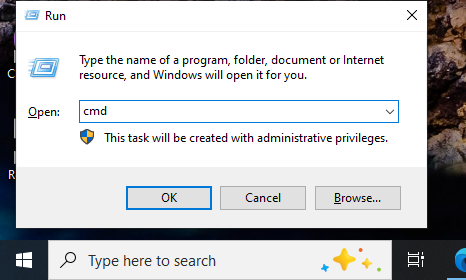
- Step 3: Type the drive letter (e.g.,
E:) and press Enter. - Step 4: Type
attrib -h -r -s /s /d *.*and press Enter. This command removes “hidden,” “read-only,” and “system” attributes from all files.
PandaOffice Drecov data recovery software
When manual methods fail, you need a professional-grade solution. PandaOffice Drecov data recovery software is specifically designed to handle complex data loss scenarios on flash media like the SanDisk Extreme Fit USB-C. It utilizes deep scanning algorithms to reconstruct file headers and recover lost partitions.
Why Choose PandaOffice Drecov?
This software is highly effective because it supports over 1,000 file formats and can recover data from formatted, corrupted, or RAW drives. Its user interface is designed to be intuitive, ensuring that even non-technical users can navigate the recovery process with confidence.
⚠ Warning: Install it on a drive different from the one where your data was lost to prevent overwriting.
Step-by-Step Recovery Guide with PandaOffice Drecov
- Step 1: Select the Target Drive. Launch the software. On the main dashboard, you will see a list of available drives. Select your SanDisk Extreme Fit USB-C from the “External Drives” section.
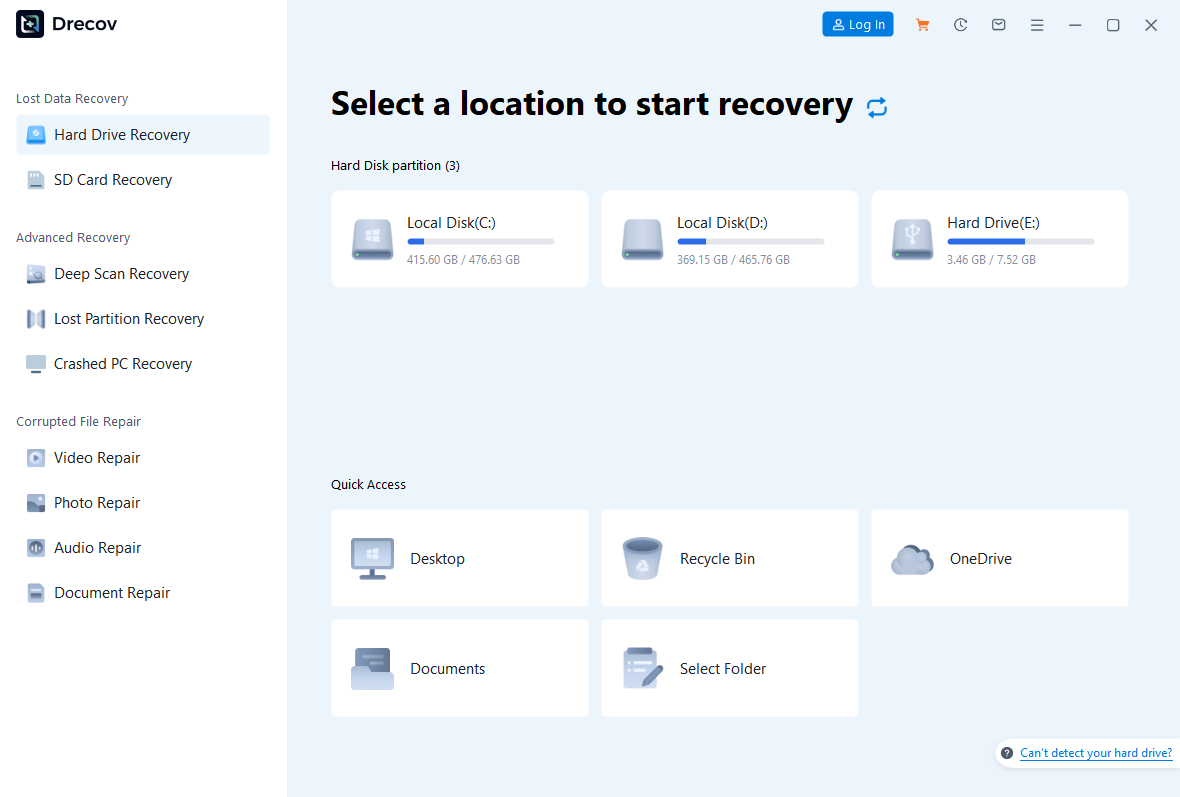
- Step 2: Initiate the Scan. Click the Scan button. PandaOffice Drecov will perform a Quick Scan followed by a Deep Scan. The Deep Scan is crucial for finding fragmented files that other tools might miss.
- Note: The scanning time depends on the capacity of your drive (e.g., a 512GB drive will take longer than a 64GB one).
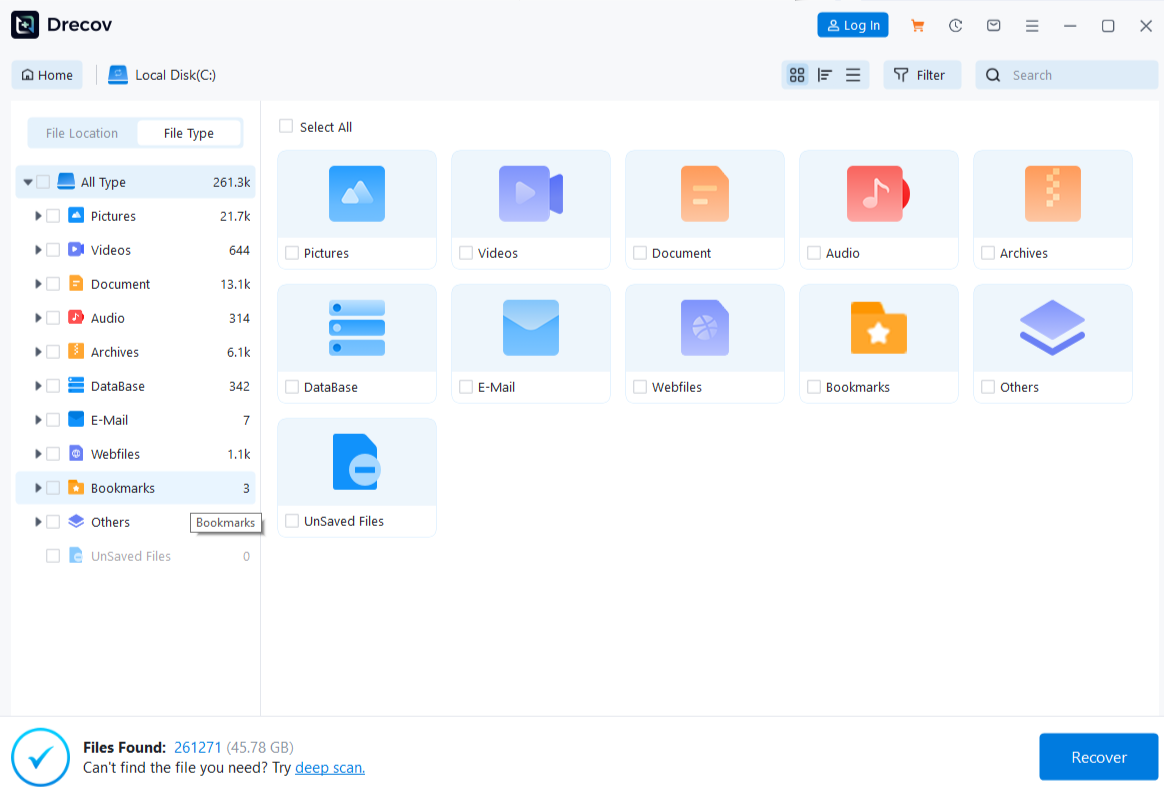
- Step 3: Preview and Filter. Once the scan is complete, browse the results. You can use the filter options to search by file type (JPG, DOCX, MP4, etc.) or date. PandaOffice Drecov allows you to preview images and documents before recovery to ensure they are not corrupted.
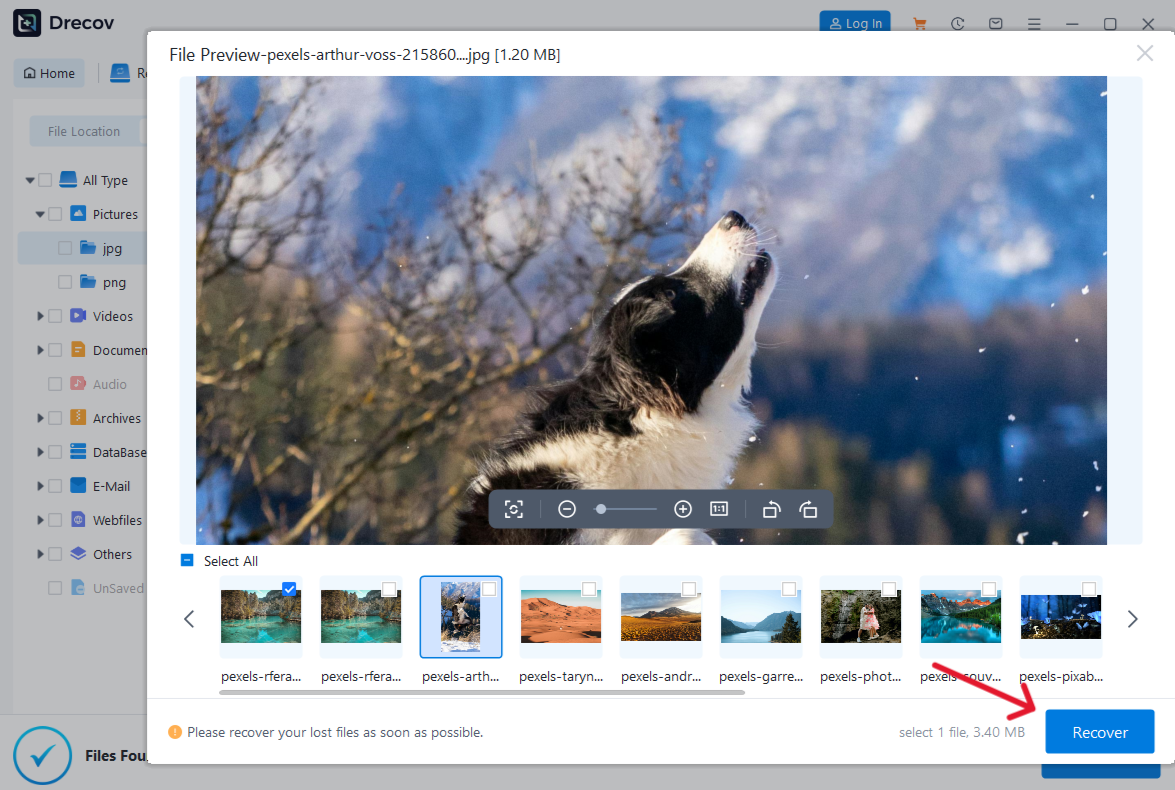
- Step 4: Recover the Data. Check the boxes next to the files you wish to save and click Recover.
Warning: Always save the recovered files to your local hard drive or a different external storage device. Never save them back to the SanDisk Extreme Fit USB-C during this step, as it could overwrite the remaining data you are trying to rescue.
Post-Recovery: Ensuring Drive Health
Once you have successfully recovered your data, it is vital to check if the drive is still reliable for future use. You can use the Windows chkdsk tool or the macOS First Aid feature to repair any underlying file system errors. If your SanDisk Extreme Fit USB-C continues to show errors, it may be time to replace it.
For more detailed troubleshooting on hardware connectivity, check out this USB ports not working ultimate troubleshooting guide. If you are using your drive for system maintenance, you might find this guide on how to reinstall Windows 10 from USB helpful. For a broader look at different scenarios, read our expert tips on how to recover deleted files from USB drive.
Comparison with Other USB Drives
Standard USB Drives vs Extreme Fit
Traditional drives are larger and often slower. The SanDisk Extreme Fit USB-C focuses on speed and convenience, making it ideal for modern users. Standard drives often use the older USB-A connector, which is becoming obsolete on modern laptops like the MacBook Pro or Dell XPS series. While standard drives might be cheaper, they lack the high-speed NAND controllers found in the Extreme Fit series.
Competitor Comparison Table
| Feature | Extreme Fit USB-C | Standard USB Drive | Generic USB 2.0 Drive |
| Size | Ultra-compact | Bulky | Varies |
| Speed | Up to 400MB/s | 100-150MB/s | 20MB/s |
| Port | USB-C | USB-A | USB-A |
| Portability | Excellent | Average | Average |
| Durability | High (Internal) | Medium | Low |
Pros and Cons of SanDisk Extreme Fit USB-C
Advantages
The biggest strengths include speed, compact design, and compatibility with modern devices. It’s perfect for users who value efficiency and portability. Additionally, its aesthetic appeal cannot be overstated—it looks sleek and professional when plugged into high-end hardware. The inclusion of security software adds a layer of professional utility that generic drives lack.
Disadvantages
Its small size makes it easy to lose if not kept in a bag or case. Furthermore, it may run warm during extended use, particularly when transferring large batches of data (50GB+). This is a physical reality of packing high-speed components into a tiny plastic and metal housing. Finally, some users with thick laptop cases might find the ultra-flush fit difficult to plug in or remove.
Best Use Cases for This Flash Drive
Everyday Users
For everyday users, the SanDisk Extreme Fit USB-C is perfect for backups, file transfers, and expanding storage. If your laptop only has 256GB of internal SSD space, plugging in a 512GB Extreme Fit is a cost-effective way to triple your storage without the bulk of an external SSD. It is also excellent for students who need to move between school computers and home laptops.
Professionals and Creators
Professionals benefit from its speed and reliability, especially when working with large files. Photographers can use it as a “shuttle” drive to move RAW files from a field tablet to a studio workstation. IT professionals often use these drives to carry bootable diagnostic tools or portable software suites, as the SanDisk Extreme Fit USB-C can boot an OS much faster than standard drives.
Advanced Maintenance Tips for Your SanDisk Drive
To ensure your SanDisk Extreme Fit USB-C lasts as long as possible, follow these industry-standard maintenance tips:
- Always Eject Safely: Whether on Windows or Mac, always use the “Eject” or “Safely Remove Hardware” option. This ensures that all cached write operations are completed before power is cut to the drive, preventing file system corruption.
- Format Correctly: For maximum compatibility across Windows and Mac, use the ExFAT file system. If you only use Windows, NTFS is more robust against errors. If you are exclusively on Mac, APFS or Mac OS Extended are the native choices.
- Avoid Static Electricity: When carrying the drive, keep it in a small pouch or on a keychain to protect the USB-C pins from static discharge and physical debris.
SanDisk Drive FAQs
1. Is the SanDisk Extreme Fit USB-C good for daily use?
Yes, it’s designed for everyday storage and frequent file transfers. Its high endurance makes it suitable for frequent reads and writes.
2. Does it work with smartphones?
Yes, as long as your phone supports USB-C OTG (On-The-Go). Most modern Android devices and the latest iPhone models with USB-C ports are fully compatible.
3. Is it fast enough for large files?
Absolutely. With speeds up to 400MB/s, the SanDisk Extreme Fit USB-C is significantly faster than standard USB 3.0 drives, making it ideal for 4K video and large databases.
4. Can I leave it plugged in all the time?
Yes, its compact design is specifically intended for “plug-and-stay” use. It won’t get caught on your laptop bag or break off easily.
5. Is it secure for sensitive data?
Yes, it comes with access to SanDisk SecureAccess software, which provides 128-bit AES encryption to keep your private files password-protected.
6. What should I do if my SanDisk Extreme Fit USB-C gets hot?
It is normal for compact, high-speed drives to get warm. If it becomes uncomfortable to touch, pause your file transfer and let it cool down for a few minutes.
7. Can I recover data if I formatted the drive by mistake?
Yes, in most cases, a “Quick Format” does not erase the data, only the file directory. Using PandaOffice Drecov data recovery software can help you reconstruct the files.
8. Does the drive come with a warranty?
SanDisk typically offers a multi-year limited warranty for the Extreme series. Check the packaging or the Western Digital Support page for specific details based on your region.
Conclusion
The SanDisk Extreme Fit USB-C stands out as a powerful, compact solution for modern storage needs. It combines speed, portability, and convenience in a way that aligns perfectly with today’s tech ecosystem. Whether you’re a casual user or a professional, it offers a reliable way to carry your data wherever you go.
While data loss can be a terrifying prospect, understanding how to use tools like PandaOffice Drecov data recovery software provides a safety net. By following the troubleshooting steps outlined for when your SanDisk Extreme Fit USB-C is not recognized on Mac/Windows, you can resolve most issues independently. Always remember that the best data recovery strategy is a proactive one—regularly back up your most important files to the cloud or a secondary physical location.





