







In the modern digital landscape, USB flash drives remain indispensable tools for transferring files between devices, creating bootable media, and expanding storage for game consoles or car stereos. However, compatibility issues often arise. You might find yourself needing to know how to format a usb to fat32 because your smart TV or older PlayStation won’t recognize the newer NTFS or exFAT file systems.
Formatting a drive is a double-edged sword. While it refreshes the file system and clears out errors, it also wipes every piece of data residing on the device. As an expert in both SEO and data recovery, I have designed this comprehensive guide to help you navigate the technicalities of formatting while ensuring your precious data remains safe. We will explore various methods, from simple Windows tools to advanced command-line techniques, and most importantly, how to rescue your files if things go wrong.
Understanding File Systems: Why FAT32 Still Matters in 2026
Before we dive into the “how-to,” we must understand the “why.” FAT32 (File Allocation Table 32) is one of the oldest file systems supported by Windows, dating back to Windows 95 OSR2. Despite its age, it remains the “universal language” of storage.
- Universal Compatibility: It works on Windows, macOS, Linux, Android, ChromeOS, and almost all embedded systems like car stereos and printers.
- Simplicity: It has less overhead than NTFS, making it slightly faster for simple file transfers on lower-capacity drives.
- The Limitations: The biggest drawback is the 4GB individual file size limit. You cannot store a single 5GB 4K movie on a FAT32 drive. Additionally, Windows natively restricts formatting drives larger than 32GB to FAT32, though we will show you how to bypass this.
Preparation: Backing Up Your Data
Before you learn how to format a usb to fat32, you must realize that formatting is a destructive process. It recreates the file system structure, which involves overwriting the partition table.
- Check for Hidden Files: Ensure you aren’t missing hidden system files.
- Verify Cloud Sync: If you use the USB for work, ensure the latest versions are synced to OneDrive or Google Drive.
- Physical Integrity: Ensure the USB port is stable. A disconnection during formatting can lead to a “raw” drive state.
How to Format 64GB USB to FAT32 Windows 10/11
Many users encounter a common roadblock: Windows refuses to format a 64GB or 128GB drive to FAT32 using the standard right-click method. The “FAT32” option simply disappears from the dropdown menu, leaving only NTFS and exFAT. This is an artificial limitation imposed by Microsoft. Here is how you bypass it using the PowerShell method.
Method 1: Using Windows PowerShell (No Third-Party Software)
This is the most reliable way to how to format 64gb usb to fat32 windows 10/11 without downloading external utilities.
- Step 1: Connect your 64GB USB drive to your computer. Note the drive letter assigned to it (e.g., Drive
G:). - Step 2: Right-click the Start button and select Windows Terminal (Admin) or Windows PowerShell (Admin).
- Step 3: Type the following command, replacing
Xwith your actual drive letter:format /FS:FAT32 X: - Step 4: Press Enter. The system will warn you that all data will be lost. Type
Yand press Enter again. - Step 5: Be patient. For a 64GB drive, this process can take anywhere from 30 minutes to an hour because it performs a full format rather than a “quick” one.
Warning: If the process takes too long or fails with an “entry too large” error, you may need to use a dedicated partition tool or the command-line utility “Diskpart.”
Dealing with Errors: Fix USB Drive Needs to Be Formatted Error
Sometimes, you aren’t formatting by choice. You plug in your device, and a daunting pop-up appears: “You need to format the disk in drive X: before you can use it.” This usually indicates file system corruption, a pulled plug during a write operation, or bad sectors.
How to Fix USB Drive Needs to Be Formatted Error Without Losing Data
Before hitting that “Format disk” button, try to repair the logic of the drive first using the CHKDSK utility.
- Step 1: Open the Command Prompt as an Administrator.
- Step 2: Type
chkdsk X: /f(replaceXwith your USB drive letter). - Step 3: The
/fparameter tells Windows to fix any errors it finds on the disk. - Step 4: If CHKDSK reports that it cannot open the volume for direct access, the file system is likely “RAW.” In this case, you will have to proceed with the format and then use recovery software.
If the repair fails, follow the official Microsoft guide on disk management to see if the partition is visible.
The Worst Case Scenario: Recover Data from Formatted FAT32 USB Drive
Perhaps you moved too quickly and formatted the wrong drive, or you were forced to format a corrupted drive to make it accessible again. Don’t panic. When you perform a “Quick Format,” the data isn’t actually erased; only the “address book” (the File Allocation Table) is cleared. The actual bits and bytes remain on the NAND flash memory until they are overwritten by new files.
Using PandaOffice Drecov Data Recovery Software
To recover data from formatted fat32 usb drive, you need a professional-grade tool that can perform “RAW” scanning. PandaOffice Drecov is specifically engineered to handle the complexities of the FAT32 structure.
⚠ Warning: Install it on a drive different from the one where your data was lost to prevent overwriting.
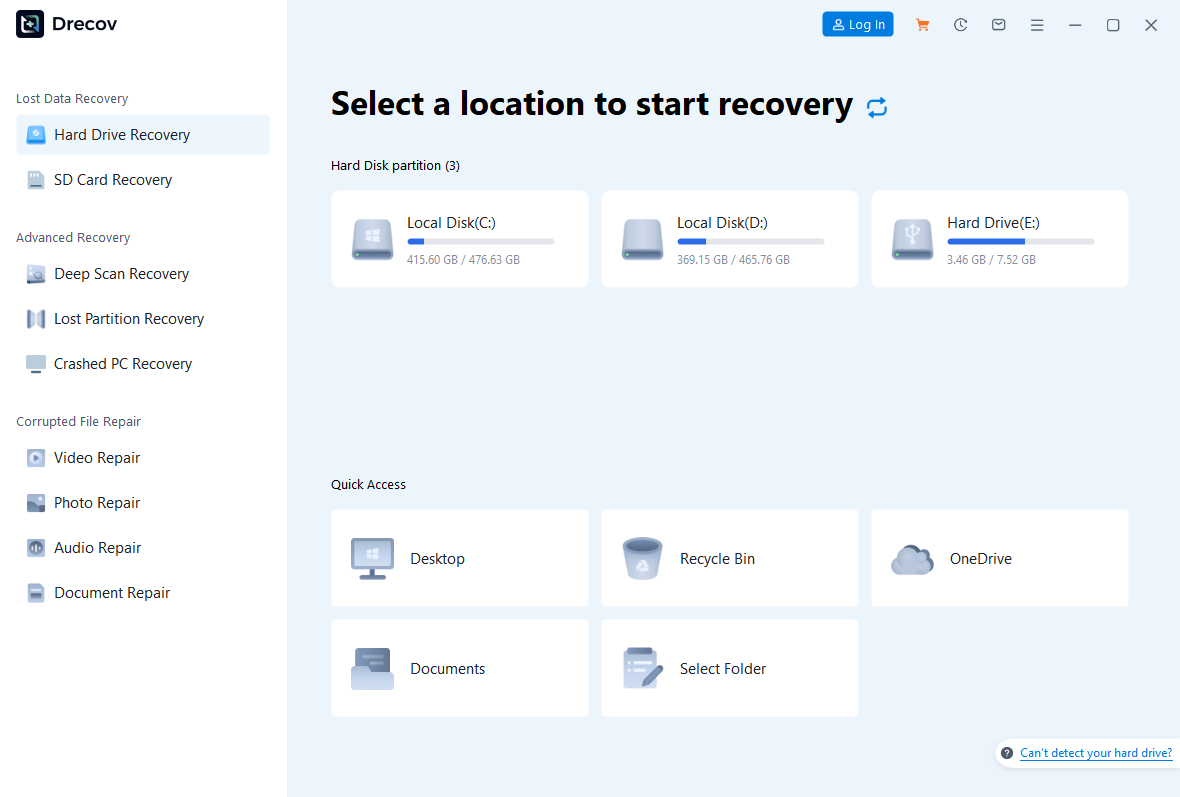
- Step 1: Select the Drive. Launch the software. On the main interface, you will see a list of drives. Select the USB drive under the “External Devices” section.
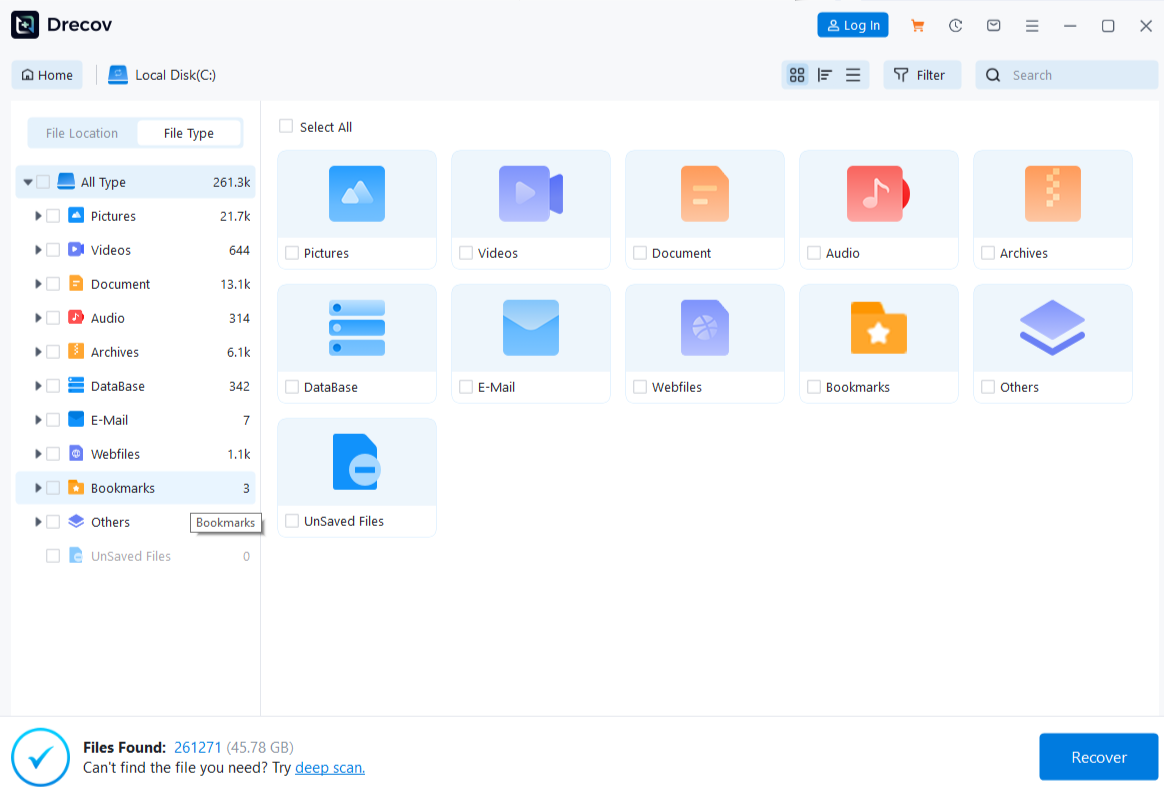
- Step 2: Deep Scan. Click the Scan button. PandaOffice Drecov will begin a two-stage scan. First, it looks for the directory structure; second, it performs a Deep Scan to find files based on their digital signatures (headers).
- Step 3: Preview Files. Once the scan is complete, browse through the folders. You can use the filter to find specific file types like
.jpg,.docx, or.mp4.
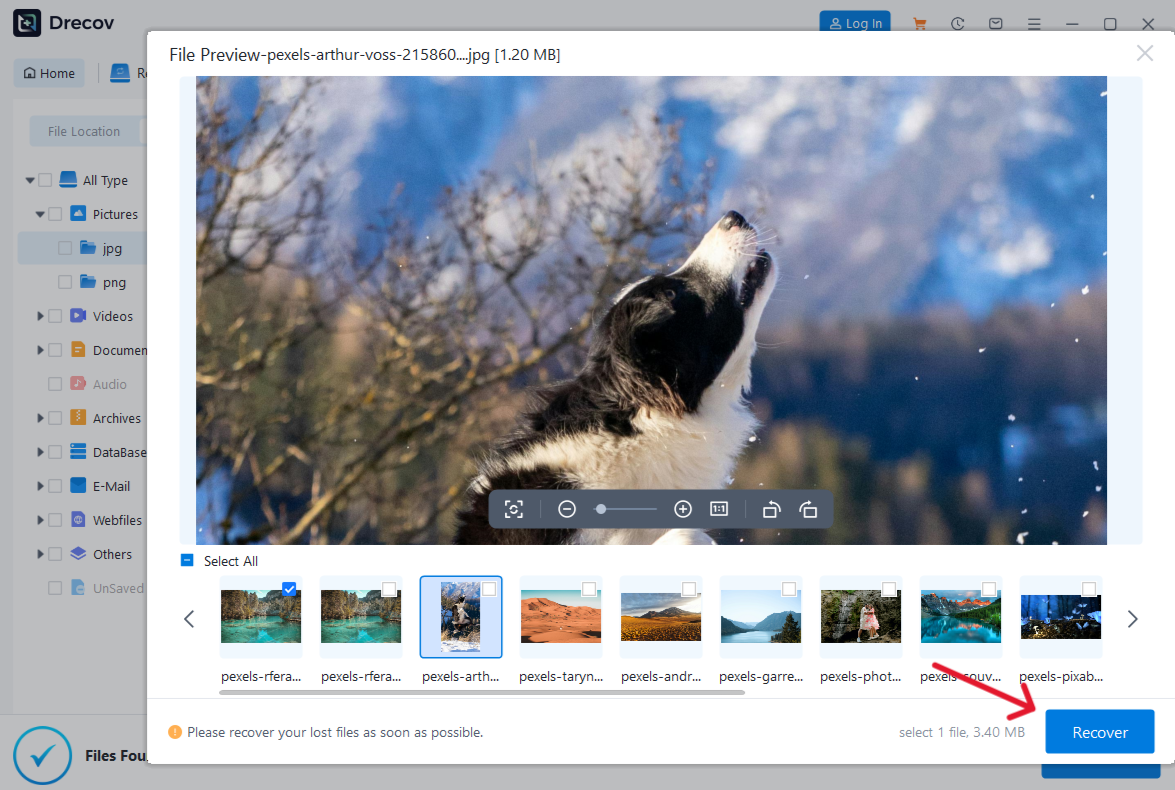
- Step 4: Recover. Select the files you need and click Recover. Choose a destination on your local hard drive—never save recovered files back to the same USB drive they were lost from.
For more specific guides on USB maintenance and recovery, explore our related resources:
- How to recover deleted files from USB drive
- Recover deleted files from USB flash drive: A complete guide
- How to format USB to FAT32: The ultimate 128GB fix 2026
By following the steps outlined above, you can confidently manage your storage devices, overcome Windows limitations, and ensure that your digital life remains intact even after a format. For further technical assistance, always refer to Official Windows Support for OS-specific updates regarding file system changes.
Can You Undo FAT32 Format USB?
A common question among panicked users is whether they can undo fat32 format usb. Technically, there is no “undo” button in Windows that reverses a format like Ctrl+Z reverses a typo. Once the format command is executed, the file system is rewritten.
However, “undoing” the format effectively means restoring the drive to its previous state. This is achieved through partition recovery.
- Partition Recovery: Tools like PandaOffice Drecov can sometimes find “Lost Partitions.” If you accidentally deleted the partition before formatting, the software can restore the entire partition table, making it look as if the format never happened.
- The Metadata Factor: If you converted a drive from NTFS to FAT32, the metadata structures are different. An “undo” in this context is strictly a data recovery mission.
Advanced Command Line: The Diskpart Method
If the standard Windows interface fails to show your drive or errors out, Diskpart is your “nuclear” option. It is a powerful command-line utility that handles disk partitioning at a lower level.
Step-by-Step Diskpart Formatting
- Step 1: Type
diskpartin the Windows search bar and run as admin. - Step 2: Type
list diskto see all connected drives. Identify your USB by its size. - Step 3: Type
select disk N(ReplaceNwith your USB’s number). Be extremely careful here; selecting the wrong disk will erase your hard drive. - Step 4: Type
clean. This wipes the partition information entirely. - Step 5: Type
create partition primary. - Step 6: Type
format fs=fat32 quick. - Step 7: Type
assignto give the drive a letter, thenexit.
This method is the most effective way to how to format a usb to fat32 when the drive is acting “stubborn” or showing up as “Read Only.”
Maintaining Your USB Drive Health
To avoid the need to fix usb drive needs to be formatted error in the future, follow these industry best practices:
- Always Eject Safely: Use the “Safely Remove Hardware” icon. This ensures all cached “write” operations are completed before power is cut.
- Avoid Crowded Hubs: Poorly powered USB hubs can cause voltage drops, leading to write errors and file system corruption.
- Run Periodic Scans: Every few months, run a manual CHKDSK to find and mark bad sectors.
- Keep PandaOffice Drecov Ready: Data loss usually happens when you least expect it. Having a recovery tool installed means you can act immediately before data is overwritten.
Format a USB to Fat32 FAQs
1. Why does Windows only allow me to format up to 32GB as FAT32?
This is a legacy limitation dating back to the development of Windows 95. While the FAT32 file system itself can technically support volumes up to 2TB (with 32KB clusters) or even 16TB (with 64KB clusters), Microsoft chose to cap the format tool at 32GB to encourage users to move toward the more robust NTFS format. To bypass this and how to format 64gb usb to fat32 windows 10/11, you must use the Command Prompt, PowerShell, or third-party partition managers.
2. Can I change a USB from NTFS to FAT32 without losing data?
Native Windows tools do not support “non-destructive” conversion from NTFS to FAT32. To perform this change using built-in features, you must format the drive, which erases all data. However, if you have already formatted and realized you forgot to backup, you should immediately use PandaOffice Drecov data recovery software to undo fat32 format usb effects by retrieving the original files from the disk’s unallocated space.
3. I formatted my drive to FAT32, but now I can’t copy a 5GB ISO file to it. Why?
This is the most common “gotcha” of the FAT32 system. Regardless of the total capacity of your USB (even if it’s a 128GB drive), FAT32 has an absolute individual file size limit of 4GB. If you need to store files larger than 4GB while maintaining high compatibility, you should consider formatting the drive to exFAT instead, which removes the file size limit while remaining compatible with both Mac and PC.
4. What should I do if Windows says “The volume is too big for FAT32”?
If you receive this error in the Command Prompt, it means you are trying to use the standard format command on a drive larger than 32GB. Windows blocks this to prevent performance degradation. To solve this, you can use the Diskpart utility with the quick parameter, or use a specialized third-party tool designed to format large volumes to FAT32. If the drive becomes inaccessible during these attempts, remember to fix usb drive needs to be formatted error by checking the partition table health.
5. Is it safe to use FAT32 for a bootable Windows installation USB?
Yes, in fact, it is often required. Modern computers using UEFI (Unified Extensible Firmware Interface) usually require the boot partition of a USB drive to be formatted as FAT32 to be recognized by the BIOS/UEFI firmware. If you format your bootable media as NTFS, the computer may fail to find the bootloader. If your installation files are larger than 4GB, you may need to “split” the install.wim file to stay within FAT32’s limitations.
Conclusion
Mastering how to format a usb to fat32 is a vital skill for anyone dealing with cross-platform hardware. Whether you are using the GUI, PowerShell, or Diskpart, the key is to always prioritize your data integrity. If a format goes wrong or was performed accidentally, remember that PandaOffice Drecov provides a professional safety net to recover data from formatted fat32 usb drive.





