







Losing important files is a digital nightmare that most of us have faced at some point. Whether it was a crucial work presentation, a thesis, or a collection of irreplaceable family photos, the moment you realize the Recycle Bin is empty can be heart-stopping. However, as an SEO expert and a professional in the data recovery field, I am here to tell you that “deleted” does not always mean “gone forever.”
In this comprehensive guide, we will explore every possible avenue on how to restore things deleted from recycle bin. We will move from the simplest built-in Windows features to advanced professional solutions like PandaOffice Drecov data recovery software. By the end of this article, you will be equipped with the knowledge and tools to handle almost any data loss scenario.
Understanding the Logic of Data Deletion
Before we dive into the “how-to,” it is vital to understand what happens when you “permanently” delete a file. When you empty your Recycle Bin or use the Shift + Delete shortcut, Windows does not immediately erase the binary data of that file from your hard drive. Instead, the operating system marks the space occupied by that file as “available.”
Essentially, the file remains on the disk until new data overwrites it. This is the golden rule of data recovery: Stop using the drive immediately. If you continue to save new files, install software, or even browse the web (which creates temporary files), you risk overwriting the very data you are trying to save.
Level 1: Basic Recovery from the Recycle Bin
Sometimes, the simplest solution is the one we overlook in a panic. If you haven’t emptied the bin yet, your files are just a few clicks away.
How to recover deleted data from recycle bin if not emptied
- Step 1: Locate the Recycle Bin icon on your desktop and double-click to open it.
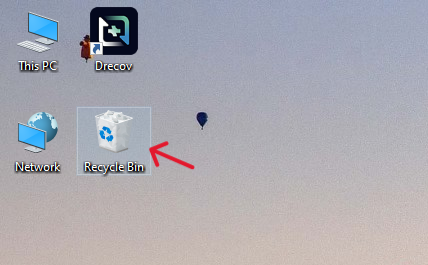
- Step 2: Use the search bar at the top right to type the name of your file or sort by “Date Deleted.”
- Step 3: Once you find the file, right-click it and select Restore.
The file will immediately return to its original location. If you cannot find the icon, you can access it by typing shell:RecycleBinFolder into the Windows Run dialog (Win + R).
Level 2: Using Windows Built-in Backup Features
Windows offers several native tools designed to protect users from accidental data loss. If you have been proactive with your system settings, you might not need third-party software.
Method 1: Restoring from File History
File History is a powerful feature in Windows 10 and 11 that takes snapshots of your files at regular intervals.
- Step 1: Open the Start Menu, type “Restore your files with File History,” and press Enter.
- Step 2: Look through the folders for your deleted items. You can use the left and right arrows at the bottom to view different versions of your folders.
- Step 3: Select the files you need and click the green Restore button.
Method 2: Using “Restore Previous Versions”
This method relies on System Protection points. It is particularly useful for folders where files were recently deleted.
- Step 1: Navigate to the folder that previously contained the deleted file.
- Step 2: Right-click the folder and select Properties.
- Step 3: Click on the Previous Versions tab.
- Step 4: Select a version dated before the deletion and click Restore.
Pro Tip: If the “Restore” button is greyed out, it means you likely didn’t have System Protection enabled for that drive. You can learn more about configuring these settings at theOfficial Microsoft Support Page.
Level 3: Professional Recovery with PandaOffice Drecov data recovery software
When built-in tools fail, or if you have emptied the bin and have no backups, it is time to use professional-grade technology. This is the most reliable method for how to restore things deleted from recycle bin after a permanent deletion.
PandaOffice Drecov data recovery software is a specialized tool designed to scan the “free space” on your drive and reconstruct the file headers of deleted items. It supports over 1,000 file formats, including documents, photos, videos, and compressed archives.
⚠ Warning: Install it on a drive different from the one where your data was lost to prevent overwriting.
Step-by-Step Guide to Using PandaOffice Drecov
- Step 1: Select Location. Launch the program. On the main interface, select the Recycle Bin option or the specific drive (usually C:) where the files were housed.

- Step 2: Deep Scan. Click Scan. The software will perform a Quick Scan followed by a Deep Scan. The Deep Scan is essential for “how to restore things deleted from recycle bin” because it digs into the raw data sectors.

- Step 3: Filter and Preview. Once the scan is complete, use the sidebar to filter by file type (e.g., .jpg, .docx). PandaOffice Drecov allows you to Preview files before recovery to ensure they aren’t corrupted.

- Step 4: Recovery. Tick the boxes next to the files you want. Click the Recover button and choose a different drive (like an external USB) to save the recovered data.
Recovery isn’t a one-size-fits-all process. Depending on your specific situation, you might find these specialized guides helpful:
- If you accidentally saved over an important document, learn how to recover overwritten excel files to get your data back.
- For a quick summary of alternative methods, check out these 5 fast fixes for recycle bin restoration.
- Sometimes, cloud syncing causes confusion; here is a guide to removing OneDrive from File Explorer to keep your local file management clean.
Level 4: Advanced Recovery via Windows File Recovery
For those who are comfortable with a command-line interface, Microsoft provides a free tool called Windows File Recovery, available on the Microsoft Store. This is a “no-GUI” alternative to how to restore things deleted from recycle bin.
- Step 1: Download “Windows File Recovery” from the Microsoft Store.
- Step 2: Open the app, which will launch a Command Prompt window.
- Step 3: Use the following syntax to attempt recovery:
winfr source-drive: destination-drive: /regular /n \$Recycle.Bin\ - Step 4: For example, if you are recovering from C: to an external drive E:, you would type:
winfr C: E: /extensive /n *project_report*
Warning: This tool is powerful but lacks the “Preview” feature of PandaOffice Drecov data recovery software, making it harder to know if you’ve found the right file until after the process is done.
Level 5: Deep System Fixes – The Registry Method
In rare cases, the Recycle Bin icon disappears or the system “forgets” where the deleted files are stored. You can sometimes trigger a refresh via the Windows Registry.
- Step 1: Press
Win + R, typeregedit, and hit Enter. - Step 2: Navigate to the following path:
HKEY_LOCAL_MACHINE\SOFTWARE\Microsoft\Windows\CurrentVersion\Explorer\Desktop\NameSpace - Step 3: Right-click on NameSpace, select New > Key, and name it:
{645FF040-5081-101B-9F08-00AA002F954E} - Step 4: In the right pane, double-click the (Default) value and type “Recycle Bin” in the Value Data box.
- Step 5: Restart your computer. This may restore the link to the hidden
$Recycle.Binfolder.
Critical Tips to Maximize Recovery Success
- Act Fast: The longer a computer stays on, the more background processes write data to the disk.
- Avoid Rebooting Repeatedly: Every boot cycle writes temporary files. If possible, perform the recovery from a “Live USB” or connect the affected hard drive to another computer as a secondary drive.
- Check Cloud Storage: If you use OneDrive, Dropbox, or Google Drive, check their online “Trash” folders. Often, files deleted locally are held in the cloud for 30 days.
Conclusion
Learning how to restore things deleted from recycle bin is a vital skill in the modern age, but prevention is even better. To avoid future stress, consider setting up a robust backup routine using a combination of external hard drives and cloud services.
Remember, if the manual methods seem too daunting, PandaOffice Drecov data recovery software provides a safe, guided environment to retrieve your files without needing a degree in computer science. Data loss is temporary if you have the right tools and the right knowledge. Keep this guide bookmarked, stay calm, and start your recovery process today! The Ultimate Guide: How to Restore Things Deleted from Recycle Bin






