







We have all been there. You are tidying up your desktop, selecting old documents, and hitting that delete key with a sense of accomplishment. Then, a cold shiver runs down your spine as you realize you just deleted the final draft of a major project. The immediate question that springs to mind is: how can you retrieve deleted files from the recycle bin?
Fortunately, Windows provides several safety nets. However, data recovery is a race against time. The moment you delete a file, its “address” is removed, but the data itself often lingers on the hard drive until new information overwrites it. In this massive educational guide, we will explore everything from the simplest recovery clicks to advanced deep-scanning techniques using professional tools like PandaOffice Drecov.
The Science of Deletion: Why Files Don’t Vanish Instantly
To understand how can you retrieve deleted files from the recycle bin, you must first understand what happens when you press “Delete.” In most cases, Windows doesn’t actually erase the data bits from your physical drive. Instead, it marks the space as “available.”
Think of your hard drive like a giant library. Deleting a file is like removing the index card from the library’s catalog. The book (your data) is still sitting on the shelf, but the librarian (Windows) no longer knows where it is. As long as a new book hasn’t been placed on that specific spot, you can still find it. This fundamental principle is why data recovery software is so effective.
Method 1: The Basic Restore
If you have simply moved a file to the trash, the solution is straightforward. This is the first place anyone should look when wondering how can you retrieve deleted files from the recycle bin.
How to Recover Deleted Files from Recycle Bin Manually
- Step 1: Locate the Recycle Bin icon on your desktop. If you cannot find it, you might need to check your desktop icon settings.
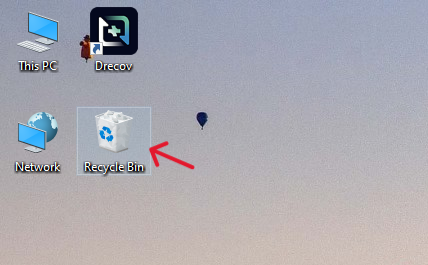
- Step 2: Double-click the icon to open the folder. Here, you will see a list of all items currently pending permanent deletion.
- Step 3: To make things easier, click on the Date Deleted column header to sort the files by the most recently removed items.
- Step 4: Find the file or folder you need. Right-click on it and select Restore.
- Step 5: Windows will automatically move the file back to its original location. Navigate to that folder to verify it has returned.
Key Point: If you don’t remember the original location, you can check the “Original Location” column in the Recycle Bin before hitting restore.
Method 2: Using the Windows “Undo” Shortcut
If you literally just deleted the file and haven’t performed other actions, Windows has a built-in “memory” for its last few file operations.
- Step 1: While in the folder where the deletion occurred (or on the desktop), press Ctrl + Z on your keyboard.
- Step 2: Alternatively, right-click any empty space in the folder and select Undo Delete.
This is the fastest answer to “how can you retrieve deleted files from the recycle bin,” but it only works for the most recent action.
Method 3: File History and Windows Backups
If you have emptied the trash, you can no longer use the simple restore method. This is where system backups come into play. Windows has a feature called File History that, if enabled, takes snapshots of your files over time.
- Step 1: Click the Start menu and type Restore your files with File History.
- Step 2: Search for the folder that contained your deleted file.
- Step 3: Use the arrow buttons at the bottom to “travel back in time” to a version of the folder before the file was deleted.
- Step 4: Select the file and click the green Restore button.
If you are using a network or a corporate machine, you might also find success with Previous Versions. You can right-click a folder, select Properties, and navigate to the Previous Versions tab to see if the system has saved a shadow copy of your data.
Method 4: Professional Recovery with PandaOffice Drecov
What happens when the Recycle Bin is empty, and you never set up File History? This is the critical point where many users panic. However, professional data recovery software like PandaOffice Drecov can bridge the gap.
Drecov is specifically engineered to scan the “unallocated space” of your hard drive to find those “books” that have been removed from the library catalog but are still on the shelf. It is a powerful tool for anyone asking how can you retrieve deleted files from the recycle bin after a permanent shift-delete or a trash emptying.
Why Use PandaOffice Drecov?
While there are many tools on the market, Drecov stands out for its high success rate and user-friendly interface. It supports hundreds of file types, including photos, videos, CAD files, and databases. It also works on external USB drives, SD cards, and SSDs.
⚠ Warning: Do not install the software on the same drive partition where the deleted files were located. Doing so could overwrite the very data you are trying to save! Install it on a different drive or a USB stick.
Step-by-Step Recovery Process with PandaOffice Drecov
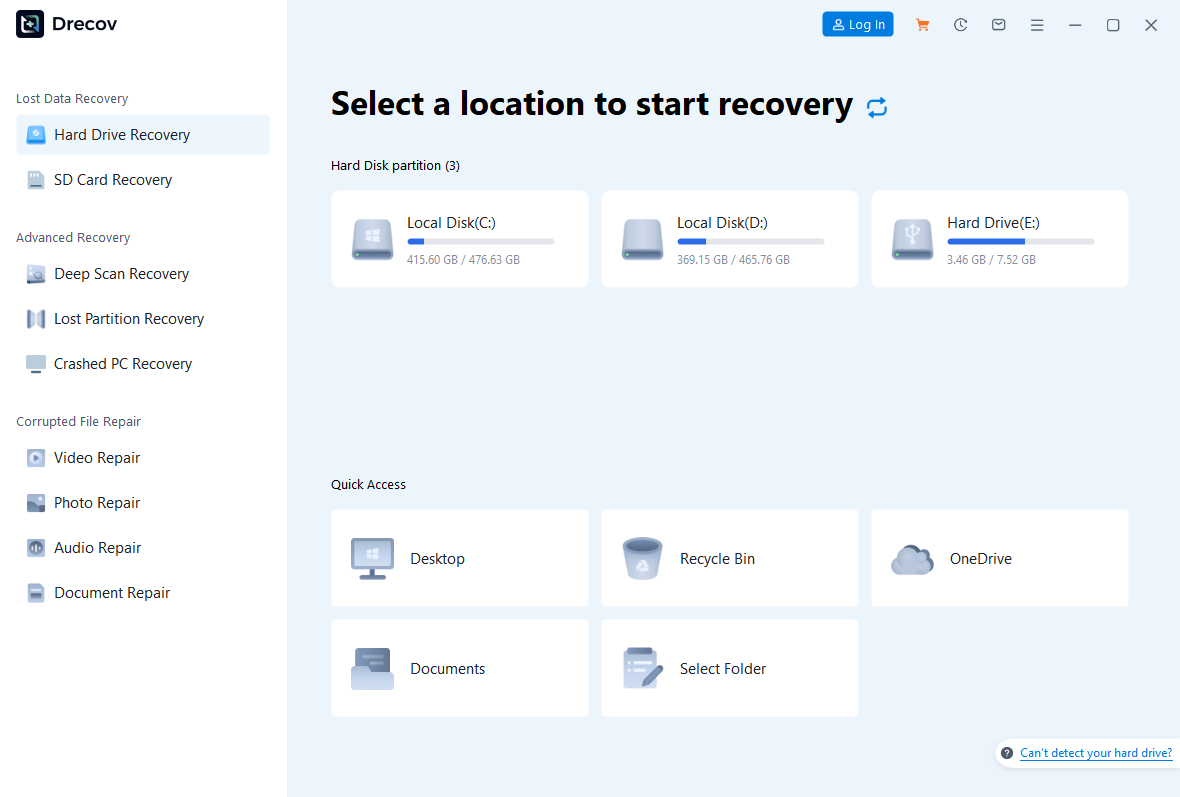
- Step 1: Select the Source. Open the application. You will see a list of drives. Select the drive where the Recycle Bin is located (usually the C: Drive).
- Step 2: Initiate the Scan. Click Scan. The software will first perform a “Quick Scan” to find recently deleted items. If your file doesn’t show up, it will automatically transition into a “Deep Scan,” which examines the drive bit-by-bit.
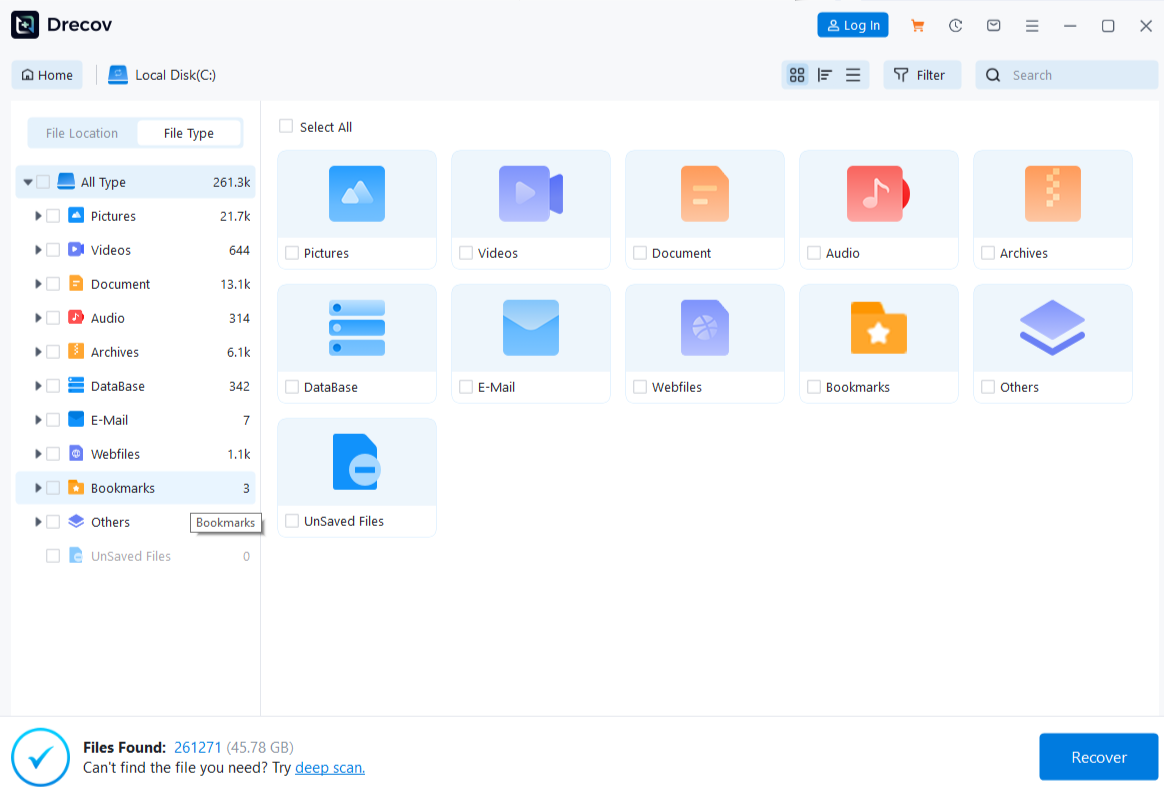
- Step 3: Use the Filter Feature. Because a Deep Scan can find thousands of files, use the Filter or Search bar in the top right. Type the name of your file or filter by extension (e.g.,
.pdfor.docx).

- Step 4: Preview before Recovery. One of the most important operation points is the Preview function. Double-click a file to see its content. If the preview looks correct, the file is healthy and recoverable.
- Step 5: Recover the Data. Check the boxes next to your files and click the Recover button. Choose a destination folder on an external drive or a different partition to finalize the process.
Method 5: Command Prompt and Windows File Recovery
For those who are comfortable with a text-based interface, Microsoft offers a tool called “Windows File Recovery” available via the Microsoft Store. It is a command-line utility that provides a bit more granular control.
- Step 1: Download Windows File Recovery from the Microsoft Store.
- Step 2: Open the app, which will launch a Command Prompt window.
- Step 3: Use the following syntax:
winfr source-drive: destination-drive: [/mode] [/switches]For example, if you want to recover a specific folder from the C: drive to a recovery folder on the E: drive, you would use:winfr C: E: /regular /n \Users\<username>\Documents\ - Step 4: Wait for the tool to process the disk sectors.
This method is precise but lacks the visual preview and ease of use found in PandaOffice Drecov.
Best Practices to Avoid Permanent Data Loss
Now that you know how can you retrieve deleted files from the recycle bin, you should focus on prevention. Data recovery is a powerful skill, but it should be your last resort.
- Avoid the “Shift + Delete” Habit: This command bypasses the Recycle Bin entirely. Unless you are absolutely sure you never want to see a file again, stick to the standard delete.
- Enable Cloud Syncing: Services like OneDrive or Dropbox provide an additional layer of “Version History” that can be accessed from any device.
- The 3-2-1 Backup Rule: Keep 3 copies of your data, on 2 different media types, with 1 copy stored off-site (cloud).
- Stop Using the Computer Immediately: If you realize you’ve lost data, stop writing new files to that drive. Browsing the web, downloading updates, or even moving files around can overwrite the deleted data.
Deep Dive: The Technical Side of the Recycle Bin
For the curious minds, the Recycle Bin isn’t just one folder. It is actually a hidden system folder named $Recycle.Bin located at the root of every drive partition. When you delete a file from your D: drive, it doesn’t move to the C: drive’s trash; it moves to the hidden $Recycle.Bin on the D: drive.
This is why, when using PandaOffice Drecov, you should scan the specific partition where the file was originally stored. If you want to dive deeper into the mechanics of your system, you might be interested in learning where is recycle bin in windows 10 3 quick ways to find it.
Furthermore, if you find the icon distracting, you can learn windows 10 11 how to remove the recycle bin from desktop without actually disabling the recovery feature. And if you are ever lost in a new Windows update, here is a guide on where do i find recycle bin in windows 10.
Retrieve deleted files from the recycle bin FAQs
1. Why can’t I find the file I just deleted in the Recycle Bin?
There are three common reasons why a file might skip the Recycle Bin entirely:
- Shift + Delete: If you used this keyboard shortcut, the file is marked for immediate permanent deletion.
- File Size: If a file is larger than the maximum storage capacity allocated to the Recycle Bin, Windows will delete it permanently.
- Removable Media: Files deleted from USB flash drives or SD cards usually do not go to the Recycle Bin; they are deleted instantly. In these cases, you should immediately use PandaOffice Drecov to perform a Deep Scan of the drive.
2. Can I recover files from a Recycle Bin that was emptied days ago?
Yes, but success depends on your computer usage. When you empty the trash, the space is marked as “free.” If you have been downloading large files or installing new software since then, the old data might have been overwritten. To increase your chances, stop using the PC and run a recovery scan as soon as possible.
3. Does the Recycle Bin store files deleted from network drives?
Generally, no. When you delete a file from a shared network folder, it is usually deleted permanently from the server side and does not appear in your local PC’s Recycle Bin. You would need to check the server’s own backup system or contact your IT administrator to use a tool like Drecov on the host server.
4. How can I increase the storage limit of my Recycle Bin to prevent auto-deletion?
If you deal with large video or CAD files, you may want to increase the bin’s capacity:
- Step 1: Right-click the Recycle Bin icon and select Properties.
- Step 2: Select the drive you want to adjust (e.g., C:).
- Step 3: Under Settings for selected location, choose Custom size and enter a larger value in MB.
- Step 4: Click Apply.
5. What is the difference between a Quick Scan and a Deep Scan in PandaOffice Drecov?
A Quick Scan looks for the file directory markers that Windows recently “forgot.” It is very fast but only finds recently deleted items. A Deep Scan ignores the file system entirely and looks at the raw binary data on the disk. This is the best method for finding files from an emptied Recycle Bin or a formatted partition, though it takes longer to complete.
Conclusion
Mastering how can you retrieve deleted files from the recycle bin is an essential part of digital literacy. Whether you are a student, a professional, or a casual user, your data represents your time and effort. While Windows provides the Recycle Bin and File History, they aren’t foolproof.
In cases where human error, system crashes, or accidental formatting occur, professional software becomes indispensable. PandaOffice Drecov simplifies the complex world of data forensics, putting the power of recovery back into your hands. Always remember: as long as the data hasn’t been overwritten, there is hope.






