







Understanding How to Make a Copy of a Word Document
What Does It Mean?
When you make a copy of a Word document, you are essentially creating a duplicate version of the original file while keeping the source unchanged. This is especially useful when you want to edit, share, or store different versions without risking data loss.
Many users often ask, how do I make a copy of a Word document without overwriting the original. The process is actually simple, but it varies depending on your device, operating system, and the version of Microsoft Word you are using.
Whether you are working on Windows, macOS, or cloud platforms like OneDrive, knowing how to copy a Word document properly ensures better file management and avoids accidental edits.
Another common scenario involves users wanting to save a copy of a Word document before making major revisions. This allows version tracking and easy rollback if something goes wrong.
Understanding the concept behind making a copy of a Word document helps you:
- Preserve original content
- Create backups for safety
- Share editable versions
- Maintain version control
⚠️ Warning: Directly editing the original file without creating a copy can lead to permanent data loss if mistakes occur.
Why You Need to Create a Copy of a Word Document
Common Situations Where Copying Is Necessary
There are many practical reasons why users need to make a copy of a document in Word. One of the most common is when editing important files such as contracts, reports, or academic work.
For example, if you are revising a document, creating a duplicate ensures that the original remains untouched. This is particularly important in professional environments where document integrity matters.
Another reason is collaboration. When multiple people are working on the same file, sharing copies prevents conflicts and accidental overwrites. Instead of editing the original, each collaborator can work on their own version.
Additionally, when sending documents via email, users often prefer to create a copy of a Word document to avoid exposing sensitive information contained in the original.
Backup is another major factor. If your system crashes or files become corrupted, having a copied version can save hours of work.
Risks of Not Making a Copy
Failing to copy a document in Word before editing can lead to several issues:
- Overwriting important data
- Losing original formatting
- Corrupting the only version of the file
- Difficulty in tracking changes
⚠️ Warning: Once a file is overwritten, recovery may not always be possible without specialized tools.
Preparation Before Copying a Word Document
Check File Location and Permissions
Before you make a copy of a Word document, it is important to verify where the file is stored. Files saved on local drives, external storage, or cloud services may require different steps.
Ensure that you have proper permissions to access and duplicate the file. If the document is read-only or restricted, you may need to adjust settings or request access.
Also, confirm that the file is not currently being edited by another user, especially in shared environments. This can prevent syncing issues or incomplete copies.
Verify Software and System Environment
Test Environment Example:
- Operating System: Windows 11 / macOS Sonoma
- Software: Microsoft Word 2019 / Microsoft 365
- Storage: Local disk and OneDrive cloud storage
Knowing your environment helps determine the most efficient way to make a copy of word document.
Different versions of Word may display slightly different menus, but the core functionality remains the same.
⚠️ Warning: Always ensure your document is saved before attempting to copy it to avoid incomplete duplication.
Best Practices for Making a Copy of a Word Document
Organize File Naming for Easy Identification
When you create a copy of a Word document, naming is crucial. Avoid generic names like “Copy” or “Document1.” Instead, use descriptive labels such as:
- Report_v2
- Final_Copy
- Draft_Backup
This makes it easier to identify different versions later.
A good naming convention improves workflow efficiency and reduces confusion, especially when dealing with multiple copies.
Choose the Right Storage Location
Deciding where to save your copied file is just as important as creating it. You can store it:
- On your local computer
- In cloud storage (OneDrive, Google Drive)
- On an external drive
Each option has its advantages. Cloud storage allows easy access and sharing, while local storage provides faster performance.
Maintain File Integrity
To ensure the copied file remains intact:
- Avoid interrupting the copying process
- Check file size and content after duplication
- Open the copied file to verify accuracy
These steps help guarantee that your effort to make a copy of a word document is successful.
Overview of Methods
Different Ways to Duplicate a Word File
There are several ways, and each method suits different situations. Some methods are quick and simple, while others offer more control over file management.
Common approaches include:
- Using “Save As” within Microsoft Word
- Copying and pasting the file in File Explorer or Finder
- Duplicating through cloud platforms
- Using backup or recovery tools
Each method has its own advantages depending on your workflow.
For instance, “Save As” is ideal when you are already working inside the document, while file explorer copying is faster for bulk duplication.
Choosing the Right Method for Your Needs
If you are wondering how to make a copy of a document in Word, the best method depends on:
- Your device (Windows or Mac)
- File location (local or cloud)
- Purpose (backup, editing, sharing)
Understanding these factors helps you choose the most efficient approach.
In the next section, we will explore step-by-step methods, including advanced solutions and tools to help you safely.
Step-by-Step Methods to Make a Copy of a Word Document
Method 1: Use “Save As” in Microsoft Word
One of the easiest ways is by using the built-in “Save As” feature. This method allows you to duplicate the file directly within Word while assigning a new name or location.
Test Environment:
- OS: Windows 11
- Software: Microsoft Word 365
- Storage: Local disk
Steps:
- Open the original Word document.
- Click File in the top menu.
- Select Save As from the sidebar.
- Choose a new location (optional).
- Enter a new file name.
- Click Save.
This process instantly creates a duplicate file while keeping the original unchanged. It is ideal for users wondering how to save a copy of a Word document before making edits.
The biggest advantage of this method is simplicity. Since you are already inside the document, you don’t need to switch between windows.
⚠️ Warning: Avoid saving the copy with the same name in the same folder, as it may overwrite the original file.
Method 2: Copy and Paste the File in File Explorer (Windows)
If you prefer working outside Word, you can copy a document in Word using Windows File Explorer. This method is fast and works well for bulk duplication.
Test Environment:
- OS: Windows 10
- Software: File Explorer
- Storage: External hard drive
Steps:
- Navigate to the folder containing the Word document.
- Right-click the file.
- Select Copy.
- Right-click in the same or another folder.
- Click Paste.
Windows will automatically create a duplicate labeled “Copy” or similar.
This method is perfect if you need to make a copy of word document without opening it. It is also useful when organizing files across different folders.
Another benefit is speed. You can copy multiple files at once, making it efficient for managing large document collections.
Method 3: Duplicate a Word Document on Mac (Finder)
Mac users can easily create a copy of a Word document using Finder. The process is similar to Windows but optimized for macOS.
Test Environment:
- OS: macOS Sonoma
- Software: Finder
- Storage: Local SSD
Steps:
- Open Finder and locate your file.
- Right-click the document.
- Select Duplicate.
A new file will appear with “copy” added to its name.
This is one of the fastest ways to handle making a copy of a Word document on Mac, as it requires only a few clicks.
Alternatively, you can use keyboard shortcuts:
- Command + C (Copy)
- Command + V (Paste)
⚠️ Warning: Be careful when duplicating files in synced folders, as it may trigger unnecessary cloud uploads.
Method 4: Copy a Word Document Using OneDrive or Cloud Storage
If your file is stored in the cloud, you can make a copy of a document in Word directly from platforms like OneDrive.
Test Environment:
- Platform: OneDrive Web
- Browser: Chrome
- Device: Windows PC
Steps:
- Log in to your cloud storage account.
- Locate the Word document.
- Right-click the file.
- Select Copy to or Duplicate.
- Choose the destination folder.
This method is ideal for remote work and collaboration. It allows you to copy a Word document without downloading it.
It also ensures that your files are backed up automatically, reducing the risk of data loss.
Method 5: Use Pandaoffice Drecov for Backup and Copy Recovery
Sometimes users are not just trying to make a copy of a Word document, but also recover or duplicate files that were lost, deleted, or corrupted. In such cases, using a specialized tool can be helpful.
Test Environment:
- OS: Windows 11
- Software: Pandaoffice Drecov
- Scenario: Deleted Word document recovery
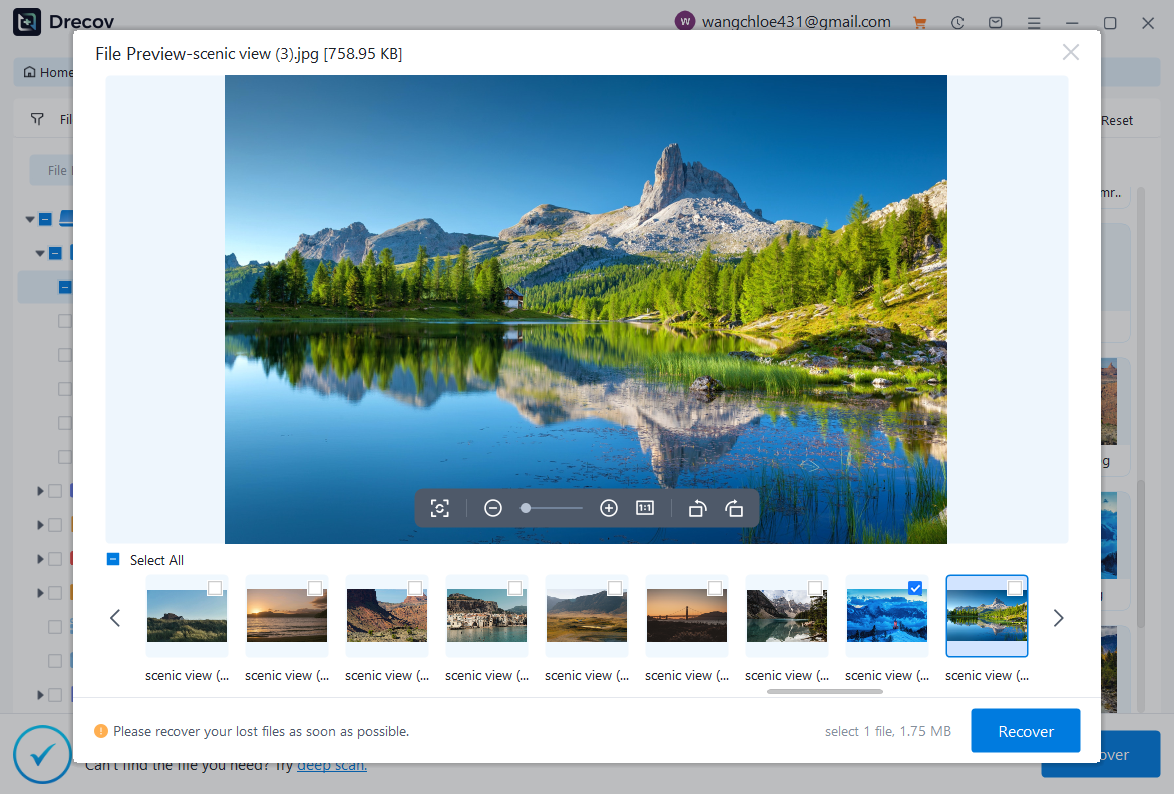
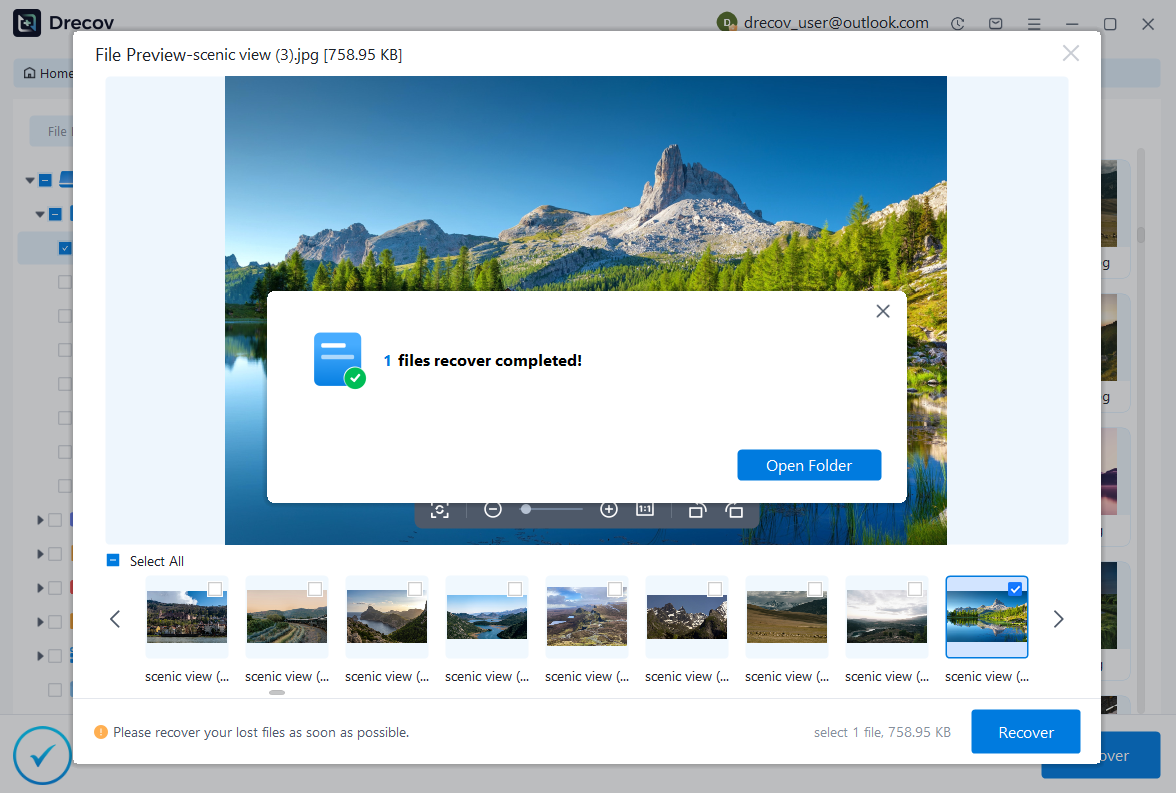
Steps:
- Install and launch Pandaoffice Drecov.
- Select the drive where the document was stored.
- Start scanning for lost files.
- Preview the recovered Word document.
- Save it as a new file (copy).
This method not only helps you create a copy of a Word document, but also restores files that cannot be accessed normally.
It is especially useful in situations involving accidental deletion, system crashes, or corrupted documents.

Why Choose PandaOffice Drecov?
PandaOffice Drecov is a versatile and reliable solution for recovering a wide range of lost or inaccessible files. Whether you need audio recovery, video recovery, or excel recovery files, PandaOffice Drecov provides fast and efficient results, ensuring your important data is safely restored.
For creative professionals, it supports file recovery Illustrator projects, allowing designers to retrieve unsaved or accidentally deleted artwork without compromising file integrity. Businesses and individuals can also benefit from its restore Windows previous date feature, which helps recover documents or spreadsheets that were lost due to system errors or accidental deletions.
When external storage devices fail, such as a Lacie hard drive not showing up, PandaOffice Drecov can detect and restore files from these drives, ensuring you do not lose critical data. Even deleted files in the recycle bin can be recovered using its advanced recycle bin recovery software capabilities.
Additionally, the software supports recovering data from lost partitions, making lost partition recovery straightforward and reliable. Its intuitive interface allows users to perform audio recovery, video recovery, and excel recovery effortlessly, even for large or complex files.
⚠️ Warning: Avoid saving recovered files to the same drive to prevent overwriting recoverable data.
FAQ
How do I make a copy of a Word document without opening it?
You can copy a document in Word without opening it by using File Explorer (Windows) or Finder (Mac). Simply right-click the file and select copy or duplicate.
This method is quick and works well for users who need to manage multiple files at once.
How to create a copy of a Word document in the same folder?
To make a copy of a Word document in the same location, use copy and paste. The system will automatically rename the duplicate to avoid conflicts.
This is the simplest way to maintain multiple versions in one folder.
Can I copy a Word document on mobile devices?
Yes, mobile apps like Microsoft Word and cloud storage platforms allow you to make a copy of word document easily.
Look for options like “Save a Copy” or “Duplicate” within the app interface.
Why can’t I copy a document in Word?
If you are unable to copy a Word document, it may be due to:
- File permission restrictions
- Read-only settings
- Syncing issues with cloud storage
Adjusting permissions or saving a new version usually resolves the issue.
Conclusion: Key Takeaways for Copying Word Documents
Best Ways to Make a Copy Safely and Efficiently
Learning how to make a copy of a Word document is an essential skill for both personal and professional use. Whether you are editing, sharing, or backing up files, having a duplicate ensures your original data remains safe.
The most straightforward method is using “Save As,” while File Explorer and Finder provide quick alternatives. Cloud-based duplication is ideal for remote access, and recovery tools like Pandaoffice Drecov offer advanced solutions when files are lost.
Each method serves a specific purpose, so choosing the right one depends on your workflow and environment.
By following best practices such as proper naming, verifying file integrity, and selecting the correct storage location, you can efficiently manage your documents.
⚠️ Warning: Always double-check your copied file before making major edits to ensure it contains all original data.






