







Understanding What Happens After a Factory Reset
Does Factory Reset Delete Photos and Personal Data?
A factory reset is designed to restore a device to its original system state, removing user-installed apps, settings, and most personal files. This is why many users ask does factory reset delete photos or does a factory reset delete photos when they accidentally reset their phone or computer.
In most modern Android and iOS devices, a factory reset removes user data from internal storage, including photos, videos, documents, app data, and cached files. However, whether data is truly gone depends on how the storage system handles deletion.
On older devices, data might still physically remain on storage chips until overwritten. On newer encrypted devices, the reset process may destroy encryption keys, making data inaccessible even if remnants exist. This creates confusion for users trying to recover photos after factory reset or understand how to get back photos after factory reset.
The key takeaway is that a factory reset does not always mean immediate physical destruction of data, but it often makes normal access impossible without recovery tools or backups.
⚠️ Warning: After a factory reset, avoid installing apps or saving new files immediately, as this can overwrite recoverable data.
What Really Happens During a Factory Reset Process
When a factory reset is initiated, the system performs a structured cleanup of the device. It removes user partitions, clears application data, and resets system settings. In most cases, it also wipes encryption keys used to protect stored files.
This is important because even if data still physically exists on the storage chip, without encryption keys, it cannot be decrypted or read normally. This is one reason why many users fail when attempting to retrieve photos after factory reset using basic file browsing methods.
On Android devices, a factory reset typically erases user partitions but may leave some low-level data traces until overwritten. On iPhones, Apple’s encryption system makes post-reset recovery significantly more difficult because the reset destroys the cryptographic link to the stored data.
Understanding this process helps users set realistic expectations when trying to recover photos after factory reset without backup. While recovery is not always guaranteed, certain scenarios still allow partial or full restoration.
Why Some Data May Still Be Recoverable After Reset
Even after a factory reset, not all data disappears instantly. Storage systems usually mark space as available rather than physically erasing everything immediately. This means deleted data may remain until new files overwrite it.
In some cases, especially on Android devices without full encryption or with older file systems, fragments of photos and files may still exist. This is why specialized tools can sometimes help users how to get back photos after factory reset successfully.
Additionally, if the device had external storage such as SD cards, USB drives, or cloud synchronization enabled, a significant portion of data may still be recoverable from those sources.
Users often assume that factory reset means total loss, but recovery depends heavily on timing, device type, and whether the storage space has been reused.
Why Data Loss Happens After Factory Reset
System-Level Wipe vs Logical Deletion
A factory reset is more than simple deletion—it is a system-level operation that affects how data is structured and accessed. Logical deletion removes file pointers, while system-level wipe resets partitions and system configurations.
This distinction is critical when trying to understand how to recover photos after factory reset. In logical deletion cases, recovery tools can rebuild file structures. However, after a full reset, file indexing is often removed entirely, making recovery more complex.
Even so, underlying storage blocks may still contain remnants of data, especially if they have not been overwritten. This is where advanced recovery techniques and data recovery tools for factory reset scenarios become useful.
Impact on Internal Storage and Encrypted Devices
Modern smartphones rely heavily on encryption. When a factory reset occurs, encryption keys are often deleted, rendering stored data unreadable even if it physically exists.
This means that for many users trying to recover photos after factory reset without backup, success depends on whether encryption was fully applied and whether any external backups exist.
Internal storage on modern devices is also optimized for performance and security. Technologies like TRIM commands on SSD-like storage can actively clear deleted blocks, further reducing recovery chances.
Understanding these technical limitations helps users make informed decisions about recovery attempts.
Common User Mistakes Leading to Permanent Data Loss
One of the most common mistakes after a factory reset is continuing to use the device. Installing apps, downloading updates, or taking new photos can overwrite recoverable data.
Another mistake is assuming that recovery software is unnecessary if no backup exists. In reality, recovery tools may be the only option in such cases.
Users also sometimes reformat storage again or reset multiple times, which significantly reduces the chances of successfully retrieve photos after factory reset.
Finally, ignoring cloud services is another common issue. Many users forget that automatic backups may already contain their missing data.
⚠️ Warning: Do not perform additional resets or heavy usage if you intend to recover lost files.
Methods to Recover Data After Factory Reset
Method 1: Restore from Cloud Backup Services
Cloud backups are the most reliable way to recover data after a factory reset. Services like Google Drive, iCloud, and manufacturer-specific backup systems often store photos, contacts, and app data automatically.
Test Environment
- Device: Android 14 smartphone
- Backup Service: Google Drive Auto Backup
- Scenario: Factory reset performed accidentally
- Data Type: Photos, videos, app data
Steps:
- Sign in with the same Google or Apple account.
- Open backup settings or cloud storage.
- Check available backups before reset date.
- Restore data during device setup.
- Wait for synchronization to complete.
This method is often the fastest way to recover photos after factory reset, especially when automatic backups were enabled before the reset occurred.
Cloud recovery does not depend on internal storage, which makes it highly effective even when physical device data is no longer accessible.
Method 2: Recover Using Google Account or Apple ID Sync
Many devices continuously sync data using account-based services. Even if a factory reset occurs, signing back into the same account may restore some data automatically.
Test Environment
- Device: iPhone 15 Pro
- Account: Apple ID with iCloud Photos enabled
- Scenario: Reset performed during troubleshooting
- Data Type: Photos and contacts
Steps:
- Log in with original Apple ID or Google account.
- Enable sync options such as Photos and Drive.
- Allow device to connect to Wi-Fi.
- Wait for automatic restoration process.
- Check Photos or Gallery app.
This method is especially useful for users asking how to get back photos after factory reset without manual recovery tools.
However, success depends entirely on whether synchronization was enabled before the reset.
Method 3: Use PandaOffice Drecov to Scan Device Storage
When backups are unavailable, specialized recovery software becomes essential. One such tool is PandaOffice Drecov, designed to scan storage devices for recoverable file fragments.
Test Environment
- Device: Windows 11 PC connected to Android phone
- Storage: Internal phone memory
- Scenario: Factory reset with no backup available
- File Types: JPG, PNG, MP4
Steps:
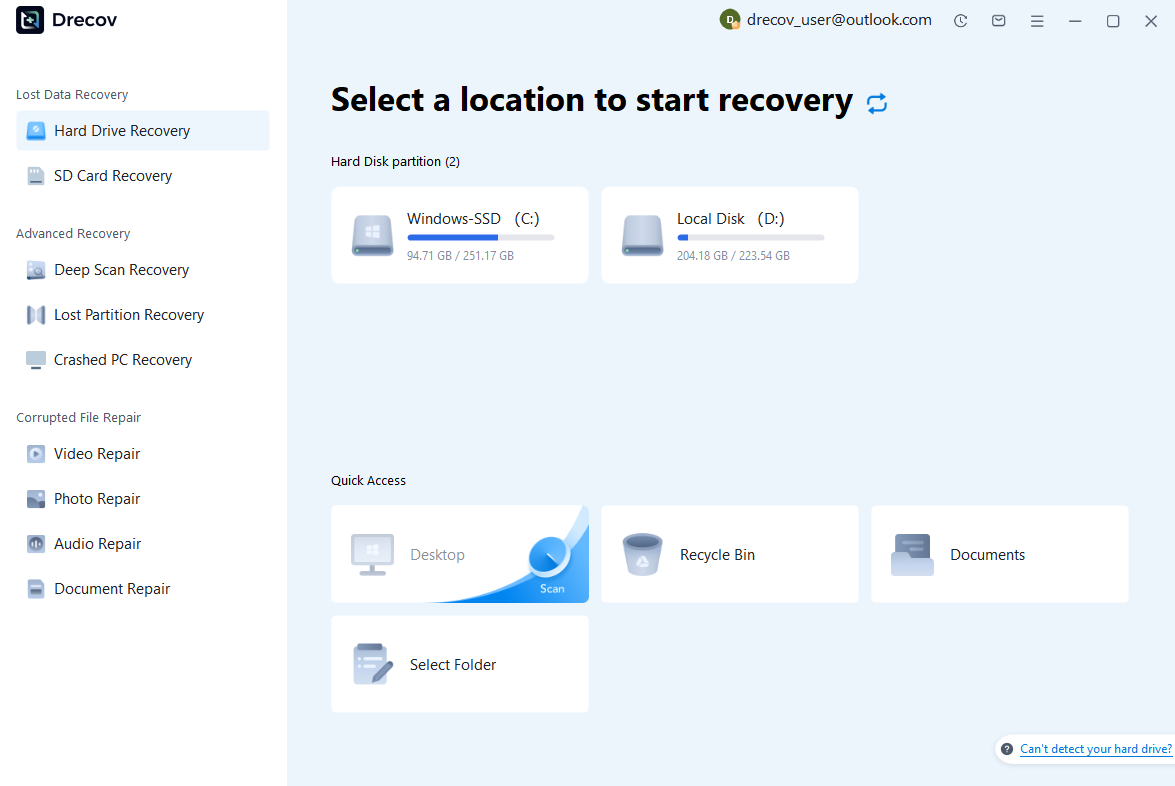
Step 1: Scan the Storage Device (SD Card / Hard Drive / USB)
Connect your device (SD card, HDD/SSD, or USB drive) to your computer and launch PandaOffice Drecov. Select the target device and start the scan. The software will perform a quick scan and deep scan to detect lost or deleted data.
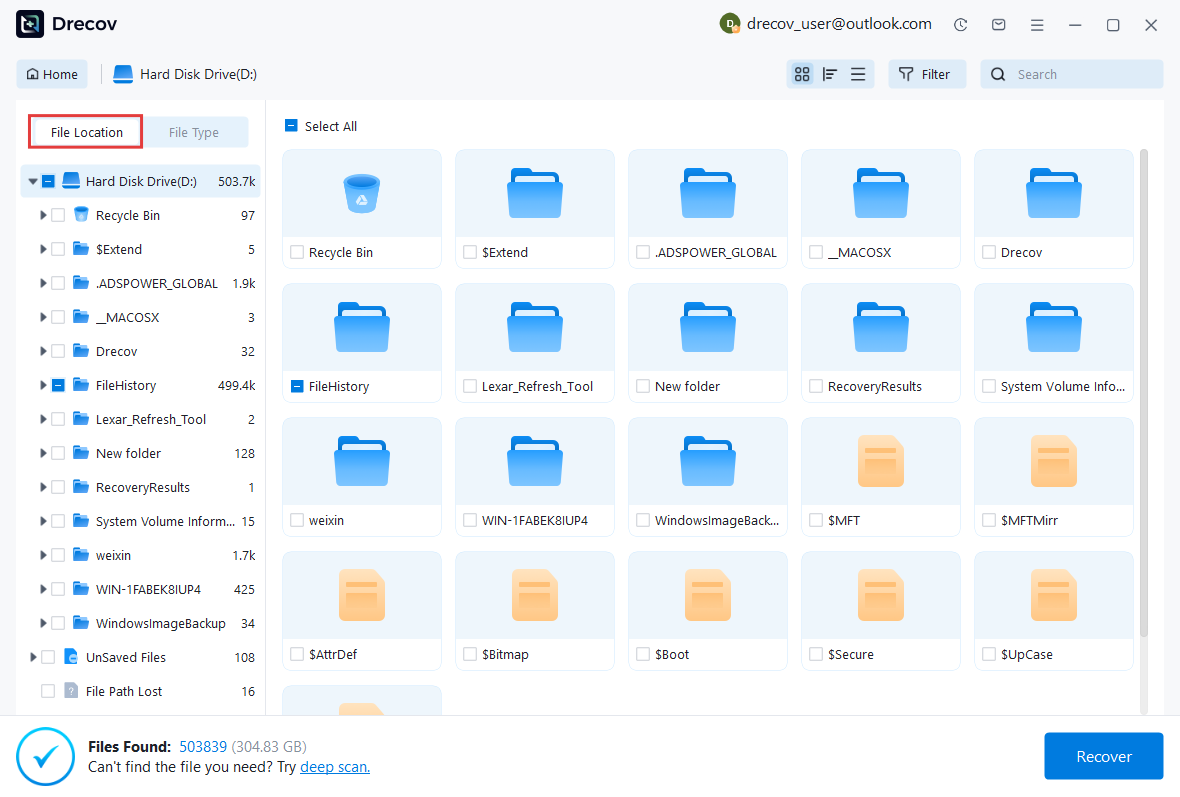
Step 2: Locate and Preview Lost Files
After scanning, browse the detected files and use the preview feature to check recoverable data. You can preview documents (Word, Excel, PDF), photos, and videos to ensure file integrity before recovery.
Step 3: Recover and Save to a New Location
Select the files you want to restore and click recover. Save all recovered data to a different drive or location (not the original device) to avoid overwriting lost data.

Why Choose PandaOffice Drecov Recovery Software?
PandaOffice Drecov offers a fast, secure, and user-friendly solution for recovering lost files across multiple scenarios. Whether you need email recovery, ZIP File Recovery, format data recovery, or help to recover deleted drafts Outlook, the software provides reliable recovery performance for both personal and business users.
PandaOffice Drecov supports recovery from formatted hard drives, SSDs, USB drives, SD cards, and external storage devices. Its advanced scanning engine can locate deleted archives, damaged ZIP files, lost Outlook drafts, and accidentally removed documents with high accuracy. For users searching for how to find deleted messages in Teams, PandaOffice Drecov can also help recover exported chat files, attachments, and related local cache data when available.
Key advantages include:
- Deep scan technology for complex data loss situations
- Support for emails, archives, videos, photos, and office documents
- Recovery from accidental deletion, formatting, corruption, and system crashes
- Easy preview before restoring files
- Compatible with Windows and multiple storage devices
Unlike complicated enterprise recovery tools, PandaOffice Drecov keeps the recovery process simple. Users can scan, preview, and restore files in just a few steps without technical expertise.
Whether you are dealing with lost Outlook drafts, corrupted ZIP archives, formatted drives, or missing communication data, PandaOffice Drecov provides an efficient and practical recovery experience designed to minimize downtime and protect important files.
Test Environment:
Cross-device recovery export test
64GB corrupted SD card
Deep scan mode enabled
File preview validation
⚠️ Warning: Stop using the device immediately after reset to increase recovery chances.
Method 4: Recover Photos and Files from SD Card or External Storage
In many cases, users assume a factory reset deletes everything on their device, but external storage such as SD cards or USB drives is often unaffected. This makes removable storage one of the most important recovery sources when trying to recover photos after factory reset or retrieve photos after factory reset.
Test Environment
- Device: Android smartphone (Android 14)
- Storage: 64GB microSD card
- Scenario: Factory reset performed on internal storage only
- Data Type: JPEG, MP4 files stored externally
Steps:
- Remove the SD card immediately after reset.
- Insert it into a computer using a card reader.
- Check for existing folders such as DCIM or Pictures.
- If files are missing, use recovery software to scan the card.
- Preview recoverable media files.
- Restore files to a separate drive.
External storage often provides a higher success rate because factory reset processes usually target internal storage only. This makes SD cards a key source for users trying to how to get back photos after factory reset without relying on backups.
In some cases, SD cards may also contain deleted fragments that can be reconstructed using deep scan tools.
⚠️ Warning: Do not format or reuse the SD card before attempting recovery, as this may overwrite recoverable data.
Method 5: Retrieve Data from Local Backup or PC Backup
Local backups remain one of the most overlooked but effective ways to recover lost data after a factory reset. Many users unknowingly create backups using computer software, phone management tools, or manual file transfers.
Test Environment
- Device: Windows 11 PC + Android smartphone
- Backup Type: Manual file copy and Android backup tool
- Scenario: Device reset with prior PC connection
- Data Type: Photos, documents, videos
Steps:
- Connect the device to a PC using USB.
- Check for existing backup folders.
- Look in directories such as “Phone Backup” or “DCIM Copy.”
- Restore files manually to the device.
- Verify recovered images and media.
This method is especially useful for users searching how to recover photos after factory reset when they previously transferred files to a computer.
Many Android management tools also create hidden backup folders automatically, which can contain partial or complete copies of lost data.
Local backups are often more reliable than cloud backups because they are not dependent on internet connectivity or sync settings.
Method 6: Use Professional Data Recovery Tools for Deep Scan
When all standard recovery options fail, advanced recovery tools may still provide a chance to retrieve lost data. These tools perform deep-level scans of storage sectors to locate residual file fragments.
Test Environment
- Device: Android 13 smartphone (post-reset)
- Connection: USB debugging enabled
- Scenario: No backup available after factory reset
- File Type: Mixed media files (JPG, MP4, PNG)
Steps:
- Install a professional recovery tool on a PC.
- Connect the device via USB cable.
- Enable device detection or debugging mode.
- Start a full deep scan of internal storage.
- Analyze recoverable file fragments.
- Select and restore available files.
These tools are commonly used when users attempt to recover photos after factory reset without backup. However, success depends heavily on whether storage blocks have been overwritten or encrypted.
While not all files can be restored, deep scan methods sometimes recover partial images or metadata that can be reconstructed.
How to Recover Photos After Factory Reset Without Backup
Is It Possible to Recover Photos Without Backup?
Yes, it is sometimes possible to recover data even without backups, but success depends on several technical factors. When users search for how to recover photos after factory reset without backup, they are usually dealing with one of the most difficult recovery scenarios.
Without backup, recovery relies entirely on whether data still exists in raw storage form. If the factory reset did not fully overwrite storage blocks, fragments of photos may still be recoverable using specialized tools.
However, modern devices with encryption significantly reduce recovery chances because encryption keys are deleted during reset, making stored data unreadable.
Despite these limitations, partial recovery is still possible in some cases, especially if the device was not heavily used after reset.
Factors That Affect Recovery Success Without Backup
Several important factors influence whether recovery is possible:
- Time elapsed after reset
- Amount of new data written to device
- Type of storage (HDD-like vs SSD-like flash storage)
- Encryption level used before reset
- Whether SD cards or external storage were used
Users trying to how to get back photos after factory reset without backups should avoid using the device immediately, as every new action reduces recovery chances.
Even small activities like installing apps or connecting to Wi-Fi can overwrite recoverable data blocks.
Step-by-Step Recovery Approach Without Backup
Test Environment
- Device: Android smartphone (no backup enabled)
- Scenario: Immediate factory reset recovery attempt
- Storage: Internal flash memory
Steps:
- Stop using the device immediately after reset.
- Connect to a PC without writing data to device.
- Run deep scan recovery software.
- Search for image file signatures.
- Preview recoverable photos.
- Restore to external storage only.
This structured approach offers the best chance to recover photos after factory reset without backup, though success is never guaranteed.
Common Questions About Factory Reset Data Recovery
How to Get Back Photos After Factory Reset?
You can restore photos using cloud backups, Google or Apple sync, SD card recovery, or deep scan recovery tools depending on your device setup.
Does a Factory Reset Delete Photos Permanently?
A factory reset removes access to data, but in some cases, data may still exist until overwritten or encrypted keys are destroyed.
How to Retrieve Photos After Factory Reset on Android and iPhone?
Android users can use Google backups or SD cards, while iPhone users rely on iCloud backups or Apple ID sync. Without backups, recovery tools may offer limited results.
Conclusion: Key Takeaways for Data Recovery After Reset
Best Practices to Improve Recovery Success Rate
Recovering data after a factory reset is challenging, but not always impossible. The most effective approach is to start with backups, then move to storage-based recovery methods, and finally use deep scan tools if necessary.
Users searching for does factory reset delete photos or how to recover photos after factory reset should understand that recovery success depends heavily on timing and device usage after reset.
How to Prevent Data Loss in Future Factory Resets
To avoid future data loss:
- Always enable cloud backups
- Regularly sync photos to Google Photos or iCloud
- Store copies on external drives
- Double-check before performing factory reset
By combining preventive measures with proper recovery strategies, users can significantly reduce the risk of permanent data loss and improve their chances of restoring important files when unexpected resets occur.





