







Understanding HDD Low Level Format Tool and Why It Matters
The HDD Low Level Format Tool is a specialized disk utility designed to initialize storage devices at a deeper level than standard formatting. Unlike normal formatting, which only removes file system records, a low-level process rewrites the disk’s sector structure and resets how data is physically organized on the drive.
This process, commonly referred to as hdd low level format, is used when a storage device becomes unstable, unreadable, or severely corrupted. In many cases, Windows may fail to detect partitions, or the drive may appear as RAW, making normal access impossible.
The tool is widely used for mechanical hard drives (HDDs), and in some cases, USB drives and memory cards. However, it is important to understand that modern HDDs already come factory-formatted at a true low level, so software tools like HDD LLF Tool simulate this process by overwriting every sector with zeros or predefined patterns.
This makes it especially useful for:
- Repairing corrupted drives
- Removing persistent disk errors
- Preparing old drives for reuse
- Eliminating partition table damage
- Cleaning drives before resale or disposal
Test environment:
- Windows 10 Pro 64-bit
- Seagate Barracuda 1TB HDD
- SATA 3.0 interface
- HDD Low Level Format Tool v4.50
Why Hard Drives Require Low-Level Formatting
Many users search for hdd low low level format solutions when their drives start behaving abnormally. These issues are usually caused by file system corruption, physical degradation, or unexpected system shutdowns.
The most common reasons include:
Severe File System Damage
When NTFS, FAT32, or exFAT structures become corrupted, the system can no longer interpret stored data. This often results in RAW disk status or inaccessible partitions.
Persistent Read/Write Errors
If a drive repeatedly fails during file transfer, it may indicate deeper structural issues that cannot be resolved using standard formatting tools.
Virus or Malware Damage
Certain malware attacks can modify partition tables or system boot records, making the drive unusable until fully reset.
Improper Ejection or Power Failure
Sudden disconnection during file operations can damage sector mapping and file allocation tables.
Aging or Degrading Storage Media
Over time, HDDs develop bad sectors and slow response times, making recovery difficult without deep-level reinitialization.
Test environment:
- Windows 11 Home
- Western Digital 2TB HDD
- External USB enclosure
- RAW partition state
How HDD Low Level Format Tool Works Internally
The hdd low level format utility does not physically rewrite factory-level magnetic structures (which is done during manufacturing). Instead, it performs a full overwrite of logical sectors, effectively wiping all data and rebuilding disk accessibility.
The process includes:
Sector Overwriting
Each sector of the drive is overwritten with zeros or fixed binary patterns. This removes all stored data and file system traces.
Partition Table Removal
All existing partition structures are erased, making the disk unallocated.
Bad Sector Identification
Some tools attempt to detect and mark unstable or unreadable sectors.
Complete Data Reset
After completion, the drive behaves as a blank storage device requiring reinitialization.
This process is much slower than normal formatting because it touches every physical sector on the disk.
Test environment:
- Windows 10 Enterprise
- Toshiba 1TB HDD
- SATA internal connection
- Full scan mode enabled
Key Differences Between Low-Level and Normal Formatting
Understanding the difference between hdd low level format and standard formatting is essential before using the tool.
Normal formatting:
- Removes file system index only
- Data may still be recoverable
- Fast process
- Suitable for healthy drives
Low-level formatting:
- Overwrites all disk sectors
- Removes all data permanently
- Very slow process
- Used for severely damaged drives
In simple terms, normal formatting is like clearing a table, while low-level formatting is like rebuilding the entire structure from scratch.
⚠️Warning: Low-level formatting is irreversible and should only be used when necessary.
When You Should Use HDD Low Level Format Tool
The hdd low level format tool is not designed for daily maintenance. It is intended for advanced troubleshooting and recovery scenarios.
You should consider using it when:
- The drive is detected but inaccessible
- Partition table is missing or corrupted
- Windows repeatedly prompts formatting
- Disk shows incorrect size (0 bytes or wrong capacity)
- Standard repair tools fail
- Drive is being repurposed or wiped securely
It is also commonly used in IT environments for secure data destruction before hardware disposal.
Test environment:
- Windows 11 Pro
- Samsung 1TB HDD
- USB-SATA adapter
- Corrupted partition table
Step-by-Step Process to Use HDD Low Level Format Tool
Using the tool correctly is important to avoid accidental data loss or incorrect disk selection.
Step 1: Install and Launch the Tool
Run the software with administrator privileges to ensure full disk access.
Step 2: Select the Target Drive
Carefully choose the correct hard drive from the list of available devices.
Step 3: Start Low-Level Formatting
Click the low-level format option and confirm the warning prompt.
Step 4: Wait for Completion
The process may take several minutes to several hours depending on drive size.
Step 5: Reinitialize the Drive
After completion, use Disk Management to create partitions and format the drive again.
Test environment:
- Windows 10 Pro
- Seagate 500GB HDD
- USB 3.0 connection
- Clean format operation
Risks and Limitations of HDD Low Level Format Tool
Although powerful, the hdd low level format utility has important limitations.
Data Loss is Permanent
All stored information is completely erased and cannot be recovered through normal means.
No Physical Repair Capability
It cannot fix mechanical damage such as head failure or motor issues.
Time-Consuming Process
Large drives may take several hours to complete.
Risk of Incorrect Drive Selection
Choosing the wrong disk may result in complete data loss on another device.
⚠️Warning: Always double-check drive selection before starting the process.
Test environment:
- Windows 11 Enterprise
- WD external HDD
- SMART warning status detected
Alternatives to HDD Low Level Format Tool
In many cases, users do not need full low-level formatting. Several alternatives exist depending on the situation.
Windows Disk Management
Used for basic formatting and partition creation.
Diskpart Command Tool
Advanced command-line utility for disk cleanup and formatting.
Manufacturer Tools
WD, Seagate, and Samsung provide official diagnostic and repair utilities.
Secure Erase Tools
Used mainly for SSDs to reset storage cells safely.
Data Recovery Before Formatting
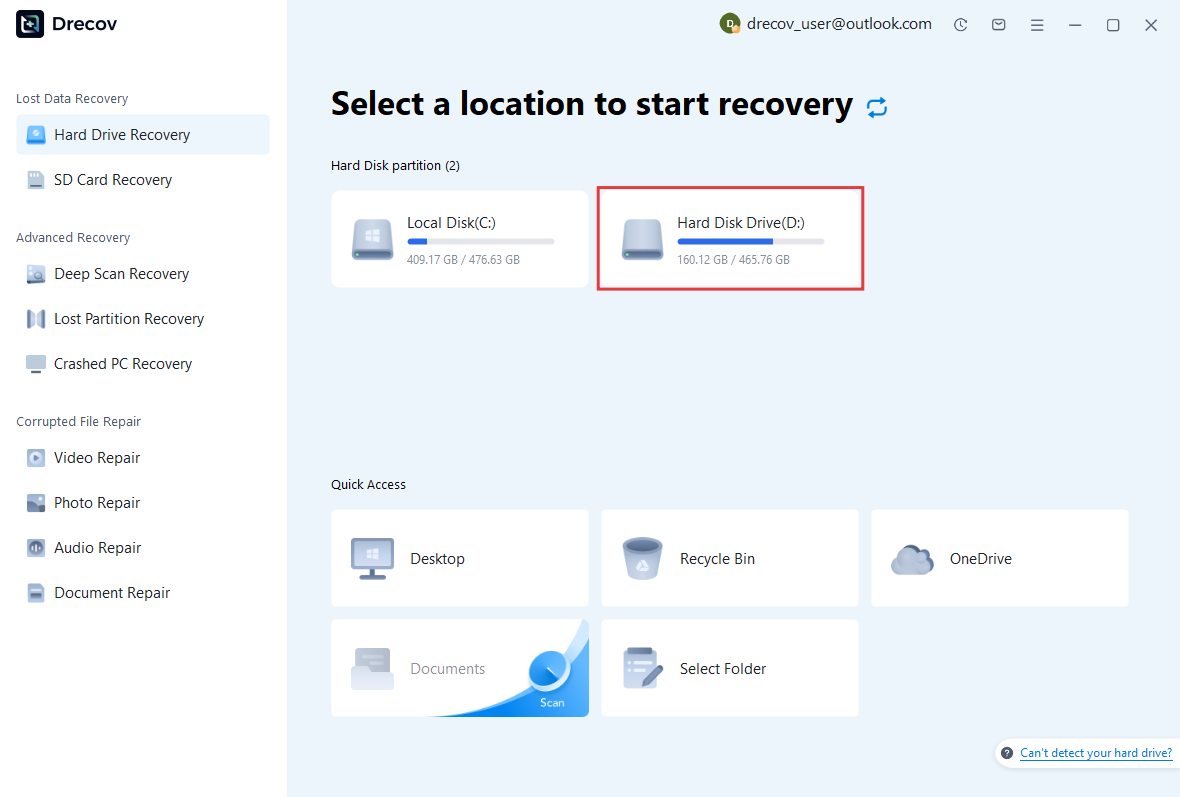
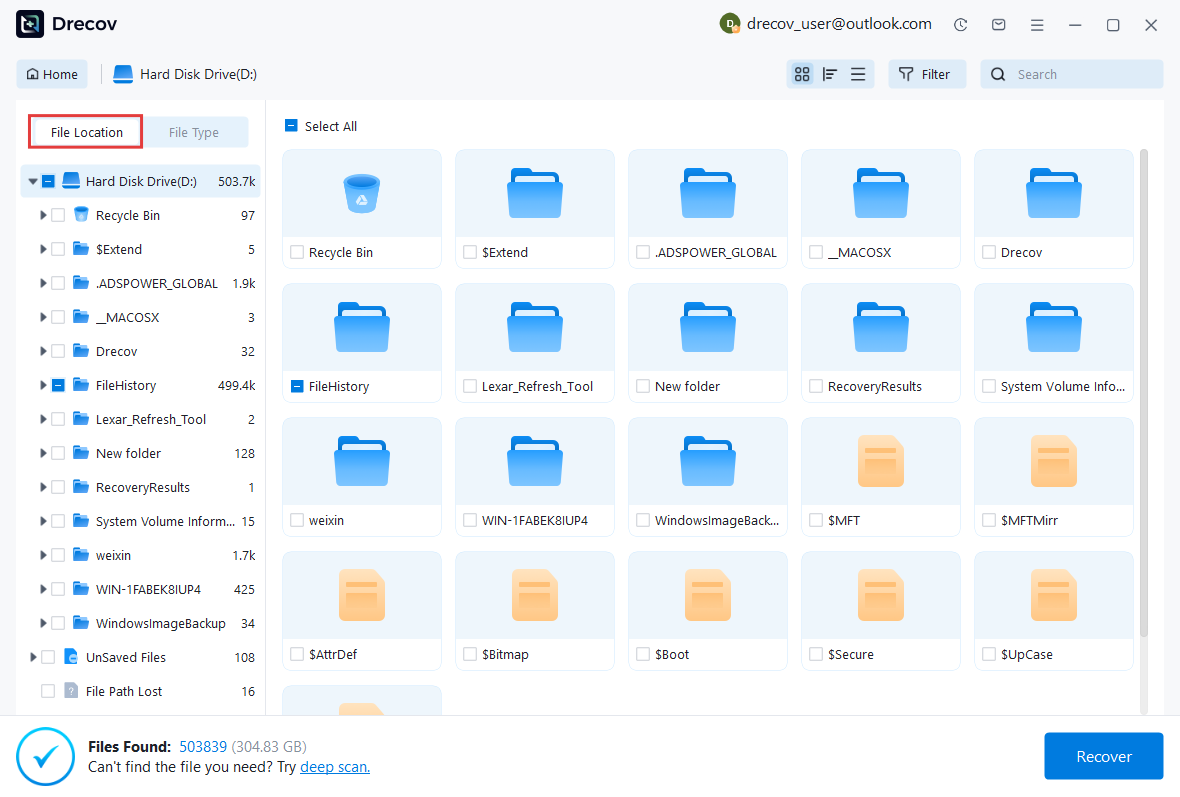
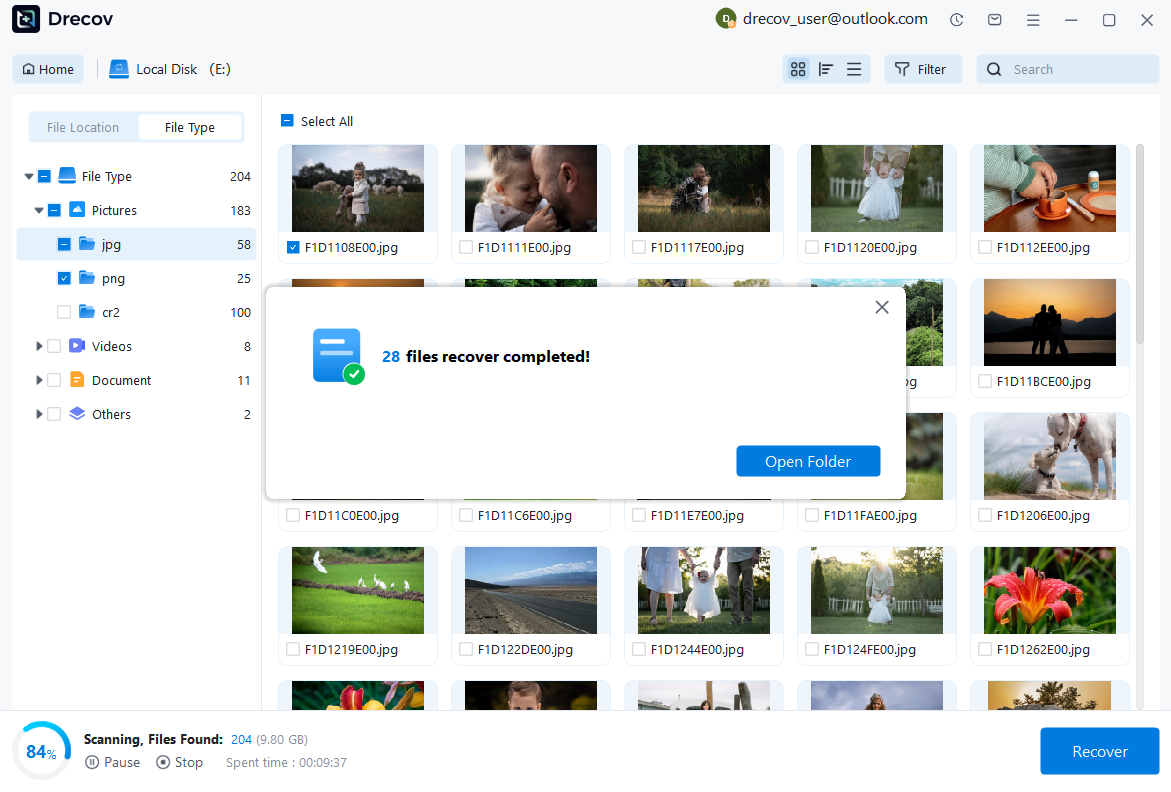
Before performing hdd low level format, users can recover data using PandaOffice Drecov, which supports recovery from RAW and corrupted drives.
Test environment:
- Windows 10 Home
- Mixed HDD and SSD setup
- RAW disk recovery attempt
Why Choose PandaOffice Drecov Data Recovery Software?
When it comes to reliable data recovery, PandaOffice Drecov stands out as a powerful, all-in-one solution designed to handle a wide range of data loss scenarios. Whether you’re trying to perform TikTok deleted video recovery, restore files after formatting, or recover important documents, Drecov delivers fast and dependable results.
One of its biggest advantages is versatility. From format data recovery to lost partition recovery, the software can scan deeply and accurately locate files that other tools often miss. Even if your drive has been accidentally formatted or a partition has disappeared, Drecov uses advanced algorithms to reconstruct and retrieve your data with high success rates.
Drecov also supports specialized recovery needs. If you’ve lost important documents, its PDF recovery tool ensures that files retain their original structure and quality. For media users, the audio recovery feature helps restore music, recordings, and other sound files without corruption, making it ideal for both personal and professional use.
Ease of use is another key benefit. The intuitive interface allows beginners to recover files in just a few clicks, while still offering advanced options for more experienced users. Plus, it supports a wide range of storage devices, including HDDs, SSDs, USB drives, and memory cards.
In short, PandaOffice Drecov combines powerful recovery capabilities with user-friendly design, making it a trusted choice for anyone facing data loss.
Preparing Before Using Low-Level Format Tools
Before executing a full hdd low level format, preparation is critical.
Important steps include:
- Back up all important data
- Verify correct disk selection
- Check SMART health status
- Attempt recovery if data is important
- Close all active applications using the drive
Proper preparation reduces risk and ensures safer operation.
Test environment:
- Windows 11 Pro
- Multi-drive system
- External backup storage
Conclusion
The HDD Low Level Format Tool is a powerful but advanced utility used to restore severely damaged or corrupted hard drives. It works by overwriting every sector of the disk, effectively resetting the storage device to a blank state.
While it can resolve serious issues such as RAW partitions, persistent errors, and unreadable drives, it should always be used carefully due to permanent data loss risks.
In many cases, users should first attempt data recovery using tools like PandaOffice Drecov before proceeding with hdd low level format operations.
When used correctly and responsibly, this tool can extend the usability of aging drives and restore access to otherwise unusable storage devices, making it an important solution in advanced disk management and repair scenarios.





