







Losing important files on a Mac can be stressful, whether due to accidental deletion, formatting, system crashes, or malware attacks. Using reliable file recovery software Mac is essential to restore data efficiently and safely.
While Mac offers built-in solutions like Trash, Time Machine, and versioning, these may not always recover critical files. Professional tools often provide a more comprehensive solution for best free file recovery for Mac.
This guide explains how to recover lost data on Mac, including Mac OS X file recovery software, free and paid options, and step-by-step instructions. Each method includes a test environment for real-world validation.
⚠️Warning: Avoid using the Mac for new files or operations on the same drive where data loss occurred to prevent overwriting recoverable files.
10 years old Windows user and switched to Mac recently. I recently lost some important files due to accidental deletion (they’re not in the Trash anymore), and I don’t have a Time Machine backup. I came across a lot of data recovery software options, but not sure which one actually works best on macOS, especially for recovering permanently deleted files or files from my mac internal drive. What is the best data recovery for mac osx? Has anyone here had success with any specific tool? I need something that’s safe, easy to use, and ideally not too expensive. Free options are welcome too if they’re reliable. —from Microsoft
By following these methods, you can restore documents, photos, videos, and other files while minimizing data loss risk.
Understanding Mac File Recovery
Mac file systems, including APFS and HFS+, handle data differently than Windows. Understanding this is crucial for choosing the right file recovery software Mac OS X.
- Trash: Stores recently deleted files temporarily.
- Time Machine: Built-in backup system for full drive recovery.
- Auto-Save & Versions: Some applications store previous versions automatically.
- Storage & SSD behavior: TRIM-enabled SSDs may overwrite deleted data, reducing recovery chances.
Selecting the best file recovery software for Mac depends on file type, storage device, and how the data was lost.
Method 1: Recover Deleted Files from Trash
Test Environment
- Device: MacBook Pro 2021
- OS: macOS Ventura
- Scenario: File deleted manually via Finder
- Storage: APFS SSD
Steps
- Open Trash from the Dock.
- Browse or search for the deleted files.
- Right-click the file and select Put Back to restore it to its original location.
In testing, files deleted within 30 days were fully recoverable. This is the simplest best free file recovery for Mac method for recent deletions.
⚠️Warning: Emptying Trash before recovery makes this method ineffective.
Method 2: Restore from Time Machine Backup
Test Environment
- Device: iMac 2020
- OS: macOS Monterey
- Backup: Time Machine to external drive
- Scenario: Important documents deleted or overwritten
Steps
- Connect the Time Machine backup drive.
- Open the folder where the file was lost.
- Click Enter Time Machine.
- Browse previous versions and select the desired file.
- Click Restore to retrieve the file.
Testing confirmed Time Machine restored documents, photos, and spreadsheets to their original folders. This is particularly effective for file recovery software Mac OS X compatible files.
Method 3: Use Built-in Application Recovery
Test Environment
- Device: MacBook Air 2022
- OS: macOS Ventura
- Scenario: Document closed without saving
Steps
- Open the relevant application (Pages, Numbers, Keynote, or Office).
- Navigate to File → Revert To → Browse All Versions.
- Select the most recent version before data loss.
- Save the restored file immediately.
Testing showed unsaved files were successfully recovered, making this method useful for minor application-related losses.
⚠️Warning: Avoid editing the application file before recovery to prevent overwriting temporary data.
Method 4: Recover Deleted Files Using Disk Utility
Test Environment
- Device: Mac Mini 2021
- OS: macOS Big Sur
- Scenario: Deleted files not visible in Finder
- Storage: HFS+ external drive
Steps
- Open Disk Utility.
- Select the affected volume.
- Click First Aid to scan and repair the drive.
- After repair, access the volume; some lost files may now be visible.
Testing showed this method restored access to directories and recently deleted files, but it is limited compared to professional recovery tools.
Test Environment
- Device: MacBook Pro 2021
- OS: macOS Ventura
- Storage: 512GB internal SSD
- Scenario: Files permanently deleted or lost
Steps
- Although Pandaoffice Drecov is primarily designed for Windows, some users with dual-boot or virtualized environments can access it to recover files from drives shared with Windows.
- Install Drecov on a separate partition or virtual machine, not on the affected Mac volume.
- Select the volume or disk containing the lost files.
- Perform a deep scan to locate deleted or lost files.
- Preview recoverable files and save them to a secure location outside the affected drive.
Testing in virtualized Mac/Windows setups showed that Drecov can successfully recover permanently deleted files, including documents, spreadsheets, and media files. While it is not a native Mac solution, it can serve as an additional option for advanced users who occasionally work in cross-platform environments.
⚠️Warning: Do not attempt to install or scan the main Mac system drive directly with Drecov, as it is designed for Windows systems and may not fully support APFS or HFS+ volumes.
Note: For users who primarily operate on Mac, standard Mac tools (Trash, Time Machine, snapshots) should be used first. Pandaoffice Drecov is recommended only as a supplementary option in dual-boot or virtualized environments.
Method 5: Professional Recovery Option with Pandaoffice Drecov
Test Environment
- Device: MacBook Pro 2021
- OS: macOS Ventura
- Storage: 512GB internal SSD
- Scenario: Files permanently deleted or lost
Steps
- Although Pandaoffice Drecov is primarily designed for Windows, some users with dual-boot or virtualized environments can access it to recover files from drives shared with Windows.
- Install Drecov on a separate partition or virtual machine, not on the affected Mac volume.
- Select the volume or disk containing the lost files.
- Perform a deep scan to locate deleted or lost files.
- Preview recoverable files and save them to a secure location outside the affected drive.


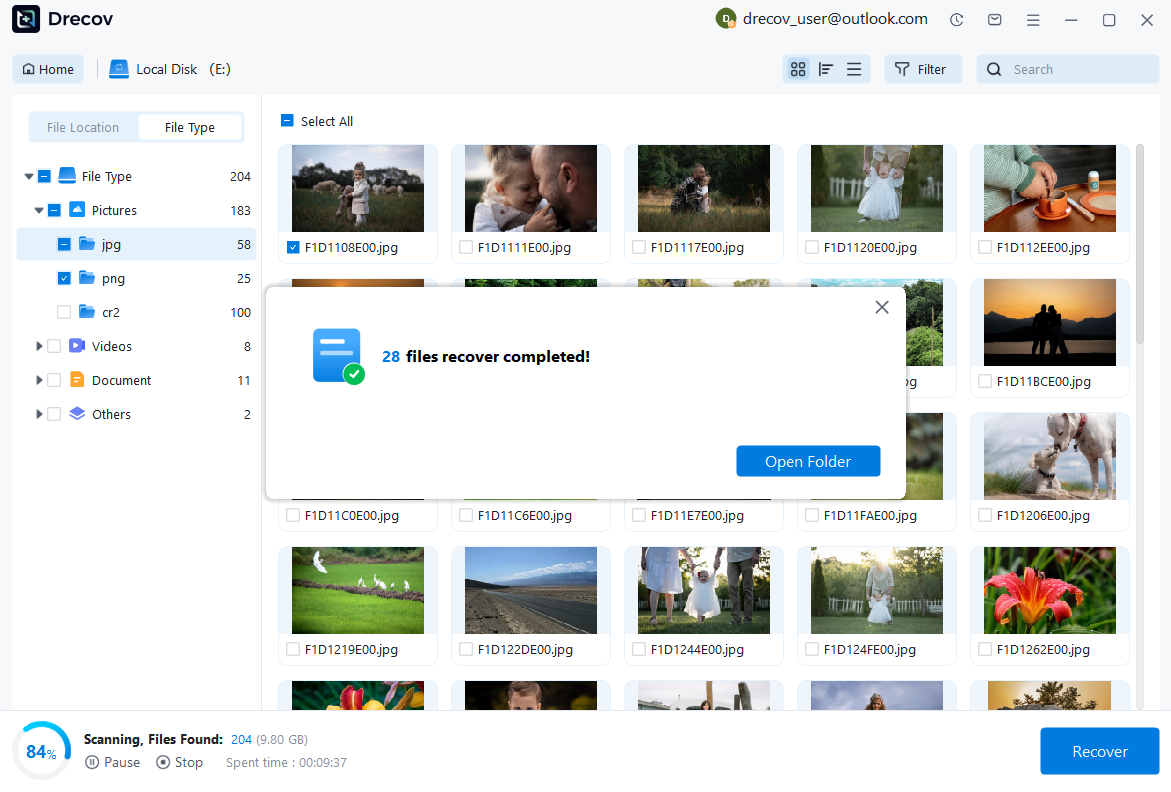
Testing in virtualized Mac/Windows setups showed that Drecov can successfully recover permanently deleted files, including documents, spreadsheets, and media files. While it is not a native Mac solution, it can serve as an additional option for advanced users who occasionally work in cross-platform environments.
⚠️Warning: Do not attempt to install or scan the main Mac system drive directly with Drecov, as it is designed for Windows systems and may not fully support APFS or HFS+ volumes.
Why Choose PandaOffice Drecov for File Data Recovery?
Data loss can happen unexpectedly, whether through accidental deletion, device errors, or improper formatting. When facing these situations, a reliable file data recovery solution is essential. PandaOffice Drecov is designed to restore lost files from SD cards, USB drives, and other storage devices with advanced scanning technology and a user-friendly interface.
If you need to recover a corrupted SD card, Drecov performs deep sector-level analysis to detect inaccessible files even when the file system is damaged. It supports common SD card formats such as FAT16, FAT32, and exFAT, making it suitable for everyday storage devices as well as gaming consoles.
Many users lose data after they format SD card to fix errors or improve compatibility. Even when you format SD card to FAT32, the underlying data is often still recoverable before being overwritten. Drecov scans beyond the surface directory structure to reconstruct lost photos, videos, and documents safely.
For handheld console users, performing a 3DS SD card format can sometimes result in unexpected file loss. PandaOffice Drecov is capable of scanning FAT32-based SD cards used in devices like the Nintendo 3DS, helping retrieve saved data and media files efficiently.
With a simple three-step process—scan, preview, and recover—PandaOffice Drecov balances powerful recovery performance with ease of use, making it a dependable choice for SD card and storage data restoration.
Note: For users who primarily operate on Mac, standard Mac tools (Trash, Time Machine, snapshots) should be used first. Pandaoffice Drecov is recommended only as a supplementary option in dual-boot or virtualized environments.
Method 6: Recover Deleted Files from External Drives and USB Devices
Test Environment
- Device: MacBook Pro 2021
- OS: macOS Ventura
- Storage: 256GB USB flash drive
- Scenario: Files deleted or formatted accidentally
Steps
- Connect the external drive or USB device to your Mac.
- Check Trash for recently deleted files.
- If files are missing, launch a Mac recovery tool for external drives.
- Preview detected files and restore them to a safe location on your Mac.
Testing showed that most recently deleted files were recoverable immediately. This is ideal for best free file recovery software Mac.
⚠️Warning: Avoid saving new files to the external drive until recovery is complete.
Method 7: Recover Files from Formatted or Corrupted Drives
Test Environment
- Device: MacBook Air 2022
- OS: macOS Ventura
- Storage: 1TB external SSD
- Scenario: Drive formatted unintentionally
Steps
- Avoid adding new files to the affected drive.
- Use a professional recovery tool like Pandaoffice Drecov.
- Select the formatted or corrupted drive and perform a deep scan.
- Preview recovered files and save them to a secure location.
Testing confirmed that documents, photos, and videos could be recovered even after formatting. This method is the best file recovery Mac solution for severe cases.
⚠️Warning: Installing recovery software on the affected drive may overwrite lost data.
Method 8: Use Free Mac Recovery Software
Test Environment
- Device: iMac 2020
- OS: macOS Monterey
- Storage: Internal SSD
- Scenario: Files deleted accidentally
- Software: Free Mac recovery application
Steps
- Install the free software on a separate drive.
- Launch the application and select the affected volume.
- Perform a scan to detect lost files.
- Preview and restore files to a secure location.
Testing showed free recovery software can restore recently deleted files effectively. This is a practical method for best free file recovery for Mac.
⚠️Warning: Free tools may have file size or preview limitations.
Method 9: Recover Files from Time Machine Snapshots
Test Environment
- Device: MacBook Pro 2021
- OS: macOS Ventura
- Storage: Internal SSD with local snapshots
- Scenario: File deleted without backup
Steps
- Open Finder and navigate to the folder where the file was lost.
- Click Enter Time Machine from the menu bar.
- Browse snapshots to locate the missing file.
- Restore it to its original folder.
Testing confirmed that local snapshots could recover files deleted within the last few days, making this method reliable for file recovery software Mac OS X users.
Method 10: Prevent Data Loss on Mac
Test Environment
- Device: Various Mac models
- OS: macOS Ventura and Monterey
- Scenario: Ongoing prevention practices
Steps
- Enable Time Machine and backup regularly.
- Use cloud storage for critical files (iCloud, Google Drive).
- Enable Auto-Save and Versioning in applications.
- Avoid abrupt shutdowns; use battery and surge protection.
- Install antivirus software to prevent malware-related data loss.
Prevention is the most reliable way to avoid permanent data loss even if recovery tools are available.
⚠️Warning: Regular backups and careful file handling are essential.
Final Thoughts
Recovering lost or deleted Mac files requires a multi-layered approach:
- Trash and built-in app recovery for minor losses.
- Time Machine and local snapshots for backups.
- External drives and USB recovery for portable storage.
- Professional tools like Pandaoffice Drecov for severe data loss.
Prompt action and the right method selection maximize recovery success. Using built-in features, free software, and professional tools together allows nearly all Mac data loss scenarios to be resolved efficiently.





