







Linux provides powerful built-in utilities for managing and formatting storage devices. Unlike some operating systems that rely heavily on graphical tools, Linux offers both command-line and graphical methods for disk management. Because of this flexibility, many users search for information about format hard drive on linux when setting up new drives, repairing corrupted storage, or preparing disks for system installation.
Formatting a drive in Linux means creating a new file system structure on the storage device. During this process, existing partition information and file system metadata are replaced. Depending on the formatting method, previous data may become inaccessible or permanently erased.
Many administrators and advanced users rely on linux hard drive recovery tools before formatting damaged disks. Recovery tools help retrieve important files from inaccessible partitions before destructive operations begin.
Linux systems commonly support:
- EXT4
- XFS
- Btrfs
- FAT32
- exFAT
- NTFS
Understanding these file systems is important when deciding how to format hard drive for linux environments.
Test Environment:
- Ubuntu 24.04 LTS
- 1TB SATA HDD
- EXT4 and NTFS formatting tests
- USB boot environment validation
Linux disk management is extremely flexible but requires careful execution.
What Happens During Formatting Hard Drive Linux Operations
When users perform formatting hard drive linux operations, the system creates a new file system structure and prepares the drive for data storage.
The formatting process typically includes:
- Removing old file system metadata
- Creating partition structures
- Writing new allocation tables
- Preparing inode systems for Linux file management
Linux formatting can be:
- Quick formatting
- Full formatting
- Secure erase formatting
Each method serves different purposes depending on the condition of the drive.
Test Environment:
- Ubuntu Desktop
- 500GB SSD
- EXT4 quick format testing
- Full format sector scan comparison
Understanding the difference between these methods helps users avoid unnecessary data loss.
Why Users Need to Reformat Hard Drive Linux Systems
Users commonly reformat hard drive linux systems for several reasons:
- Installing a fresh Linux distribution
- Repairing corrupted partitions
- Converting file systems
- Preparing external drives for compatibility
- Removing malware or damaged data
For example, a drive previously used in Windows may need reformatting before Linux installation because NTFS is not always ideal for Linux-native operations.
Test Environment:
- Dual-boot Windows/Linux environment
- External SSD compatibility test
- EXT4 migration benchmarking
- File transfer stability analysis
Reformatting also improves storage organization and performance in many cases.
Common Linux File Systems for Hard Drive Format Linux Operations
Choosing the correct file system is critical during hard drive format linux procedures.
Below is a comparison of common Linux-compatible file systems:
Linux file system compatibility
Comparison of common Linux-compatible file systems and cross-platform support.036912EXT4XFSBtrfsNTFSexFAT
EXT4
- Default for most Linux distributions
- Stable and reliable
- Excellent performance
XFS
- Suitable for large storage systems
- Strong scalability
Btrfs
- Advanced snapshot features
- Data integrity functionality
NTFS/exFAT
- Better Windows compatibility
- Useful for external drives
Test Environment:
- Ubuntu 24.04
- Fedora Linux
- Cross-platform transfer testing
- External HDD compatibility validation
⚠️Warning: Formatting with incompatible file systems may limit access on other operating systems.
Common Situations Requiring Format Hard Drive Linux Procedures
Many users search how to format a hard drive on linux only after encountering storage or operating system problems.
Preparing Drives for Linux Installation
A common reason to format hard drive linux is preparing storage for a new Linux installation.
This often involves:
- Removing old partitions
- Creating EXT4 partitions
- Setting swap space
- Configuring boot partitions
Test Environment:
- Ubuntu installer
- GPT partition layout
- NVMe SSD installation
- UEFI boot validation
Formatting ensures clean installation and stable performance.
Repairing Corrupted Linux Partitions
Corrupted partitions may become unreadable after:
- Sudden shutdowns
- File system errors
- Power interruptions
- Hardware failures
Users often rely on linux hard drive recovery tools before formatting damaged partitions.
Test Environment:
- EXT4 corruption simulation
- USB power interruption test
- File recovery analysis
- Mount failure validation
⚠️Warning: Formatting damaged partitions without recovery attempts may permanently erase recoverable files.
Converting Drives Between Linux and Windows Compatibility
External drives frequently move between Linux and Windows systems. In such cases, users may need to:
- Convert EXT4 to exFAT
- Convert NTFS to Linux-native file systems
- Rebuild partition tables
This is one reason many users search how to format hard drive with linux.
Test Environment:
- Ubuntu + Windows 11
- Cross-platform SSD testing
- NTFS/exFAT transfer benchmark
- External USB-C drive validation
How to Format a Hard Drive in Linux Using Different Methods
Linux provides several methods for users learning how to format a hard drive in linux.
Method 1 – Format Hard Drive on Linux Using GNOME Disks
GNOME Disks provides a graphical method for beginners.
Steps
- Open GNOME Disks
- Select target drive
- Delete old partitions
- Create new partition table
- Choose file system
- Start formatting process
This method is ideal for desktop Linux users.
Test Environment:
- Ubuntu Desktop 24.04
- 1TB external HDD
- EXT4 formatting test
- GUI stability validation
Method 2 – How to Format Hard Drive on Linux with fdisk and mkfs
Advanced users often prefer command-line tools.
Basic Workflow
sudo fdisk /dev/sdbAfter partition creation:
sudo mkfs.ext4 /dev/sdb1This creates a new EXT4 file system.
Test Environment:
- Ubuntu Server
- SATA SSD formatting
- Terminal-based partitioning
- EXT4 performance validation
Method 3 – Linux Reformat Hard Drive Using GParted
GParted is one of the most popular Linux partition editors.
Features include:
- Resize partitions
- Delete partitions
- Create new file systems
- Manage GPT/MBR tables
Test Environment:
- Linux Mint
- 2TB HDD partition management
- GParted live USB testing
- File system conversion validation
Method 4 – Format Hard Drive for Linux Using Terminal Commands
Terminal formatting offers full administrative control.
Example Commands
sudo umount /dev/sdb1
sudo mkfs.xfs /dev/sdb1
This method supports:
- EXT4
- XFS
- Btrfs
- FAT32
Test Environment:
- Fedora Workstation
- Enterprise SSD formatting
- XFS benchmarking
- Terminal automation scripts
Method 5 – Recover Files Before Formatting Using Pandaoffice Drecov
Before performing linux reformat hard drive operations, recovering important files is recommended.
Pandaoffice Drecov helps users recover:
- Deleted Linux files
- Corrupted partitions
- RAW drive data
- External storage files
Typical Workflow
- Connect drive to recovery workstation
- Scan disk deeply
- Preview recoverable files
- Export important data
- Proceed with Linux formatting safely
Test Environment:
- Ubuntu + Windows recovery setup
- Corrupted EXT4 partition
- Deep recovery scan
- File integrity validation
Important Precautions Before Formatting Hard Drive Linux Systems
Before attempting any format hard drive on linux operation, users should carefully prepare the system and verify storage device information. Linux provides powerful formatting utilities, but incorrect usage can instantly erase partitions or destroy important files.
Unlike some graphical operating systems, Linux terminal commands often execute immediately without multiple confirmation prompts. Because of this, even experienced administrators double-check device names before formatting.
Proper preparation should include:
- Identifying the correct disk
- Backing up valuable files
- Verifying mounted partitions
- Understanding target file systems
- Checking disk health
Test Environment:
- Ubuntu 24.04 LTS
- Multi-drive workstation
- NVMe + SATA mixed storage
- Terminal formatting simulation
Careful preparation significantly reduces the risk of formatting the wrong drive.
How to Identify the Correct Linux Drive Before Formatting
Linux identifies storage devices using paths such as:
/dev/sda
/dev/sdb
/dev/nvme0n1
Before performing format hard drive linux operations, users should verify:
- Disk capacity
- Existing partitions
- Mount points
- Device labels
Useful commands include:
lsblkand:
sudo fdisk -lThese commands display connected storage devices and partition layouts.
Test Environment:
- Ubuntu Server
- 4-drive RAID simulation
- External USB SSD detection
- Device mapping validation
⚠️Warning: Formatting the wrong /dev/sdX device may permanently erase unrelated drives.
Unmounting Drives Before Formatting Hard Drive Linux
Linux does not allow active mounted partitions to be formatted safely. Users must unmount partitions before starting formatting operations.
Example command:
sudo umount /dev/sdb1This ensures:
- No active file usage
- Stable formatting process
- Reduced corruption risk
Formatting mounted drives may generate errors or incomplete file systems.
Test Environment:
- Fedora Workstation
- EXT4 mounted partition
- Active file access simulation
- Safe unmount verification
Unmounting is one of the most important steps when learning how to format a hard drive in linux.
Choosing the Best File System for Different Linux Workloads
Selecting the proper file system is a critical part of any hard drive format linux workflow. Different Linux file systems are optimized for different workloads, storage sizes, and operating environments.
The best choice depends on:
- Desktop or server usage
- SSD or HDD hardware
- Cross-platform compatibility
- Backup requirements
- Performance priorities
Test Environment:
- Ubuntu 24.04
- Fedora Workstation
- External SSD benchmarking
- Multi-file transfer testing
Understanding practical use cases helps users avoid compatibility and performance issues later.
EXT4 for Everyday Linux Desktop Systems
EXT4 remains the most popular Linux file system because it balances:
- Stability
- Speed
- Reliability
- Broad compatibility
Most Linux distributions use EXT4 as the default installation format.
Advantages include:
- Fast boot performance
- Low corruption risk
- Efficient SSD support
- Strong recovery compatibility
This makes EXT4 ideal for users learning how to format hard drive with linux for normal desktop usage.
Test Environment:
- Ubuntu Desktop
- 512GB NVMe SSD
- Daily workload simulation
- Application launch benchmarking
XFS for Enterprise and Large Storage Environments
It is commonly used in enterprise environments where large files and massive storage arrays are involved.
XFS advantages:
- Excellent scalability
- Strong large-file performance
- High-speed parallel operations
It is widely used in:
- Data servers
- Media storage systems
- Backup servers
However, XFS may be less suitable for very small partitions or lightweight desktop systems.
Test Environment:
- Linux enterprise server
- 8TB HDD array
- Large video file transfer testing
- Multi-threaded storage benchmark
Btrfs for Backup and Snapshot Systems
Btrfs offers advanced features that appeal to power users and administrators.
Features include:
- Snapshot support
- Built-in redundancy
- Advanced integrity checking
Btrfs is commonly used for:
- Backup systems
- Development environments
- Virtual machine storage
While powerful, it may require more technical knowledge compared to EXT4.
Test Environment:
- OpenSUSE Linux
- Snapshot recovery simulation
- Virtual machine storage test
- Backup rollback validation
⚠️Warning: Some advanced Btrfs features require careful configuration to avoid performance issues.
NTFS and exFAT for Cross-Platform External Drives
Users sharing drives between Linux and Windows often prefer NTFS or exFAT.
NTFS
- Better Windows integration
- Supports large files
- Suitable for shared storage
exFAT
- Lightweight compatibility
- Works well with USB flash drives
- Easier cross-platform usage
These formats are commonly used for:
- Portable SSDs
- External HDDs
- Shared multimedia drives
Test Environment:
- Ubuntu + Windows 11 dual system
- External USB-C SSD
- Cross-platform transfer benchmark
- Large media file testing
Recover Files Before Formatting Using PandaOffice Drecov
Before starting any linux reformat hard drive operation, recovering important files should always be the first priority. Formatting can overwrite partition structures and reduce the chances of successful recovery later.
PandaOffice Drecov helps users retrieve lost or inaccessible data from:
- Corrupted Linux partitions
- RAW storage devices
- Accidentally deleted partitions
- External hard drives and SSDs
- Unmounted EXT4 drives
This solution is especially useful when Linux systems fail to boot or partitions become unreadable after crashes or power interruptions.
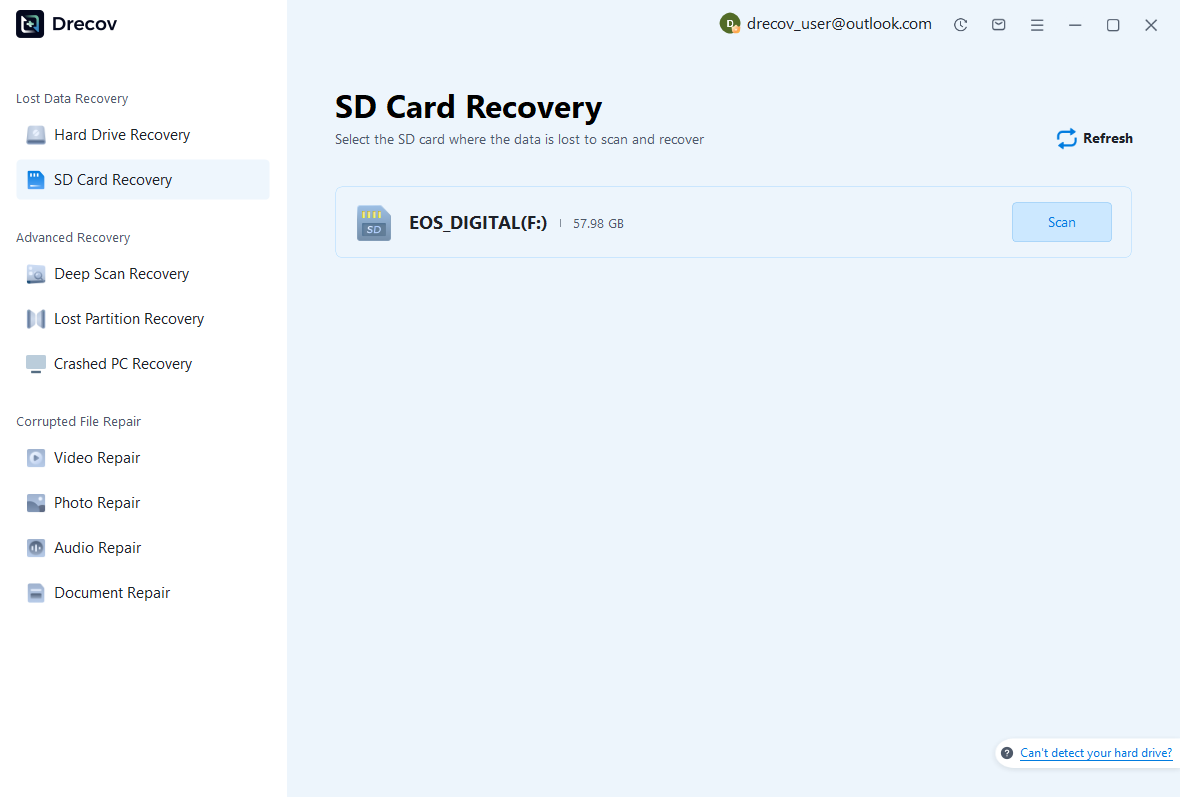
How PandaOffice Drecov Works on Linux Drives
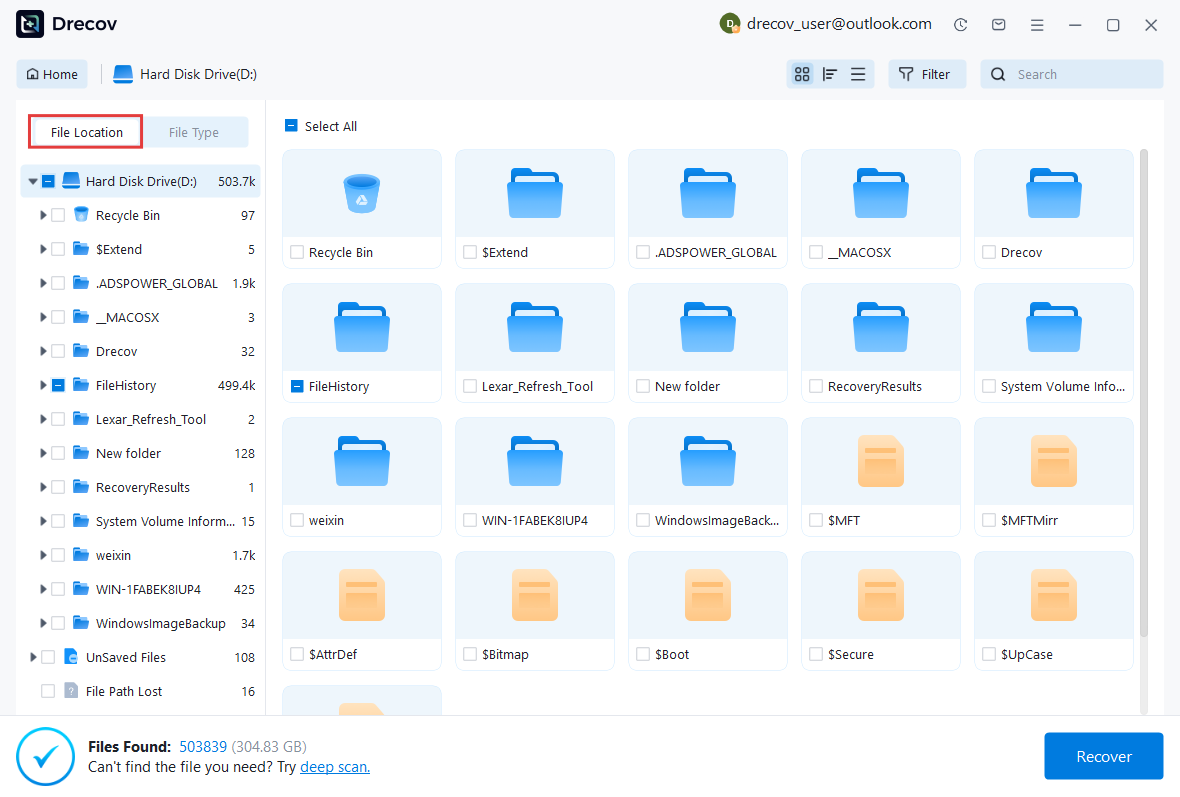
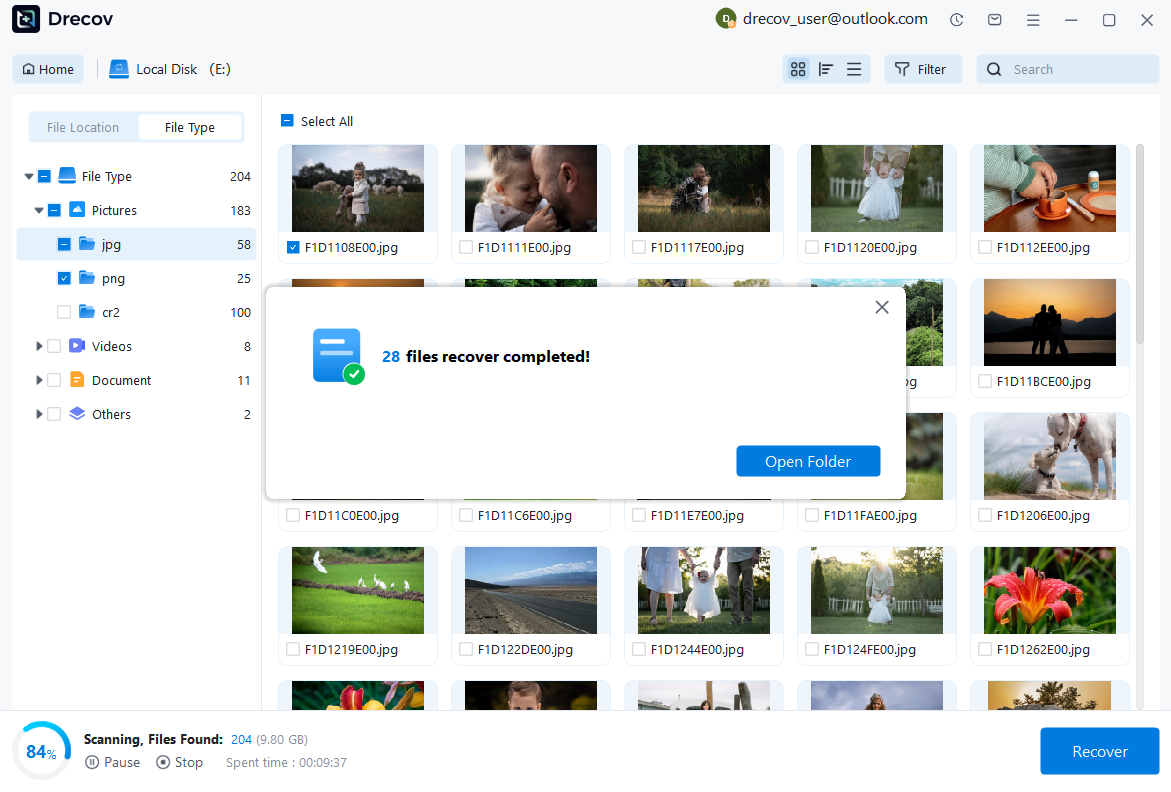
The recovery workflow is straightforward:
- Connect the damaged Linux drive to a working computer
- Launch PandaOffice Drecov
- Select the affected disk or partition
- Run a deep scan for recoverable files
- Preview documents, photos, videos, and archives
- Save recovered data to another storage device
Why Choose PandaOffice Drecov Recovery Software?
PandaOffice Drecov offers a fast, secure, and user-friendly solution for recovering lost files across multiple scenarios. Whether you need email recovery, ZIP File Recovery, format data recovery, or help to recover deleted drafts Outlook, the software provides reliable recovery performance for both personal and business users.
PandaOffice Drecov supports recovery from formatted hard drives, SSDs, USB drives, SD cards, and external storage devices. Its advanced scanning engine can locate deleted archives, damaged ZIP files, lost Outlook drafts, and accidentally removed documents with high accuracy. For users searching for how to find deleted messages in Teams, PandaOffice Drecov can also help recover exported chat files, attachments, and related local cache data when available.
Key advantages include:
- Deep scan technology for complex data loss situations
- Support for emails, archives, videos, photos, and office documents
- Recovery from accidental deletion, formatting, corruption, and system crashes
- Easy preview before restoring files
- Compatible with Windows and multiple storage devices
Unlike complicated enterprise recovery tools, PandaOffice Drecov keeps the recovery process simple. Users can scan, preview, and restore files in just a few steps without technical expertise.
Whether you are dealing with lost Outlook drafts, corrupted ZIP archives, formatted drives, or missing communication data, PandaOffice Drecov provides an efficient and practical recovery experience designed to minimize downtime and protect important files.
The software supports recovery from:
- EXT4
- NTFS
- exFAT
- FAT32
- RAW partitions
Test Environment:
- Ubuntu 24.04 EXT4 partition
- Corrupted 1TB SATA HDD
- External USB recovery adapter
- Deep scan recovery validation
Why Recovery Before Formatting Matters
Many users immediately attempt to format hard drive linux systems after corruption occurs. However, formatting first can:
- Overwrite partition metadata
- Damage recoverable file structures
- Reduce deep scan recovery success
Recovering files before formatting provides a much safer workflow, especially for drives containing business documents, multimedia projects, or system backups.
⚠️Warning: Never save recovered files back onto the same damaged Linux partition.
Using fsck for Linux File System Repair
The fsck utility repairs Linux file systems before formatting becomes necessary.
Example:
sudo fsck /dev/sdb1This command checks:
- File system consistency
- Damaged inode structures
- Corrupted allocation tables
In many cases, fsck repairs partitions without requiring full formatting.
Test Environment:
- Ubuntu recovery mode
- EXT4 corruption repair
- Power interruption simulation
- Recovery integrity verification
Recovering Files Before Linux Reformat Hard Drive Operations
When file systems become inaccessible, recovery should occur before formatting.
Important recovery steps:
- Stop writing new data
- Connect drive safely
- Run recovery scans
- Export important files
- Begin formatting only afterward
This greatly improves recovery success rates.
Test Environment:
- RAW Linux partition
- External USB enclosure
- File recovery benchmarking
- Post-recovery formatting test
⚠️Warning: Installing Linux on the same damaged partition may overwrite recoverable files permanently.
FAQ About Formatting Hard Drive Linux Systems
How to format a hard drive on Linux safely?
The safest approach is:
- Back up important files
- Verify drive identity using
lsblk - Unmount partitions
- Use trusted formatting tools such as GNOME Disks or
mkfs
Can Linux format NTFS drives?
Yes. Linux fully supports formatting NTFS drives using:
mkfs.ntfsThis is useful for drives shared with Windows systems.
What is the best file system to format hard drive for Linux?
For most Linux users, EXT4 remains the best balance of:
- Stability
- Performance
- Compatibility
Enterprise users may prefer XFS or Btrfs depending on workloads.
Can I recover files after formatting hard drive Linux systems?
Sometimes. Recovery depends on:
- Formatting method used
- Whether data was overwritten
- File system condition
Quick formats usually provide better recovery chances than full overwrites.
Conclusion – Best Practices for Linux Hard Drive Formatting
Learning how to format hard drive on linux is essential for Linux administrators, desktop users, and anyone managing storage devices across operating systems. Linux provides flexible and powerful formatting tools, but careful execution is critical to avoid accidental data loss.
The safest workflow includes:
- Identify correct drive
- Recover valuable files first
- Unmount active partitions
- Choose suitable file system
- Perform formatting carefully
For most Linux systems:
- EXT4 is the best default option
- GNOME Disks is easiest for beginners
- Terminal tools provide advanced control
- Recovery utilities help preserve important files
⚠️Warning: Never run formatting commands on active system partitions without verified backups.
For damaged drives or inaccessible Linux partitions, Pandaoffice Drecov can help recover critical files before formatting operations begin.






