







Have you ever booted up your computer only to find a sudden system crash, a botched software update, or a rogue virus has disrupted your workflow? When disaster strikes, your immediate thought is likely: how can i restore my pc to an earlier date? Reverting your system to a previous, stable state is often the fastest way to fix critical errors and rescue your digital life.
However, standard system restores can sometimes feel like a gamble. While they roll back system files, they can occasionally lead to unexpected data gaps or fail entirely if your backup points are corrupted. That is where professional data recovery solutions come in. In this comprehensive guide, we will explore manual Windows recovery methods alongside specialized software like PandaOffice Drecov data recovery software to ensure you never lose your important files during a system rollback.
Understanding the Basics of How Can I Restore My PC to an Earlier Date
When users search for how can i restore my pc to an earlier date, they are typically looking for a way to undo recent, problematic changes to their operating system. Windows includes a built-in feature called System Restore. This utility takes a snapshot of your computer’s system files and registry—known as a Restore Point—allowing you to roll back the clock when things go wrong.
Common Issues and Challenges
- Data Loss Risks: System Restore is designed to protect personal files, but unexpected glitches can still cause recent documents to vanish.
- Corrupted Restore Points: Malware or disk errors can corrupt your saved states, rendering the built-in Windows utility useless.
- Incomplete Rollbacks: A standard system rollback might fix OS bugs, but it will not resurrect files that were accidentally deleted or emptied from the Recycle Bin before the crash.
To bridge these gaps, incorporating a robust data recovery strategy is essential. PandaOffice Drecov data recovery software serves as your ultimate safety net. While a system restore fixes the operating system, Drecov focuses entirely on deep-file recovery. It ensures that your photos, documents, and databases remain intact even if your Windows restore point fails.
When to Use PandaOffice Drecov
- Accidental Deletion: If you deleted critical data right before attempting to restore my pc to an earlier date.
- Formated Drives: When a system crash forces you to format a partition.
- Broken Application Data: For recovering specific app architectures, such as discovering where Firefox bookmarks are stored on your PC and pulling them back from the brink.
⚠ Warning: Install it on a drive different from the one where your data was lost to prevent overwriting.
Solutions: How to Restore Your Computer to an Earlier Time
Fixing a malfunctioning PC requires a structured approach. Below are the step-by-step methods to execute a rollback and recover your data, organized from beginner to advanced technical levels.
Method 1: Windows System Restore
This built-in Windows utility is the first line of defense when figuring out how to restore your computer to an earlier time. It reverts system settings without altering your personal documents.
- Step 1: Press the Windows Key + R to open the Run dialog box.
- Step 2: Type
rstrui.exeand press Enter to launch the System Restore wizard. - Step 3: Click Next, then select your preferred restore point from the list. Look at the timestamp to choose a date when your PC worked perfectly.
- Step 4: Click Scan for affected programs to see what software will be uninstalled.
- Step 5: Click Finish and confirm. Your PC will restart and complete the restoration process.
Warning: Do not interrupt your PC or unplug the power source during a System Restore, as this can cause permanent operating system corruption.
Method 2: Comprehensive File Recovery via PandaOffice Drecov
If a system restore causes file loss, or if you cannot roll back because restore points were turned off, PandaOffice Drecov data recovery software is the ideal solution. It scans your storage sector-by-sector to rebuild lost file systems. This method is incredibly useful for specific scenarios, such as learning how to recover overwritten Excel files in Windows 11/10/8/7.
⚠ Warning: Install it on a drive different from the one where your data was lost to prevent overwriting.
- Step 1: Launch the application and select the target drive or specific folder where your files were last seen.

- Step 2: Click Scan. The software will execute a Quick Scan followed automatically by a Deep Scan to locate buried file signatures.

- Step 3: Browse the real-time preview window to verify your files.
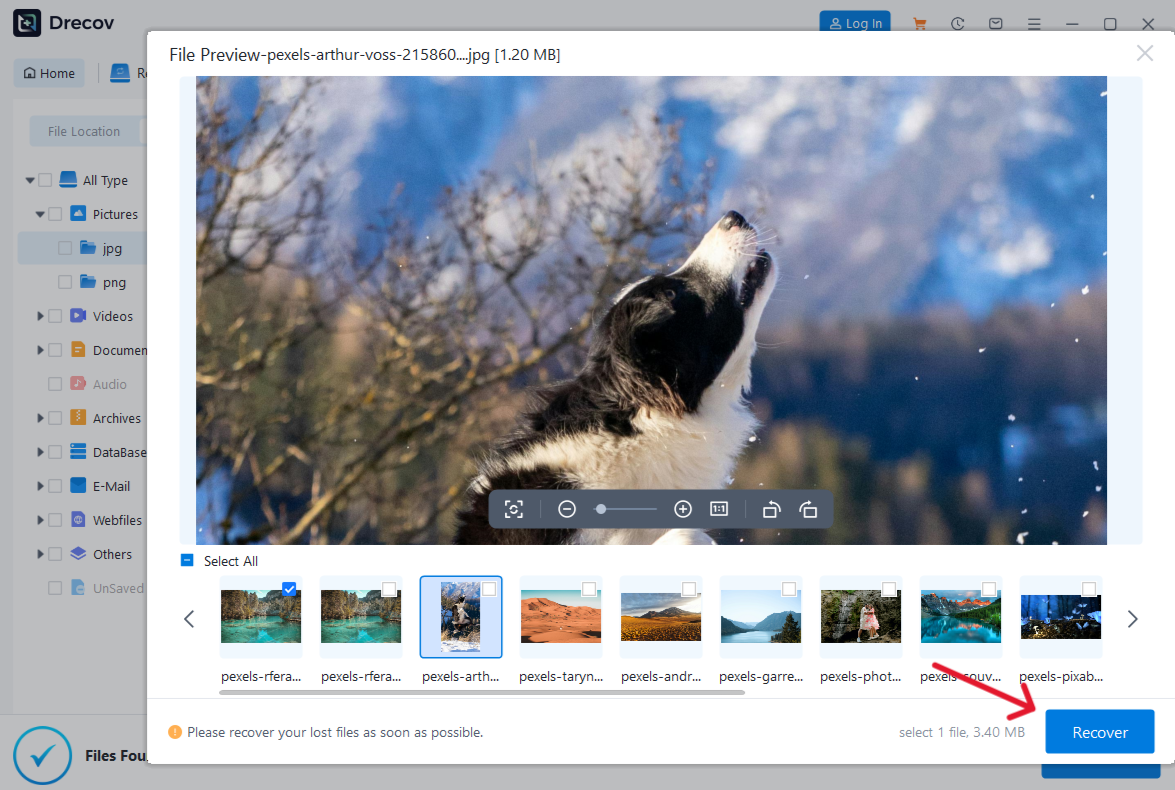
- Step 4: Select your data and click Recover to save it to an external storage drive.
For deeper insight into managing system states safely, you can consult the Microsoft Official System Support Documentation.
Method 3: System Image Recovery via Advanced Startup
When Windows fails to boot entirely, you cannot access standard settings to restore my pc to an earlier date. You must utilize an external System Image through the Windows Recovery Environment (WinRE).
- Step 1: Turn on your PC and repeatedly press the F11 key (or F8 depending on your motherboard) to trigger the Advanced Startup menu.
- Step 2: Navigate through the menu path: Troubleshoot → Advanced options → System Image Recovery.
- Step 3: Connect the external hard drive containing your pre-made Windows System Image.
- Step 4: Select the latest system image from the list and click Next.
- Step 5: Follow the prompts, leaving the “Format and repartition disks” option unchecked unless absolutely necessary, then click Finish to rewrite the drive state.
Alternative or Complementary Methods
If the primary methods do not completely resolve your issues, alternative manual and software routes can help you safely manage your data state.
Manual Tool: Windows File History
Windows File History automatically backs up versions of files located in your Documents, Music, Pictures, Videos, and Desktop folders.
- Pros: It is completely free, runs natively in the background, and allows you to scroll through a timeline of individual file changes.
- Cons: It does not back up your operating system files, apps, or registry settings. Consequently, it cannot fix a broken OS.
Cloud Recovery: OneDrive Version History
Many users sync their personal directories to cloud networks. However, improper syncing can result in sudden data loss. It is vital to learn how to delete OneDrive the right way so you don’t lose your life’s work.
- Pros: Provides off-site protection against physical hardware failure.
- Cons: Requires a constant internet connection and offers limited storage space on free tiers.
Recovery Solutions Comparison
| Feature / Method | Windows System Restore | PandaOffice Drecov | Windows File History |
| Primary Focus | Fixes OS and System Files | Recovers Missing/Deleted Files | Backs up Personal Folders |
| Technical Level | Beginner | Intermediate | Beginner |
| Risk of Data Loss | Low (but possible) | Zero (Read-only scanning) | None |
| Requires Pre-configuration? | Yes (Must be turned on) | No (Can scan retroactively) | Yes (Requires external drive) |
Tips & Best Practices for Data Protection
Successfully managing your PC’s state requires a proactive approach to system maintenance. Use these best practices to maintain optimal data integrity:
- Allocate Sufficient Disk Space: By default, Windows allocates very little space for restore points. Open the System Protection settings tab via the Control Panel and adjust the “Max Usage” slider to at least 5–10% of your disk capacity.
- Run Regular CHKDSK Scans: Corrupted drive sectors prevent system rollbacks. Open the Command Prompt as an administrator and execute
chkdsk C: /f /rquarterly to repair file system anomalies. - Follow the 3-2-3 Backup Rule: Keep three copies of your data, stored across two different types of media, with at least one copy stored safely off-site or on an independent local drive via PandaOffice Drecov data recovery software backups.
- Pause Updates During Critical Work: Windows Updates automatically create restore points but can occasionally fail mid-process. Pause non-essential updates during heavy project weeks to avoid unexpected OS loops.
Frequently Asked Questions
Will choosing to restore my pc to an earlier date remove my current personal files?
No. Standard Windows System Restore points do not affect your personal files, such as documents, photos, or emails. However, it will uninstall any apps, drivers, and system updates that were installed after the restore point was created.
How far back can I restore my computer to an earlier time?
You can go back as far as your oldest available restore point. Windows automatically manages this space and deletes older points to free up room for new ones. Typically, you will find options ranging from a few days to a few weeks back.
What should I do if my Windows System Restore fails or shows an error?
If Windows cannot complete the process, boot your computer into Safe Mode and try running System Restore again. If the restore points are corrupted, your best choice is to utilize PandaOffice Drecov data recovery software to extract your critical files first, followed by a clean reinstall of the operating system.
Can I undo a System Restore if I do not like the results?
Yes. If you run a System Restore while Windows is running normally, a new restore point is automatically created right before the rollback occurs. You can open rstrui.exe again and select the Undo System Restore option.
Conclusion
Mastering how can i restore my pc to an earlier date is an essential skill for troubleshooting unexpected system performance drops and software issues. While native tools like Windows System Restore offer great baseline protection for your operating system, they are not infallible.
For comprehensive security, pair your system rollbacks with specialized tools like PandaOffice Drecov data recovery software. Taking this multi-layered approach ensures that your operating system remains stable while your invaluable personal data stays fully protected against unexpected errors.






