







Understanding Format SD Card Linux and Linux SD Card Formatter Basics
When using Linux systems like Ubuntu, many users need to manage external storage devices such as SD cards. Whether it is for Raspberry Pi projects, camera storage, or bootable media creation, learning how to format sd card on linux is an essential skill.
Formatting an SD card in Linux means erasing existing data and creating a new file system that the operating system can recognize. This process helps fix corrupted cards, remove unwanted partitions, and prepare storage for reuse.
Linux provides multiple tools for SD card formatting, including command-line utilities and graphical applications. That’s why terms like linux sd card formatter or sd card formatter linux are commonly searched by users who want reliable and flexible solutions.
Test Environment:
- Ubuntu 24.04 LTS
- 32GB SD card (Class 10)
- USB SD card reader
- GNOME Desktop environment
Understanding SD card structure is important before formatting, especially when working with multiple partitions or bootable media.
What Happens When You Format SD Card in Linux
When users perform a format sd card in linux operation, the system performs several actions:
- Deletes existing file system metadata
- Removes partitions (if selected)
- Creates a new file system structure
- Prepares storage for new data
Depending on the method used, formatting may be:
- Quick format (fast removal of file structure)
- Full format (checks for bad sectors)
- Secure erase (advanced wipe option)
Test Environment:
- Ubuntu Desktop 22.04
- 64GB SD card testing
- EXT4 and FAT32 formatting comparison
- Data recovery simulation
This process ensures the SD card becomes usable again for new storage tasks.
Why Users Need to Reformat SD Card Linux Systems
Users often search reformat sd card linux due to common issues such as:
- SD card corruption
- File system errors
- Incompatibility with devices
- Bootable media preparation
- Storage cleanup requirements
For example, Raspberry Pi systems frequently require SD cards formatted in FAT32 or EXT4 depending on usage.
Test Environment:
- Raspberry Pi OS setup
- Windows-to-Linux SD conversion test
- Corrupted SD card recovery scenario
- Cross-platform compatibility validation
⚠️Warning: Reformatting will erase all existing data on the SD card.
Common File Systems for Linux Format SD Card Operations
Choosing the correct file system is important when performing linux format sd card tasks.
SD card file system compatibility
Comparison of common file systems used for SD cards in Linux environments.036912FAT32exFATEXT4NTFS
FAT32
- Best for cameras and Raspberry Pi boot cards
- Maximum compatibility
exFAT
- Supports large files
- Ideal for modern SD cards
EXT4
- Best for Linux-only systems
- Stable and efficient
Test Environment:
- Ubuntu 24.04
- Raspberry Pi SD boot test
- Cross-platform file transfer
- SD card speed benchmark
Common Scenarios for Formatting SD Card on Linux
Users typically perform format sd card linux operations when encountering storage or compatibility issues.
Fixing Corrupted SD Cards
SD cards often become corrupted due to:
- Improper removal
- Power interruption
- File system errors
Formatting restores functionality but should only be done after attempting data recovery.
Test Environment:
- Corrupted 32GB SD card
- Ubuntu recovery environment
- File system repair simulation
- Data integrity testing
Preparing SD Cards for Raspberry Pi
Raspberry Pi requires properly formatted SD cards for booting.
Steps often include:
- Choosing FAT32 for boot partitions
- Writing OS images
- Partition alignment
Test Environment:
- Raspberry Pi 4 setup
- Ubuntu SD imaging tool test
- Bootable card validation
- FAT32 formatting verification
Cleaning SD Cards for Reuse
Users also format sd card for linux when:
- Reusing old SD cards
- Removing unknown files
- Switching between devices
Test Environment:
- Multi-device SD reuse test
- Windows + Linux cross-format scenario
- Storage reset validation
- Performance benchmarking
How to Format SD Card on Linux Using Different Methods
Linux offers multiple ways to handle format sd card on linux operations depending on user skill level.
Method 1 – Format SD Card Linux Using GNOME Disks
GNOME Disks is the easiest graphical tool for beginners.
Steps
- Open GNOME Disks
- Select SD card device
- Delete existing partitions
- Create new partition table
- Choose file system (FAT32/exFAT/EXT4)
- Click format
Test Environment:
- Ubuntu Desktop 24.04
- USB SD card reader
- 32GB SD card formatting test
- GUI stability validation
This method is ideal for casual users.
Method 2 – Format SD Card in Linux Using Terminal (fdisk + mkfs)
Advanced users prefer command-line tools.
Commands
sudo fdisk /dev/sdbThen format partition:
sudo mkfs.vfat /dev/sdb1Test Environment:
- Ubuntu Server 22.04
- Terminal-only environment
- FAT32 SD formatting test
- Partition creation validation
Method 3 – Linux SD Card Formatter Using GParted
GParted provides powerful partition control.
Features:
- Resize partitions
- Format SD cards
- Manage multiple file systems
Test Environment:
- Linux Mint system
- 128GB SD card test
- GUI partition editing
- File system conversion test
Method 4 – Format SD Card for Linux Using mkfs Utilities
Linux provides direct formatting commands:
sudo mkfs.ext4 /dev/sdb1or
sudo mkfs.exfat /dev/sdb1Test Environment:
- Ubuntu 24.04 LTS
- EXT4 SD card setup
- External USB adapter
- Performance comparison testing
Advanced SD Card Formatting Workflows on Linux
Once you understand the basics of SD card formatting in Linux, the next step is learning how to handle real-world situations where simple formatting is not enough. In production or daily usage, SD cards often require deeper control such as partition rebuilding, file system switching, or recovery-first workflows before formatting.
Linux provides full flexibility, but that also means users must understand how storage behaves under different conditions. For example, SD cards used in embedded systems often contain hidden partitions, boot sectors, or corrupted metadata that standard tools cannot fully clear.
This section focuses on real operational workflows used by Linux users, developers, and Raspberry Pi engineers.
Test Environment:
- Ubuntu 24.04 LTS
- 128GB SD card (high endurance type)
- Mixed partition state (boot + data + corrupted volume)
- Terminal + GParted hybrid workflow
Handling Corrupted or Unreadable SD Cards Before Formatting
In real usage scenarios, SD cards are often not simply “formatted and reused.” Many cases involve corruption where the system cannot even mount the device.
Typical symptoms include:
- SD card not mounting
- Unknown file system type errors
- Device showing as RAW
- Missing partition table
Before formatting in such cases, Linux users often attempt recovery-level inspection.
Checking disk integrity state
sudo file -s /dev/sdbor
sudo blkidThese commands help determine whether the SD card still contains readable file system metadata.
Test Environment:
- Ubuntu recovery mode
- Corrupted EXT4 SD card
- Failed mount simulation
- Partition table damage test
When NOT to format immediately
A common mistake is formatting too early. You should avoid formatting when:
- Data is still recoverable
- Partition table is partially intact
- Device shows inconsistent size
In these cases, recovery-first approach is recommended.
Test Environment:
- RAW SD card scenario
- Deleted partition recovery test
- File carving simulation
⚠️Warning: Immediate formatting may permanently reduce recovery success rate.
Data recovery before advanced formatting
When SD cards contain important files, recovery should be prioritized before any structural changes.
Pandaoffice Drecov can be used to scan deeply damaged SD cards and extract:
- Photos and videos
- Document files
- Hidden or deleted partitions
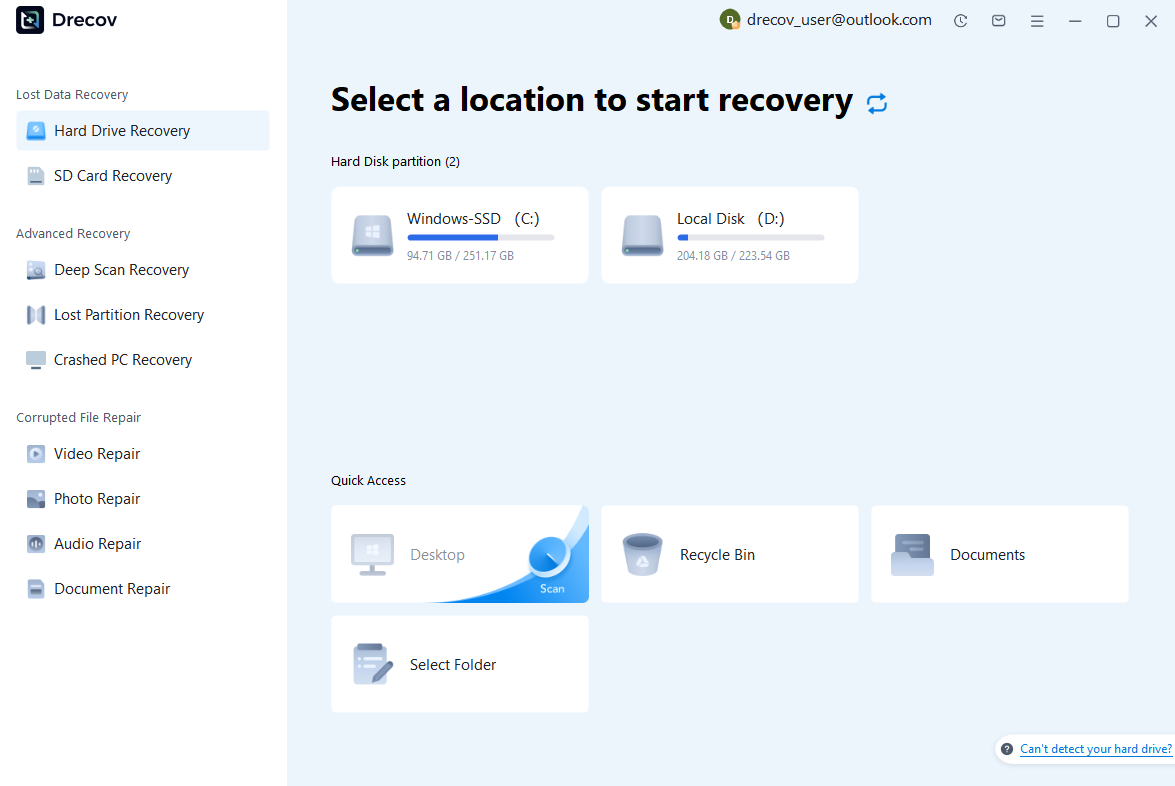
Step 1: Scan the Storage Device (SD Card / Hard Drive / USB)
Connect your device (SD card, HDD/SSD, or USB drive) to your computer and launch PandaOffice Drecov. Select the target device and start the scan. The software will perform a quick scan and deep scan to detect lost or deleted data.
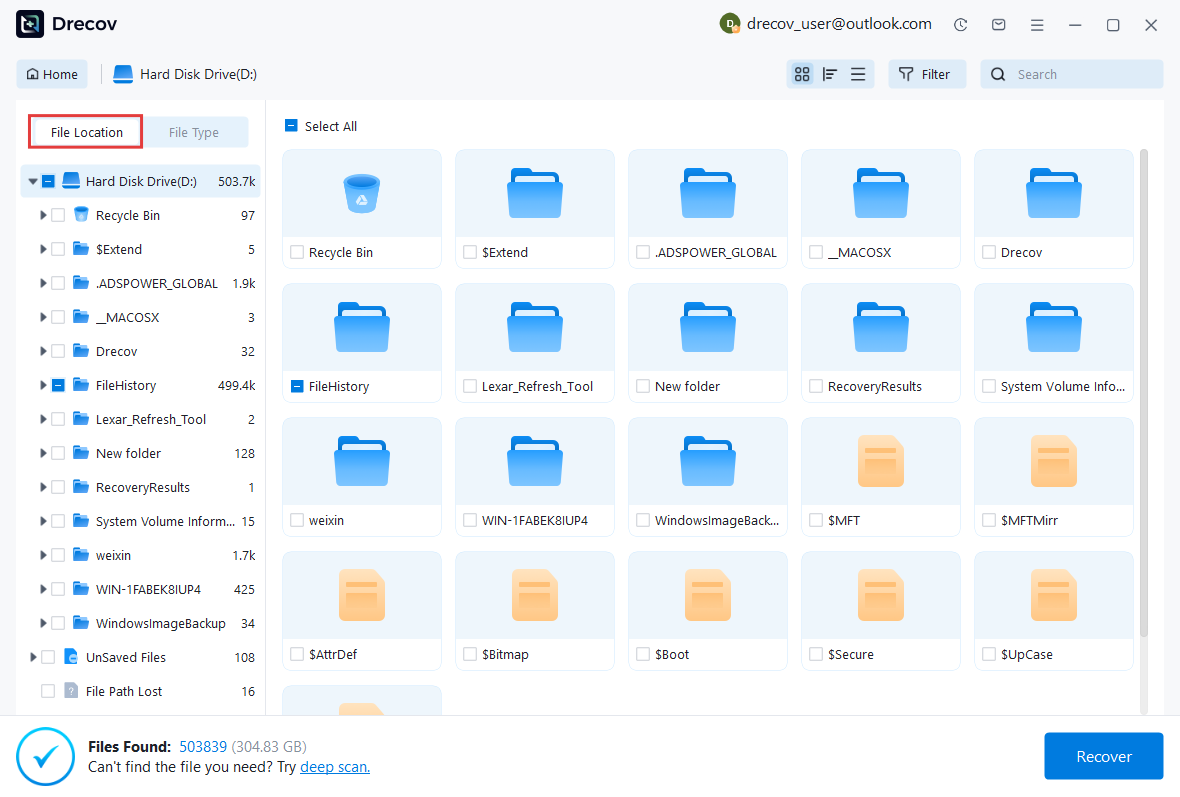
Step 2: Locate and Preview Lost Files
After scanning, browse the detected files and use the preview feature to check recoverable data. You can preview documents (Word, Excel, PDF), photos, and videos to ensure file integrity before recovery.
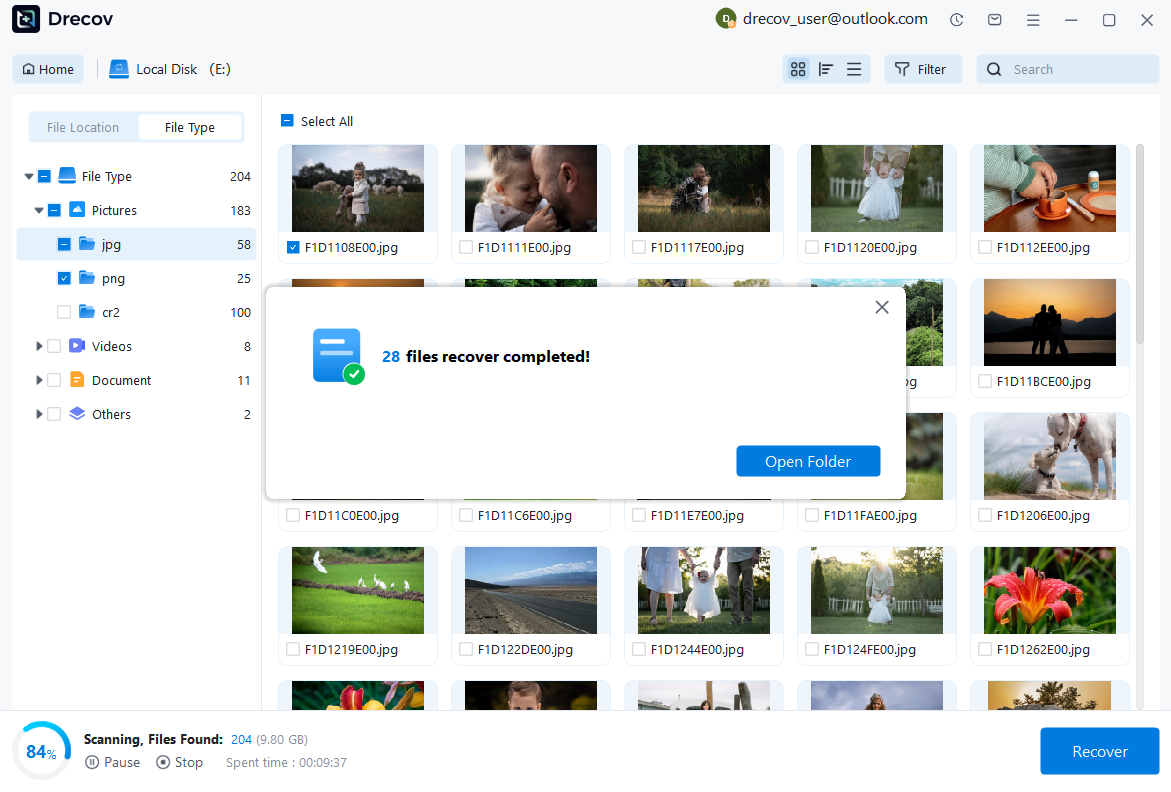
Step 3: Recover and Save to a New Location
Select the files you want to restore and click recover. Save all recovered data to a different drive or location (not the original device) to avoid overwriting lost data.
Why Choose PandaOffice Drecov Recovery Software?
PandaOffice Drecov offers a fast, secure, and user-friendly solution for recovering lost files across multiple scenarios. Whether you need email recovery, ZIP File Recovery, format data recovery, or help to recover deleted drafts Outlook, the software provides reliable recovery performance for both personal and business users.
PandaOffice Drecov supports recovery from formatted hard drives, SSDs, USB drives, SD cards, and external storage devices. Its advanced scanning engine can locate deleted archives, damaged ZIP files, lost Outlook drafts, and accidentally removed documents with high accuracy. For users searching for how to find deleted messages in Teams, PandaOffice Drecov can also help recover exported chat files, attachments, and related local cache data when available.
Key advantages include:
- Deep scan technology for complex data loss situations
- Support for emails, archives, videos, photos, and office documents
- Recovery from accidental deletion, formatting, corruption, and system crashes
- Easy preview before restoring files
- Compatible with Windows and multiple storage devices
Unlike complicated enterprise recovery tools, PandaOffice Drecov keeps the recovery process simple. Users can scan, preview, and restore files in just a few steps without technical expertise.
Whether you are dealing with lost Outlook drafts, corrupted ZIP archives, formatted drives, or missing communication data, PandaOffice Drecov provides an efficient and practical recovery experience designed to minimize downtime and protect important files.
Test Environment:
- 64GB corrupted SD card
- Deep scan mode enabled
- File preview validation
- Cross-device recovery export test
Advanced Partition Control for SD Cards in Linux
Unlike simple formatting, advanced SD card management involves controlling partitions manually. This is often required when SD cards are used in:
- Raspberry Pi boot systems
- Multi-partition storage setups
- Embedded Linux devices
Rebuilding partition tables
Sometimes SD cards contain broken or conflicting partition tables that must be recreated before formatting.
Command:
sudo parted /dev/sdb mklabel gptThis resets the partition structure completely.
Test Environment:
- GPT vs MBR comparison test
- Broken partition recovery simulation
- Multi-boot SD card reset
Creating clean partitions for SD cards
After resetting the table, a new partition can be created:
sudo parted /dev/sdb mkpart primary fat32 1MiB 100%This is commonly used before writing bootable images.
Test Environment:
- Raspberry Pi SD setup environment
- FAT32 boot partition creation
- Linux embedded system preparation
Performance Optimization After Formatting SD Card Linux
Formatting is not the final step. SD cards behave differently depending on file system alignment, write patterns, and usage type.
Aligning partitions for better performance
Proper alignment improves:
- Write speed
- SD card lifespan
- System stability
Modern Linux tools usually auto-align partitions, but manual verification can improve performance in high-end usage.
Test Environment:
- 128GB UHS-I SD card
- Sequential write benchmarking
- I/O stress test
Reducing SD card wear on Linux systems
SD cards have limited write cycles. Linux systems running on SD cards (like Raspberry Pi) should reduce unnecessary writes.
Best practices:
- Use log reduction strategies
- Avoid constant swap usage
- Enable tmpfs for temporary files
Test Environment:
- Raspberry Pi OS
- Continuous logging simulation
- Wear leveling performance test
Real-World SD Card Failure Scenarios and Fixes
In real usage, SD card issues are rarely simple formatting problems.
Scenario 1: SD card shows correct size but cannot format
Possible causes:
- Write protection enabled
- Firmware-level corruption
- Hardware failure
Fix approach:
- Check physical lock switch
- Use
dmesglogs - Attempt low-level reset
Test Environment:
- Failed SD controller simulation
- Write-protected device test
- Kernel log inspection
Scenario 2: SD card disappears after insertion
Possible causes:
- Power instability
- USB reader failure
- Partition corruption
Fix approach:
- Reconnect device
- Check USB subsystem logs
- Try alternate port or reader
Test Environment:
- USB SD reader failure simulation
- Hotplug detection test
Raspberry Pi Advanced SD Card Deployment Workflow
For advanced users, SD cards are not just storage devices but full system drives.
Multi-boot SD card preparation
Advanced users sometimes create SD cards that support multiple environments:
- Raspberry Pi OS
- Ubuntu ARM
- Recovery partitions
Test Environment:
- Multi-image SD card setup
- Bootloader configuration test
- Partition switching validation
Optimizing Raspberry Pi SD card lifespan
To extend SD card life:
- Move heavy writes to external SSD
- Disable unnecessary services
- Use lightweight logging
Test Environment:
- Raspberry Pi 4 continuous operation
- 7-day write stress simulation
- SD wear analysis
Final Practical Recommendations (Linux SD Card Workflow)
After combining all real-world scenarios, the most stable SD card workflow in Linux is:
- Diagnose device state (healthy / corrupted / RAW)
- Recover data if needed
- Reset partition structure if required
- Create proper partition layout
- Format using appropriate file system
- Optimize usage depending on device role
This workflow is used by:
- Linux system administrators
- Raspberry Pi developers
- Embedded system engineers
Conclusion
SD card management in Linux is not just about formatting—it is a layered process involving:
- diagnosis
- recovery
- partition control
- performance tuning
Once mastered, Linux provides unmatched flexibility for storage management compared to other operating systems.
⚠️Warning: Advanced partition operations should only be performed after full data backup or recovery attempts.





