







Losing critical data can happen in the blink of an eye. Whether you accidentally pressed Shift + Delete or formatted the wrong drive, knowing how to restore deleted folder structures is a vital skill. Fortunately, your files are rarely gone forever immediately after deletion.
When Windows or macOS deletes a folder, it simply marks the space as “available” rather than shredding the actual data. Consequently, your data remains intact until new files overwrite it. This article delivers a comprehensive, step-by-step blueprint on how to restore deleted folder paths efficiently. While manual methods exist, utilizing dedicated recovery software like PandaOffice Drecov data recovery software provides the highest success rate for retrieving your lost documents, photos, and system archives.
Understanding the Basics of How to Restore Deleted Folder Structures
Before diving into complex technical procedures, it is essential to understand what happens behind the scenes during file deletion. Your operating system relies on file systems (such as NTFS, FAT32, or APFS) to catalog where data resides on your storage drive.
Why Folders Appears “Lost”
When a folder is removed, the operating system alters the directory pointer. The underlying data clusters remain on the NAND flash cells or magnetic platters. However, a major challenge is data fragmentation. Folders contain pointers to multiple files scattered across your drive. If you continue using the device, new temporary files can overwrite these unallocated clusters, permanently corrupting your data.
Introducing PandaOffice Drecov Data Recovery Software
To combat file overwriting, specialized tools are required. PandaOffice Drecov data recovery software specializes in deep-sector scanning. It bypasses logical operating system errors to reconstruct original file directories.
This professional utility is highly effective across various data loss scenarios:
- Accidental Emptying of the Recycle Bin: Reverses the permanent purging of desktop items.
- Malware or Ransomware Attacks: Reclaims directories hidden or altered by malicious code.
- Drive Formatting Errors: Reconstructs partition tables after an accidental disk format.
⚠ Warning: Install it on a drive different from the one where your data was lost to prevent overwriting.
To ensure your computer operates flawlessly prior to or during recovery scenarios, you might need to resolve peripheral system issues. For instance, knowing how to clean install your OS or fixing bootable drives can prevent system crashes. If you run into boot problems while diagnosing data loss, check out this guide on how to reinstall Windows 10 from USB to fix errors and optimize performance.
3 Proven Solutions on How to Restore a Deleted Folder
The difficulty of recovering data depends entirely on how much activity has occurred on the drive since the deletion. Below are three methods categorized by technical difficulty.
Method 1: Locate the Recycle Bin
Sometimes, the simplest solution is overlooked because the icon is missing from your desktop layout.
- Press the Windows Key + D to minimize all open windows and view your desktop.
- Look for the Recycle Bin icon. If it is missing, you must unhide it via system settings.
- Open the settings panel or review these 3 quick ways to find the Recycle Bin in Windows 10 to locate the application directory instantly.
- Once inside, type your folder name in the search bar.
- Right-click the target folder and select Restore.
Method 2: Utilize PandaOffice Drecov Data Recovery Software
If the folder is not in the Recycle Bin, it has been permanently deleted. This scenario occurs frequently when users empty their trash binaries. To learn more about this specific issue, read about what happens when you empty Recycle Bin to understand how data behaves.
⚠ Warning: Install it on a drive different from the one where your data was lost to prevent overwriting.
Follow these steps to deploy PandaOffice Drecov data recovery software for a complete recovery:
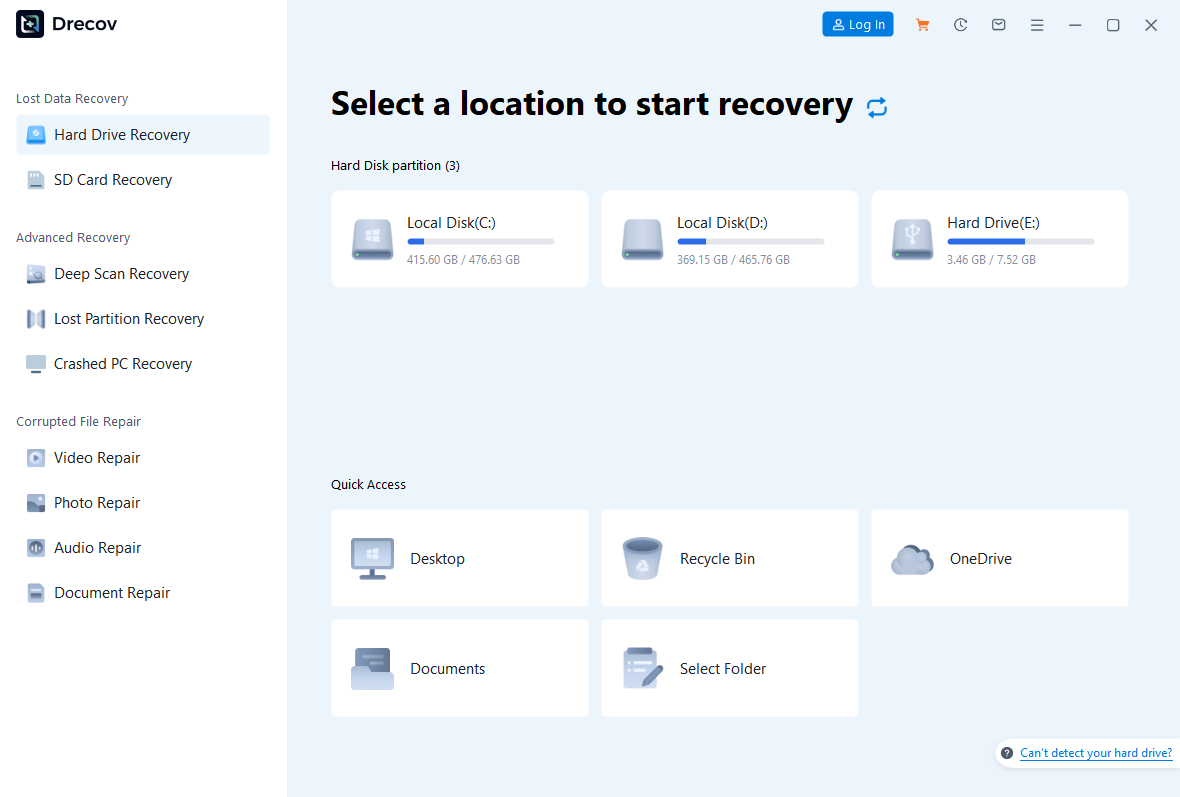
- Step 1: Select the Target Location. Launch the interface. Select the specific drive letter or external storage device where your deleted folder used to live.
- Step 2: Run the Scan. Click the Scan button. The software will execute a Quick Scan followed automatically by a Deep Scan to piece together fragmented raw data blocks.
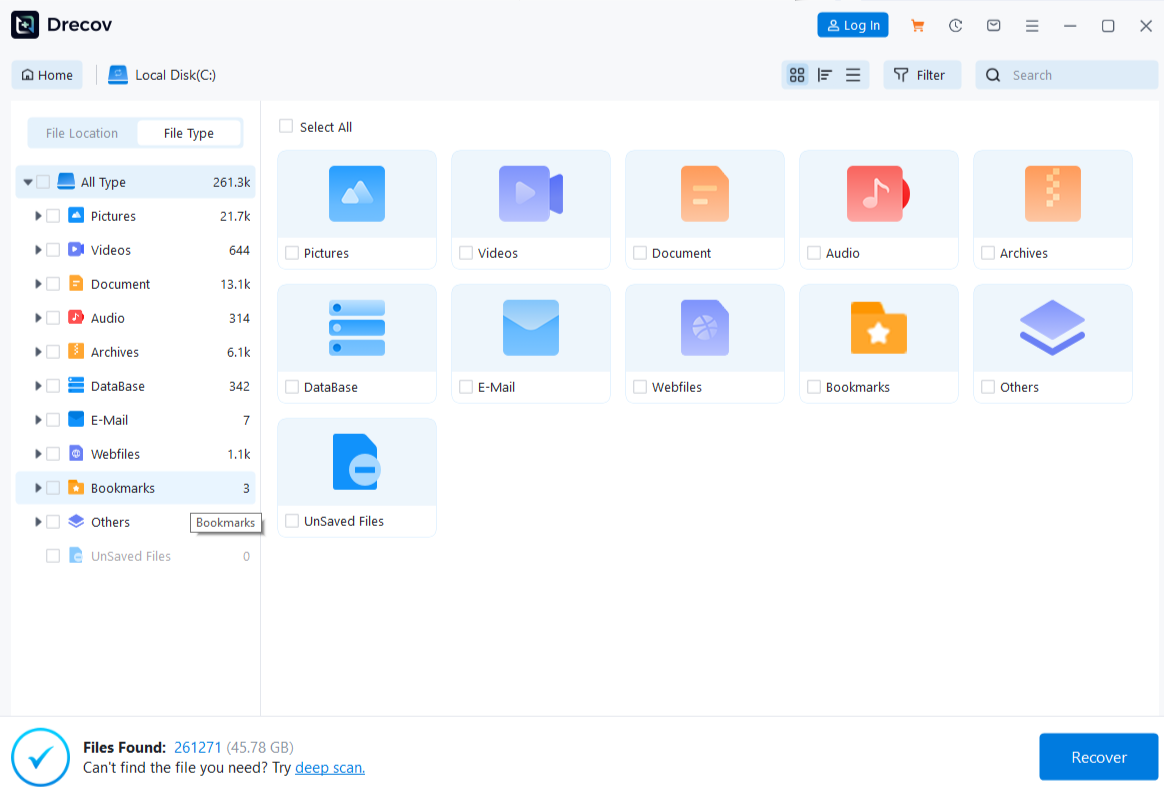
- Step 3: Filter and Preview. Expand the directory tree in the left pane. You can search directly for your deleted folder name. Double-click files to preview them safely.
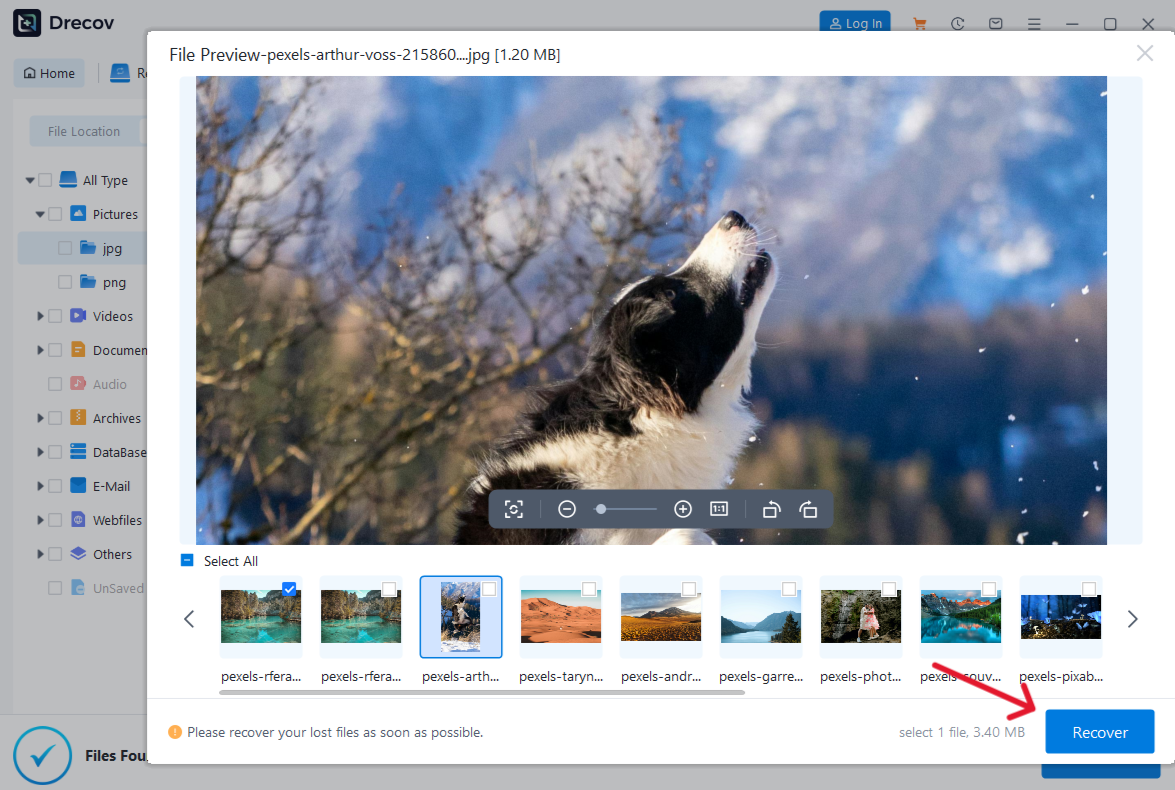
- Step 4: Execute Recovery. Check the box next to your target folder. Click Recover and select a secure destination path on an external hard drive or distinct partition.
CRITICAL WARNING: Never save recovered folders back to the exact same partition they were deleted from. Doing so triggers a self-overwriting sequence that permanently destroys remaining unrecovered items.
Method 3: Restore via Windows Registry and Shadow Copies
If system protection was active, Windows may have captured a snapshot of your directory state before deletion.
- Press Windows Key + R, type
regedit, and hit Enter to open the Registry Editor. - Navigate to the following path:
HKEY_LOCAL_MACHINE\SOFTWARE\Microsoft\Windows\CurrentVersion\Explorer\Desktop\NameSpace - Right-click NameSpace, select New > Key, and name it
{645FF040-5081-101B-9F08-00AA002F954E}. - Double-click the (Default) string in the right pane and set its value data to
Recycle Bin. - Restart your PC. Afterward, right-click the parent folder where your deleted data originally resided and select Restore previous versions to pull the directory from a Volume Shadow Copy.
Alternative or Complementary Methods
If you want to look at alternative recovery architectures, several built-in operating system capabilities can supplement PandaOffice Drecov data recovery software.
Windows File Recovery
Microsoft provides a command-line utility called Windows File Recovery via the Microsoft Store. This tool operates via terminal prompts to parse file tables manually.
- Pros: Completely free; safe developed by Microsoft; effective on NTFS file systems.
- Cons: Lacks a graphical user interface (GUI); requires mastery of complex syntax parameters; often fails to restore the original folder hierarchy name, leaving you with disorganized files.
Backup and Restore (Windows 7 / 10 / 11)
If you proactively configured a system backup using external media, you can bypass recovery software entirely.
| Feature / Method | PandaOffice Drecov | Windows Backup | Windows File Recovery (CMD) |
| Success Rate | Very High (up to 98%) | 100% (If backup exists) | Moderate |
| Technical Skill | Beginner Friendly | Intermediate | Advanced |
| Folder Structure Retention | Yes | Yes | No |
| Time Required | Fast Deep Scanning | Variable | Slow Command Execution |
Tips & Best Practices for Optimizing Recovery Success
To ensure you achieve the absolute highest recovery rate possible when learning how to restore deleted folder components, incorporate these industry-standard operational behaviors:
- Cease All Writing Operations Immediately: Stop downloading files, streaming content, or running background disk defragmentation utilities.
- Deploy Read-Only Scanning Environments: Ensure your chosen recovery tool does not modify the source sectors during analysis. PandaOffice Drecov data recovery software utilizes strict read-only parameters to protect storage integrity.
- Beware of SSD TRIM Commands: Solid-State Drives (SSDs) use an optimization protocol called TRIM. This command automatically purges deleted data blocks during idle times. Consequently, you must launch your recovery process immediately before TRIM activates.
- Verify File Signatures: Always check file health using built-in preview tools before finalizing recovery to ensure file headers are intact.
For further validation on data integrity standards and how file systems structure storage partitions, refer to the Microsoft Storage Documentation for verified enterprise insights.
Frequently Asked Questions
How to restore deleted folder paths if the Recycle Bin was emptied?
You can easily resolve this by utilizing a specialized file recovery program. Download PandaOffice Drecov data recovery software, choose the drive location, and perform a deep scan to extract raw data blocks that Windows no longer registers.
Can I retrieve a folder deleted using the Shift + Delete shortcut?
Yes. The Shift + Delete shortcut bypasses the Recycle Bin entirely, but the underlying data clusters still remain on your hard drive. Using advanced data recovery applications will let you find and reconstruct these orphaned partitions.
Why is my recovered folder empty or showing corrupted data?
This issue occurs because new data has partially or completely overwritten the original disk sectors. To prevent this, always stop utilizing the drive immediately after a data loss incident.
Is it safe to install PandaOffice Drecov data recovery software directly on my system drive?
You should only install it on the system drive if the deleted folder was located on a secondary partition (like an external drive or D: drive). Always download and install the program onto an alternate drive to prevent overwriting your lost data.
Conclusion
Mastering how to restore deleted folder configurations does not require an advanced computer science degree. By acting quickly, avoiding unnecessary disk operations, and leveraging native OS safeguards, you can protect your valuable data.
However, manual interventions have technical limitations, especially against emptied recycle bins or corrupted file systems. For a reliable, stress-free recovery process, download PandaOffice Drecov data recovery software. Its advanced deep-scanning capabilities ensure that your lost folders, complex file architectures, and essential media are safely returned to your control. Implement a routine backup schedule today to guarantee your files remain fully secure in the future!






