







Have you ever turned on your PC only to find a blue screen, a sudden system slowdown, or missing files after a recent update? It is a frustrating experience that leaves many users asking: how can I restore my PC to an earlier date without losing everything? System crashes, malware infections, and corrupted registries can happen at any moment. Fortunately, learning how to restore computer to earlier date settings can revert your system to a stable, working state.
However, system restoration can sometimes lead to unexpected data loss, especially for files created after the chosen restore point. To ensure your files remain completely safe during this process, using a dedicated recovery tool like PandaOffice Drecov data recovery software is highly recommended. In this comprehensive guide, we will walk you through the exact steps to restore your system and protect your valuable files.
Understanding the Basics of How to Restore to Earlier Date
Before diving into the step-by-step methods, it is essential to understand what actually happens when you choose to restore computer to earlier date parameters. Windows uses a built-in feature called System Restore, which takes a snapshot of your computer’s system files, registry entries, and installed applications at a specific point in time.
Common Challenges and Risks
While this tool is incredibly helpful, users frequently encounter several major issues:
- The “No Restore Points” Error: Windows often disables this feature by default on newer updates, leaving you without a backup when disaster strikes.
- Accidental Data Loss: System Restore is designed to affect system files, not personal documents. However, software conflicts can sometimes cause recent files, downloads, or browser data to vanish.
- Incomplete Restores: If a virus has corrupted your core operating system, the native Windows restore process may fail mid-way.
Safeguarding Your Files with PandaOffice Drecov
If you realize you have lost critical documents, photos, or emails after attempting a system rollback, don’t panic. PandaOffice Drecov data recovery software is specifically designed to rescue lost partitions, formatted drives, and files deleted by system mishaps. Whether your system booted into a black screen or a Windows update wiped your desktop, this software scans your hard drive at a deep sector level to retrieve your information.
⚠ Warning: Install it on a drive different from the one where your data was lost to prevent overwriting.
If you are facing other common system or data issues, you can explore these detailed guides:
- If your desktop feels cluttered or you cannot find where your deleted files went, learn where is Recycle Bin in Windows 10.
- If you ended up losing files because you cleared out your temporary storage during a system glitch, read about how to handle an empty Recycle Bin.
Step-by-Step Solutions: How to Restore My Computer to an Earlier Date
Depending on whether your computer can boot into Windows normally or not, choose the appropriate technical level below to execute a safe rollback.
Method 1: Using Windows System Restore
If your computer still boots to the desktop, you can use the native Windows graphical interface.
- Step 1: Press the Windows Key + S to open the search bar, type
Create a restore point, and press Enter. - Step 2: In the System Properties window that appears, click on the System Restore… button under the System Protection tab.
- Step 3: Click Next, choose your desired restore point from the chronological list, and click Next again.
- Step 4: Confirm your selection and click Finish. Your computer will restart and begin the restoration process.
Method 2: Data Recovery via PandaOffice Drecov
If the native restore process failed, or if you noticed that critical files disappeared after you tried to restore computer to earlier date, you must deploy specialized data recovery immediately to prevent data overwriting.
⚠ Warning: Install it on a drive different from the one where your data was lost to prevent overwriting.
- Step 1: Launch the software, select the specific drive partition (usually the
C:drive) where your missing data was located, and click Scan.
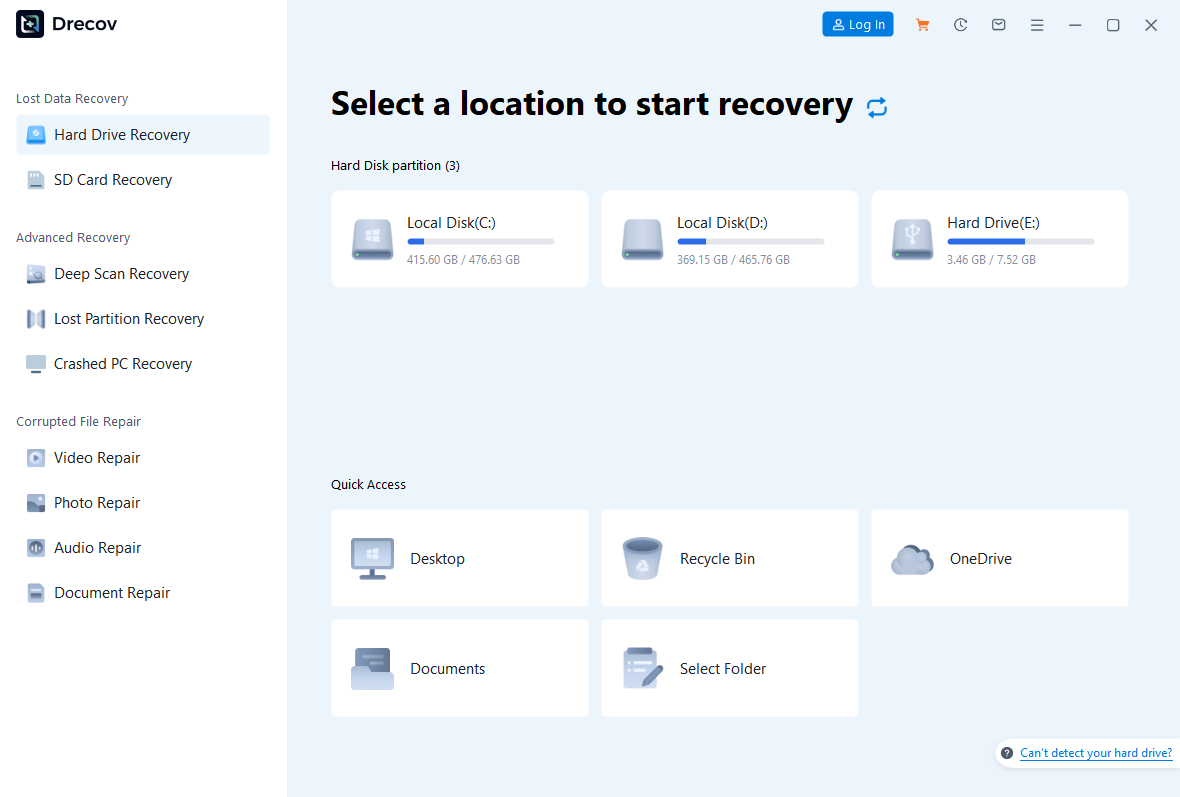
- Step 2: Browse through the scanned files using the filter options. Preview your documents or images to verify their integrity.

- Step 3: Select the files you want to save, click Recover, and choose a secure external drive or a different partition to store the recovered data.
Method 3: Restoring from Advanced Startup Options
If Windows fails to boot entirely and displays a black or blue error screen, you must access the recovery environment outside of the standard OS.
- Step 1: Turn on your PC. As soon as the manufacturer logo appears, hold down the power button for 10 seconds to force a shutdown. Repeat this process 3 times until the Automatic Repair screen appears. Alternatively, boot your computer using a bootable USB. For instructions on setting this up, check how to reinstall Windows 10 from USB.
- Step 2: From the choose an option screen, navigate to Troubleshoot > Advanced options > System Restore.
- Step 3: Select your administrator account, enter your password, and choose a stable restore point from the list. Click Finish to force the rollback.
Alternative and Complementary Methods
If you find that you cannot restore to earlier date targets because no restore points exist, alternative system recovery methods can help fix your computer.
| Recovery Method | Pros | Cons | Best Used For |
| System Image Recovery | Restores the entire drive, including all files, settings, and programs exactly as they were. | Requires a massive external hard drive and proactive, manual setup beforehand. | Complete hard drive failures or total system upgrades. |
| Windows Cloud Reset | Reinstalls a fresh, uncorrupted version of Windows directly from Microsoft servers. | Deletes all installed third-party programs and desktop configurations. | Severe malware infections or heavily corrupted system files. |
| PandaOffice Drecov | Extracted data remains completely independent of Windows operating system errors. | Does not repair system file errors; focuses purely on saving files. | Rescuing data before a clean OS reinstallation. |
Tips & Best Practices for Data Integrity
To ensure you never lose critical files when you try to restore computer to earlier date configurations, implement these expert data management habits:
- Verify System Protection is Active: Windows frequently disables System Protection during major feature updates. Open
sysdm.cplvia the Run dialog (Windows Key + R), go to the System Protection tab, select yourC:drive, click Configure, and ensure Turn on system protection is checked. Allocate at least 5% to 10% of disk space for restore points. - Avoid Installing New Software Before a Rollback: If you suspect your system is unstable, do not write new data to your hard drive. New data can overwrite the sectors where your old system settings and deleted files are stored.
- Always Run a Security Scan First: Sometimes, a malicious script will actively delete your restore points. Run a deep antivirus scan before attempting a system rollback to stop malware from blocking the process. For authoritative guidance on handling system security and recovery configurations, refer to the Microsoft Support Documentation.
Frequently Asked Questions
Will I lose my personal files if I restore my computer to an earlier date?
No, the native Windows System Restore tool does not target or delete personal files like documents, photos, or emails. However, it will remove any applications, drivers, and system updates installed after the restore point was created. To prevent accidental data loss from system instability, it is highly recommended to run a scan with PandaOffice Drecov data recovery software to secure your files first.
How long does it take to restore to earlier date settings?
Typically, the process takes between 20 to 45 minutes depending on the size of your registry, the speed of your hard drive (SSD vs. HDD), and the amount of data that needs to be altered. If the process takes longer than two hours, your system may be hung up on a corrupted file.
Why are there no restore points available on my PC?
Windows might have disabled System Protection automatically to save disk space, or a recent major Windows upgrade may have wiped out your historical restore points. Consequently, you will need to rely on alternative methods like a System Image backup or use file recovery software to salvage files before performing a clean factory reset.
Conclusion
Learning how to restore computer to earlier date settings is a fundamental skill for keeping your Windows system stable and functional. Whether you opt for the built-in Windows System Restore tool or use advanced startup configurations, you can easily undo problematic updates and system glitches.
However, system modifications always carry an inherent risk of data corruption. Furthermore, relying entirely on Windows backup tools can leave you stranded if your restore points disappear. By integrating PandaOffice Drecov data recovery software into your emergency toolkit, you can confidently repair your operating system knowing your personal documents, photos, and creative work remain completely protected. Take control of your digital workspace today by verifying your backup settings and ensuring your system protection is turned on.






