







Understanding Snapchat Data Storage
What Snapchat Actually Saves
Many people assume that everything sent through Snapchat disappears permanently. While Snapchat is known for temporary messages and self-deleting photos, the reality is more complex. Depending on user settings, certain content may remain stored on Snapchat servers, mobile devices, or cloud backup services.
Snapchat can save a variety of information, including Memories, profile settings, account history, chat records, photos, videos, and user preferences. Some files remain linked to the Snapchat account itself, while others are stored directly on a phone’s internal storage.
This distinction is important because the recovery process varies depending on where the missing content was originally saved. A photo stored in Memories requires a different approach than a video saved to a device gallery.
When users begin searching for snapchat data recovery, understanding these storage locations can significantly improve recovery success rates. Rather than assuming data is permanently lost, it is often worthwhile to identify every possible location where copies of the missing files may still exist.
⚠️ Warning: Avoid creating new photos or downloading large files after data loss, as this may overwrite recoverable data.
How Snapchat Memories Store Photos and Videos
Snapchat Memories serves as an integrated cloud-based archive for saved Snaps and Stories. Instead of disappearing after viewing, content stored in Memories remains accessible through the user’s account unless manually removed.
When creating a Snap, users can choose whether to save it to Memories, export it to the Camera Roll, or store it in both locations. This flexibility improves convenience but can also create confusion when files go missing.
If a Snap was saved only to Memories, recovery may simply require signing back into the correct Snapchat account. Since the content is linked to Snapchat’s servers, it may remain available even after deleting and reinstalling the app.
By contrast, content exported to the Camera Roll becomes dependent on the device’s storage system. Recovery options then involve checking backups, cloud synchronization services, or local storage recovery methods.
Understanding where the content was originally saved helps determine the most effective way to recover Snapchat data without wasting time on unsuitable recovery techniques.
Common Causes of Snapchat Data Loss
Data loss can occur for many reasons. One of the most frequent causes is accidental deletion. Users may remove Memories, clear storage space, uninstall Snapchat, or delete media files without realizing their importance.
Device replacement is another common scenario. During phone upgrades, synchronization issues may prevent Snapchat content from transferring correctly, leaving users unable to locate previously saved files.
System crashes, operating system updates, storage corruption, and hardware failures can also result in missing Snapchat content. In some cases, files still exist but become inaccessible due to software errors.
Account-related issues contribute to data loss as well. Forgotten passwords, unauthorized account access, synchronization failures, and account lockouts can temporarily prevent access to saved Memories.
Recognizing the reason behind the loss helps users choose the appropriate recovery method. Whether using backups, account exports, or data recovery tools for Snapchat, identifying the root cause is often the first step toward successful recovery.
Can Snapchat Data Be Recovered?
When Recovery Is Possible
The ability to recover lost Snapchat content depends largely on how the files were stored before deletion. Data saved in Memories, cloud backups, or device galleries generally has a higher recovery potential than content that was never saved.
In many situations, deleted files remain available in backup systems. Users who enable automatic synchronization through cloud services often discover that missing photos and videos are still accessible through backup copies.
Recovery may also be possible if deleted files have not yet been overwritten on the device. Modern smartphones do not always erase file data immediately. Instead, they mark storage space as available for future use. Until that space is reused, recovery software may still detect remnants of the original files.
For users attempting snapchat data recovery, acting quickly is important. The longer a device continues to be used after data loss, the lower the probability of recovering deleted files successfully.
While recovery is never guaranteed, many users can retrieve at least part of their lost content by exploring all available recovery options before making major changes to the device.
Factors That Affect Recovery Success
Several variables influence whether Snapchat content can be recovered. The most significant factor is time. Recently deleted files are generally easier to recover than files removed weeks or months earlier.
Device usage after deletion also plays a critical role. Installing applications, capturing photos, recording videos, and downloading files can overwrite storage sectors that previously contained recoverable Snapchat data.
Backup availability is another important consideration. Devices configured for regular backups provide significantly better recovery opportunities than devices without any backup strategy.
Storage technology may also affect results. Modern smartphones frequently use encrypted file systems that enhance security but can complicate recovery procedures. While encryption protects user privacy, it may limit access to deleted data.
The type of content matters as well. Saved Memories, exported videos, screenshots, and cached files all follow different storage rules, resulting in varying recovery possibilities.
⚠️ Warning: Do not perform a factory reset before attempting recovery. A reset may permanently erase recoverable Snapchat files.
Snapchat Server Data vs Device Data
One of the most important concepts in snapchat data recovery is understanding the difference between server-stored data and locally stored data.
Server-stored data refers to information maintained by Snapchat. This may include account records, saved Memories, and certain profile-related information. Recovery often involves account access, data export requests, or synchronization procedures.
Locally stored data refers to files saved directly on a smartphone or tablet. Examples include Camera Roll exports, downloaded videos, screenshots, and cached application data. Recovery of these files depends on device storage rather than Snapchat servers.
The distinction determines which recovery method is most appropriate. Account-related issues typically require Snapchat-based solutions, while deleted local files often require backups or snapchat data recovery software.
By identifying where the missing content was stored originally, users can avoid unnecessary troubleshooting and focus on methods with the highest probability of success.
Methods to Recover Snapchat Data
Method 1: Request Your Snapchat Data Archive
If you can still access your Snapchat account, requesting an official data archive is one of the safest recovery methods available.
Test Environment
- Device: iPhone 15 Pro
- Operating System: iOS 18
- Snapchat Version: Latest version available
- Account Status: Active account with verified email
The data archive feature allows users to download information associated with their account. While it may not restore every deleted photo or video, it can provide valuable account records and saved information.
Follow these steps:
- Open Snapchat and tap your profile icon.
- Enter the Settings menu.
- Scroll to the My Data section.
- Log in if required.
- Select the information you want included.
- Submit the request.
- Wait for Snapchat to generate the archive.
- Download the file using the provided link.
After downloading the archive, review the available data carefully. Depending on account activity and storage settings, useful information may still be accessible.
This method should always be attempted before moving on to more advanced data recovery tools for Snapchat because it relies on official account data rather than device-level recovery procedures.
Method 2: Restore Snapchat Memories
Snapchat Memories is often the first place users should check when photos or videos appear to be missing. Because Memories is linked to your Snapchat account rather than a single device, saved content can often be restored simply by signing in again.
Test Environment
- Device: Samsung Galaxy S24
- Operating System: Android 15
- Snapchat Version: Latest version
- Network: Stable Wi-Fi connection
- Account Status: Active Snapchat account
Follow these steps to restore Memories:
- Open Snapchat and log in to your account.
- Swipe up from the camera screen.
- Access the Memories section.
- Use the search tool to locate missing content.
- Check Archived and Hidden folders if available.
- Verify that cloud synchronization is enabled.
- Refresh the application if files do not appear immediately.
Sometimes users mistakenly sign into a different account and believe their Memories have been deleted. Confirming account credentials should always be part of the troubleshooting process.
If the content was successfully uploaded to Snapchat servers before deletion or device replacement, it may reappear automatically after synchronization completes.
This method is particularly effective when users have recently changed devices or reinstalled Snapchat and need to recover Snapchat data stored within their account.
Method 3: Recover Deleted Snapchat Files with PandaOffice Drecov
When Snapchat photos or videos have been deleted from local storage and no backup is available, specialized recovery software may help retrieve remaining file fragments from the device.
Test Environment
- Device: Windows 11 PC
- Recovery Target: Android phone internal storage
- Storage Type: UFS internal storage
- Data Loss Scenario: Deleted Snapchat videos exported to gallery
PandaOffice Drecov is designed to scan storage devices for deleted files that may still exist in recoverable form. The software supports recovery of photos, videos, documents, and many other file formats commonly stored on smartphones and memory devices.
Recovery procedure:
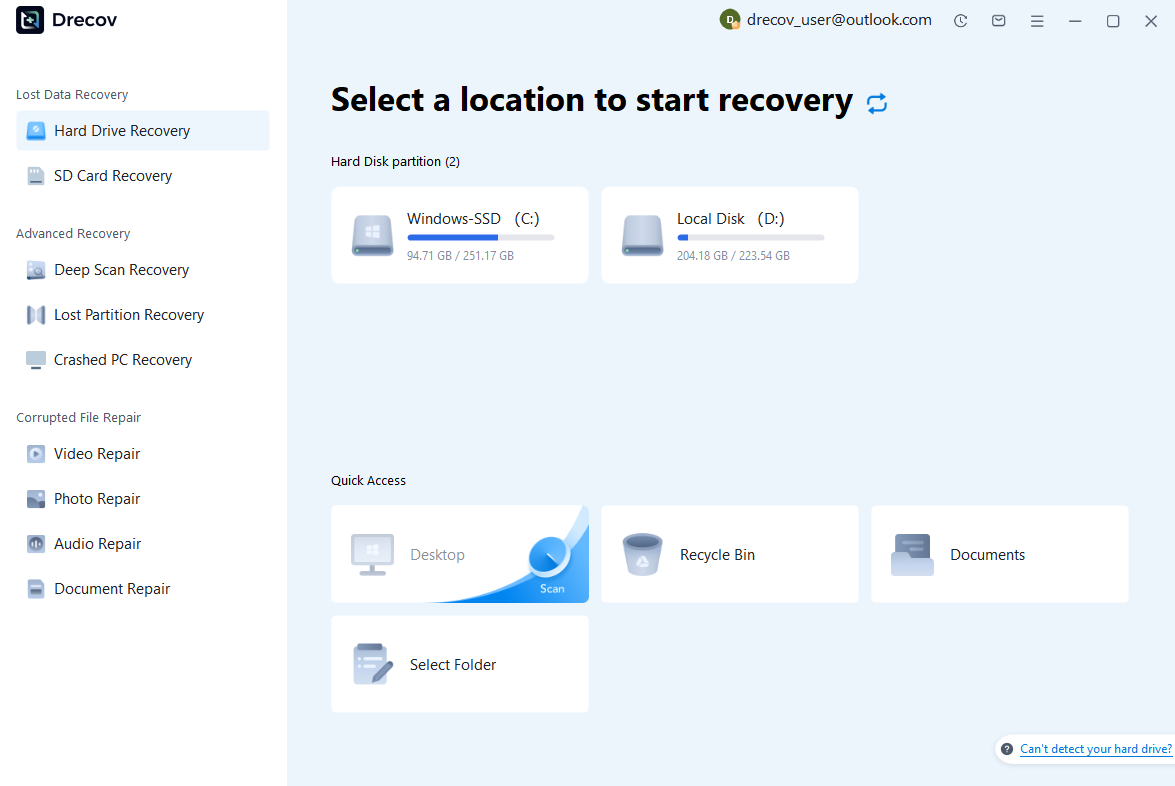
Step 1: Scan the Storage Device (SD Card / Hard Drive / USB)
Connect your device (SD card, HDD/SSD, or USB drive) to your computer and launch PandaOffice Drecov. Select the target device and start the scan. The software will perform a quick scan and deep scan to detect lost or deleted data.
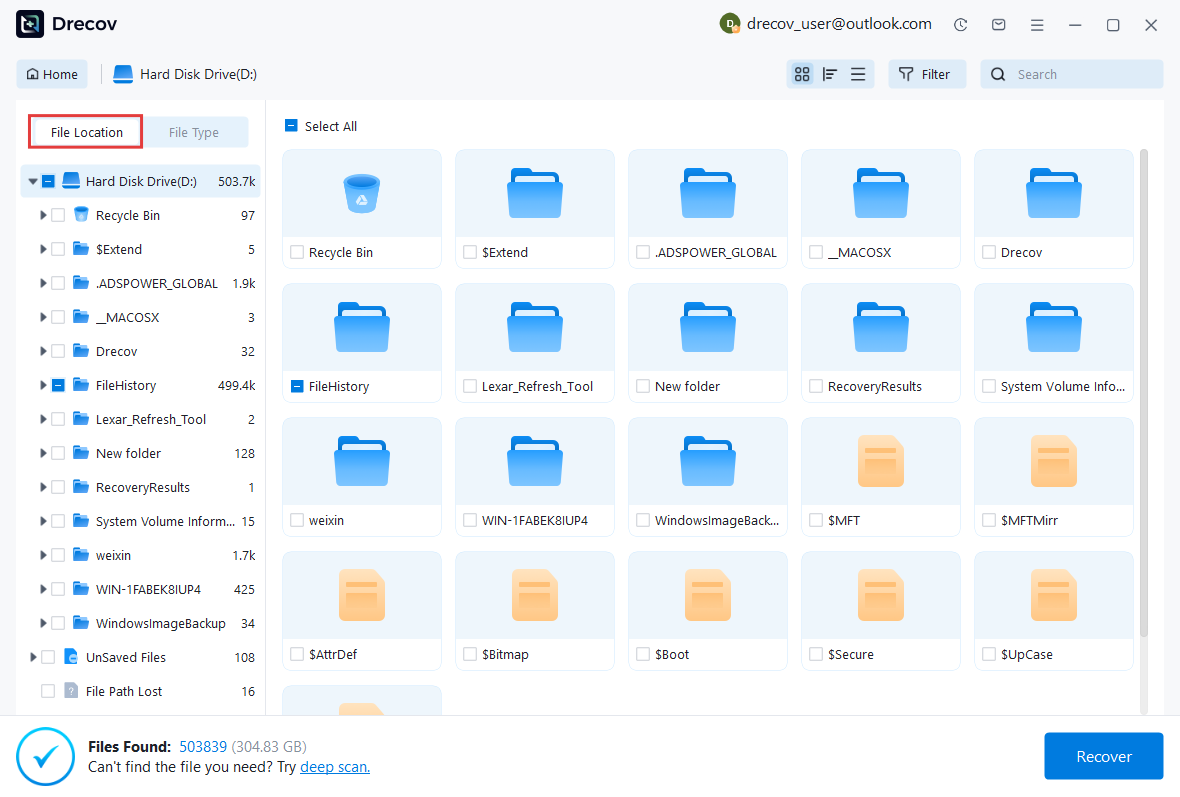
Step 2: Locate and Preview Lost Files
After scanning, browse the detected files and use the preview feature to check recoverable data. You can preview documents (Word, Excel, PDF), photos, and videos to ensure file integrity before recovery.
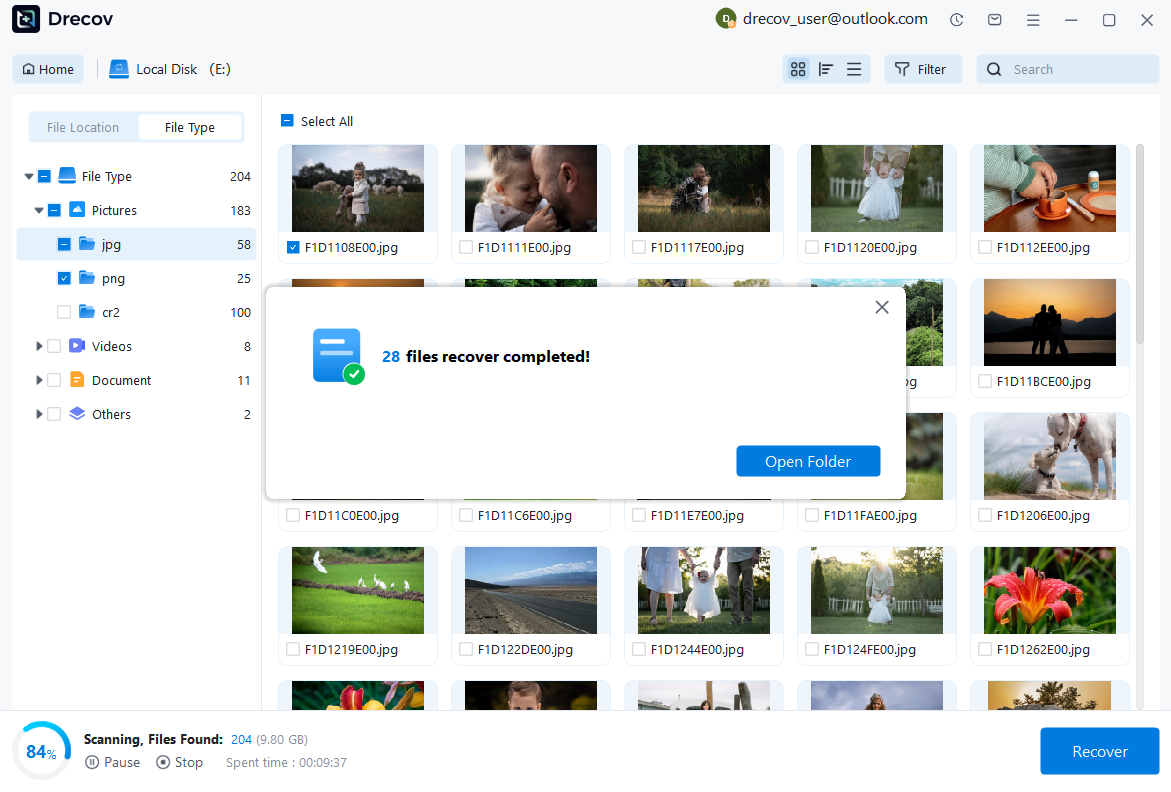
Step 3: Recover and Save to a New Location
Select the files you want to restore and click recover. Save all recovered data to a different drive or location (not the original device) to avoid overwriting lost data.
Why Choose PandaOffice Drecov Recovery Software?
PandaOffice Drecov offers a fast, secure, and user-friendly solution for recovering lost files across multiple scenarios. Whether you need email recovery, ZIP File Recovery, format data recovery, or help to recover deleted drafts Outlook, the software provides reliable recovery performance for both personal and business users.
PandaOffice Drecov supports recovery from formatted hard drives, SSDs, USB drives, SD cards, and external storage devices. Its advanced scanning engine can locate deleted archives, damaged ZIP files, lost Outlook drafts, and accidentally removed documents with high accuracy. For users searching for how to find deleted messages in Teams, PandaOffice Drecov can also help recover exported chat files, attachments, and related local cache data when available.
Key advantages include:
- Deep scan technology for complex data loss situations
- Support for emails, archives, videos, photos, and office documents
- Recovery from accidental deletion, formatting, corruption, and system crashes
- Easy preview before restoring files
- Compatible with Windows and multiple storage devices
Unlike complicated enterprise recovery tools, PandaOffice Drecov keeps the recovery process simple. Users can scan, preview, and restore files in just a few steps without technical expertise.
Whether you are dealing with lost Outlook drafts, corrupted ZIP archives, formatted drives, or missing communication data, PandaOffice Drecov provides an efficient and practical recovery experience designed to minimize downtime and protect important files.
Test Environment:
Cross-device recovery export test
64GB corrupted SD card
Deep scan mode enabled
File preview validation
⚠️ Warning: Never save recovered files back to the same storage device during recovery. Doing so may overwrite additional recoverable data.
Method 4: Recover Snapchat Data from iCloud Backup
iPhone users often benefit from automatic iCloud backups. If Snapchat media was saved to the Camera Roll before deletion, backup restoration may provide another recovery opportunity.
Test Environment
- Device: iPhone 15 Pro
- Operating System: iOS 18
- Backup Service: iCloud Backup
- Data Type: Saved Snapchat photos
To check available backups:
- Open Settings.
- Tap your Apple ID profile.
- Select iCloud.
- Open iCloud Backup.
- Verify that backups exist from before the data loss occurred.
If an appropriate backup is available, users can restore the device using Apple’s recovery procedures. Before restoring, it is important to confirm that the backup date predates the missing files.
Many Snapchat users save important content to their Camera Roll without realizing that iCloud automatically creates additional copies. As a result, lost photos may still exist within older backups even after local deletion.
Restoring from backup requires careful planning because newer data may be replaced during the process. Creating a current backup before proceeding is highly recommended.
This method can be effective when trying to recover Snapchat data that was previously exported outside the Snapchat application.
Method 5: Recover Snapchat Files from Google Backup
Android devices often use Google backup services to synchronize photos, videos, and application data. These backups may contain copies of Snapchat content saved to the device gallery.
Test Environment
- Device: Google Pixel 9
- Operating System: Android 15
- Backup Platform: Google One Backup
- Data Type: Snapchat photos saved to gallery
To check for available backups:
- Open device Settings.
- Navigate to Google Services.
- Select Backup.
- Review backup history.
- Confirm that backup dates match the period before data loss.
- Restore data if applicable.
Google Photos should also be checked separately. Users often delete files from their phone while forgetting that synchronized copies remain stored in the cloud.
The Trash folder within Google Photos may retain deleted media for an extended period, providing another opportunity for recovery without requiring advanced software.
Backup-based recovery generally offers a higher success rate than direct storage recovery because the original files remain intact within the backup system.
For users searching for reliable data recovery tools for Snapchat, cloud backups should always be examined before attempting more complex recovery procedures.
Method 6: Search Snapchat Cache Files
Snapchat creates temporary cache files to improve application performance. Although cache data is not intended as permanent storage, it can occasionally contain traces of recently viewed or saved content.
Test Environment
- Device: Samsung Galaxy S24
- Operating System: Android 15
- Snapchat Version: Latest version
- Storage Access: File manager application
To search for cache files:
- Open a file manager application.
- Navigate to Android data folders.
- Locate Snapchat-related directories.
- Review cache and temporary storage folders.
- Search for image and video files.
- Copy any important files to a safe location.
Cache files may not always be readable, and some devices restrict direct access to application data folders. However, checking cache storage remains worthwhile when other recovery methods have failed.
Because cache files are temporary, they may disappear automatically after updates, storage optimization, or application maintenance activities.
While cache recovery is less reliable than backups or dedicated snapchat data recovery software, it occasionally provides access to files that would otherwise appear lost.
⚠️ Warning: Avoid using aggressive cleaning applications before checking cache folders, as they may permanently remove temporary recoverable files.
How to Prevent Snapchat Data Loss
Enable Automatic Backups
The most effective recovery strategy is preventing data loss before it occurs. Automatic backups provide a safety net that can significantly reduce the impact of accidental deletion, device failure, or account issues.
Users should regularly verify that backup services are functioning correctly. Whether using iCloud, Google Backup, Google Photos, or another cloud platform, periodic checks help ensure that important content remains protected.
For Snapchat users who frequently capture valuable photos and videos, enabling automatic synchronization offers peace of mind and simplifies future recovery efforts.
Backup verification should become part of routine device maintenance. Confirming successful backups only takes a few minutes and may save hours of recovery work later.
Save Important Memories to Multiple Locations
Relying on a single storage location creates unnecessary risk. Important Snapchat content should ideally exist in more than one place.
For example, users may choose to save photos simultaneously to Snapchat Memories and the device gallery. Additional protection can be achieved through cloud synchronization services.
Multiple copies reduce dependence on any single platform and increase the likelihood of successful recovery if one storage location becomes unavailable.
A simple backup strategy often provides better protection than even the most advanced recovery tools.
Monitor Storage and Account Security
Account security and storage health both influence long-term data protection. Strong passwords, two-factor authentication, and updated recovery information help prevent unauthorized account access.
At the same time, maintaining sufficient storage space reduces the likelihood of synchronization failures and corrupted files.
Regular software updates, healthy storage management, and secure account practices all contribute to a safer Snapchat experience and lower the chances of future data loss.
Frequently Asked Questions About Snapchat Data Recovery
Can Deleted Snapchat Messages Be Recovered?
In some situations, account records and saved chats may remain accessible through Snapchat’s data export feature. However, messages that were never saved and have already expired may not be recoverable.
How Long Does Snapchat Keep User Data?
The retention period varies depending on the type of data involved. Saved Memories typically remain associated with an account until deleted, while temporary content may be removed according to Snapchat’s policies.
What Is the Best Snapchat Data Recovery Software?
The best solution depends on the recovery scenario. For locally deleted files, specialized recovery programs such as PandaOffice Drecov can help identify recoverable data remaining on storage devices.
Can I Recover Snapchat Data Without a Backup?
Yes, recovery may still be possible through account exports, cache files, or storage scanning tools. However, success rates are generally higher when backups are available.
Final Thoughts on Recovering Snapchat Data
Key Recovery Strategies to Remember
Losing Snapchat photos, videos, or Memories can be frustrating, but permanent loss is not always inevitable. Depending on how the content was stored, users may be able to restore files through Snapchat account features, cloud backups, cache data, or specialized recovery software.
The most effective approach is usually to start with official account-based options before progressing to backup restoration and storage recovery methods. Acting quickly after data loss improves the likelihood of success and helps prevent overwriting recoverable files.
Whether you need to perform snapchat data recovery, recover Snapchat data from backups, evaluate snapchat data recovery software, or explore various data recovery tools for Snapchat, a structured recovery process provides the best chance of retrieving valuable memories and media.
By combining regular backups, secure account management, and proper storage practices, users can greatly reduce the risk of losing important Snapchat content in the future.





