







In the modern digital landscape, connectivity is the backbone of productivity. However, we often find ourselves caught between two technological eras. While your trusty desktop might still feature the classic rectangular ports, your new smartphone or external SSD likely uses the sleek, oval connector. This is where the USB A to USB C adapter becomes an essential tool. Beyond just charging, these adapters play a critical role in data management and emergency file retrieval.
When a device fails or a connection becomes unstable, many users fear their precious photos or work documents are gone forever. The reality is that having the right hardware, like a reliable USB A to USB C adapter, combined with powerful tools like PandaOffice Drecov data recovery software, can make the difference between permanent loss and a successful recovery.
Understanding the Role of a USB A to USB C Adapter in Data Success
A USB A to USB C adapter acts as a vital bridge. It allows older hardware to “speak” to modern storage media. If you have an older workstation that only has USB-A ports, but your data is trapped on a modern USB-C external drive that isn’t being recognized, the adapter is your first line of defense.
The Technical Bridge: Why the Adapter Matters
The transition to USB-C isn’t just about a smaller plug; it involves different wiring and power delivery protocols. A high-quality USB A to USB C adapter ensures that the data pins align correctly so that the operating system can mount the drive. If the adapter is poorly made, it might provide power but fail to transmit data, leading users to believe their drive is dead when, in fact, the connection is simply “lost in translation.”
Speed and Throughput Considerations
When performing data recovery, speed is of the essence. If you are moving terabytes of recovered files, you want an adapter that supports at least USB 3.0 (5 Gbps). Using an older USB 2.0 USB A to USB C adapter will significantly throttle your recovery time, potentially turning a one-hour job into a twelve-hour ordeal.
Emergency Data Recovery: When Your USB-C Drive Stops Responding
It happens to the best of us: you plug your USB-C flash drive into your laptop via a USB A to USB C adapter, and nothing happens. Or worse, Windows asks, “You need to format the disk in drive X: before you can use it.” Do not click format.
When logical errors occur, the data is usually still there, but the “map” (the file system) is corrupted. This is where specialized software becomes mandatory.
Comprehensive Recovery with PandaOffice Drecov Data Recovery Software
For users dealing with unrecognized drives, accidental deletions, or formatted partitions, PandaOffice Drecov data recovery software is a professional-grade solution designed for simplicity. It works seamlessly with devices connected via a USB A to USB C adapter, scanning the raw sectors of the storage media to reconstruct lost files.
Whether the files were lost due to a sudden disconnection or a failing port, the software can bypass many of the common hurdles that prevent Windows Explorer or macOS Finder from seeing the files.
⚠ Warning: Install it on a drive different from the one where your data was lost to prevent overwriting.
Step-by-Step Guide: Recovering Data via a USB A to USB C Adapter
If you are facing data loss on a USB-C device and need to connect it to a USB-A port, follow these precise steps to ensure the highest chance of recovery.
Step 1: Inspect the Hardware Connection
Before launching any software, ensure the physical path is clear.
- Plug your USB-C device into the USB A to USB C adapter.
- Connect the adapter to a rear USB port if you are using a desktop PC (these are soldered directly to the motherboard and provide more stable power than front-panel ports).
- Check the device manager (Win + X > Device Manager) to see if “Universal Serial Bus controllers” recognizes a generic “Mass Storage Device.”
Step 2: Initialize PandaOffice Drecov Data Recovery Software
Once the hardware is physically connected, you need to begin the logical scan.
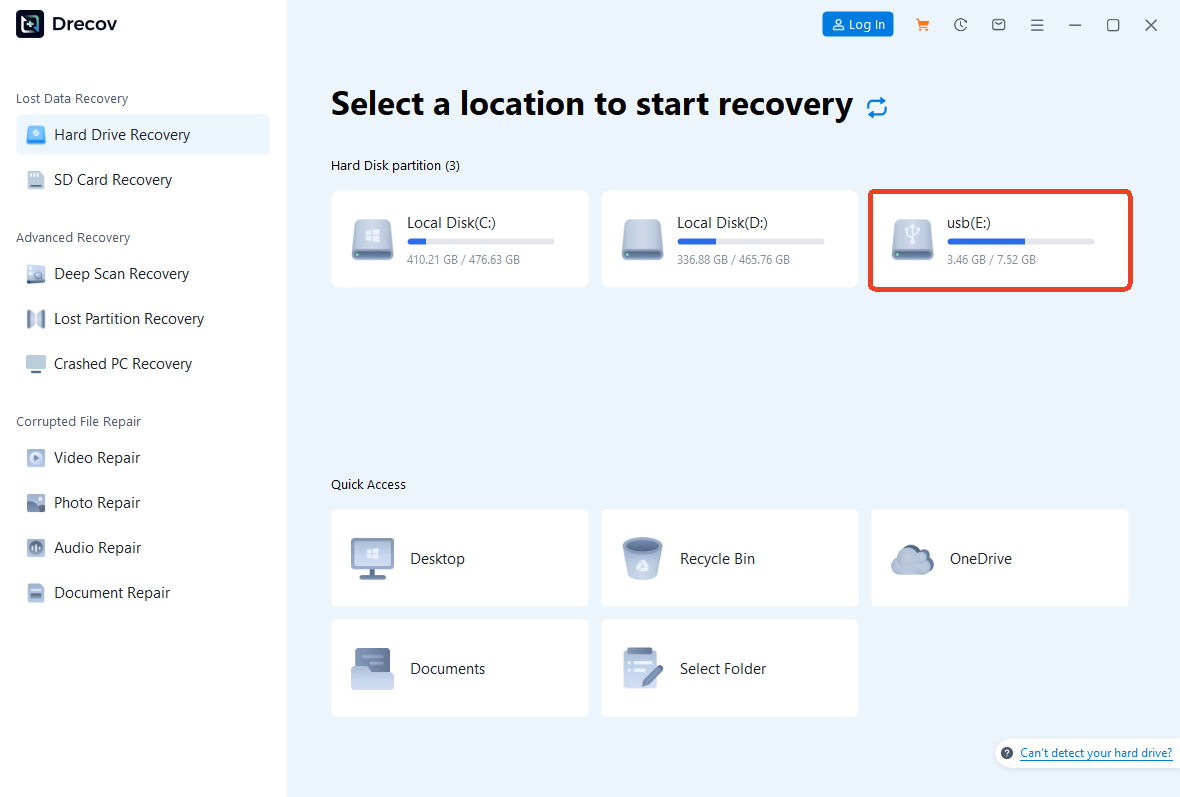
- Launch the application. You will see a list of available drives.
- Identify your external drive connected through the USB A to USB C adapter. It will usually be listed under “External Devices.”
Step 3: Perform a Deep Scan
Standard scans are quick but might miss fragmented files. For a thorough job:
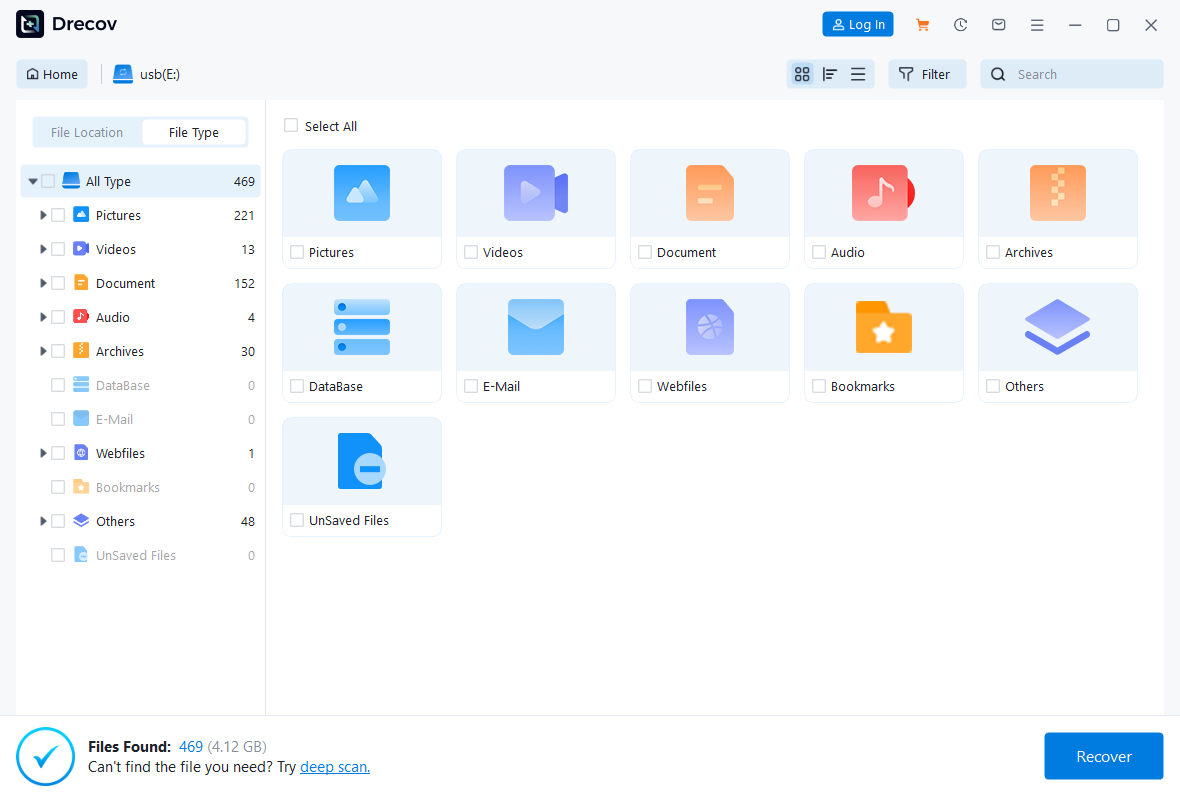
- Select the target drive in the PandaOffice Drecov data recovery software interface.
- Click on the “Scan” button. The software will begin analyzing the file structure.
Warning: Do not disconnect the USB A to USB C adapter during this process, as interrupting a scan can occasionally cause further file system instability.
Step 4: Preview and Filter Results
One of the best features of this tool is the ability to see what you are getting before you commit.
- Use the file type filters (Photos, Video, Documents) to narrow down the results.
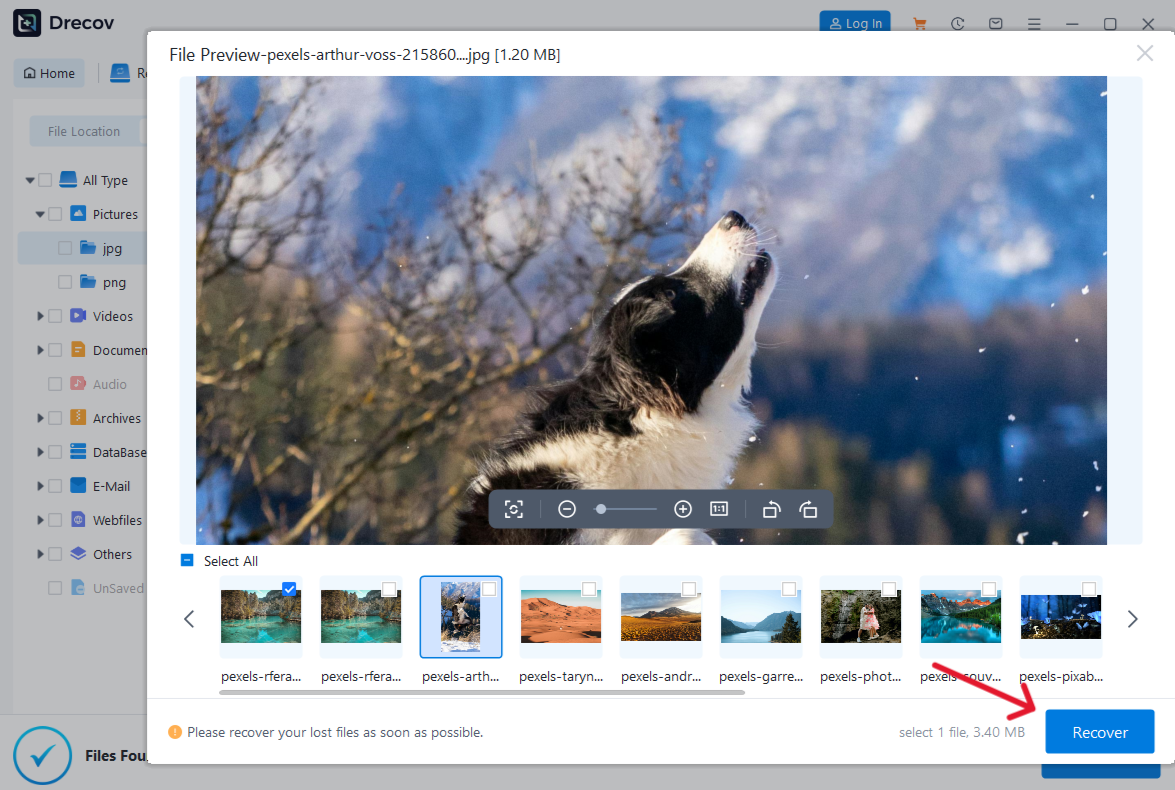
- Double-click a file to preview it. If the preview appears, the file is 100% recoverable.
- Check the “Path” or “Type” tabs to find specific folders that were lost.
Step 5: Export to a Safe Location
- Select the checkboxes for the files you wish to save.
- Click “Recover”.
Important: Always save the recovered data to a different drive (e.g., your internal C: drive) and not back onto the USB-C drive you are currently recovering from. This prevents overwriting the very data you are trying to save.
Useful Resources and Further Reading
Managing external storage and data integrity involves a variety of skills. For more detailed guides on maintaining your drives and handling specific errors, check out these resources:
- USB Formatting Tips: If your drive is recovered but needs a fresh start, learn the 4 fast ways to format USB to FAT32 even on 128GB sticks to ensure maximum compatibility across different systems.
- Media Management: For those looking to secure online content, see our how to download video from browser Firefox 2026 guide for the latest techniques.
- Error Troubleshooting: Encountering technical hurdles during a backup? Find out if a corrupted recycle bin can cause Macrium cyclic redundancy check errors and how to fix them.
Advanced Troubleshooting for USB A to USB C Adapter Issues
Sometimes the issue isn’t the software, but how the operating system handles the USB A to USB C adapter. If your drive isn’t showing up at all, you may need to dig into the system settings.
Fixing Driver Conflicts
Old drivers can prevent a modern USB A to USB C adapter from functioning at high speeds.
- Step 1: Press Windows Key + R, type
devmgmt.msc, and hit Enter. - Step 2: Expand “Universal Serial Bus controllers.”
- Step 3: Right-click each “USB Root Hub” and select “Update driver.”
- Step 4: Choose “Search automatically for drivers.”
Managing Power Settings
Windows often tries to save power by cutting juice to USB ports, which can cause a USB A to USB C adapter to disconnect during a long data recovery session with PandaOffice Drecov data recovery software.
- Step 1: In Device Manager, right-click your USB Root Hub and select Properties.
- Step 2: Go to the Power Management tab.
- Step 3: Uncheck “Allow the computer to turn off this device to save power.”
Optimizing Performance: Choosing the Right USB A to USB C Adapter
Not all adapters are created equal. To ensure that your PandaOffice Drecov data recovery software runs at peak performance, your hardware must meet certain criteria.
1. Shielding and Build Quality
Data recovery involves sensitive electronic signals. A cheap, unshielded USB A to USB C adapter can suffer from Electromagnetic Interference (EMI), especially near Wi-Fi routers or speakers. This interference can cause “bit-flips,” leading to corrupted files during the transfer process. Look for adapters with aluminum alloy shells for better heat dissipation and shielding.
2. The 56kΩ Resistor Requirement
Safety is paramount. A legitimate USB A to USB C adapter must have a 56kΩ pull-up resistor. This tells the USB-C device exactly how much power it is allowed to draw from the older USB-A port. Without this, a device might try to pull too much power, potentially frying the motherboard of your computer or damaging the controller on your storage device.
3. Support for OTG (On-The-Go)
If you plan to use your USB A to USB C adapter to recover data from a smartphone using a PC, ensure the adapter supports OTG. This allows the device to act as a “host,” making it easier for recovery tools to communicate with the internal storage.
Beyond Recovery: Maintenance and Prevention
Once you have successfully used PandaOffice Drecov data recovery software to rescue your files through your USB A to USB C adapter, it is vital to prevent future issues.
Verifying Drive Health
After a recovery, your USB-C drive might have “bad sectors.” You can check this by using the Windows CHKDSK tool.
- Open Command Prompt as Administrator.
- Type
chkdsk E: /f(Replace E: with your drive letter). - This will attempt to fix logical errors on the disk.
Safe Removal Practices
Most data corruption that requires a USB A to USB C adapter and recovery software happens because of “hot-unplugging.” Always use the “Safely Remove Hardware” icon in the system tray. This ensures that all “write” operations are cached and finished before power is cut.
Summary of Best Practices
To master the use of a USB A to USB C adapter for both daily use and data recovery, keep the following table in mind:
| Feature | Recommended Specification | Reason |
| USB Version | USB 3.0 or 3.1 | Prevents slow data transfer during recovery. |
| Resistor | 56kΩ Pull-up | Protects hardware from power surges. |
| Software | PandaOffice Drecov | High success rate in logical data retrieval. |
| Connection | Rear Motherboard Port | Provides stable voltage for external drives. |
Conclusion
The transition to a USB-C world is inevitable, but it doesn’t have to be painful. By choosing a high-quality USB A to USB C adapter, you maintain the ability to use your existing infrastructure while embracing new, faster technology. And in those moments of crisis when a drive fails to mount, remember that tools like PandaOffice Drecov data recovery software are there to bridge the gap between a technical failure and a successful file rescue.
Stay updated with official standards via the USB Implementers Forum to ensure your adapters meet the latest safety and performance specs. Whether you are a professional photographer moving 4K video or a student trying to save a thesis, the right adapter is your most versatile ally in the digital age.






