







SD cards are widely used in cameras, phones, drones, gaming devices, and portable storage systems. However, many users suddenly encounter situations where the card becomes unreadable or invisible on a PC. Problems such as sd card won’t show up on windows or sd card does not show up windows 10 can happen because of driver conflicts, partition corruption, hardware damage, or formatting errors.
This guide explains why SD cards disappear on Windows systems and provides practical methods to restore access safely. Each solution includes a test environment to help users understand when the fix is most effective.
Why an SD Card Stops Appearing on Windows
An SD card may disappear for several reasons. Sometimes the issue is related to the computer, while in other situations the card itself becomes damaged or corrupted. Understanding the root cause makes troubleshooting easier and reduces the risk of permanent data loss.
Common Symptoms of SD Card Detection Problems
Users often notice the following signs when the card fails to load:
- SD card not visible in File Explorer
- Card reader shows no storage device
- Windows requests formatting before use
- SD card appears in Disk Management but lacks a drive letter
- The system freezes after inserting the card
- Photos or videos become inaccessible
When these issues occur, avoid repeatedly unplugging and reconnecting the card because it may worsen file corruption.
⚠️Warning: Do not format the SD card immediately if important files are stored on it.
Main Causes Behind SD Card Recognition Errors
Several technical problems may prevent Windows from detecting an SD card properly:
| Cause | Description |
|---|---|
| Corrupted file system | Improper ejection or interrupted transfers can damage partitions |
| Outdated drivers | Old card reader drivers may fail after Windows updates |
| Damaged SD card reader | Faulty USB ports or readers can interrupt detection |
| Hidden partitions | Missing drive letters prevent visibility in File Explorer |
| Physical card damage | Water exposure or overheating may affect hardware |
| Malware infection | Viruses sometimes hide or corrupt removable drives |
Many cases involving sd card won’t show up on windows are software-related and can be repaired without replacing the card.
How to Check Whether the SD Card Is Physically Detectable
Before using advanced fixes, users should first confirm whether Windows can detect the hardware at all. This step helps determine whether the issue comes from software corruption or hardware failure.
Inspect the SD Card and Reader Carefully
Remove the SD card and examine its metal contacts. Dust, scratches, or oxidation may interrupt the connection.
Test environment:
- Windows 10 Home 64-bit
- USB 3.0 SD card adapter
- 64GB SanDisk microSD card
Steps:
- Remove the SD card safely.
- Clean the gold contacts gently with a dry microfiber cloth.
- Reinsert the card firmly into the reader.
- Connect the reader to another USB port.
- Check whether the drive appears in File Explorer.
If the card works on another computer, the problem is likely caused by local Windows settings or drivers.
Try Another Card Reader or Device
A defective card reader is one of the most overlooked causes of detection failure.
You can:
- Use another USB card reader
- Insert the card into a laptop SD slot
- Connect the card through a camera or phone
- Test on another Windows PC
If none of the devices detect the card, physical SD card damage becomes more likely.
⚠️Warning: Avoid using unstable USB hubs during testing because insufficient power may interrupt card detection.
Fix SD Card Not Showing Up in File Explorer
Sometimes the card is detected internally but does not appear as a usable drive. In these situations, Windows may fail to assign a drive letter correctly.
Assign a New Drive Letter in Disk Management
If the partition exists but lacks a letter, Windows cannot display it in File Explorer.
Test environment:
- Windows 11 Pro
- Kingston 128GB SDXC card
- Internal laptop card slot
Steps:
- Press
Windows + X. - Select “Disk Management.”
- Locate the SD card.
- Right-click the partition.
- Choose “Change Drive Letter and Paths.”
- Click “Add.”
- Assign an unused drive letter.
- Confirm the changes.
After assigning a letter, reopen File Explorer to check whether the SD card appears.
Enable Hidden Devices in Device Manager
Hidden or disabled storage devices may prevent normal recognition.
Steps:
- Press
Windows + R. - Type
devmgmt.msc. - Open Device Manager.
- Click “View.”
- Select “Show hidden devices.”
- Expand “Disk drives.”
- Right-click the SD card device.
- Choose “Enable device.”
Restart the computer afterward to refresh removable storage detection.
Update or Reinstall SD Card Drivers
Driver issues are extremely common after Windows updates or hardware changes. Corrupted drivers can stop removable storage devices from functioning correctly.
Update the Card Reader Driver
An outdated driver may not support modern SDXC or high-capacity cards.
Test environment:
- Windows 10 Version 22H2
- Realtek card reader
- Samsung EVO Plus SD card
Steps:
- Open Device Manager.
- Expand “Memory technology devices.”
- Right-click the SD card reader.
- Choose “Update driver.”
- Select “Search automatically for drivers.”
- Install available updates.
- Restart the computer.
This method often resolves problems related to sd card does not show up windows 10 after system upgrades.
Reinstall the SD Card Device Driver
If updating does not work, reinstalling the driver may rebuild corrupted registry settings.
Steps:
- Open Device Manager.
- Right-click the SD card device.
- Select “Uninstall device.”
- Disconnect the SD card reader.
- Restart Windows.
- Reconnect the card reader.
Windows should automatically reinstall the driver after rebooting.
⚠️Warning: Do not interrupt Windows while drivers are reinstalling.
Repair File System Errors on the SD Card
File system corruption is another major reason removable storage disappears or becomes inaccessible. Repair utilities can sometimes restore normal operation without formatting.
Use CHKDSK to Repair Logical Errors
CHKDSK scans the card for bad sectors and corrupted file structures.
Test environment:
- Windows 11 Home
- Lexar 32GB SDHC card
- USB external reader
Steps:
- Insert the SD card.
- Open Command Prompt as administrator.
- Type:
chkdsk X: /f /r - Replace
Xwith the SD card letter. - Press Enter.
- Wait for the scan to finish.
After completion, reconnect the SD card and check accessibility.
Run Windows Hardware Troubleshooter
Windows includes built-in troubleshooting tools that can detect removable storage problems automatically.
Steps:
- Open Settings.
- Go to “System.”
- Choose “Troubleshoot.”
- Select “Other troubleshooters.”
- Run the Hardware and Devices troubleshooter.
Although simple, this method occasionally fixes driver communication issues.
Recover Data Before Formatting the SD Card
If the SD card remains unreadable, recovering important files should become the priority before attempting formatting or partition repairs.
Use Pandaoffice Drecov to Restore Lost Files
When an SD card becomes inaccessible but still appears in Disk Management, recovery software may extract photos, videos, and documents before repairs begin.
Test environment:
- Windows 10 Pro
- Corrupted 64GB microSD card
- USB 3.0 card reader
Steps:
- Install Pandaoffice Drecov.
- Launch the program.
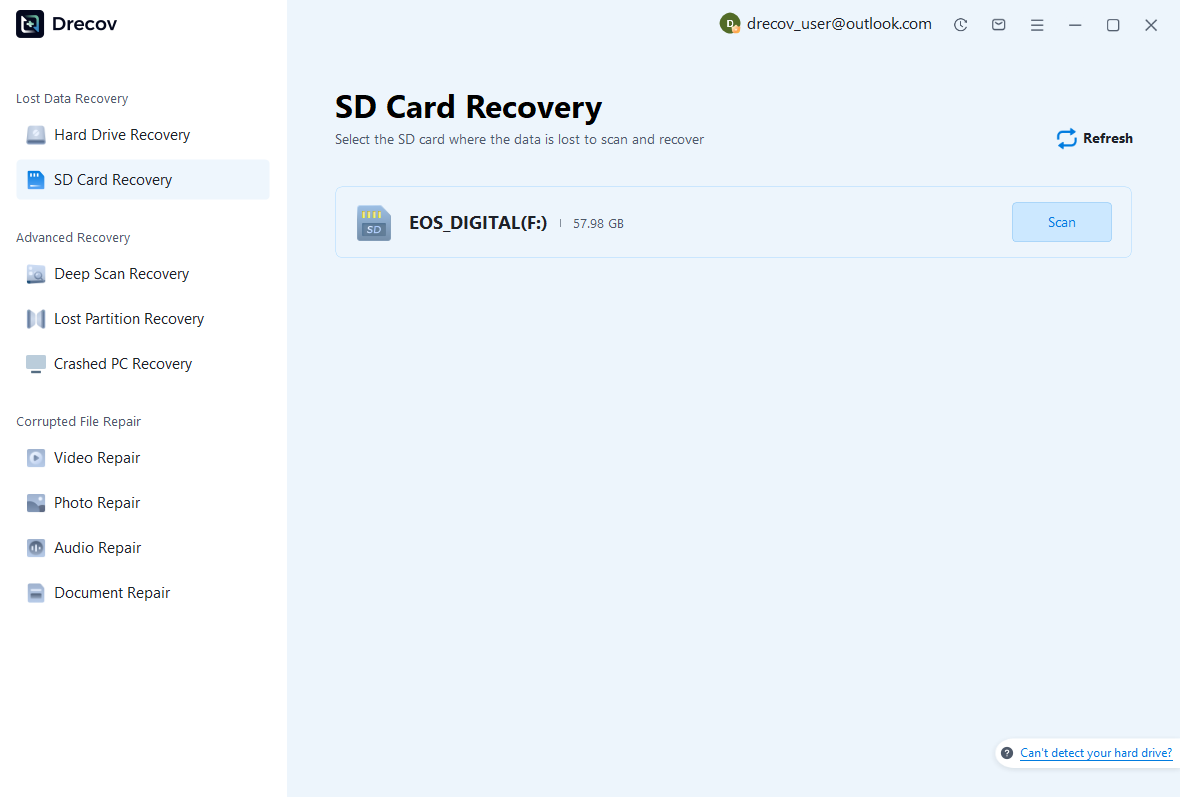
- Select the SD card from the device list.
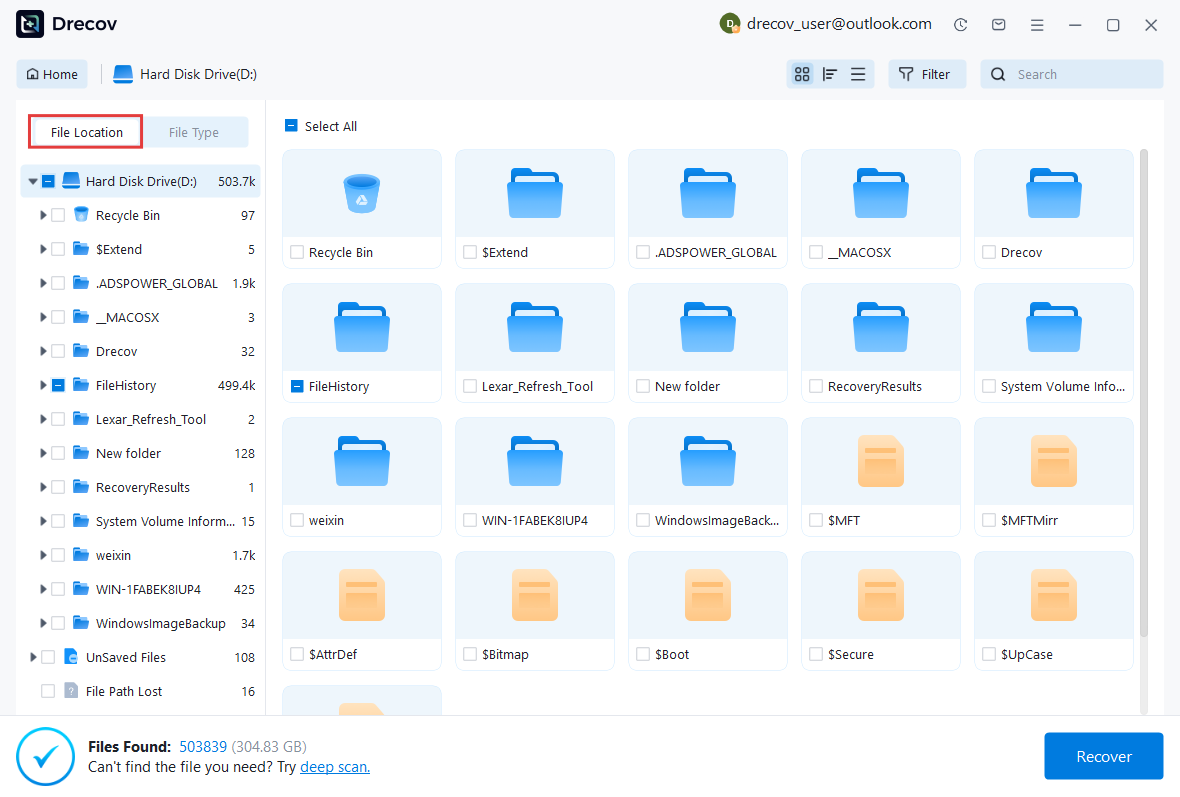
- Start a deep scan.
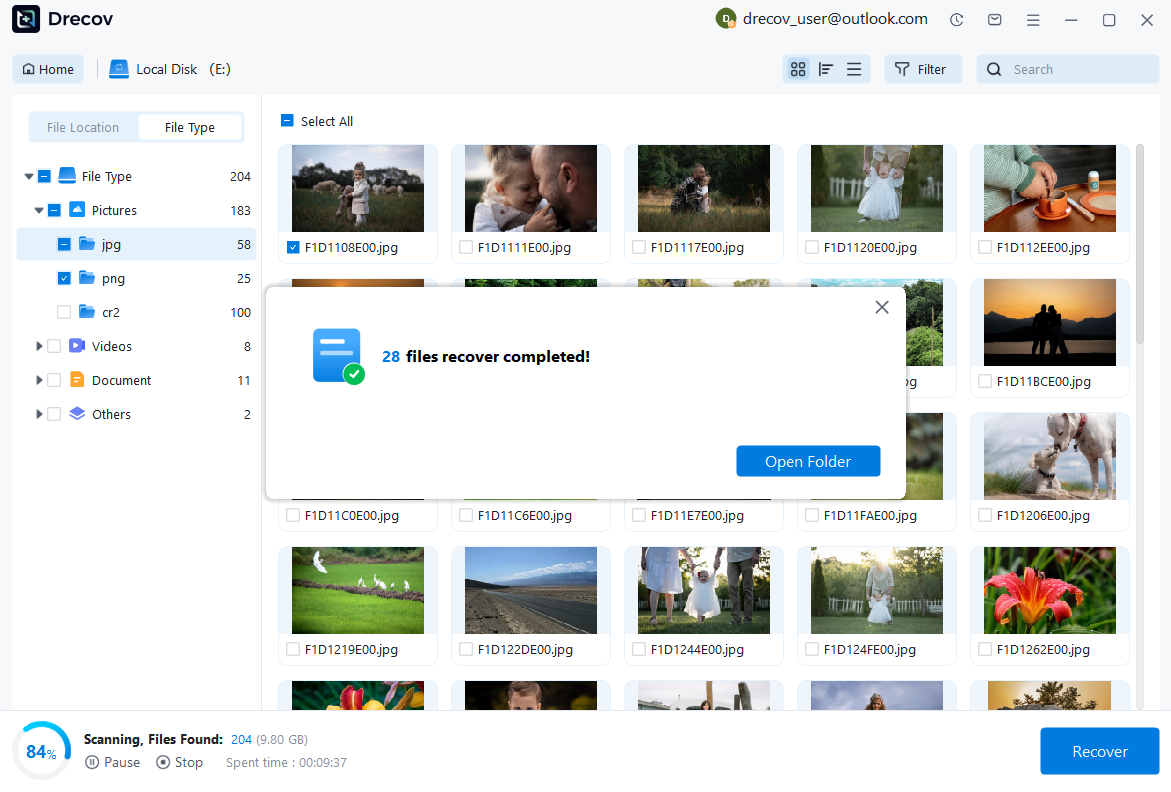
- Preview recoverable files.
- Save recovered data to another drive.
Pandaoffice Drecov supports recovery from formatted, corrupted, inaccessible, and RAW SD cards. It is particularly useful when important media files disappear unexpectedly.
Why Choose PandaOffice Drecov Recovery Software?
PandaOffice Drecov offers a fast, secure, and user-friendly solution for recovering lost files across multiple scenarios. Whether you need email recovery, ZIP File Recovery, format data recovery, or help to recover deleted drafts Outlook, the software provides reliable recovery performance for both personal and business users.
PandaOffice Drecov supports recovery from formatted hard drives, SSDs, USB drives, SD cards, and external storage devices. Its advanced scanning engine can locate deleted archives, damaged ZIP files, lost Outlook drafts, and accidentally removed documents with high accuracy. For users searching for how to find deleted messages in Teams, PandaOffice Drecov can also help recover exported chat files, attachments, and related local cache data when available.
Key advantages include:
- Deep scan technology for complex data loss situations
- Support for emails, archives, videos, photos, and office documents
- Recovery from accidental deletion, formatting, corruption, and system crashes
- Easy preview before restoring files
- Compatible with Windows and multiple storage devices
Unlike complicated enterprise recovery tools, PandaOffice Drecov keeps the recovery process simple. Users can scan, preview, and restore files in just a few steps without technical expertise.
Whether you are dealing with lost Outlook drafts, corrupted ZIP archives, formatted drives, or missing communication data, PandaOffice Drecov provides an efficient and practical recovery experience designed to minimize downtime and protect important files.
⚠️Warning: Never save recovered files back onto the same SD card because overwritten data may become unrecoverable.
Check Whether the SD Card Became RAW
A RAW partition means Windows cannot recognize the file system.
Signs include:
- “You need to format the disk before using it”
- Capacity shows incorrectly
- File system listed as RAW in Disk Management
In these cases, data recovery should happen before formatting the device.
Format the SD Card to Restore Normal Functionality
Formatting can resolve persistent corruption issues when repair tools fail. However, users should only proceed after backing up or recovering important data.
Format the SD Card Through File Explorer
A quick format rebuilds the file system structure and removes logical corruption.
Test environment:
- Windows 11 Pro
- 128GB microSDXC card
- USB-C card adapter
Steps:
- Insert the SD card.
- Open File Explorer.
- Right-click the SD card.
- Select “Format.”
- Choose:
- exFAT for cards above 32GB
- FAT32 for smaller cards
- Check “Quick Format.”
- Click “Start.”
After formatting, remove and reconnect the SD card to verify proper detection.
Use DiskPart to Clean the SD Card
DiskPart is useful when the card cannot be formatted normally.
Steps:
- Open Command Prompt as administrator.
- Type:
diskpart - Enter:
list disk - Identify the SD card number.
- Run:
select disk X
clean
create partition primary
format fs=exfat quick
assign - Replace
Xwith the correct disk number.
This process completely rebuilds the partition structure.
⚠️Warning: Selecting the wrong disk in DiskPart may erase another drive accidentally.
Fix SD Card Not Showing Up in Windows 10 Specifically
Some Windows 10 systems experience removable storage detection issues after updates or power management changes.
Disable USB Power Saving Settings
Power-saving features may disable SD card readers automatically.
Test environment:
- Windows 10 Version 21H2
- Integrated Realtek card reader
- Toshiba SD card
Steps:
- Open Device Manager.
- Expand “Universal Serial Bus controllers.”
- Right-click “USB Root Hub.”
- Select “Properties.”
- Open the “Power Management” tab.
- Uncheck:
“Allow the computer to turn off this device to save power.” - Restart the PC.
This fix often helps when sd card does not show up windows 10 after waking the computer from sleep mode.
Install the Latest Windows Updates
Microsoft frequently releases compatibility patches for storage drivers and removable devices.
Steps:
- Open Settings.
- Go to “Windows Update.”
- Click “Check for updates.”
- Install all available patches.
- Restart the system.
Outdated system components sometimes cause SD card communication failures.
Repair Corrupted SD Card Partitions
Partition corruption can make storage appear unallocated or inaccessible even though the card is physically healthy.
Create a New Partition in Disk Management
If the SD card appears as unallocated space, creating a new partition may restore functionality.
Test environment:
- Windows 11 Home
- PNY 64GB SD card
- USB reader connection
Steps:
- Open Disk Management.
- Locate unallocated space on the SD card.
- Right-click it.
- Select “New Simple Volume.”
- Follow the setup wizard.
- Assign a drive letter.
- Format the partition.
After completion, Windows should recognize the card normally.
Repair Partition Errors Using Windows Commands
The System File Checker may help if Windows storage components are damaged.
Steps:
- Open Command Prompt as administrator.
- Run:
sfc /scannow - Wait for verification to complete.
- Restart the PC.
This command repairs corrupted system files affecting hardware communication.
Prevent Future SD Card Detection Problems
Proper storage handling reduces the risk of corruption and detection failures significantly.
Safely Eject the SD Card Every Time
Removing the card during file transfers may damage the file system instantly.
Best practices:
- Wait until transfers complete
- Use “Safely Remove Hardware”
- Avoid removing the card during system shutdown
- Disconnect cameras properly before removal
These habits improve long-term storage reliability.
Protect the SD Card From Physical Damage
Environmental factors can shorten SD card lifespan.
Avoid:
- Water exposure
- Excessive heat
- Strong magnetic fields
- Bending or pressure damage
Using high-quality card readers also improves connection stability.
⚠️Warning: Cheap counterfeit SD cards often fail unexpectedly and may report fake storage capacity.
Frequently Asked Questions About SD Card Detection Errors
Why does my SD card appear in Disk Management but not File Explorer?
This usually happens when the partition lacks a drive letter or becomes corrupted. Assigning a new letter in Disk Management often restores visibility.
Can a damaged SD card be repaired?
Logical corruption can sometimes be repaired using CHKDSK or formatting. Physical damage, however, may require professional recovery services.
Why is Windows asking me to format the SD card?
Windows may display this message when the file system becomes unreadable or RAW. Recover important data before formatting.
Does formatting permanently erase files?
Quick formatting mainly removes file references, so recovery may still be possible. Full formatting reduces recovery chances significantly.
Why does the SD card work on another device but not my PC?
This often indicates:
- Driver conflicts
- USB port issues
- Card reader incompatibility
- Windows configuration errors
Trying another reader or reinstalling drivers usually helps.
How do I fix an SD card that keeps disconnecting?
Frequent disconnections may result from:
- Loose card readers
- Faulty USB ports
- Power-saving settings
- Physical card wear
Testing on another computer helps identify the exact cause.
Final Thoughts on Fixing SD Card Detection Problems
Issues involving sd card won’t show up on windows can happen suddenly and interrupt access to important files. Fortunately, many detection problems are caused by driver conflicts, partition errors, or corrupted file systems rather than permanent hardware failure.
By checking hardware connections, updating drivers, repairing file systems, and recovering data before formatting, users can often restore full SD card functionality safely. If standard fixes fail, recovery software such as Pandaoffice Drecov may help retrieve valuable data before advanced repairs or replacement become necessary.
Regular backups, safe ejection practices, and reliable storage hardware remain the best ways to prevent future SD card issues on Windows systems.






