







Understanding Photo Vault App Recovery and Hidden Data Storage
What Is a Photo Vault App and How It Stores Files
A photo vault app is a mobile or tablet application designed to securely store sensitive or private images. These apps often encrypt files, hide them from the default gallery, and require a password, PIN, or biometric authentication for access. Users frequently rely on these apps to protect personal or confidential media from accidental exposure.
The storage mechanism varies by app. Some apps save images directly in encrypted internal storage, while others create hidden folders in the device’s file system. This hidden storage is usually inaccessible through standard file explorers, which is why users often need photo vault recovery methods when images go missing.
Despite encryption and hidden folders, data is not always permanently lost after accidental deletion or app errors. Advanced recovery strategies, including specialized software, can often help recover photo vault photos even if the user cannot open the app normally.
⚠️ Warning: Avoid using the device or reinstalling the app immediately after detecting missing files to prevent overwriting recoverable data.
Why Users Need Photo Vault App Recovery
Users typically need photo vault app recovery for several reasons. Common scenarios include accidental deletion of images, forgetting the vault password, software glitches, or app updates that fail to preserve stored files.
Photo vault apps are convenient but not foolproof. A minor crash or improper installation can cause the app to lose track of stored media, creating a situation where users wonder how to restore vault photos. Recovery becomes especially important when the images hold sentimental or critical value.
Furthermore, some users mistakenly think that hidden files are permanently safe. When storage corruption or system updates occur, even secure vaults can become inaccessible. Understanding recovery options ensures that users are prepared to retrieve photos from photo vault safely and effectively.
Can Photo Vault Data Be Recovered After Deletion
Yes, photo vault data recovery is possible under certain conditions. The success depends on how the data was stored and whether it has been overwritten. Files stored on internal memory or SD cards often leave traces, even after deletion, which makes them detectable by recovery software.
Recovery is most effective if the device is immediately stopped from further use to avoid overwriting storage blocks. Specialized tools like PandaOffice Drecov are capable of scanning hidden storage areas to locate encrypted or partially deleted images.
By understanding storage mechanisms and acting quickly, users can often restore photo vault pictures without significant loss, even when backups were not previously enabled.
Common Causes of Photo Loss in Photo Vault Apps
Accidental Deletion or Hidden Album Removal
The most frequent cause of lost photos is accidental deletion. In a photo vault app, users may mistakenly remove files or hide them without realizing the changes. Some apps also allow temporary deletion that moves images to a cache or hidden folder, creating confusion about whether the photo is permanently lost.
Understanding how the app handles deleted or hidden items is key to photo vault recover photos strategies. Recovery software can often access these hidden or cached files that are otherwise invisible to standard file explorers.
App Reset, Reinstallation, or Update Issues
Resetting the app to default settings, uninstalling it, or installing updates can sometimes corrupt storage references or cause encryption conflicts. This can make the vault appear empty even though the images still exist in device memory.
In such cases, photo vault recovery tools can scan storage sectors to locate missing files and reconstruct the vault database. These scenarios are why backup procedures are highly recommended before performing app updates.
Forgotten Password or Locked Vault Access
Many users face situations where they forget the vault password or PIN. The app may then deny access to images, making it seem like the photos are deleted.
⚠️ Warning: Attempting multiple incorrect passwords can sometimes trigger automatic deletion mechanisms in certain vault apps, so proceed carefully. Using recovery tools, it is often possible to recover photo vault photos without resetting the app or losing data.
Device Damage or System Crash Impact
Hardware failure, operating system crashes, or malware attacks can corrupt a vault app’s data. Even when photos are intact in storage, the app may fail to load them.
Recovery solutions like photo vault data recovery software are designed to bypass app-level corruption, allowing direct access to encrypted files and increasing the likelihood of restoring lost photos.
Methods to Recover Photo Vault Data
Method 1: Restore from Built-in App Backup Features
Some photo vault apps include integrated backup features that sync files to cloud storage or local folders. Users should check for automatic backup settings in the app.
Test Environment
- Device: Android 13 smartphone
- App: Vault Pro with cloud backup enabled
- Scenario: Accidental deletion within the app
- Data Type: JPEG, PNG
Steps:
- Open the vault app and access the backup or cloud sync settings.
- Verify if deleted photos exist in the backup.
- Select the photos to restore.
- Confirm restoration to the original vault or a temporary folder.
This method is the simplest and most secure approach for restore vault photos, but it requires that the backup was configured before the loss occurred.
Method 2: Recover from Cloud Sync and Online Backup
For apps integrated with Google Drive, iCloud, or proprietary cloud services, lost photos may be stored online.
Test Environment
- Device: iPhone 14 Pro
- Backup: iCloud Photo Sync
- Scenario: Vault app reset, no local backup
- Data Type: Photos, MP4 videos
Steps:
- Log in to the cloud account associated with the app.
- Navigate to the app-specific folder or cloud backup directory.
- Check for photos or media files dated before deletion.
- Restore files to the device or download them for safekeeping.
Using cloud sync ensures data is recoverable even if the app fails on the device.
Method 3: Use PandaOffice Drecov for Photo Vault Data Recovery
When backups are unavailable or app corruption occurs, PandaOffice Drecov provides advanced scanning and recovery capabilities.
Test Environment
- Device: Android 12 smartphone
- Storage: Internal memory (encrypted)
- Scenario: Vault app data inaccessible after password reset
- File Type: JPG, PNG
Steps:
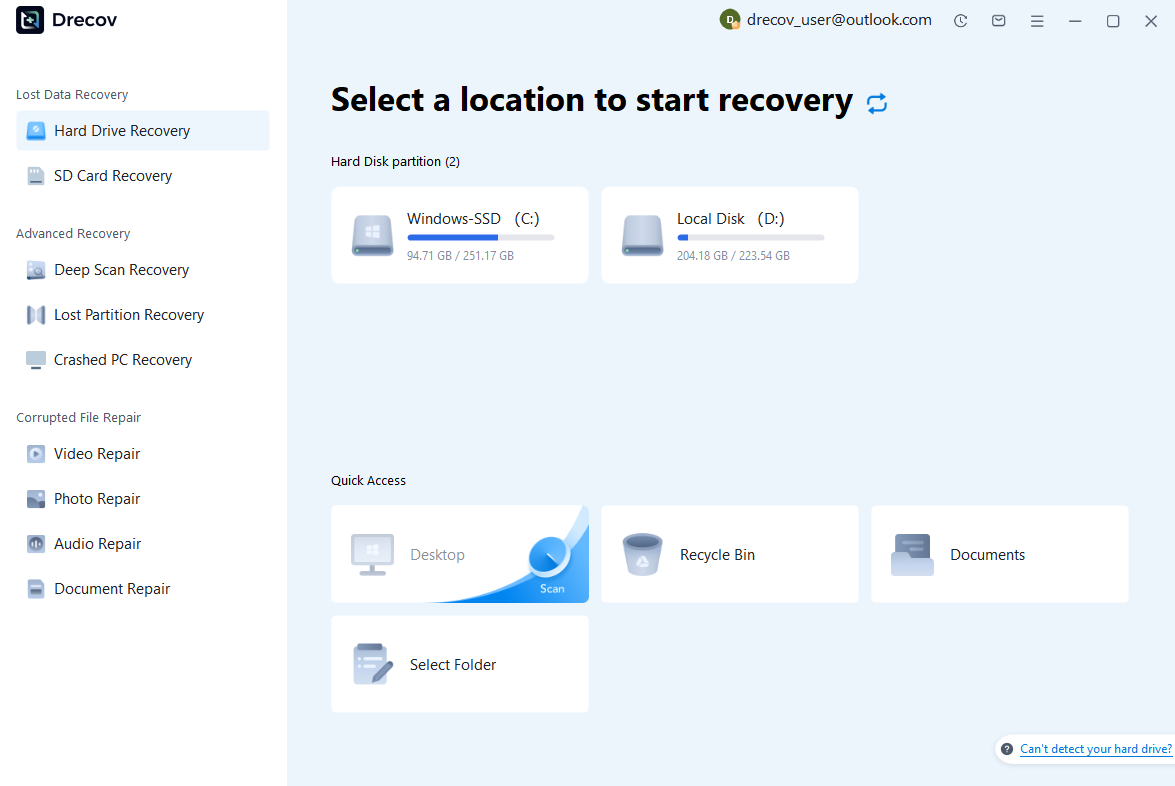
Step 1: Scan the Storage Device (SD Card / Hard Drive / USB)
Connect your device (SD card, HDD/SSD, or USB drive) to your computer and launch PandaOffice Drecov. Select the target device and start the scan. The software will perform a quick scan and deep scan to detect lost or deleted data.
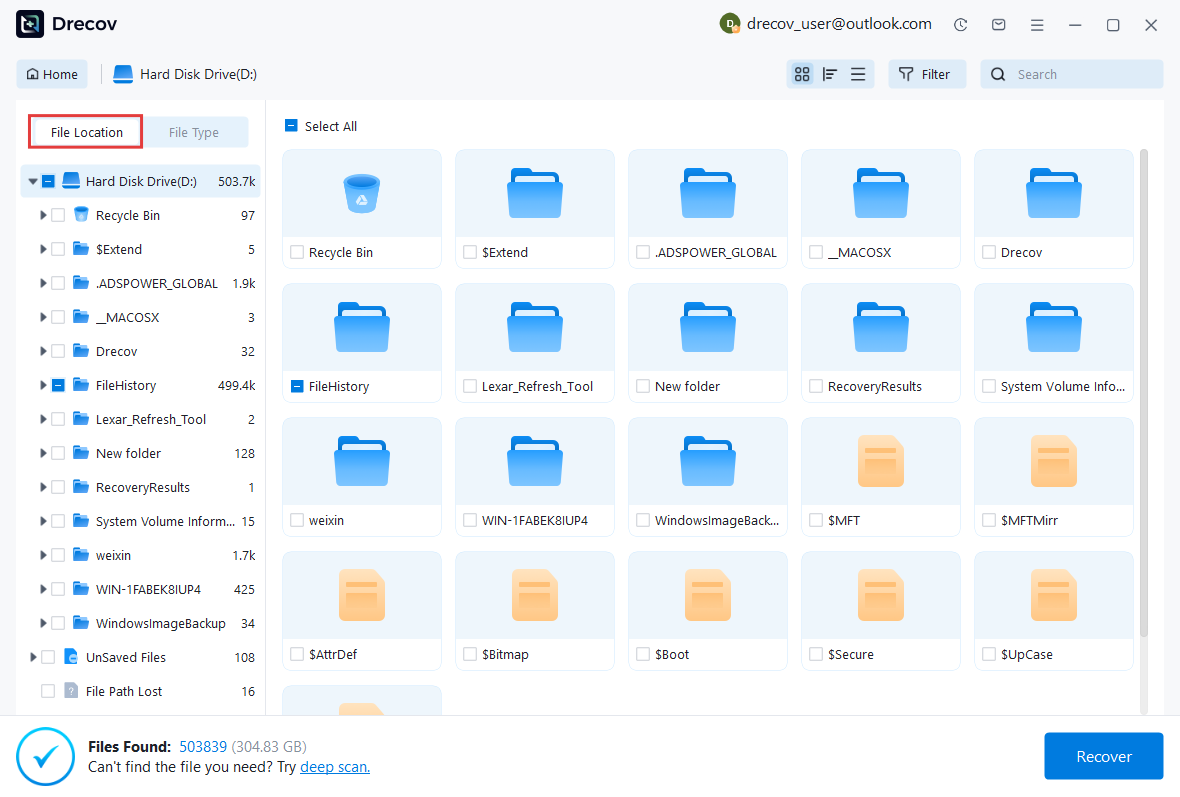
Step 2: Locate and Preview Lost Files
After scanning, browse the detected files and use the preview feature to check recoverable data. You can preview documents (Word, Excel, PDF), photos, and videos to ensure file integrity before recovery.
Step 3: Recover and Save to a New Location
Select the files you want to restore and click recover. Save all recovered data to a different drive or location (not the original device) to avoid overwriting lost data.

Why Choose PandaOffice Drecov Recovery Software?
PandaOffice Drecov offers a fast, secure, and user-friendly solution for recovering lost files across multiple scenarios. Whether you need email recovery, ZIP File Recovery, format data recovery, or help to recover deleted drafts Outlook, the software provides reliable recovery performance for both personal and business users.
PandaOffice Drecov supports recovery from formatted hard drives, SSDs, USB drives, SD cards, and external storage devices. Its advanced scanning engine can locate deleted archives, damaged ZIP files, lost Outlook drafts, and accidentally removed documents with high accuracy. For users searching for how to find deleted messages in Teams, PandaOffice Drecov can also help recover exported chat files, attachments, and related local cache data when available.
Key advantages include:
- Deep scan technology for complex data loss situations
- Support for emails, archives, videos, photos, and office documents
- Recovery from accidental deletion, formatting, corruption, and system crashes
- Easy preview before restoring files
- Compatible with Windows and multiple storage devices
Unlike complicated enterprise recovery tools, PandaOffice Drecov keeps the recovery process simple. Users can scan, preview, and restore files in just a few steps without technical expertise.
Whether you are dealing with lost Outlook drafts, corrupted ZIP archives, formatted drives, or missing communication data, PandaOffice Drecov provides an efficient and practical recovery experience designed to minimize downtime and protect important files.
⚠️ Warning: Stop using the device immediately after detecting missing files to prevent overwriting recoverable data.
Method 4: Retrieve Photos from Device Internal Storage
In some cases, hidden vault files remain in device storage even when the app cannot access them. Using file manager apps or recovery tools, users can scan for folders associated with the vault.
Test Environment
- Device: Android 11 smartphone
- Storage: Internal memory
- Scenario: App crash with missing photos
- Data Type: PNG, JPEG
Steps:
- Use a recovery tool to scan internal memory.
- Locate app-specific hidden folders.
- Identify and preview image files.
- Restore files to a new folder for access.
This method is effective when restore photo vault pictures is necessary after app failure.
Method 5: Restore Vault Photos from SD Card or External Backup
In some cases, users move or cache photo vault app recovery data on external storage such as SD cards or USB drives. Even if the app stops working, remnants of encrypted or exported files may still exist on removable storage.
Test Environment
- Device: Android 12 smartphone
- Storage: 64GB SD card
- Scenario: Vault app reinstalled after crash
- Data Type: JPG, encrypted backup files
Steps:
- Remove the SD card from the device safely.
- Insert it into a computer using a card reader.
- Scan for folders related to the vault app or hidden directories.
- Look for image files or backup archives.
- Restore recoverable files to a secure drive.
External storage often improves chances of photo vault recovery because SD cards are not always affected by app-level resets or system crashes. Some apps also allow exporting encrypted backups, which may be stored here.
⚠️ Warning: Do not format the SD card before recovery, as it may permanently remove recoverable photo vault recover photos data.
Method 6: Use Android or iOS Local Backup Restoration
Both Android and iOS systems offer local backup solutions that may include app data from vault applications. If backups were enabled, users can often restore lost images without specialized tools.
Test Environment
- Device: iPhone 13
- Backup: iTunes local backup
- Scenario: App data lost after update failure
- Data Type: Photos and app cache
Steps:
- Connect device to a computer with backup software.
- Open backup management tool (iTunes or Finder).
- Select the most recent backup before data loss.
- Restore the backup to the device.
- Check vault app for recovered images.
This method is particularly useful when users need to restore vault photos after app corruption or accidental deletion. However, restoring backups may overwrite current device data.
How to Restore Photo Vault Pictures Without Backup
Is It Possible to Recover Photo Vault Photos Without Backup?
Yes, it is sometimes possible to recover photo vault photos without backups, but success depends heavily on how the data was stored. If images were only deleted logically and not overwritten, recovery tools can still detect them in storage memory.
However, if encryption keys were destroyed or the vault app fully reinitialized, recovery becomes significantly more difficult. In such cases, photo vault data recovery relies on deep scanning techniques rather than standard restoration methods.
Key Limitations in Photo Vault Recovery Without Backup
Several limitations affect recovery success:
- Strong encryption inside vault apps
- Overwritten storage blocks
- App reset or reinstallation
- Lack of root or system access
- SSD-like storage optimization on modern devices
These factors reduce the likelihood of full recovery when trying to retrieve photos from photo vault without prior backups.
Even if recovery is possible, users may only retrieve partial or corrupted image fragments instead of complete files.
Step-by-Step Approach for Vault Recovery Without Backup
Test Environment
- Device: Android 13 smartphone
- Scenario: Vault app deleted and reinstalled
- Storage: Internal flash memory
- Data Type: Mixed images
Steps:
- Stop using the device immediately.
- Connect the device to a PC via USB.
- Launch deep scan recovery software.
- Scan internal storage for image signatures.
- Filter results for photo formats (JPG/PNG).
- Preview and restore recoverable files.
This approach provides the best chance to restore photo vault pictures when no backup exists.
Frequently Asked Questions About Photo Vault Recovery
How to Retrieve Photos from Photo Vault Safely?
The safest method is to use built-in backups or trusted recovery software. Avoid reinstalling the app repeatedly, as it may overwrite recoverable photo vault app recovery data.
Is Photo Vault Recovery Always Successful?
No. Recovery success depends on encryption, storage status, and whether files have been overwritten. While some users can fully recover photo vault photos, others may only retrieve partial data.
What Happens If Photo Vault App Is Deleted?
If the app is deleted, data may still exist in device storage or backups. However, without recovery tools or backups, accessing hidden vault files becomes more difficult, especially if encryption was enabled.
Final Thoughts on Photo Vault Recovery
Best Practices to Restore Vault Photos Successfully
Recovering data from a vault app requires quick action and the right tools. The most effective approach is to check backups first, then external storage, and finally use deep scanning recovery tools when needed.
Users attempting photo vault recover photos or retrieve photos from photo vault should avoid using the device excessively after data loss, as this reduces recovery chances significantly.
Combining multiple methods often produces the best results, especially when dealing with encrypted or hidden files.
How to Prevent Future Photo Vault Data Loss
To reduce future risks, users should:
- Enable cloud or local backups
- Export important vault images periodically
- Avoid storing all files in a single vault app
- Keep recovery software ready in emergencies
- Update apps carefully to prevent corruption
By following these practices, users can significantly reduce the chance of losing important photo vault data recovery files in the future and ensure better protection of private media.





