







Overview of Digital Camera Video Loss and Recovery
What are digital camera videos and how they are stored
Modern digital video cameras store recordings on SD cards or internal flash memory. These digital camera videos are usually saved in formats like MP4, MOV, or AVCHD depending on the device model and recording settings.
Unlike cloud storage, memory cards do not immediately erase deleted data. Instead, the system simply marks storage space as “available,” which makes recovery possible if new data has not overwritten it.
Many users invest in the best digital video camera expecting stable long-term recording, but even high-end devices cannot prevent accidental deletion or corruption.
Understanding this storage mechanism is the first step in learning how to recover deleted videos from digital camera successfully.
Test Environment
- Canon EOS R5
- Sony FDR-AX43 camcorder
- 128GB SanDisk SDXC card
- Windows 11 PC with USB 3.0 card reader
Why users rely on digital video cameras for recording
Despite smartphones becoming more advanced, digital video cameras remain essential for professional recording because of their superior optical performance and stable long-duration capture.
They are commonly used for:
- Wedding videography
- Travel documentation
- Film production
- Event recording
However, these devices also generate large digital camera videos, which increases the risk of data loss due to accidental deletion, formatting, or card failure.
Many users begin searching for how to recover deleted videos from digital camera after realizing that important footage has disappeared during shooting or transfer.
⚠️Warning: Continuing to record on the same memory card after data loss can permanently overwrite recoverable files.
Why Videos Get Deleted From Digital Cameras
Accidental deletion and formatting errors
One of the most common causes of data loss is human error. While reviewing footage on a camera screen, users may accidentally delete important clips or format the entire card.
Common situations include:
- Deleting multiple files by mistake
- Formatting SD card instead of deleting single videos
- Clearing storage during file transfer
Even the best digital video camera cannot prevent accidental user actions.
Test Environment
- Nikon Z6 II
- 64GB SD card
- In-camera delete and format functions
Memory card corruption and device malfunction
Another major issue is memory card corruption. SD cards are physical storage devices and can degrade over time or become damaged due to improper handling.
Typical causes include:
- Sudden power loss during recording
- Removing SD card while writing data
- Physical damage or wear
- File system errors
When this happens, digital camera videos may become unreadable or disappear completely from the device interface.
Users often believe files are gone, but in many cases they are still recoverable.
Test Environment
- GoPro Hero 10
- Corrupted microSD card
- Windows 11 recovery system
⚠️Warning: Avoid formatting a corrupted card immediately, as this reduces recovery chances.
How to Recover Deleted Videos From Digital Camera
Sometimes videos are not deleted but only hidden due to file system errors or camera glitches.
Steps:
- Insert SD card into a computer
- Enable “Show hidden files” option
- Open DCIM folder
- Look for missing video files
- Copy recovered files to a safe location
This simple method can sometimes restore digital camera videos instantly.
Test Environment
- Windows 11 File Explorer
- FAT32 formatted SD card
- Canon DSLR storage system
Method 2: Recover using computer built-in recovery options
Operating systems like Windows provide basic recovery tools that can help restore recently deleted files.
Steps:
- Connect SD card to PC
- Open recovery tool or file history
- Scan storage device
- Restore deleted video files
This method works best when deletion is recent and data has not been overwritten.
It is often the first attempt users make when learning how to recover deleted videos from digital camera.
Test Environment
- Windows 11 Pro
- USB SD card reader
- NTFS recovery scan
⚠️Warning: Built-in tools may not recover deeply corrupted or formatted cards.
Method 3: Professional recovery software solution
When basic methods fail, specialized tools are required to scan deeper memory sectors.
One reliable option is:
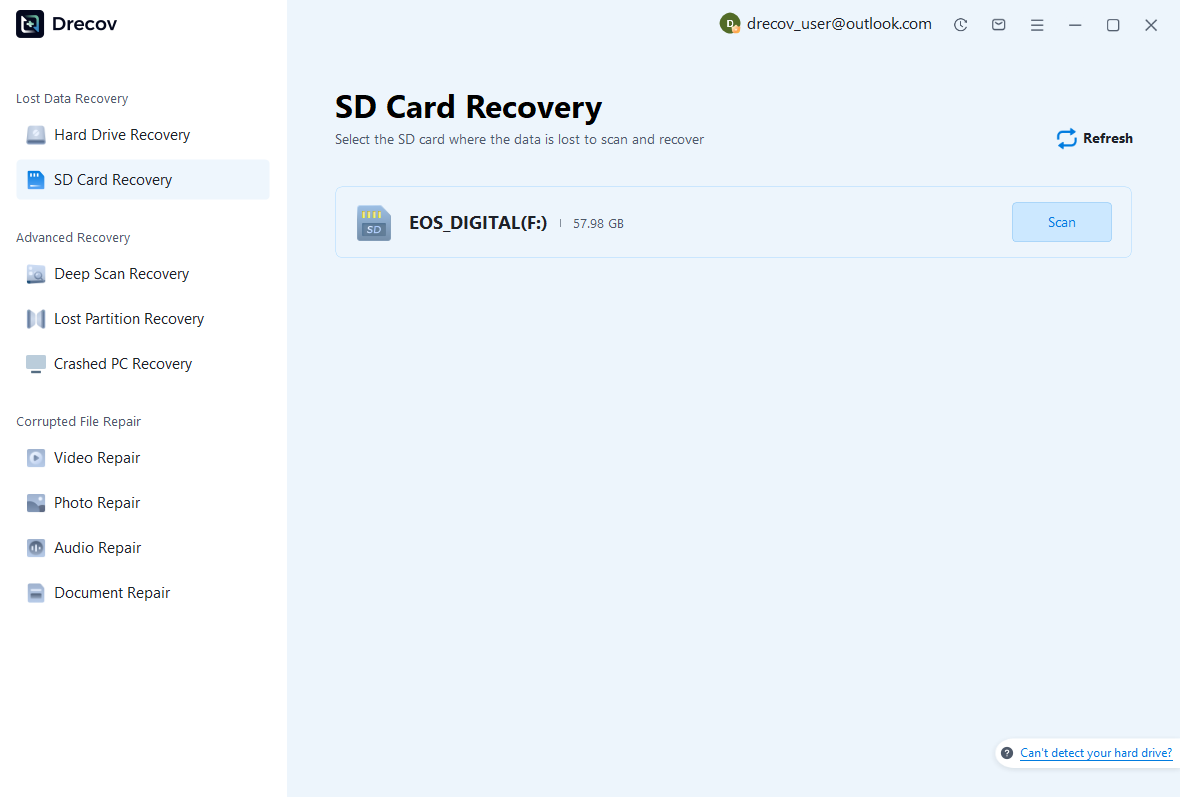
This software can scan SD cards used in digital video cameras and recover lost or deleted recordings even after formatting.
Steps:
- Install recovery software on PC
- Connect memory card via card reader
- Start deep scan mode
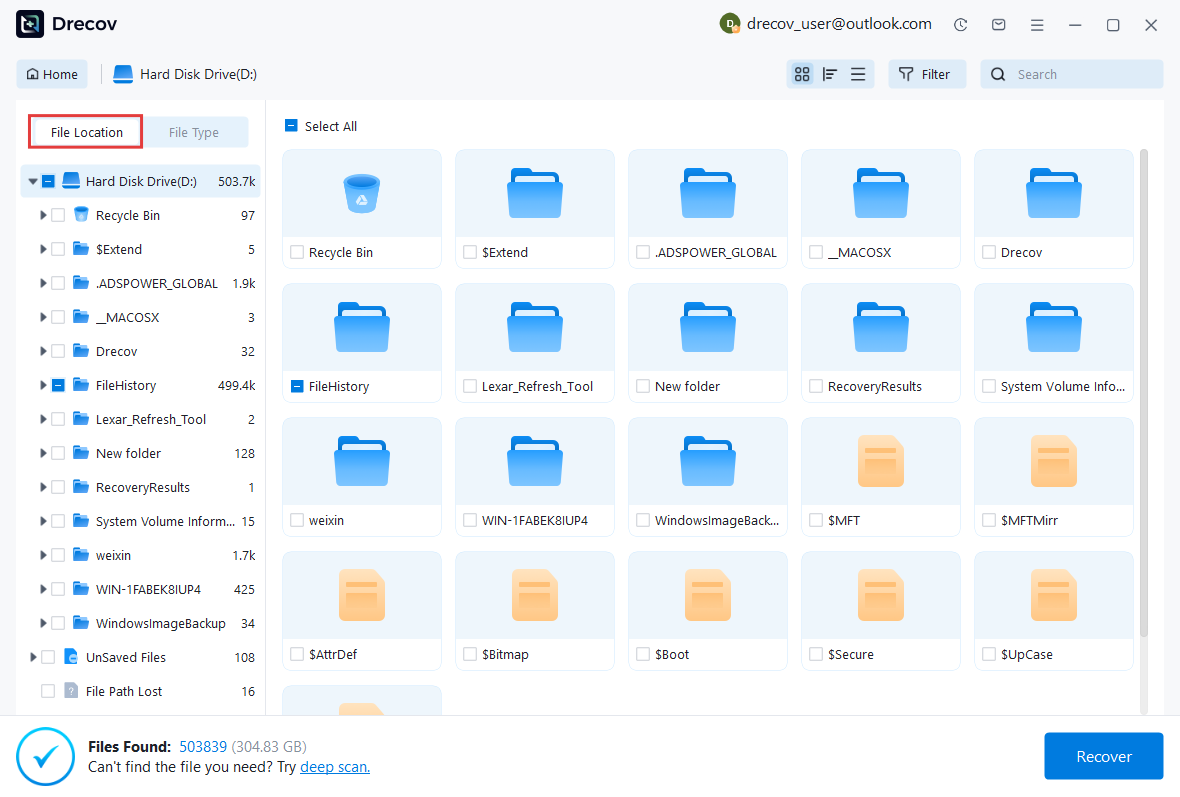
- Preview recoverable videos
- Restore selected files
It is especially effective for recovering large digital camera videos that are no longer visible in the system.
Test Environment
- Windows 11 workstation
- 128GB SDXC card
- Deep scan recovery mode

Why Choose PandaOffice Drecov Recovery Software?
PandaOffice Drecov offers a fast, secure, and user-friendly solution for recovering lost files across multiple scenarios. Whether you need email recovery, ZIP File Recovery, format data recovery, or help to recover deleted drafts Outlook, the software provides reliable recovery performance for both personal and business users.
PandaOffice Drecov supports recovery from formatted hard drives, SSDs, USB drives, SD cards, and external storage devices. Its advanced scanning engine can locate deleted archives, damaged ZIP files, lost Outlook drafts, and accidentally removed documents with high accuracy. For users searching for how to find deleted messages in Teams, PandaOffice Drecov can also help recover exported chat files, attachments, and related local cache data when available.
Key advantages include:
- Deep scan technology for complex data loss situations
- Support for emails, archives, videos, photos, and office documents
- Recovery from accidental deletion, formatting, corruption, and system crashes
- Easy preview before restoring files
- Compatible with Windows and multiple storage devices
Unlike complicated enterprise recovery tools, PandaOffice Drecov keeps the recovery process simple. Users can scan, preview, and restore files in just a few steps without technical expertise.
Whether you are dealing with lost Outlook drafts, corrupted ZIP archives, formatted drives, or missing communication data, PandaOffice Drecov provides an efficient and practical recovery experience designed to minimize downtime and protect important files.
How to Recover Deleted Videos From Digital Camera
Method 4: Restore from backup storage or cloud services
If you regularly back up your footage, recovery becomes significantly easier. Many users store digital camera videos on external hard drives, NAS systems, or cloud platforms after transferring them from digital video cameras.
Cloud services such as Google Drive, OneDrive, or Dropbox may automatically sync your media files if configured properly. In such cases, deleted files may still exist in backup history or recycle bins.
Steps:
- Log in to your backup or cloud account
- Check recycle bin or deleted files section
- Search for missing video recordings
- Restore selected files to original folder
- Download recovered videos to local storage
This method is highly effective when users frequently transfer files after shooting with the best digital video camera.
Test Environment
- Google Drive web interface
- OneDrive cloud storage
- External HDD backup system
- Windows 11 PC
⚠️Warning: Cloud sync must be enabled before deletion occurs; otherwise, backup recovery may not be possible.
Common Issues With Digital Camera Video Recovery
Overwritten data and recovery limitations
One of the biggest challenges in learning how to recover deleted videos from digital camera is data overwriting. When new photos or videos are recorded on the same memory card, they can permanently replace deleted digital camera videos.
Once overwritten, recovery becomes extremely difficult or impossible, even with professional tools.
Common scenarios that cause overwriting:
- Continuing to shoot after deletion
- Formatting and reusing the same SD card
- Using burst or continuous recording modes
- High-capacity video recording sessions
This is why immediate action is critical after noticing file loss.
Test Environment
- Sony A7 IV
- Reused 64GB SD card
- Mixed photo/video recording session
Compatibility problems with memory card formats
Not all memory cards behave the same way. Some file systems, like FAT32 or exFAT, handle large digital camera videos differently, which may affect recovery success rates.
Incompatibility issues may include:
- Card not recognized by PC
- Missing video thumbnails
- Corrupted file structure
- Partial video recovery
Older digital video cameras may also use outdated formats that require specialized recovery scanning methods.
Test Environment
- Canon EOS 7D (older DSLR)
- FAT32 SD card
- Windows 11 file recovery tools
⚠️Warning: Avoid mixing different devices on the same SD card, as it may increase corruption risks.
Best Practices for Preventing Video Loss
Use high-quality memory cards for digital video cameras
The foundation of safe recording starts with storage quality. Cheap or low-speed memory cards are more prone to failure, especially when used with high-resolution digital video cameras.
Recommended practices include:
- Use UHS-I or UHS-II SD cards
- Choose branded storage (SanDisk, Lexar, Samsung)
- Match card speed to camera requirements
- Avoid using damaged or reused cards
A reliable card reduces the chance of losing valuable digital camera videos during recording.
Test Environment
- 4K recording DSLR camera
- UHS-II 128GB SD card
- Continuous 60fps video capture
Regularly transfer and back up digital camera videos
One of the simplest ways to avoid permanent data loss is frequent backups. After each shooting session, transfer files from your digital video cameras to secure storage.
Backup options include:
- External hard drives
- Cloud storage platforms
- RAID/NAS systems
- Multiple device copies
This ensures that even if the memory card fails, your footage remains safe.
Test Environment
- Windows 11 PC
- External SSD backup drive
- Cloud sync enabled folder
Avoid interrupting recording or removing memory cards
Many cases of corrupted digital camera videos occur because users remove the SD card while the camera is still writing data.
Safe usage habits:
- Always stop recording before removing card
- Turn off camera before ejecting storage
- Avoid low battery shutdown during recording
- Wait for write indicator to stop flashing
These small habits significantly reduce file corruption risks.
Test Environment
- GoPro Hero 11 recording test
- 4K continuous video capture
- MicroSD card handling scenario
⚠️Warning: Removing memory cards during active recording is one of the most common causes of irreversible file damage.
Conclusion and Key Takeaways
Best practices to avoid losing future recordings
Recovering lost footage from digital video cameras is possible in many cases, especially when users act quickly and avoid overwriting data. Whether the issue involves accidental deletion, formatting, or corruption, understanding how to recover deleted videos from digital camera improves recovery success rates significantly.
Key takeaways:
- Deleted videos are not immediately erased
- Stop using the SD card after data loss
- Use recovery tools or backups quickly
- Maintain high-quality memory cards
- Always keep multiple backup copies
Professional recovery solutions like PandaOffice Drecov can further improve success rates when standard methods fail, especially for large or corrupted digital camera videos.
By combining safe recording habits, proper storage management, and timely recovery actions, users can greatly reduce the risk of losing important footage captured on the best digital video camera devices.





