







Reinstalling Windows used to mean wiping everything—files, apps, and settings. However, as we navigate through 2026, the process has become significantly more streamlined. If your system is slow, buggy, or infected with malware, you can now how to reinstall windows without losing files and apps using built-in tools and smart recovery methods. This modern approach balances the need for a fresh system with the necessity of keeping your digital life intact.
In this comprehensive guide, you’ll learn exactly how to reinstall windows without losing files and apps, including step-by-step instructions, best practices, and troubleshooting tips. Whether you’re using Windows 10 or Windows 11, this article will help you refresh your system safely and efficiently while ensuring you have a safety net for your data.
What Does Reinstalling Windows Without Losing Files and Apps Mean?
When you how to reinstall windows without losing files and apps, it means you are performing a surgical replacement of the operating system’s core components. Unlike a “Clean Install” which formats the drive, this method (often called a “Repair Install”) targets only the system files.
- Personal Files: Your documents, photos, and videos stay in their original folders.
- Installed Applications: Your software remains registered and ready to use.
- System Integrity: Corrupted Windows files are replaced with healthy ones.
- Settings: Most of your preferences and configurations are preserved.
When Should You Reinstall Windows Without Losing Files and Apps?
You should consider this method if you encounter the following scenarios:
- System Sluggishness: If your PC feels like it’s wading through molasses.
- Frequent Crashes: Constant Blue Screen of Death (BSOD) errors.
- Update Failures: When Windows Update repeatedly fails to install security patches.
- Corrupted Registry: When system-level registry errors prevent software from launching.
- Malware Aftermath: If a virus was removed but left your system stability in tatters.
Key Requirements Before You Begin
Before learning how to reinstall windows without losing files and apps, make sure you meet these requirements to ensure a smooth transition:
1. Sufficient Disk Space
You need at least 20–30 GB of free space on your system drive (usually C:). The installation process creates temporary folders (like Windows.old) that require extra room.
2. Stable Power Supply
Never attempt a reinstall on a laptop running solely on battery. If the power cuts out during the write phase of the OS, you could end up with a “bricked” device. Always plug into a wall outlet or a UPS.
3. Internet Connection
While some methods work offline, a stable connection is required for downloading the latest security updates and drivers during the installation process.
4. Data Recovery Tools & Backups
Even though the goal is to keep everything, hardware failures or software glitches can happen. Having a tool like PandaOffice Drecov data recovery software ready is essential for peace of mind.
Method 1: Use “Reset This PC”
This is the most accessible built-in option, but it comes with a major caveat: it keeps your files but removes your installed apps. If you want to know how to reinstall windows without losing files and apps, you must understand that this method is the “lite” version of a full reinstall.
Steps for Resetting:
- Step 1: Click the Start menu and open Settings (or press Win + I).
- Step 2: Navigate to System → Recovery.
- Step 3: Find Reset this PC and click the Reset PC button.
- Step 4: A window will pop up. Select Keep my files.
- Step 5: Choose between Cloud download (fetches a fresh copy from Microsoft) or Local reinstall. We recommend Cloud download for a cleaner experience.
- Step 6: Review your settings and click Reset.
Warning: This method will generate a list of removed apps on your desktop after the process finishes. You will have to manually reinstall programs like Adobe Creative Cloud, Steam, or Microsoft Office.
Method 2: In-Place Upgrade
If you are looking for the absolute best way on how to reinstall windows without losing files and apps, the In-Place Upgrade is the gold standard. This method overwrites the Windows system files while leaving your registry entries and application folders completely untouched.
Step 1: Download Windows Installation Media
First, visit the official Microsoft software download page. You need to download the Media Creation Tool for your specific version (Windows 10 or Windows 11).
Step 2: Mount the ISO or Run the Tool
Once downloaded, run the tool. You can choose to “Upgrade this PC now” directly, or download an ISO file. If you download the ISO, right-click it and select Mount to open it like a virtual drive.
Step 3: Initiate the Setup
Inside the mounted drive, find setup.exe and double-click it. Windows will prepare the environment and ask if you want to download updates. It is highly recommended to select “Download and install updates” to ensure the smoothest compatibility.
Step 4: The Critical Choice
After accepting the license terms, you will reach a screen titled “Choose what to keep.” To successfully how to reinstall windows without losing files and apps, you must ensure that “Keep personal files and apps” is selected. If this option is greyed out, it usually means your current Windows language doesn’t match the ISO language.
Step 5: Finalize and Install
Click Install. Your computer will restart several times. This process can take anywhere from 20 minutes to an hour depending on your SSD speed.
Where are my apps after windows reset keep my files?
A common point of confusion for users is understanding where are my apps after windows reset keep my files if they chose the “Reset” option rather than the “In-Place Upgrade.”
When you use the standard “Reset This PC” tool, Windows intentionally wipes the Program Files and Program Files (x86) folders to ensure that no corrupted software remains. However, it preserves your user profile. This means your browser bookmarks, desktop wallpaper, and documents remain, but the executable files for your software are gone.
If you find yourself asking where are my apps after windows reset keep my files, check your desktop for a file named “Removed Apps.html.” Windows automatically generates this list to show you exactly what was deleted, providing links to help you re-download them. To avoid this entirely, always use Method 2 (In-Place Upgrade) mentioned above.
Method 3: Professional Recovery with PandaOffice Drecov data recovery software
Sometimes, even the best-laid plans go wrong. Perhaps the power cut out, or a drive error occurred during the reinstall. If you find that files went missing during the process, you need a high-end solution. This is where PandaOffice Drecov data recovery software becomes your best friend.
PandaOffice Drecov is designed to handle complex data loss scenarios that occur during operating system transitions. Whether you accidentally formatted a partition or the Windows installer encountered a fatal error, this tool can deep-scan your disk to find fragments of your lost data.
⚠ Warning: Install it on a drive different from the one where your data was lost to prevent overwriting.
How to Use PandaOffice Drecov for Post-Reinstall Recovery:
- Step 1: Select the Source Drive. Launch the program and select your primary C: drive where Windows was reinstalled.

- Step 2: Scan for Lost Files. Click the Scan button. PandaOffice Drecov data recovery software will perform a Quick Scan followed by a Deep Scan to locate files that were bypassed during the OS refresh.

- Step 3: Filter and Preview. Once the scan is complete, use the file type filters (Photos, Documents, etc.) to find your missing items. You can preview images and documents before committing to a recovery.
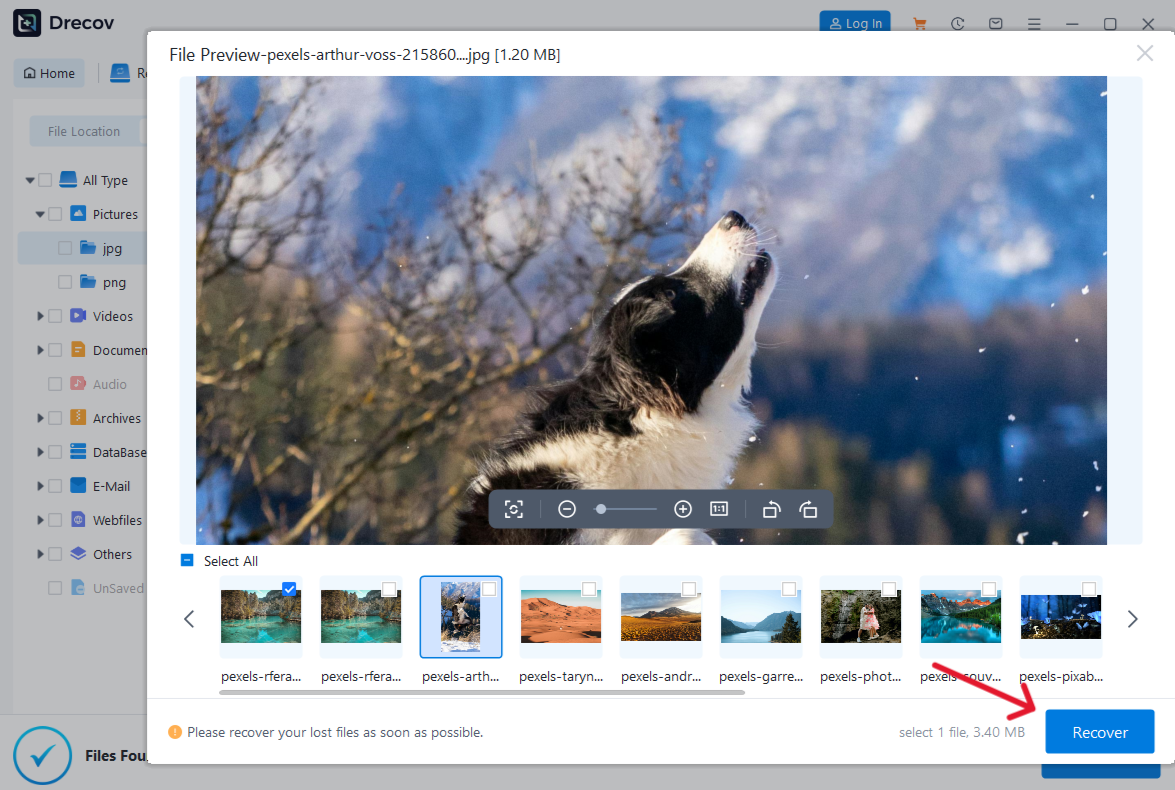
- Step 4: Recover Data. Select the files you need and click Recover. Always save the recovered files to an external hard drive or a different partition.
Key Point: PandaOffice Drecov can even recover data from the
Windows.oldfolder if it was prematurely deleted by the system’s storage sense.For more specialized data recovery scenarios, you may find these guides helpful:
- If you are dealing with external storage issues after a system change, learn how to fix LaCie hard drive not showing up on Mac.
- Lost your browser data during the move? Here is how to find your Firefox bookmarks location to manually restore them.
- If the reinstall didn’t fix the issue, you might want to try to restore your computer to an earlier date on Windows using System Restore.
How to recover desktop files after windows reinstall
The desktop is often the most vulnerable place during an OS refresh. If you have finished the process and are wondering how to recover desktop files after windows reinstall, there are a few specific locations you should check before panicking.
- Check the C:\Windows.old Folder: Windows often moves your old user profile to this directory. Navigate to
C:\Windows.old\Users\[YourUsername]\Desktop. If your files are there, simply copy and paste them back to your new desktop. - Check OneDrive Sync: If you had OneDrive enabled, your desktop files might be safely tucked away in the cloud. Log into OneDrive.com to see if your folders were synced before the reinstall.
- Use Specialized Software: If neither of the above works, the files were likely unindexed during the installation. This is the time to learn how to recover desktop files after windows reinstall using a deep-sector scanner like PandaOffice Drecov. It can find file headers that the Windows File Explorer can no longer see.
Method 4: Repair Windows Using Command Tools
If your goal for how to reinstall windows without losing files and apps is simply to fix errors, you might not need to reinstall at all. Windows includes powerful command-line utilities that can repair the system image while you are still logged in.
The SFC (System File Checker) Scan
This tool verifies the integrity of every protected operating system file.
- Step 1: Type
cmdin the Start search bar. - Step 2: Right-click Command Prompt and select Run as Administrator.
- Step 3: Type the following command and press Enter:
sfc /scannow - Step 4: Wait for the verification to reach 100%. If it finds corrupt files, it will replace them automatically from a cached copy.
The DISM (Deployment Image Servicing and Management) Tool
If SFC fails, DISM can fix the underlying Windows image by downloading healthy files from Microsoft’s servers.
- Step 1: In the same Administrator Command Prompt, type:
DISM /Online /Cleanup-Image /RestoreHealth - Step 2: This process requires an internet connection. It will compare your local files with the official Microsoft version and repair any discrepancies.
Common Mistakes to Avoid During Reinstallation
Even when you follow the steps for how to reinstall windows without losing files and apps, human error can creep in. Stay vigilant against these common pitfalls:
1. Ignoring the “Keep Nothing” Warning
During the installation, if the “Keep personal files and apps” option is greyed out, some users click “Nothing” out of frustration. Do not do this. This will trigger a clean install and wipe your data. Stop the process and ensure your installation media matches your system version and language.
2. Forgetting to Deactivate Specialized Software
Some high-end software (like CAD tools or specialized accounting suites) use hardware-bound licenses. Even if you keep the app, the license might break during a reinstall. It is often safer to “Deactivate” the license within the app before starting the Windows refresh.
3. Insufficient Disk Space
If your drive is 99% full, the reinstall will fail halfway through. This can lead to a corrupted bootloader. Always delete temporary files or move large videos to an external drive to create at least 30 GB of breathing room.
Advanced Troubleshooting: What to do if the Reinstall Fails?
Sometimes the process of how to reinstall windows without losing files and apps hits a snag. Here is how to handle common error codes:
- Error 0x80070002 – 0x20016: This usually indicates a driver conflict. Unplug all non-essential USB devices (printers, webcams, drawing tablets) before trying again.
- The “Undoing Changes” Loop: If Windows says it is undoing changes, it means a specific system service blocked the upgrade. Disable your third-party Antivirus (like Norton or McAfee) and try the In-Place upgrade again.
- Media Creation Tool Errors: If the tool won’t run, ensure your system clock is set to the correct time and date, as this can interfere with security certificates.
Maintaining System Health After Reinstallation
Once you have successfully mastered how to reinstall windows without losing files and apps, you want to make sure you don’t have to do it again anytime soon.
- Run Windows Update Immediately: Go to Settings > Windows Update and click “Check for updates.” There will likely be several security patches released since your installation media was created.
- Update Your Graphics Drivers: The Windows generic driver is fine for basic tasks, but for gaming or video editing, visit the official NVIDIA, AMD, or Intel websites to get the latest drivers.
- Use Storage Sense: Enable this feature in Settings > System > Storage. It will automatically clean up temporary files and keep your drive from getting cluttered, reducing the need for future reinstalls.
Frequently Asked Questions
1. Will I need my Windows product key?
In 2026, most Windows licenses are “Digital Licenses” tied to your Microsoft account or BIOS. As long as you are reinstalling the same version (Home vs. Pro), Windows will activate automatically as soon as you connect to the internet.
2. Does an In-Place upgrade remove my browser history?
No. If you choose “Keep personal files and apps,” your browser profiles (Chrome, Edge, Firefox) remain untouched.
3. Can I downgrade from Windows 11 to Windows 10 using this method?
No. You can only use these methods to stay on the same version or upgrade to a newer one. Going backward usually requires a “Clean Install” (Keep Nothing).
4. How long does the “Windows.old” folder stay on my drive?
By default, Windows keeps this folder for 10 days. After that, it is automatically deleted to save space. If you need to recover something from it, do it immediately!
Conclusion
Mastering how to reinstall windows without losing files and apps is an essential skill for any modern PC user. By utilizing the In-Place Upgrade method, you can effectively bypass the headache of manual backups and software re-installations.
However, technology is never 100% predictable. Always ensure you have a backup of your most critical documents and a reliable recovery tool like PandaOffice Drecov data recovery software at the ready. Whether you are solving a performance issue or fixing a corrupted system, the steps outlined above provide a safe, logical, and expert-approved path to a healthier computer.






