







Losing important documents, cherished photos, or critical work projects can feel like a digital nightmare. We have all been there—that sinking feeling in your chest when you realize you emptied the Recycle Bin just a second too soon. However, the good news is that “deleted” doesn’t always mean “gone forever.” In the world of data forensics, your files often linger in the background of your hard drive until new data overwrites them.
In this comprehensive guide, we will explore every possible avenue for how to restore files deleted from recycle bin. Whether you are a casual user or someone looking for professional-grade solutions, this article provides a step-by-step roadmap to getting your data back safely.
Understanding the Basics of Data Recovery
Before we dive into the technical steps, it is essential to understand how Windows handles deletion. When you delete a file and it goes to the Recycle Bin, it stays in a specific hidden folder on your drive. When you “Empty Recycle Bin,” Windows doesn’t actually erase the file’s bits and bytes immediately. Instead, it marks the space as “available.”
Think of it like a library catalog: Windows deletes the entry in the index, but the book remains on the shelf until someone puts a new book in its place. This is why the most important rule of data recovery is: Stop using your computer immediately to prevent overwriting those “invisible” files.
Method 1: The First Step—How to Find Files Deleted from Recycle Bin
Before assuming the worst, we must ensure the files aren’t simply hidden or misplaced. Sometimes, a “deleted” file is just a few clicks away in the system’s temporary storage.
Step 1: Check the Recycle Bin Directly
It sounds obvious, but many users panic before checking the obvious.
- Double-click the Recycle Bin icon on your desktop.
- Use the search bar in the top-right corner to type the filename.
- If found, right-click the file and select Restore.
Step 2: Use the Search Feature via File Explorer
Sometimes files are moved rather than deleted.
- Open File Explorer (Win + E).
- Navigate to “This PC.”
- Use the search box to look for the file extension (e.g.,
*.docxor*.jpg).
If these steps don’t work, it’s time to move on to more advanced recovery techniques for how to find files deleted from recycle bin.
Method 2: Using Windows Built-in Tools
Windows includes several “safety nets” that can help you understand how to recover files deleted from recycle bin without downloading third-party tools.
Restoring via “File History”
File History is a powerful backup feature in Windows 10 and 11. If you had this enabled prior to the deletion, you are in luck.
- Step 1: Open the Start Menu, type “Restore your files with File History,” and press Enter.
- Step 2: Look through the folders for the location where your deleted files were originally stored.
- Step 3: Use the arrow buttons at the bottom to browse different versions (back in time).
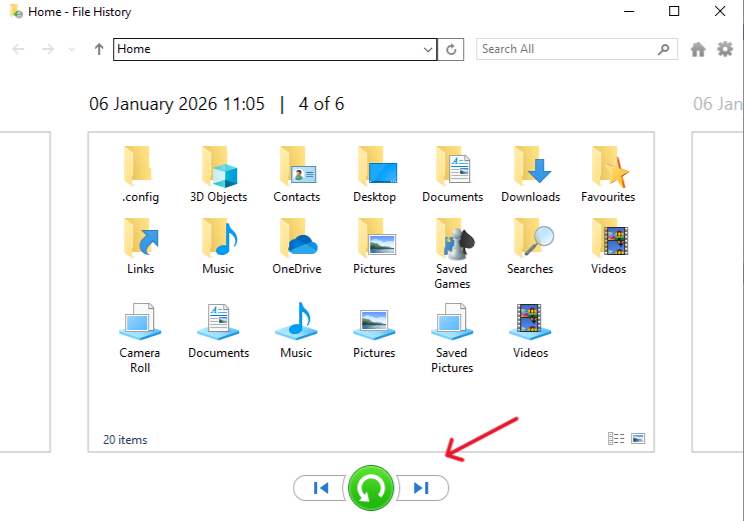
- Step 4: Once you locate the correct version of the file, click the green Restore icon to return it to its original location.
Using System Restore Points
While System Restore is primarily for system files, it can sometimes recover older versions of folders.
- Type “Create a restore point” in Windows search.
- Click System Restore in the System Protection tab.
- Choose a date before the deletion occurred.
Warning: This will revert system settings and apps installed after that date, so use this as a secondary option.
Method 3: Professional Recovery with PandaOffice Drecov Data Recovery Software
When built-in tools fail, or if you have already emptied the bin, you need a specialized engine that can scan the raw sectors of your hard drive. This is where PandaOffice Drecov data recovery software excels. It is designed to find “orphaned” data that the operating system no longer recognizes.
Why Choose PandaOffice Drecov?
Unlike basic tools, PandaOffice Drecov data recovery software uses deep-scan algorithms to reconstruct file headers. It supports over 1,000 file formats, including documents, videos, and compressed archives.
⚠ Warning: Do not install the software on the same drive where the deleted files were located. Use an external drive or a different partition to avoid overwriting.
Step-by-Step: How to Restore Files Deleted from Recycle Bin using Drecov
- Step 1: Select the Location. Launch the program. On the main interface, you will see a list of drives. Select the Recycle Bin icon or the specific C: drive to begin the scan.
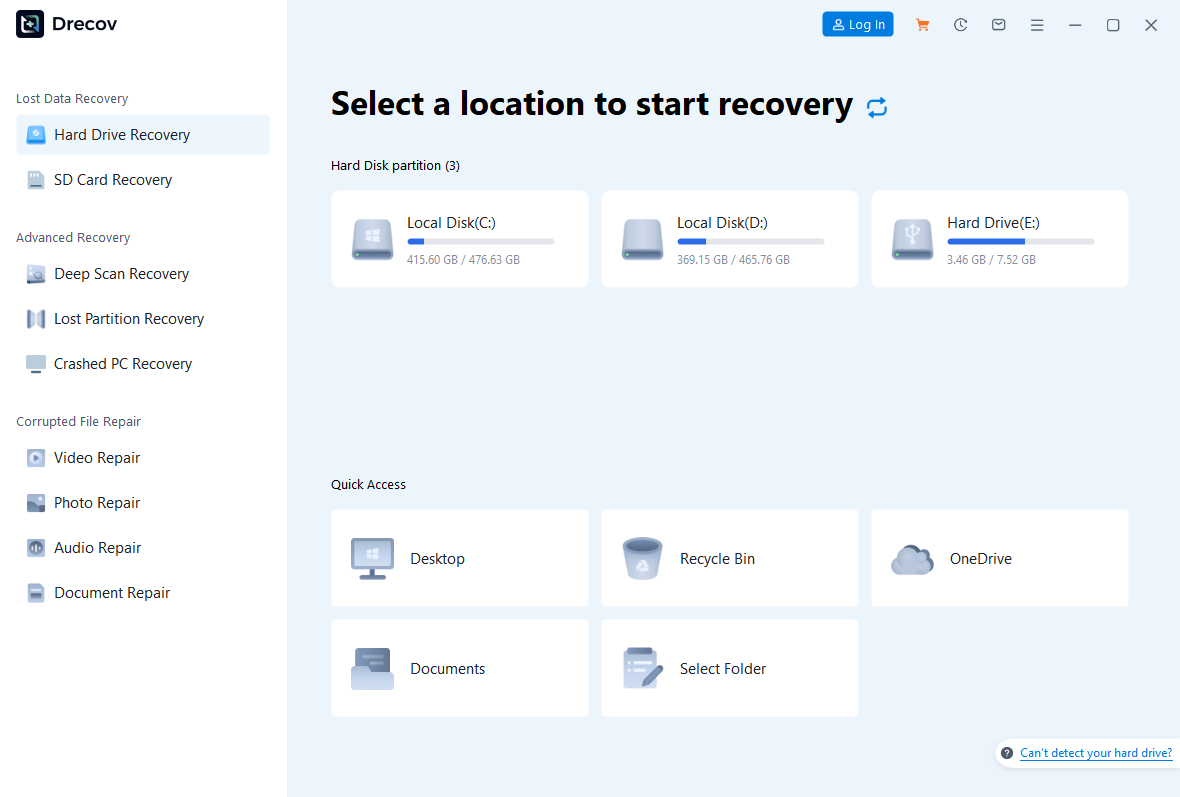
- Step 2: Initiate the Scan. Click the Scan button. The software will perform a “Quick Scan” first, followed automatically by a “Deep Scan” to find deeply buried data.
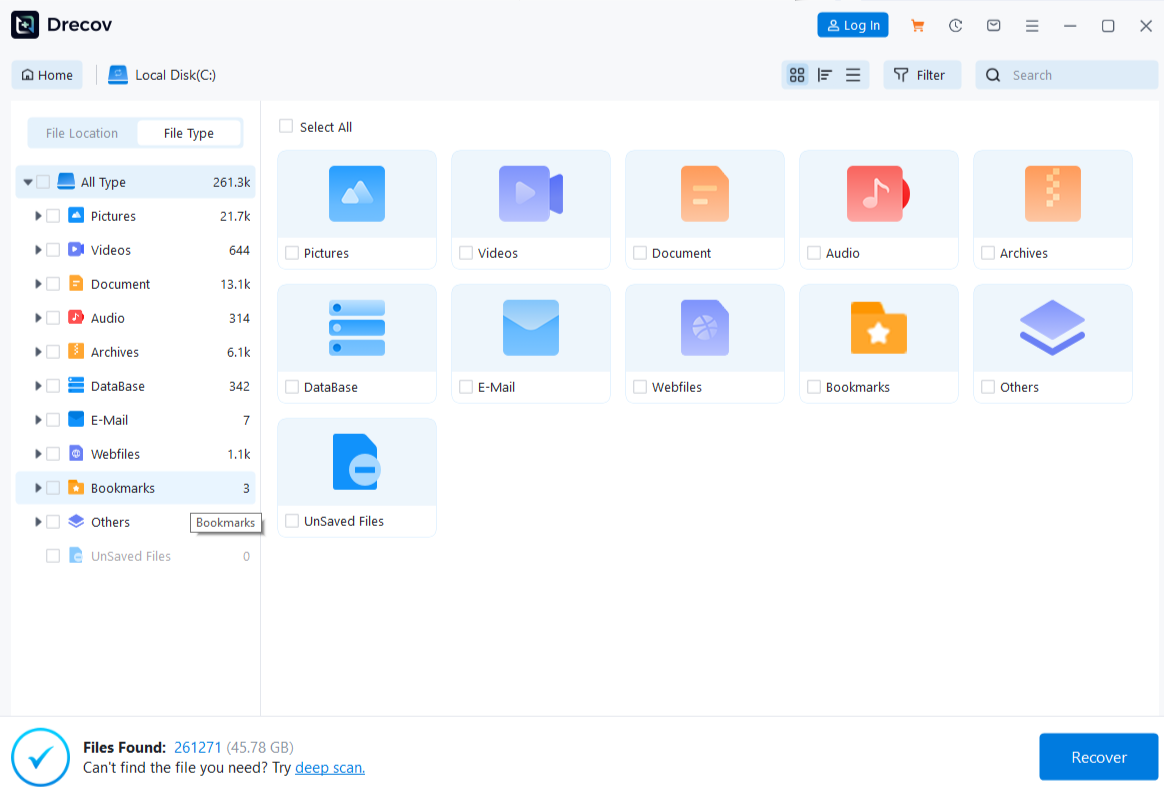
- Step 3: Filter and Preview. Once the scan is complete, use the sidebar to filter by file type (e.g., Pictures, Documents). You can double-click a file to Preview it. This ensures the file is intact before you commit to recovering it.

- Step 4: Recover the Data. Check the boxes next to the files you want. Click the Recover button and choose a destination on a different drive (like a USB flash drive).
Pro Tip: If a file appears with a “Poor” status, it may be partially overwritten. Always preview before recovery!
Sometimes, your recovery needs are more specific. If you have successfully recovered a file but find it was an older version or was overwritten by a newer save, we have specialized guides to help:
- Lost a critical essay? Check out this guide on how to recover overwritten Word documents.
- Professional Designer? Don’t panic; here is the complete guide to Illustrator file recovery.
Method 4: Advanced Recovery via Command Prompt
For those who prefer a more hands-on approach, the Command Prompt can sometimes trigger the file system to recognize “hidden” deleted attributes. This is a more technical way of how to recover files deleted from recycle bin.
- Step 1: Press Win + R, type
cmd, and press Ctrl + Shift + Enter to run as Administrator. - Step 2: Type the command
chkdsk X: /f(replace X with your drive letter) and press Enter. This fixes file system errors. - Step 3: Use the
attribcommand:attrib -h -r -s /s /d X:\*.*. This command removes the “hidden,” “read-only,” and “system” attributes from files, which might make them visible again if they were simply moved to a hidden system folder.
Summary of Methods and Success Rates
| Method | Complexity | Best For | Success Rate |
| Recycle Bin | Very Low | Immediate recovery | High (if not emptied) |
| File History | Medium | Users with backups | Very High |
| PandaOffice Drecov | Medium | Emptied Bin / Formatted Drive | Excellent |
| Command Prompt | High | System-level errors | Moderate |
Critical Tips to Maximize Recovery Success
Learning how to restore files deleted from recycle bin is only half the battle; the other half is ensuring you don’t ruin the chances of recovery during the process.
- Don’t Restart Excessively: Every time Windows boots, it writes logs and temp files. This can overwrite your deleted data.
- Avoid “Cleaner” Software: Tools that “clean” your PC often wipe free space, which permanently destroys any recoverable data.
- Check Cloud Storage: If you use OneDrive or Google Drive, check their respective online “Trash” folders. Often, files deleted locally are synced and held in the cloud for 30 days. You can find more information on Microsoft’s Official Support page.
FAQ: Mastering Data Recovery Challenges
1. Is it possible to restore files if the “Shift + Delete” shortcut was used?
Yes, but the process is different. When you use Shift + Delete, the file bypasses the Recycle Bin entirely and the space is immediately marked as available for new data. In this scenario, you cannot “find” the file manually. Your best option is to immediately use PandaOffice Drecov data recovery software. Since the file was never in the bin, the software will scan the “Unallocated Space” of your drive to reconstruct the file from its raw data fragments.
2. Why can’t I see the Recycle Bin icon on my desktop to begin recovery?
Sometimes the icon is hidden due to system settings, making it difficult to know how to find files deleted from recycle bin. To fix this, right-click on your desktop, select Personalize, then go to Themes > Desktop icon settings. Ensure the “Recycle Bin” checkbox is ticked. Once the icon reappears, you can proceed with the standard restoration steps or check if the files are still held in the system’s buffer.
3. Does performing a “System Image Recovery” restore my deleted personal files?
Generally, no. A System Image is a snapshot of the Windows operating system, programs, and settings. While it is excellent for fixing a crashed computer, it is not an efficient way to recover files deleted from recycle bin because it may overwrite any data created after the image was made. It is much safer to use file-specific recovery tools or “File History” rather than reverting your entire operating system.
4. Can I recover files from the Recycle Bin of an external USB drive or SD card?
This is a common misconception: USB flash drives and SD cards usually do not have a Recycle Bin. When you delete a file from a removable drive, Windows deletes it permanently and instantly. To get these files back, you must use a deep-scan tool like PandaOffice Drecov. Connect the external device to your PC, select that specific drive letter in the software, and run a Deep Scan to locate the lost data.
5. How long do I have before a deleted file becomes unrecoverable?
There is no fixed time limit, but there is a “usage limit.” Data recovery depends on whether the physical sectors on the disk where the file lived have been overwritten. On a busy system drive (C:), files might be overwritten within hours due to background updates and temp files. On a secondary storage drive (D: or E:), you might be able to restore files deleted from recycle bin weeks later, provided no new data has been saved to that partition.
Conclusion
Mastering how to restore files deleted from recycle bin is a vital skill in the digital age. By acting quickly, checking your backups, and utilizing professional tools like PandaOffice Drecov data recovery software, you can reverse even the most stressful data loss scenarios. Remember to always maintain a regular backup schedule to ensure that next time, a simple “Delete” doesn’t become a permanent problem.
Data recovery is a race against time—start your scan today and get your digital life back on track!






