







Understanding RAW image files and professional photography formats
A raw image file is an uncompressed or minimally processed image captured directly from a digital camera sensor. Unlike JPG or PNG files, RAW formats preserve full image data, including exposure details, color depth, and dynamic range. This allows photographers to perform advanced editing without significant quality loss.
Modern DSLR and mirrorless devices often support RAW formats because they provide maximum flexibility during post-processing. A raw image camera captures more detailed information compared to compressed image formats, making RAW files essential for professional photography workflows.
However, because RAW files are larger and more complex, they are also more vulnerable to corruption, accidental deletion, transfer interruptions, and storage device failures.
Why photographers prefer RAW formats for editing
RAW photography offers several advantages over compressed image formats. Photographers can recover shadows, adjust highlights, and modify white balance without permanently damaging image quality.
Professional users rely on RAW formats for:
- Wedding photography
- Commercial advertising
- Landscape photography
- Wildlife photography
- Studio editing workflows
RAW editing also works closely with software like Adobe Camera Raw and Photoshop.
Many users frequently search:
- how to open a photo in camera raw
- how to open photo in camera raw
- how do i open an image in camera raw
- how to open image in camera raw
These searches are common because RAW files often require dedicated editing tools before viewing or exporting.
⚠️Warning: Opening RAW files with unsupported software may cause preview errors or missing image thumbnails.
Common causes of RAW image file loss or corruption
RAW image files can become inaccessible for many reasons. Because photographers often work with SD cards, external drives, and camera storage, file corruption risks increase during transfers or editing sessions.
The most common causes include:
- Accidental deletion
- SD card formatting
- Corrupted memory cards
- Interrupted file transfers
- Virus or malware attacks
- Sudden power loss during saving
- Damaged storage sectors
Test environment
- Device: Canon EOS R5
- Storage: 128GB SDXC card
- Operating system: Windows 11
- Problem: RAW images disappeared after interrupted transfer
In this environment, several RAW files became unreadable after the transfer process unexpectedly stopped.
Why RAW photo recovery is often possible
Even when RAW photos appear deleted or inaccessible, the original image data may still physically exist on the storage device until overwritten.
Recovery tools can scan storage sectors directly and locate recoverable image fragments. This makes it possible to restore:
- Deleted RAW photos
- Formatted image files
- Corrupted camera files
- Missing image folders
The success rate depends on how quickly recovery begins and whether new files overwrite the original data.
⚠️Warning: Avoid taking new photos on the same memory card after accidental deletion, as overwritten sectors may permanently destroy recoverable images.
Recover RAW photos using PandaOffice Drecov
PandaOffice Drecov provides advanced scanning technology designed to recover deleted or corrupted RAW image files from SD cards, SSDs, USB drives, and external hard disks.
The software supports recovery for many professional camera formats, including:
- CR2 / CR3
- NEF
- ARW
- DNG
- RAF
- ORF
Test environment
- Device: Sony A7 IV
- Storage: SanDisk Extreme Pro SD Card
- System: Windows 10 workstation
- Issue: accidentally formatted RAW photo card
Recovery steps
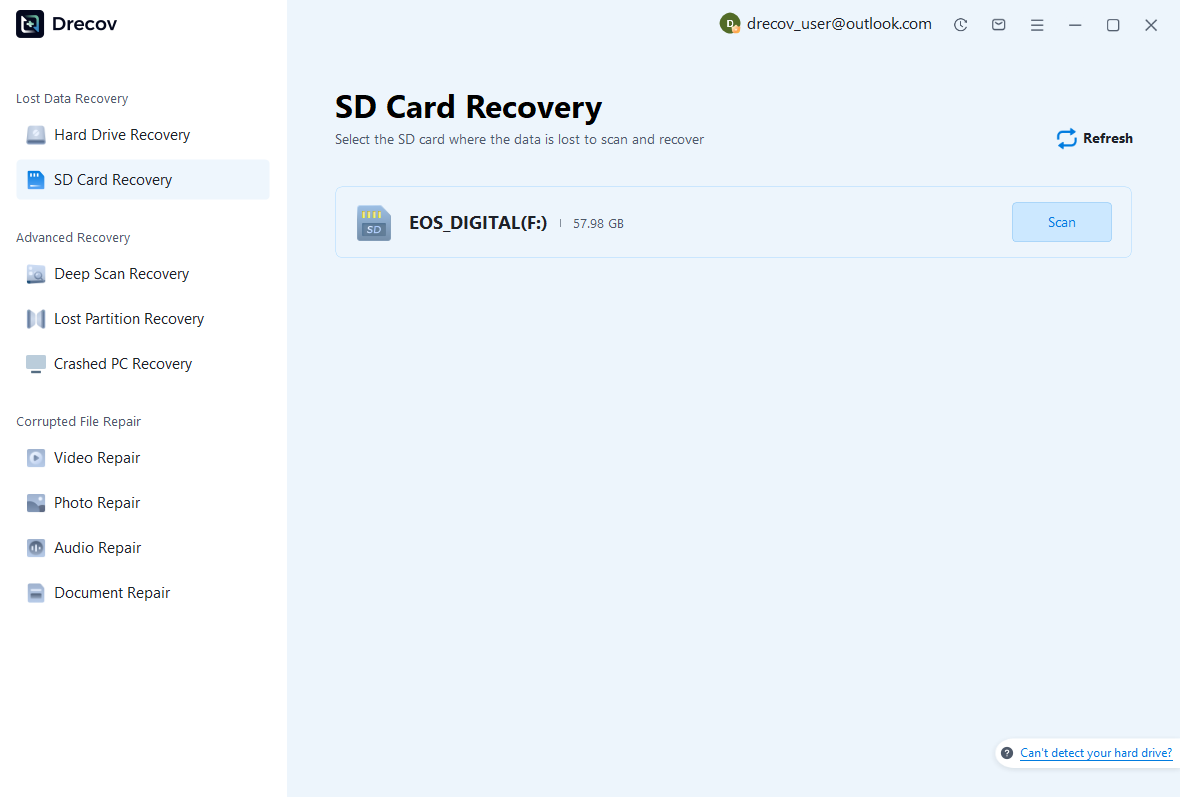
Connect the storage device
Insert the memory card or connect the affected drive to the computer using a stable card reader.
Launch PandaOffice Drecov
Open the software and select the storage device containing the lost RAW files.
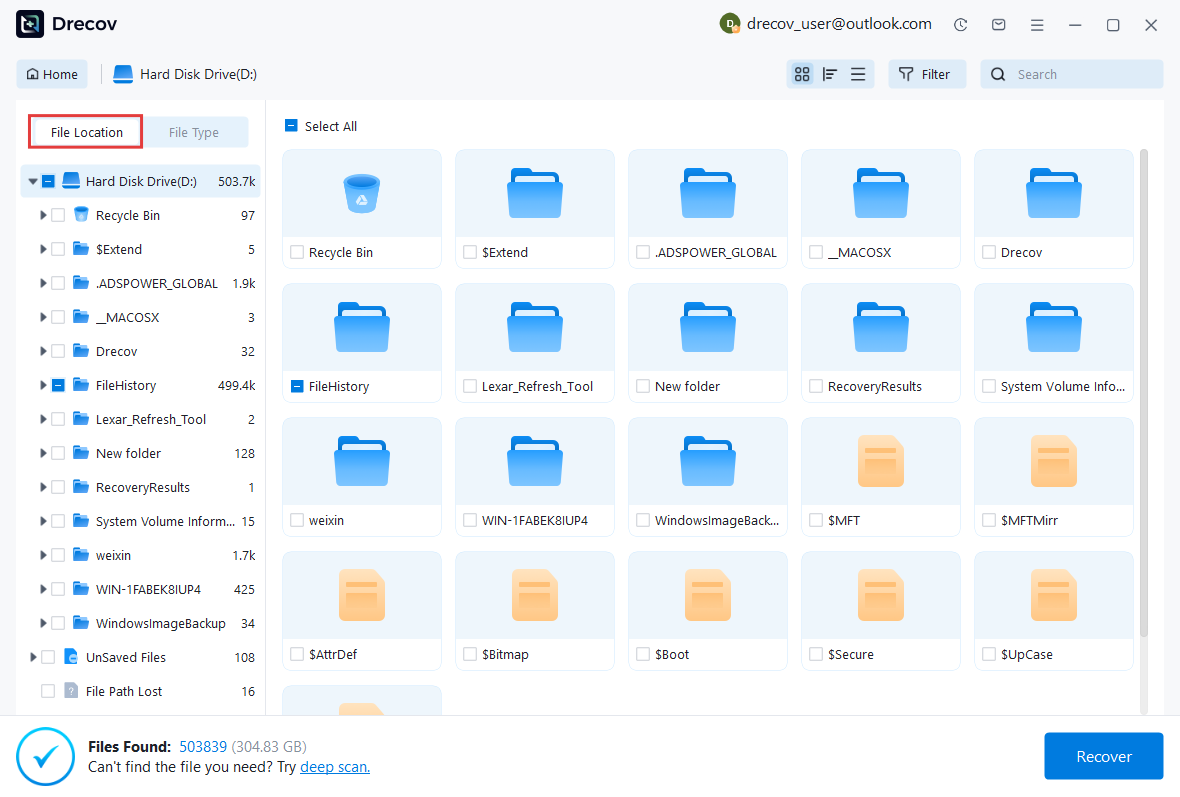
Start deep scanning
Choose deep scan mode to analyze deleted or inaccessible sectors.
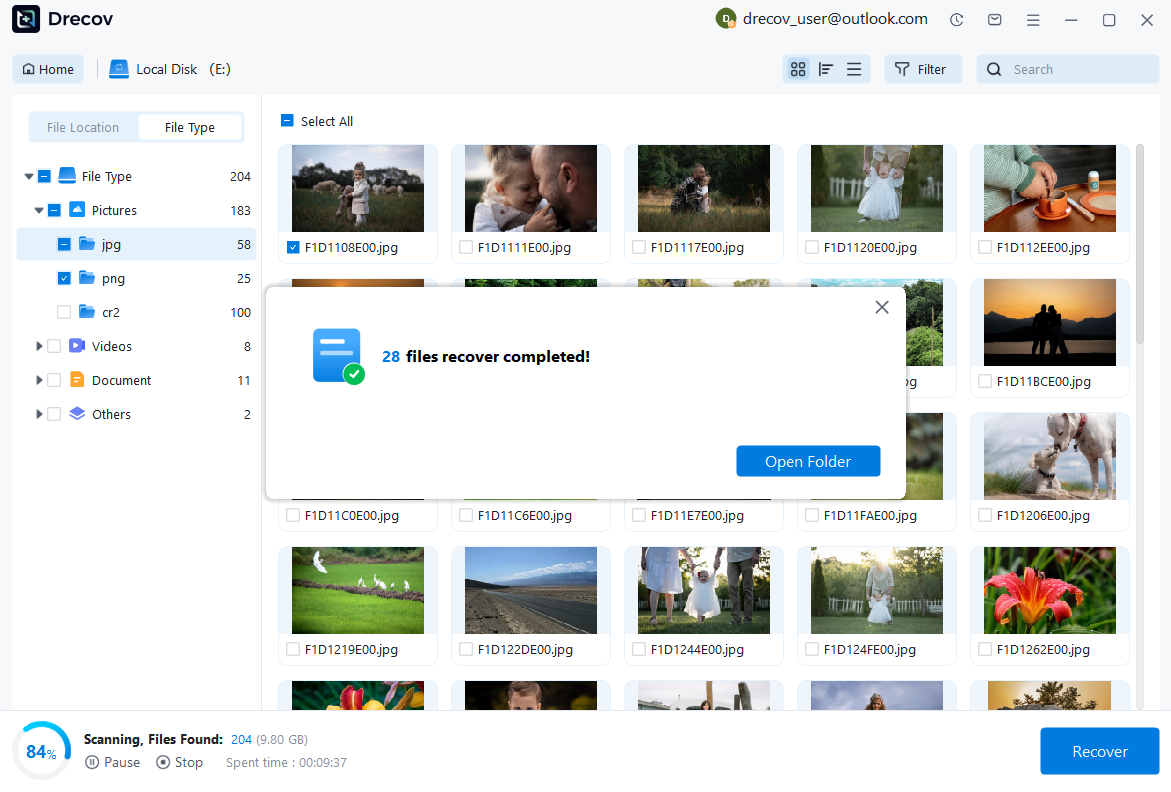
Preview recoverable RAW photos
After scanning finishes, preview the detected images before recovery.
Save recovered files
Export recovered files to another healthy drive instead of the original memory card.
This method is effective for restoring professional RAW photography projects after deletion or formatting.
Why Choose PandaOffice Drecov Recovery Software?
PandaOffice Drecov offers a fast, secure, and user-friendly solution for recovering lost files across multiple scenarios. Whether you need email recovery, ZIP File Recovery, format data recovery, or help to recover deleted drafts Outlook, the software provides reliable recovery performance for both personal and business users.
PandaOffice Drecov supports recovery from formatted hard drives, SSDs, USB drives, SD cards, and external storage devices. Its advanced scanning engine can locate deleted archives, damaged ZIP files, lost Outlook drafts, and accidentally removed documents with high accuracy. For users searching for how to find deleted messages in Teams, PandaOffice Drecov can also help recover exported chat files, attachments, and related local cache data when available.
Key advantages include:
- Deep scan technology for complex data loss situations
- Support for emails, archives, videos, photos, and office documents
- Recovery from accidental deletion, formatting, corruption, and system crashes
- Easy preview before restoring files
- Compatible with Windows and multiple storage devices
Unlike complicated enterprise recovery tools, PandaOffice Drecov keeps the recovery process simple. Users can scan, preview, and restore files in just a few steps without technical expertise.
Whether you are dealing with lost Outlook drafts, corrupted ZIP archives, formatted drives, or missing communication data, PandaOffice Drecov provides an efficient and practical recovery experience designed to minimize downtime and protect important files.
Restore RAW image files from backups
If photographers maintain regular backups, recovery becomes significantly easier. Cloud storage platforms, NAS systems, and external drives are commonly used for photography backups.
Test environment
- Device: Nikon Z8 camera
- Backup system: external SSD backup archive
- Operating system: macOS Sonoma
- Issue: accidental RAW folder deletion
In this case, restoring the backup copy immediately recovered all missing image files without additional repair tools.
Backup restoration process
Locate backup storage
Access the external backup drive or cloud storage account.
Find the deleted RAW folder
Browse backup directories by date or project name.
Copy files to a new location
Restore the RAW image files to a healthy local drive.
Regular backups remain one of the safest protection methods against permanent photo loss.
Recover RAW image files from formatted SD cards
Formatting a memory card does not always erase RAW photos permanently. In many cases, only the file index is removed while the actual image data remains recoverable.
Test environment
- Device: Fujifilm X-T5
- Storage: 64GB SD Card
- System: Windows 11
- Problem: accidental quick format before backup
Recovery process
Stop using the SD card immediately
Do not capture new photos after formatting.
Connect the card to a computer
Use a reliable card reader for stable detection.
Scan the card with recovery software
Use deep scanning to locate deleted RAW image sectors.
Export recovered files
Save recovered content to another storage device.
This approach often restores deleted professional photography files successfully.
How to open RAW photos in Camera Raw
Many users search online for:
- how to open a photo in camera raw
- how to open photo in camera raw
- how do i open an image in camera raw
- how to open image in camera raw
These questions are common because RAW files require compatible editing software.
Test environment
- Device: Windows 11 PC
- Software: Adobe Photoshop + Camera Raw plugin
- File type: Canon CR3 RAW image
Steps to open RAW photos
Install Adobe Camera Raw
Ensure Photoshop and the Camera Raw plugin are updated.
Open Photoshop
Launch Photoshop normally.
Import the RAW image
Drag the RAW file into Photoshop or use:
File → OpenCamera Raw opens automatically
The RAW editor window appears before the image enters Photoshop.
This workflow allows photographers to adjust exposure, color balance, and detail before editing further.
Solve compatibility issues with RAW image camera files
Different camera brands use unique RAW formats, which may not always work with older editing software.
Test environment
- Device: Panasonic Lumix camera
- Software: outdated Photoshop version
- Problem: unsupported RAW file format
Common compatibility solutions
Update Camera Raw plugin
Older plugins may not support newer camera models.
Convert RAW files to DNG
Adobe DNG Converter improves compatibility across devices.
Install updated editing software
New software versions support more modern RAW formats.
⚠️Warning: Editing unsupported RAW files directly may result in corrupted previews or failed imports.
Store RAW image files on reliable storage devices before disaster strikes
Professional photographers often handle thousands of high-resolution images during weddings, travel shoots, studio sessions, and commercial projects. Because RAW files are extremely large, unstable storage devices can quickly become a major risk factor.
Using unreliable SD cards or damaged portable drives may lead to sudden corruption, missing folders, or inaccessible photo libraries. Choosing dependable storage solutions is one of the most effective ways to protect important photography work.
Test environment
- Device: Canon EOS R6
- Storage: Samsung T7 external SSD
- Operating system: Windows 11
- Task: transferring large RAW photography archive
In this workflow, the SSD maintained stable transfer performance and reduced the risk of interrupted file operations.
Professional photographers often follow these best practices:
- Use high-end SD cards from trusted brands
- Replace aging storage devices regularly
- Keep multiple backup copies of RAW projects
- Avoid editing directly from unstable memory cards
⚠️Warning: Disconnecting a storage device during RAW file transfers may permanently damage image structures.
Smart ways to organize RAW photo projects and avoid accidental loss
Disorganized storage is one of the biggest reasons photographers accidentally delete or overwrite important projects. Large RAW libraries become difficult to manage without a clear structure.
A well-organized workflow helps photographers quickly locate files, maintain backups, and reduce editing mistakes.
Test environment
- Device: MacBook Pro M3
- Software: Adobe Lightroom Classic
- Task: managing 20,000+ RAW photos
Creating structured folders significantly improved editing efficiency and reduced accidental duplication.
Many professionals organize projects using:
Year → Client → RAW → Edited → ExportedThis structure keeps original RAW files separated from edited exports, making recovery and backups much easier.
Convert RAW photos for faster sharing without losing your originals
Although RAW files provide maximum editing flexibility, they are not ideal for quick sharing because of their large size and software requirements. Many photographers create additional export formats for clients and online publishing.
Common export formats include:
- JPG for social media and previews
- TIFF for printing
- PNG for graphic workflows
Test environment
- Device: Windows 10 workstation
- Software: Adobe Lightroom
- File type: Sony ARW RAW images
- Task: exporting online client gallery
Converting selected files reduced storage usage while preserving the original RAW archive for future editing.
This approach also improves compatibility with mobile devices and cloud platforms.
Hidden mistakes that secretly destroy RAW image files
Many photographers lose important RAW images because of avoidable workflow errors. Understanding these common mistakes can significantly reduce future data loss risks.
The most common causes include:
- Formatting SD cards before backups
- Removing storage devices unsafely
- Editing files directly from unstable cards
- Ignoring storage warnings or bad sectors
- Using outdated software with new RAW formats
Users working with a raw image camera should always verify that backups exist before deleting or formatting any storage device.
⚠️Warning: Never keep your only copy of professional RAW images on a single memory card.
Professional habits that prevent RAW photo corruption
Recovering deleted images can be difficult and time-consuming, so prevention is always the better strategy. Professional photographers typically use layered protection methods to keep projects safe.
Recommended habits include:
- Backing up files immediately after every shoot
- Using dual memory card recording when possible
- Updating Camera Raw and editing software regularly
- Checking storage health periodically
- Verifying transferred files before formatting cards
Test environment
- Device: Nikon Z9
- Storage: dual CFexpress cards
- Workflow: simultaneous backup recording during events
This setup automatically created duplicate copies while shooting, reducing the chance of permanent file loss.
Most Asked Questions About RAW Photo Files and Camera Raw
What is a raw image file and why do professionals use it?
A raw image file contains minimally processed image data captured directly from a camera sensor. Unlike JPG images, RAW files preserve full color and lighting information, giving photographers far greater editing flexibility.
RAW formats are commonly used in:
- Wedding photography
- Commercial production
- Landscape photography
- Studio retouching
Because of their higher quality, RAW images are preferred in professional editing environments.
What is a raw image camera?
A raw image camera is a camera capable of saving photos in RAW format instead of only compressed formats like JPG. Most DSLR and mirrorless cameras support RAW capture for advanced photography workflows.
RAW-compatible cameras allow users to preserve maximum image quality for post-production editing.
How to open a photo in Camera Raw correctly
Many users search online for how to open a photo in camera raw because RAW files often cannot open in regular image viewers.
To open a RAW file properly:
- Install Adobe Camera Raw
- Open Adobe Photoshop
- Import the RAW image file
- Camera Raw launches automatically before editing
This allows photographers to adjust exposure, color balance, highlights, and shadows before exporting.
How do I open an image in Camera Raw if Photoshop cannot read it?
If users search how do i open an image in camera raw, the problem is usually related to compatibility.
Common solutions include:
- Updating Photoshop
- Updating Camera Raw plugins
- Converting unsupported RAW formats into DNG files
New camera models often require updated RAW support in editing software.
Can deleted RAW photos still be recovered after formatting?
Yes. In many cases, formatted or deleted RAW photos remain recoverable if new files have not overwritten the original storage sectors.
Recovery success depends on:
- Device condition
- Time since deletion
- Amount of overwritten data
- Storage health
The sooner recovery begins, the better the chances of restoring original image quality successfully.
⚠️Warning: Continuing to shoot new photos after deletion may permanently overwrite recoverable RAW files.
Final Thoughts: Keep Your RAW Photography Safe and Recoverable
RAW photography delivers exceptional image quality and unmatched editing flexibility, which is why professionals rely on it for high-end creative work. However, RAW files are also more vulnerable to corruption, accidental deletion, transfer interruptions, and storage device failure.
This guide explained:
- What a raw image file is
- How a raw image camera works
- How to open photo in camera raw correctly
- How to open image in camera raw using Adobe tools
- Professional storage and recovery strategies for RAW photography
By combining reliable storage, organized workflows, backup protection, and trusted recovery tools when needed, photographers can greatly reduce the risk of losing valuable RAW image projects.





