







In today’s digital world, storage space disappears faster than most people expect. High-resolution photos, 4K videos, games, business files, and backups can quickly fill up a computer’s internal drive. That is why a USB 3.0 external hard drive has become one of the most useful devices for students, professionals, gamers, and everyday users. It offers extra storage, portability, and faster file transfers without requiring complicated installation.
A USB 3.0 external hard drive is a storage device that connects to your computer through a USB 3.0 port. Unlike older USB 2.0 drives, USB 3.0 technology provides significantly faster transfer speeds, making it ideal for large files and modern workloads. Whether you want to store family photos, back up important work documents, or carry an entire gaming library, these drives make the process simple and efficient.
However, even the most reliable USB 3.0 external hard drive is susceptible to data loss. Because these devices are portable, they face physical risks like drops or electronic failures, as well as logical issues like file system corruption or accidental formatting. Understanding how to manage your drive—and more importantly, how to recover data when things go wrong—is essential for any user.
What Is a USB 3.0 External Hard Drive?
A USB 3.0 external hard drive is a portable storage device that uses USB 3.0 technology to transfer data between the drive and a computer. Inside the enclosure is typically a traditional hard disk drive (HDD), although some models may contain SSD storage instead.
The “USB 3.0” part refers to the connection standard. USB 3.0 was introduced as a major upgrade over USB 2.0, increasing transfer speeds dramatically. While USB 2.0 supports speeds up to 480 Mbps, USB 3.0 can theoretically reach up to 5 Gbps. That difference is massive when transferring large files such as movies, games, or backups.
Most USB 3.0 external hard drives are plug-and-play devices. This means you simply connect them to a USB port, and your computer automatically detects them. No advanced setup is usually required. That simplicity makes external drives accessible even for users with very little technical experience.
External hard drives come in different sizes and capacities. Common options include:
| Capacity | Best For |
| 500GB | Basic file storage, documents |
| 1TB | Students and casual users |
| 2TB | Gamers and creative professionals |
| 4TB+ | Large backups and 4K media libraries |
The physical size also varies. Portable 2.5-inch drives are smaller and powered directly through USB, while larger 3.5-inch desktop drives often require external power adapters but provide more storage capacity.
Benefits of Using a USB 3.0 External Hard Drive
One of the biggest reasons people buy a USB 3.0 external hard drive is convenience. Expanding your computer’s internal storage can be complicated and expensive, especially with laptops. External drives provide an easier solution.
Faster File Transfers
USB 3.0 dramatically improves transfer speed compared to older USB standards. Copying a large movie collection or backing up your system becomes much faster. What once took hours with USB 2.0 can now take minutes. For example, moving a 10GB file might take 5 minutes on USB 2.0 but less than 30 seconds on a high-quality USB 3.0 external hard drive.
Portable Storage Anywhere
A USB 3.0 external hard drive lets you carry massive amounts of data in your pocket or backpack. It works almost like having a second computer drive that travels with you. Students can transport projects between school and home, while professionals can access work files anywhere.
Backup Protection
One of the smartest uses for an external hard drive is creating backups. Computers can fail unexpectedly due to hardware issues, malware, or accidental deletion. Keeping important files on an external drive adds an extra layer of protection. Many users follow the “3-2-1 backup rule”:
- 3 copies of important data.
- 2 different storage types.
- 1 backup stored externally/offsite.
A USB 3.0 external hard drive fits perfectly into this strategy, acting as your primary local backup.
Data Recovery Methods for your USB 3.0 External Hard Drive
Despite their efficiency, a USB 3.0 external hard drive can fail. Whether you accidentally deleted a folder or the drive suddenly shows as “Raw,” you need a plan. Below are recovery methods organized by technical complexity.
Level 1: Basic Logical Checks
Sometimes, the USB 3.0 external hard drive isn’t broken; the connection is just faulty.
- Step 1: Swap the USB cable. USB 3.0 cables are more sensitive than older versions.
- Step 2: Plug the drive into a rear USB port if you are using a desktop PC. Front ports often lack sufficient power.
- Step 3: Check Disk Management. Press Windows + X and select Disk Management. If the drive appears here but has no drive letter, right-click it and select Change Drive Letter and Paths.
Level 2: Using Command Prompt
If your USB 3.0 external hard drive has minor file system errors, you can use the built-in Windows utility, CHKDSK.
- Step 1: Type cmd in the Windows search bar, right-click, and Run as Administrator.
- Step 2: Type the command
$chkdsk E: /f$(Replace E: with your drive’s actual letter). - Step 3: Hit Enter. This tool will attempt to repair the file system structure without deleting your data.
Warning: If the drive is making “clicking” noises, do not run this command. Physical damage requires a professional lab.
Advanced Recovery with PandaOffice Drecov data recovery software
When simple fixes fail, specialized tools are required. For deep logical errors or accidental formatting of a USB 3.0 external hard drive, PandaOffice Drecov data recovery software is a highly recommended solution. It is designed to scan the binary sectors of the drive to reconstruct lost files that the operating system can no longer see.
⚠ Warning: Install it on a drive different from the one where your data was lost to prevent overwriting.
Step-by-Step Recovery Using PandaOffice Drecov
Follow these steps to safely retrieve your data from a USB 3.0 external hard drive:
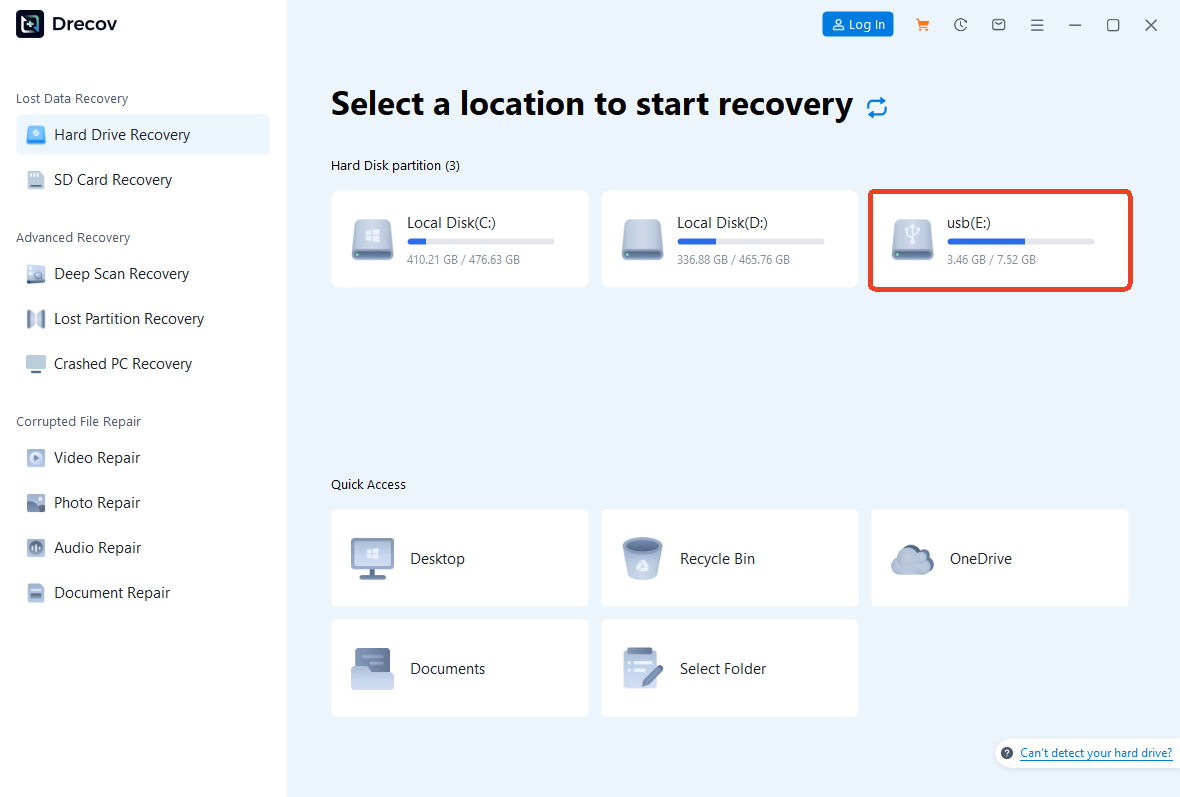
- Step 1: Select the Target Drive. On the main interface, you will see a list of available drives. Identify your USB 3.0 external hard drive (usually labeled by its size, e.g., 2TB Seagate). Click on it to select it as the scan target.
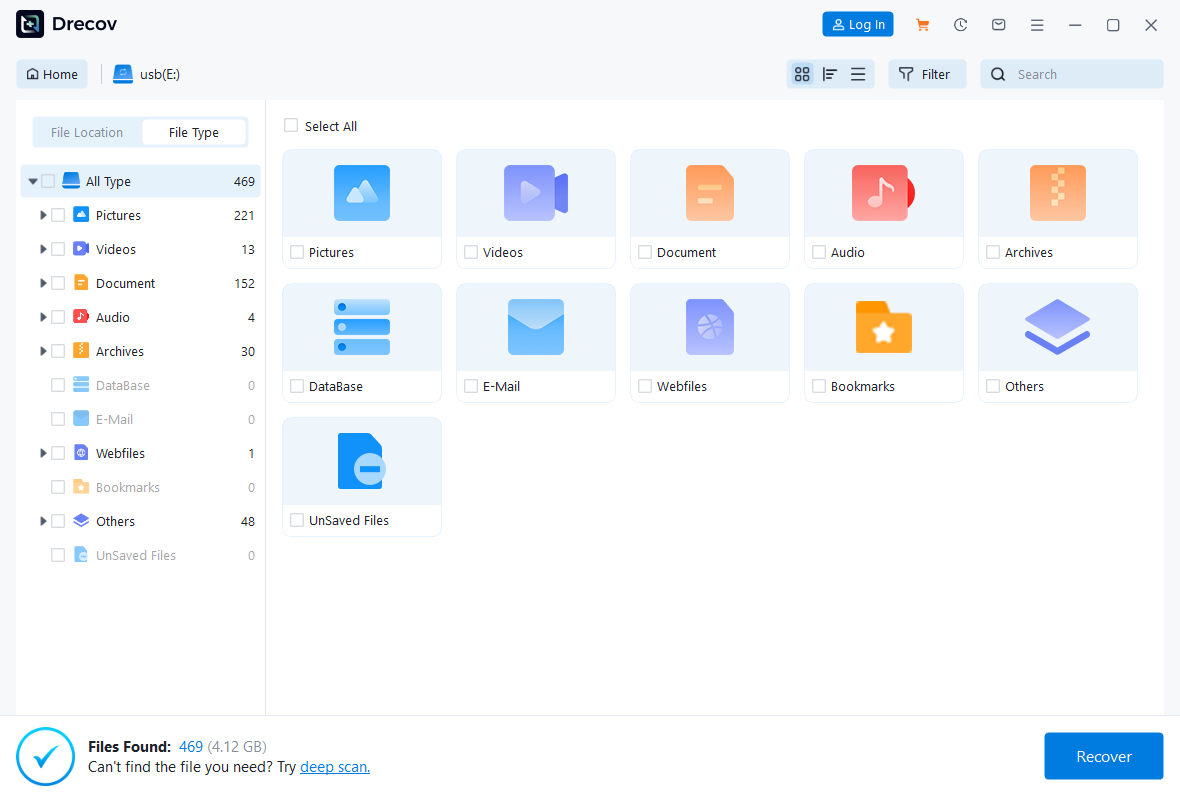
- Step 2: Initiate the Deep Scan. Click the “Scan” button. PandaOffice Drecov data recovery software will perform a quick scan followed by a deep scan. The deep scan is crucial for external drives that have been formatted or have “Raw” file systems.
- Step 3: Preview and Filter. Once the scan is complete, you can browse the files. Use the filter options to look for specific file types like
.jpg,.docx, or.mp4. One of the best features is the preview function, which allows you to see the file before committing to the recovery.
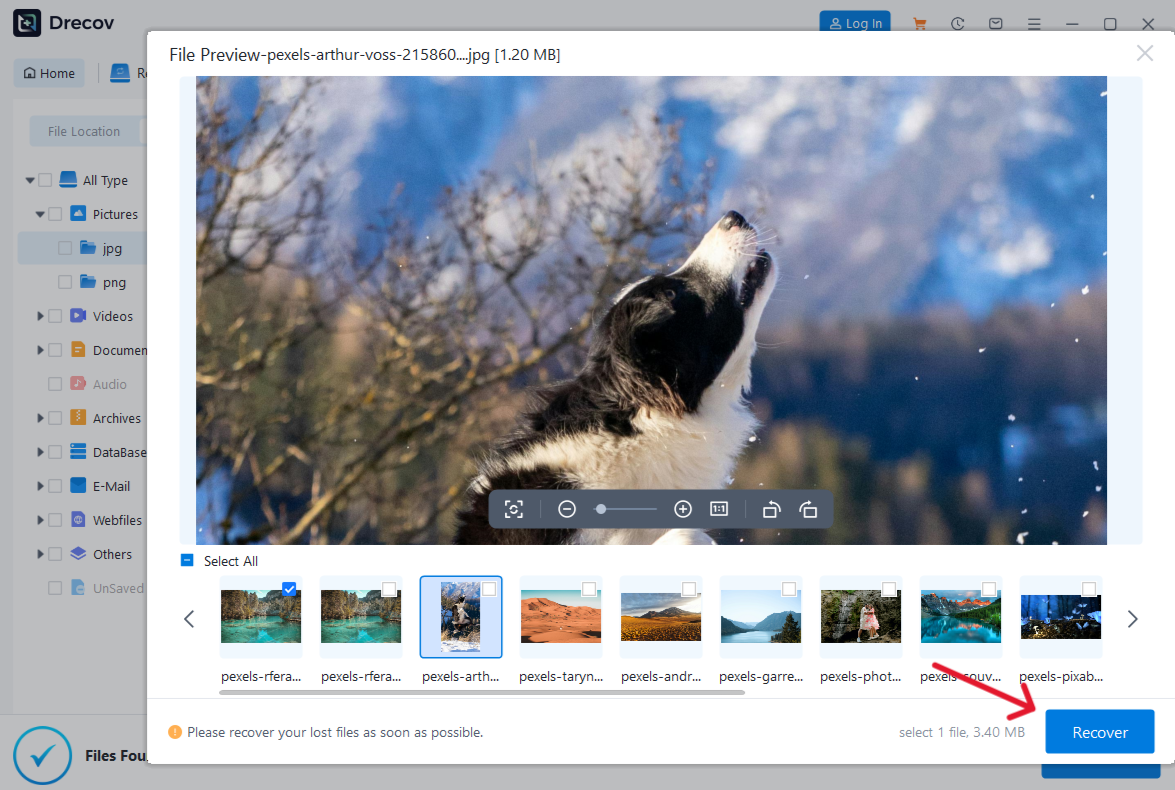
- Step 4: Recover to a Safe Location. Select the files you wish to keep and click Recover.
Critical Warning: Never save the recovered files back onto the same USB 3.0 external hard drive you are recovering from. This can overwrite the very data you are trying to save. Always save them to your internal PC drive or a different external device.
After you have successfully recovered your files, you might need to fix the drive’s formatting to use it again. You can learn how to format a hard drive in Windows 11 to refresh the file system. If you are looking to secure your system further, you should also know how to create a recovery partition in Windows 10. For those who simply lost a file and haven’t emptied the trash yet, here are 3 quick ways to find the Recycle Bin in Windows 10.
Tips to Make Your USB 3.0 External Hard Drive Last Longer
External hard drives are reliable, but they still require proper care. Because a USB 3.0 external hard drive often contains moving parts (if it’s an HDD), it is more fragile than an SSD.
Avoid Physical Damage
Traditional HDDs contain spinning disks inside that rotate at thousands of revolutions per minute. Dropping the drive while it is operating can cause the read/write head to “crash” into the platter, leading to permanent data loss. Always place your USB 3.0 external hard drive on a flat, stable surface.
Safely Eject the Drive
Windows uses “write caching” to improve performance. This means it might tell you a file is finished copying when it is actually still writing in the background. If you pull the cable out too early, the file system on your USB 3.0 external hard drive can become corrupted. Always use the “Safely Remove Hardware” icon in the system tray.
Manage Heat and Environment
Electronic components hate heat. If you are performing a massive backup that takes an hour, ensure the USB 3.0 external hard drive is in a well-ventilated area. Avoid leaving it in a hot car or in direct sunlight, as the enclosure can trap heat and degrade the internal components.
Future of USB External Storage
Technology continues advancing rapidly. While the USB 3.0 external hard drive remains the king of “price-per-gigabyte,” newer standards like USB-C and USB 4 are becoming increasingly common. These offer even faster speeds and better connectivity.
However, the USB 3.0 external hard drive remains highly relevant because of its universal compatibility. Almost every computer manufactured in the last 15 years has a USB-A port that supports 3.0 speeds. It provides:
- Offline access: No need for an internet connection like cloud storage.
- Privacy: Your data isn’t sitting on someone else’s server.
- No monthly fees: You pay once and own the storage forever.
As file sizes continue increasing, especially with 8K video and massive games, having a high-capacity USB 3.0 external hard drive in your toolkit is not just a luxury—it’s a necessity for digital organization and data safety.
Conclusion
A USB 3.0 external hard drive is one of the most practical and cost-effective storage solutions available today. It combines portability, large storage capacity, and faster data transfer speeds into a simple plug-and-play device that works for almost anyone. By following proper maintenance and knowing how to use tools like PandaOffice Drecov data recovery software, you can ensure your digital life remains safe, organized, and accessible for years to come.





