Home » What is a Type C Micro USB [USB Cables & Recovery]
What is a Type C Micro USB [USB Cables & Recovery]
This guide clarifies the differences between USB-C and Micro USB connectors while providing professional data recovery solutions. Learn how to use PandaOffice Drecov to safely retrieve lost files from any USB device in five simple steps.
Technology changes fast, and charging cables are one of the best examples of that evolution. Many people still ask questions like “what is a type c micro usb?” because the terms USB Type-C and Micro USB are often confused or mixed together. At first glance, they may seem similar since both are used for charging and transferring data, but they are actually different types of USB connectors with distinct features, speeds, and capabilities.
If you have ever struggled to plug a charging cable into your phone the wrong way in the dark, you have probably experienced the frustration of Micro USB. USB Type-C was designed partly to solve that exact problem. It introduced a smaller, reversible connector that works regardless of orientation. Today, USB-C is rapidly replacing older Micro USB technology in smartphones, laptops, tablets, gaming devices, and accessories.
Micro USB was once the standard charging connector for Android phones and many electronic devices. For years, it dominated the tech world because it was compact and affordable. However, as devices became more powerful and demanded faster charging and quicker data transfer speeds, Micro USB started showing its limitations. USB Type-C emerged as the modern solution with improved performance, durability, and convenience.
The confusion often comes from people hearing both terms together. Some assume “type c micro usb” is a single connector type. In reality, USB Type-C and Micro USB are separate standards. There are adapters and hybrid cables that connect the two, but they are not the same thing.
To clarify, Micro USB is the older, trapezoidal-shaped connector, while USB Type-C is the newer, oval-shaped, reversible connector. This distinction is vital not just for charging, but for data recovery. If your device uses a Micro USB port, it likely utilizes older data transfer protocols (USB 2.0), whereas USB-C devices often utilize USB 3.1 or higher, which impacts how quickly and effectively a computer can scan the device for lost files.
Technical Breakdown of Micro USB
Micro USB is a small USB connector that became extremely popular in the late 2000s and early 2010s. It was widely used for charging smartphones, Bluetooth speakers, power banks, cameras, headphones, and other portable electronics. Before Micro USB, many manufacturers used their own proprietary charging ports. This created frustration because every device required a different charger.
The connector itself is compact and thin, making it suitable for portable gadgets. However, it has one major limitation: it is not reversible. You must insert the cable in the correct direction, which often leads to annoying trial and error. This physical stress often leads to port failure—a common reason why people seek data recovery services.
Technical Breakdown of USB Type-C
USB Type-C, often called USB-C, is the modern USB connector standard designed to replace older USB types. It is smaller, faster, smarter, and far more versatile. One of the most noticeable features of USB-C is its reversible design. Unlike Micro USB, you can plug it in either direction.
USB-C supports many advanced features, including:
USB Power Delivery (USB PD): Capable of providing up to 240W of power.
High-Speed Data: Transfer rates up to 40Gbps with USB4.
Alt Mode: Support for HDMI, DisplayPort, and Thunderbolt 3/4.
Data Loss Risks Associated with USB Connectors
Whether you are using a type c micro usb adapter or a native cable, data loss remains a significant threat. Because these ports are the primary gateway for file transfers, any interruption can result in corrupted partitions or “ghost” files that appear but cannot be opened.
Common Causes of Data Loss on USB Devices
Physical Wear and Tear:Micro USB ports are notorious for pin damage. If a pin breaks during a file transfer, the file system can become “RAW.”
Improper Ejection: Removing a USB-C external drive while the OS is still writing “metadata” is a primary cause of logical data corruption.
Voltage Spikes: Since USB-C carries much higher wattage, using a low-quality third-party charger can sometimes fry the controller chip of an external drive.
Accidental Deletion: The most common cause remains human error—hitting “Shift + Delete” on a folder connected via a USB cable.
When a device connected via USB-C or Micro USB fails to show its contents, or when you’ve accidentally wiped a drive, you need a robust solution. PandaOffice Drecov data recovery software is a professional-grade tool designed to handle both logical and physical-link data loss scenarios. It is compatible with all USB generations and can reconstruct file structures that have been damaged by hardware disconnects.
Why Choose PandaOffice Drecov?
The software utilizes advanced deep-scanning algorithms that bypass the operating system’s file directory to look directly at the binary data on the storage chips. This is particularly useful for Micro USB devices that might be suffering from “slow-seek” issues due to aging hardware.
⚠ Warning: Install it on a drive different from the one where your data was lost to prevent overwriting.
Step-by-Step Data Recovery Using PandaOffice Drecov
If you have realized that your files are missing from a drive connected via USB-C or Micro USB, follow these precise steps to retrieve your data.
Step 1: Connect Your Device and Launch the Software
First, ensure your device is securely connected. If you are using a type c micro usb adapter, ensure it is a high-quality data-rated adapter, not just a charging one. Open the PandaOffice Drecov application on your Windows or Mac computer.
Warning: If your computer does not recognize the device at all, try a different cable or port before proceeding. Hardware recognition is the first requirement for software-based recovery.
Step 2: Select the Target Drive
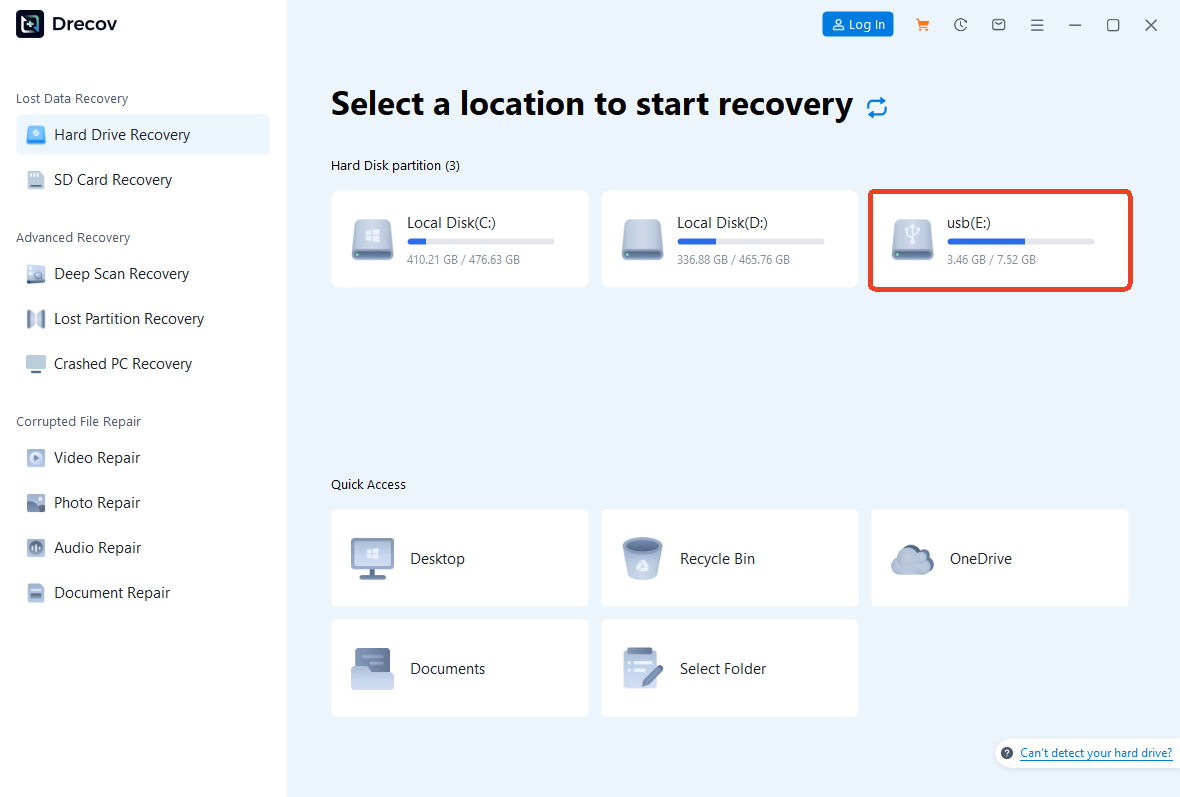
On the main interface of PandaOffice Drecov, you will see a list of all connected drives. This includes your internal HDD/SSD and any external devices plugged into your USB-C or Micro USB ports. Select the specific drive letter (e.g., E: or F:) where the data loss occurred.
Step 3: Initiate the Deep Scan
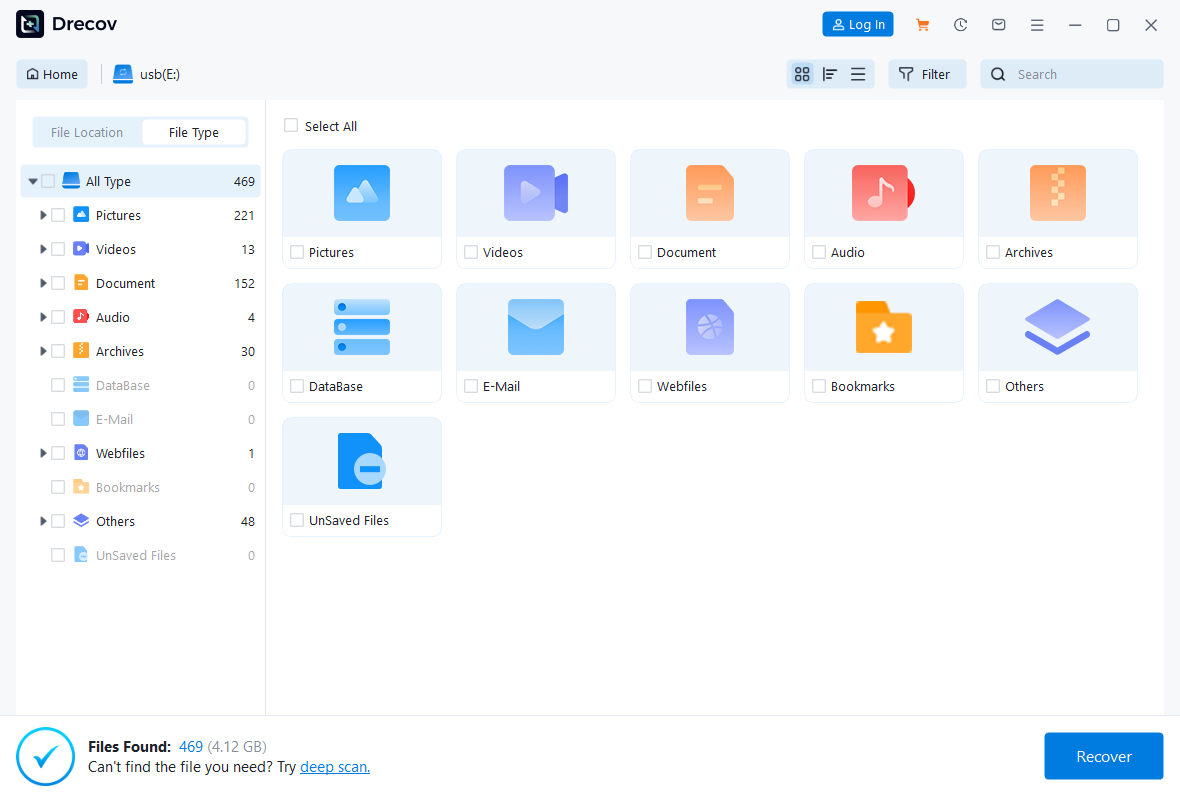
Click the “Scan” button. The software will begin with a “Quick Scan” to find recently deleted files. It will then automatically transition into a Deep Scan, which is necessary for formatted drives or corrupted partitions.
Step 4: Filter and Preview Files
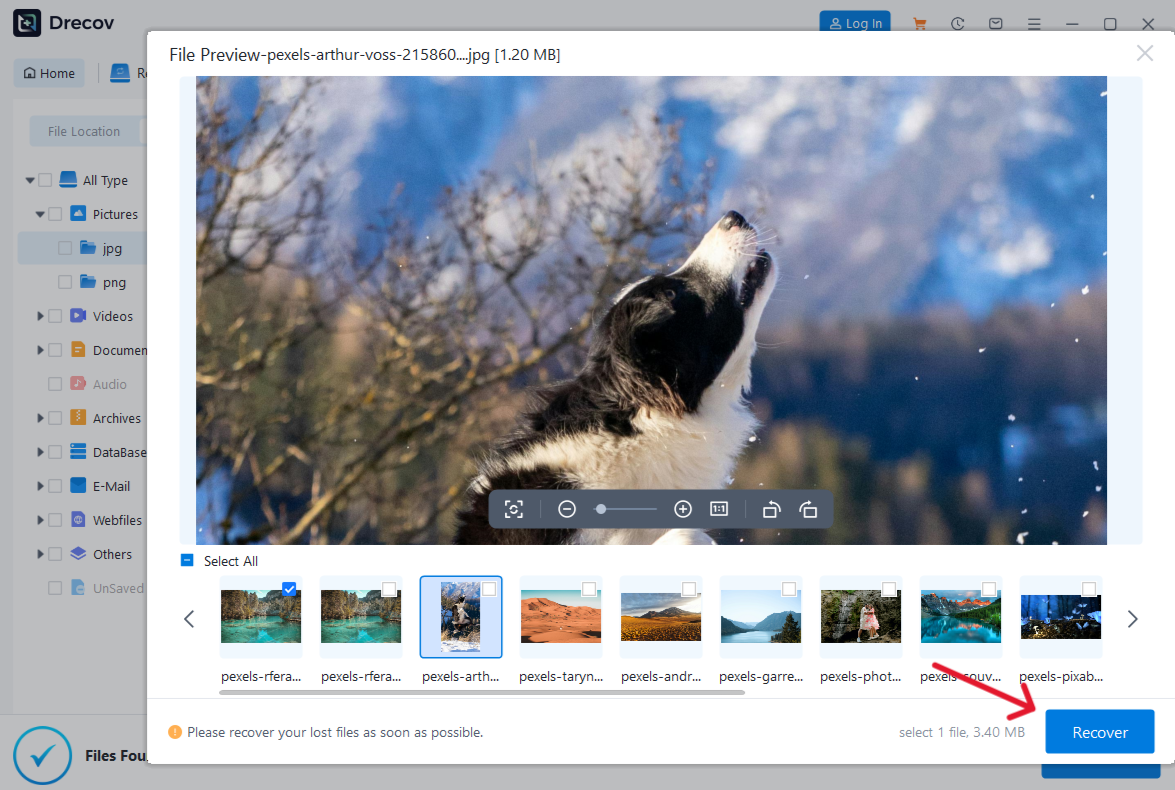
Once the scan progresses, you can use the sidebar to filter results by file type (Photo, Video, Document, etc.). PandaOffice Drecov allows you to double-click a file to preview it. This ensures that the file is actually recoverable and not just a corrupted fragment.
Step 5: Recover and Save
Select the files you wish to keep and click the “Recover” button.
Critical Note: Always save your recovered files to a different drive than the one you are recovering from. Saving back to the original drive can overwrite the very data you are trying to save!
Advanced Data Recovery Methods for Different USB Types
While PandaOffice Drecov data recovery software is the easiest method, sometimes the technical nature of the connection (like USB-C vs Micro USB) requires a deeper understanding of system tools.
Method 2: Using Windows CHKDSK for File System Errors
If your USB-C drive is showing “File System is RAW,” you can try the built-in Windows utility.
Step 1: Press Windows + S and type cmd. Right-click and select “Run as Administrator.”
Step 2: Type chkdsk E: /f (Replace E with your drive letter).
Step 3: Press Enter. This tool attempts to fix the index of the files so they become visible again.
Method 3: Assigning a New Drive Letter
Sometimes a Micro USB device is functioning, but Windows 11 fails to assign it a path.
Step 1: Right-click the Start button and select Disk Management.
Step 2: Locate the drive. If it has no letter, right-click the partition and select “Change Drive Letter and Paths…”
Understanding what is a type c micro usb involves more than just knowing the shape; it involves knowing how to maintain the connection. Because USB-C is more complex, it requires cleaner contacts.
Tips for Physical Longevity
Avoid Tension: Never let a USB-C external hard drive hang by its cable. The weight can warp the internal pins of the port.
Keep it Clean: Use compressed air to blow out dust from Micro USB ports. Dust buildup often causes “connection flickering,” which leads to data corruption during transfers.
Check the Version: Ensure you are using at least a USB 3.0 cable for recovery tasks to prevent timeout errors in your software.
If you are a heavy browser user and lose data due to a system crash, you might also want to know where are Firefox bookmarks stored on your PC to ensure you have a full backup before a port failure occurs.
The Evolution of USB Standards
To truly master the concept of the type c micro usb ecosystem, we must look at the speeds and power levels that define these tools.
Feature
Micro USB (2.0)
USB Type-C (3.2 Gen 2)
Max Transfer Speed
480 Mbps
10 – 20 Gbps
Max Power Delivery
~9 Watts
Up to 240 Watts
Video Signal
No (Usually)
Yes (DisplayPort/HDMI)
Reversibility
No
Yes
Because USB-C is so much faster, it is the preferred choice for creating recovery partitions. If your system fails, having a high-speed USB-C recovery drive is a lifesaver. Learn more about this by reading how to create a recovery partition in Windows 10.
Conclusion
In conclusion, while the term “what is a type c micro usb” is often used by those transitioning from old tech to new, it is important to recognize them as two distinct stages of technological evolution. Micro USB provided the foundation for universal charging, but USB Type-C has perfected it by adding speed, power, and ease of use.
Data loss can happen regardless of which cable you use. However, with professional tools like PandaOffice Drecov data recovery software, you can rest easy knowing that your photos, documents, and videos are not gone forever. By following the structured steps provided, maintaining your hardware, and using the right cables, you can master your digital environment and protect your most valuable data.