







Have you ever plugged your USB drive into a computer only to face a jarring error message? You are not alone. Millions of users experience sudden drive failures daily, losing access to critical work files, family photos, and essential backups. When a drive becomes unreadable, finding a reliable method for flash drive repair becomes an urgent priority. Many people assume that a corrupted drive means their data is gone forever. However, most USB storage issues stem from logical errors or file system corruption rather than permanent physical destruction.
This comprehensive guide will walk you through the most effective techniques to fix pendrive issues and restore your digital life. While Windows offers native utilities to tackle basic storage errors, specialized software provides a much higher success rate for deep logical corruption. We highly recommend PandaOffice Drecov data recovery software as your primary solution. This professional-grade tool scans damaged storage sectors, bypasses file system glitches, and retrieves lost files with remarkable efficiency. Whether your computer demands that you format the disk before use or the device simply refuses to open, the right approach can salvage your files. Let us dive into the fundamentals of USB troubleshooting and explore how you can restore your device to perfect working order today.
Understanding the Basics of Flash Drive Repair
To successfully repair usb flash disk errors, you must first understand why these compact storage devices fail. USB drives utilize flash memory, which relies on electronic circuits to retain data. Unlike traditional hard drives, they contain no moving parts. However, this configuration makes them highly susceptible to sudden power disruptions and file system disruptions.
Common USB Issues and Challenges
USB corruption typically falls into two main categories: logical damage and physical damage. Physical damage involves broken connectors, cracked circuit boards, or fried memory chips. If your computer does not register the device at all, or if you hear a faint clicking sound, you are likely dealing with hardware failure. Conversely, logical damage occurs when the underlying data structure becomes scrambled.
You can easily identify logical corruption through several classic warning signs:
- The operating system prompts you to format the drive before opening it.
- Files suddenly appear as raw text or display bizarre, unreadable characters.
- The drive shows up in Disk Management but displays 0 bytes of available space.
- Windows displays an “Access Denied” or “Request Failed Due to a Fatal Device Hardware Error” notification.
Introduction to PandaOffice Drecov
When standard troubleshooting fails, specialized recovery tools are required to repair pendrive sectors. PandaOffice Drecov data recovery software stands out as an industry leader for this exact purpose. Engineered with advanced algorithmic scanning, Drecov bypasses the corrupted logical layers of your operating system to read the raw data directly from the storage chips. This software supports all major file systems, including NTFS, FAT32, exFAT, and macOS formats.
Furthermore, Drecov is highly versatile. It can salvage data from completely raw partitions, formatted drives, and drives infected by malware. If you are struggling with broader data loss issues, you can also check out our guides on where are Firefox bookmarks stored on your PC or learn about specialized hardware fixes via our complete guide to Toshiba hard disk data recovery.
Solutions to Flash Drive Repair Issues
When your goal is to repair thumb drive problems without losing your valuable data, your order of operations matters immensely. You must never attempt aggressive repair utilities before extracting your files. Running intense command-line repairs can alter the data structure, permanently overwriting your files in the process. Consequently, the safest strategy is divided into two distinct phases: first, rescue your data with Drecov; second, fix the file system using native Windows tools.
Phase 1: How to Extract Data Using PandaOffice Drecov
The most secure method to handle usb disk repair is to pull your existing files to a safe location first. PandaOffice Drecov data recovery software provides an intuitive, three-step wizard designed for users of all technical backgrounds. Follow these exact steps to secure your files:
⚠ Warning: Install it on a drive different from the one where your data was lost to prevent overwriting.
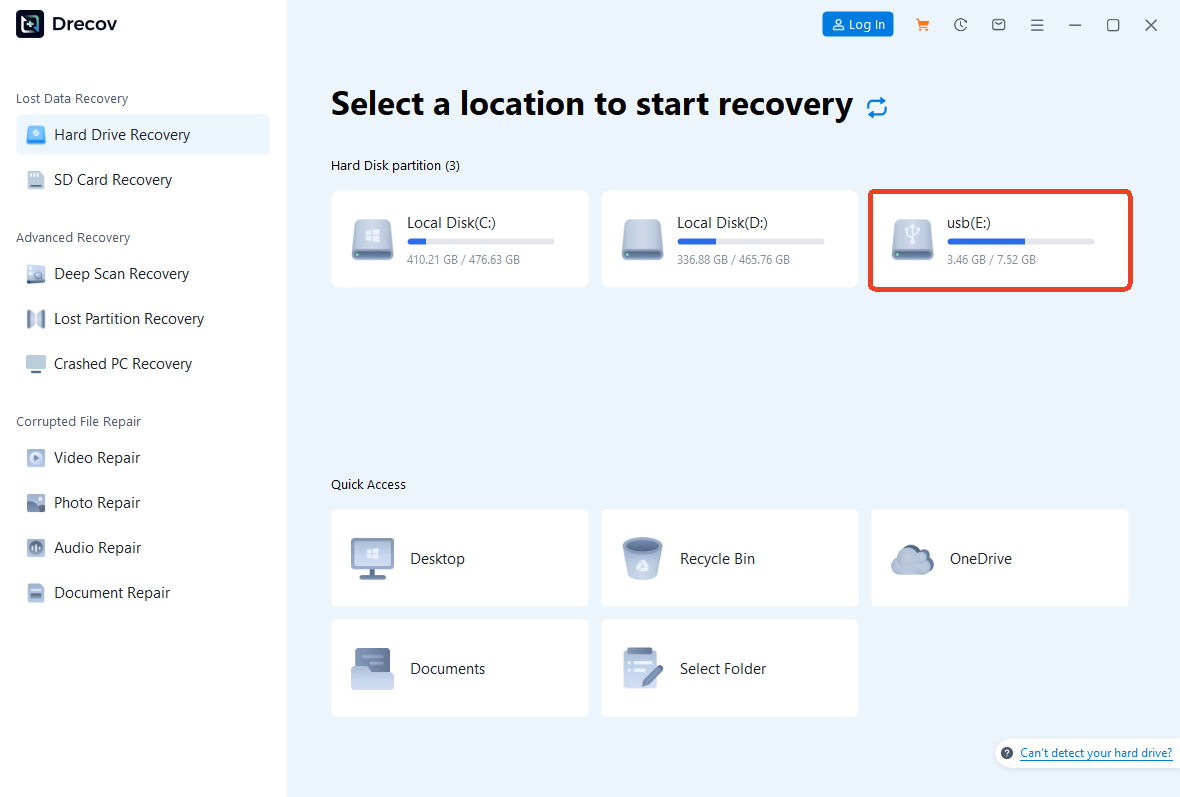
Step 1: Connect Your Storage Device and Select the Target Location
First, insert your malfunctioning USB stick into a working port directly on your computer motherboard. Avoid using external USB hubs, as they can cause voltage drops that interfere with the recovery process. Launch the Drecov application on your desktop. On the primary dashboard, locate the External Drives section. Select your corrupted drive from the list and click the Scan button at the bottom right corner of the user interface.
Step 2: Preview the Discovered Files During the Scan
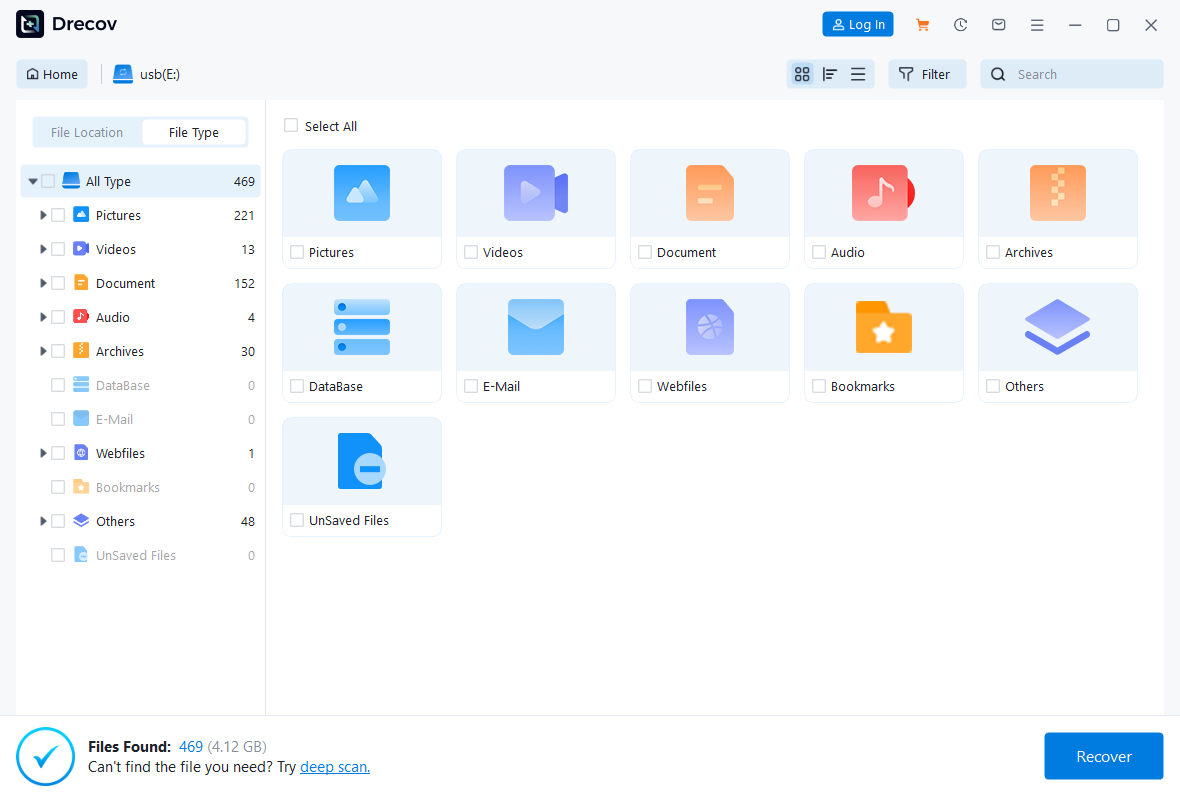
The software will automatically initiate a Quick Scan followed immediately by a Deep Scan. The Deep Scan reads the drive sector by sector to piece together fragmented file signatures. Meanwhile, you can browse the real-time results using the left-hand folder tree. Drecov allows you to filter results by file type, such as images, documents, or videos. Double-click any file to open the built-in preview window, which allows you to verify that the file is fully intact before proceeding.
Step 3: Recover and Save Your Files to a Secure Drive
Mark the checkboxes next to the folders or specific files you wish to preserve. Click the Recover button. A file explorer window will prompt you to choose a destination path. Select a folder on your primary local hard drive or an external storage unit. Never save the recovered files back onto the damaged USB drive, because doing so will overwrite other lost data. Click Confirm to complete the extraction process.
Phase 2: Fixing the Corrupted Drive via Windows Built-in Tools
Once your data is safely backed up on your local machine, you can proceed to repair usb stick errors using Windows native command utilities. The most effective tool for this task is CHKDSK, which stands for Check Disk. This built-in engine scans the file allocation table and repairs corrupt indexes.
Step 1: Open an Elevated Command Prompt
Press the Windows Key on your keyboard to open the search bar. Type cmd into the search field. Look at the right-side options panel and select Run as administrator to grant the application elevated system permissions.
Step 2: Execute the Repair Command
Identify the drive letter assigned to your USB device by looking at File Explorer. For this example, we will assume your drive letter is E. Type the following exact string into the command line interface:
chkdsk E: /f /r
Press the Enter key. The /f parameter tells the system to fix any detected errors automatically. Meanwhile, the /r parameter instructs the engine to locate bad sectors and recover readable information from them. Allow the process to run until the progress meter reaches 100 percent. For more detailed insights on this process, explore our specialized tutorial on how to repair corrupted USB flash drive without losing data.
Alternative or Complementary Methods
If the command line method fails to completely repair flashdisk errors, you have several alternative solutions at your disposal. These methods range from deep operating system configurations to manual adjustments within the Windows Registry.
Using the Windows Disk Management Utility
Sometimes a USB drive fails to open simply because its drive letter conflicts with an existing network share or local partition. You can resolve this issue quickly within Disk Management. Press Windows Key + X simultaneously to open the Power User menu. Select Disk Management from the list. Right-click your USB drive from the visual volume list and choose Change Drive Letter and Paths. Click the Change button, assign a completely new, unused letter from the dropdown menu, and click OK. This forces the Windows Explorer subsystem to refresh its connection to the device.
Modifying the Windows Registry for Write-Protected Drives
A common issue during usb flash drive repair is the dreaded Write Protection error, which blocks you from modifying or formatting the drive. You can clear this restriction by modifying the system registry. Press Windows Key + R to launch the Run dialog box. Type regedit and press Enter to launch the Registry Editor. Navigate down the following path:
HKEY_LOCAL_MACHINE\SYSTEM\CurrentControlSet\Control\StorageDevicePolicies
If the StorageDevicePolicies folder does not exist, right-click the Control folder, select New, click Key, and name it exactly as stated. Inside this folder, look for a entry named WriteProtect. Double-click this entry and change its value data from 1 to 0. Click OK, close the editor, and restart your PC.
Pros and Cons of Various Repair Approaches
| Method | Advantages | Disadvantages |
| PandaOffice Drecov Software | Extremely safe; guarantees data extraction; reads raw storage blocks | Requires a separate computer to run the software |
| Windows CHKDSK Utility | Completely free; built into the OS; fast execution for minor bugs | Can corrupt loose file fragments; fails on hardware issues |
| Registry Modifications | Clears deep operating system locks; bypasses write blocks | Modifying the wrong registry key can cause system instability |
| Low-Level Formatting | Wipes the partition table clean; revives seemingly dead drives | Destroys every single piece of data permanently |
Tips & Best Practices
Achieving high-quality usb memory stick repair outcomes requires careful handling. Storage media is sensitive, and a single wrong move can turn a temporary logical glitch into a permanent data loss scenario.
Optimizing Recovery Success
To maximize your chances of a successful file rescue, you must stop using the flash drive the exact moment you suspect corruption. Furthermore, do not copy new files onto the device, and never run defragmentation tools on flash media. Defragmentation is designed for mechanical drives; running it on flash chips adds unnecessary write cycles that degrade the memory cells.
Maintaining Data Integrity
Always use the Safely Remove Hardware option before pulling your thumb drive out of a computer port. Sudden removal while a background process is writing data to the drive is the number one cause of file system corruption. In addition, you should regularly update your operating system controller drivers via the Windows Device Manager to prevent communication errors between the motherboard and your external storage devices. According to technical documentation on data management from Microsoft Learn, proper drive dismounting ensures all cached data is written completely to the storage sectors before power is cut.
Frequently Asked Questions
How can I perform a flash drive repair if my computer does not recognize the device?
First, open Disk Management to check if the drive appears without a drive letter. If it does not show up there, try plugging the unit into a different USB port or a different computer altogether. If the drive remains completely invisible across multiple machines, the device likely has severe physical hardware damage.
Is it possible to fix pendrive errors without losing my stored data?
Yes, you can absolutely fix these errors without data loss if you prioritize data extraction. You must run PandaOffice Drecov data recovery software to pull your files to safety before you attempt any native Windows repair commands or formatting routines.
Why does my computer say the drive is write-protected during a repair usb flash disk process?
Write protection can be triggered by a physical switch on the side of the drive body. Alternatively, it can be caused by logical errors within the file system. You can clear logical write protection by using the Windows Diskpart tool or by editing the WriteProtect key inside the Windows Registry Editor.
Will running CHKDSK to repair pendrive sectors destroy my files?
CHKDSK is generally safe for minor fixes, but it can occasionally discard highly fragmented files that it cannot properly reassemble. Consequently, you should always extract your vital data with a dedicated recovery application prior to running the utility.
How do I know if I need to repair thumb drive hardware or software?
If your drive displays a flashing LED indicator light or shows up under Disk Management with the incorrect storage size, you are dealing with a software or logical issue. However, if the drive gets extremely hot to the touch or fails to show up anywhere in the system topology, the hardware chips are likely broken.
Conclusion
Dealing with a broken flash drive can be incredibly stressful, but executing a proper flash drive repair strategy will save both your device and your sanity. By utilizing a logical, step-by-step approach, you can fix underlying file system structures without sacrificing your valuable documents. Remember to always prioritize data extraction before attempting any system-level repair commands.
We highly recommend downloaded PandaOffice Drecov data recovery software to handle the heavy lifting. Its robust scanning engines ensure your files are pulled to safety before you format or run disk utilities on your storage hardware. Moving forward, make it a daily habit to back up your critical projects to a secondary local drive or a secure cloud repository.





