







Rstrui is the Windows program that opens System Restore. It can return system settings, drivers, and installed-program state to an earlier restore point after a troublesome change. It is not a backup of your documents, photos, or game saves. Before choosing a point, save current work, check an independent backup, and use the wizard’s affected-programs view. If you are trying to recover a deleted personal file, start with Recycle Bin or a real file backup instead.
You might see rstrui.exe in a support article, a Windows recovery screen, or a command someone suggested. The name looks obscure, but the choice it opens is familiar: should Windows roll back some system state? A restore point may help after a driver, update, or application installation breaks normal operation. It cannot diagnose a drive that keeps disconnecting, rebuild missing user files, or replace a clean copy of important data.
Identify the problem before choosing a date
Think about the last time Windows worked normally. Did a newly installed driver cause a blue screen? Did a program installation change a service or file association? Those are plausible reasons to examine a restore point created before the change. By contrast, a missing photo after you emptied Recycle Bin is a file-loss event. Moving Windows to an earlier system state is not the same as restoring the photo from a backup.
System Restore is also different from Reset this PC. Reset reinstalls Windows and offers choices about keeping or removing personal files; System Restore rolls back selected system components to a recorded point. The buttons sit near one another in recovery settings, which makes confusion easy. Read the heading and confirmation screen before approving anything. If a reset has already removed files, diagnose that particular event rather than assuming rstrui will reverse it.
A restore point must already exist. Opening the wizard does not create a historical state retroactively. On a computer managed by a workplace, policy may disable the feature or limit which points appear. If the drive is encrypted, a recovery environment may require a BitLocker key to access Windows. Locate the key before you start recovery work; do not treat a prompt for it as an invitation to erase the device.
Open rstrui and inspect a point without committing
On a Windows desktop, press Windows + R, type rstrui.exe, and select OK. You can also search Start for Create a restore point, open System Properties, and select System Restore. Both routes lead to the same kind of wizard. If Windows cannot start, its recovery environment may offer System Restore under Advanced options. The available route depends on how far the PC can boot.
Select a restore point dated before the problem, but do not choose solely by the oldest date. Read its description and consider what changed afterward. Use Scan for affected programs when offered. Windows lists applications and drivers that may be removed or restored. Keep installers, account details, and license information for software you will need again. The list helps you judge consequences; it does not certify every application database or local project.
Cancel the wizard if no suitable point appears or the affected-program list creates a bigger problem than the original fault. You can inspect choices without running the restore. On a laptop, connect stable power before any approved rollback. Save open documents and close programs, because Windows will restart during the process. Do not start a rollback while a failing drive is making abnormal sounds or dropping offline.
What changes after the restore?
Windows may revert system files, registry state, drivers, and installed applications to the selected point. Programs added after that date may need reinstalling. A driver you deliberately updated may return to an older version. Ordinary personal documents are not the main target of the rollback, but this is not a guarantee that every application will find its data afterward. A restored app configuration may point at an old folder or a different account.
After Windows restarts, check the original symptom first. Does the device or program that failed now work? Then open a few important files, especially databases, email stores, and projects managed by an application. Look for a changed shortcut or library path before declaring a file missing. If a cloud client asks to resolve a version conflict, preserve both copies until you know which one has the wanted content.
If System Restore does not solve the fault, note the message it displays. Do not run many different points in rapid succession without understanding what each changes. A recurring problem may involve hardware, malware, or a user profile rather than the driver or update you suspected. Repeating the same action will not turn a weak diagnosis into a strong one. Microsoft’s System Restore instructions describe the current Windows entry points and the affected-program check.
Missing documents require a different search
Check the Recycle Bin, the actual folder path, File History, cloud trash and version history, application autosaves, and other devices. A document absent from a recent-files list may still be present under a different Windows account or path. For a cloud-only file, use that provider’s web interface; scanning a local disk cannot retrieve content that never resided there. The article on whether System Restore deletes files goes deeper into apparent loss after a rollback.
If you truly deleted a local file, stop adding data to its original drive. New downloads and installations can reuse the space. On an SSD, TRIM can further reduce the material a recovery scan can find. Do not run a system restore merely to recover that document; it can change app state without returning the missing content. The page on restore points and deleted files explains that boundary in more detail.
Use Drecov only for a genuine local-loss branch
PandaOffice Drecov is Windows data recovery software for missing files on stable, readable PC storage and supported external media. In this situation, its role is to search for a deleted or inaccessible personal file, not to create or apply a System Restore point. Its read-only recovery mode, Quick Scan, Deep Scan, filters, preview, and recovery to another healthy destination help you inspect candidates. Lost Partition Recovery applies if an entire former partition is missing. None of these modes repairs a failing drive, changes Windows system state, or guarantees an overwritten file.
First confirm the original location and check usable backups. Prepare a different healthy drive for recovered output, and do not install recovery software on the partition that held the missing file. If the source clicks, repeatedly disconnects, reports the wrong capacity, or produces serious read errors, stop direct scanning. A controlled image or professional service may be safer. There is no benefit in asking a software scanner to fix physical instability.
⚠ Warning: Install it on a drive different from the one where your data was lost to prevent overwriting.
Step 1: Open Drecov and select the loss location
In a working Windows environment, launch Drecov and choose the volume where the personal file actually lived. A file deleted from the Desktop usually belongs to the Windows user-data volume; one deleted from a USB drive belongs to that USB device. Match the device by capacity and label. Do not select today’s backup destination as the source. Choose Lost Partition Recovery only when the prior partition has disappeared.
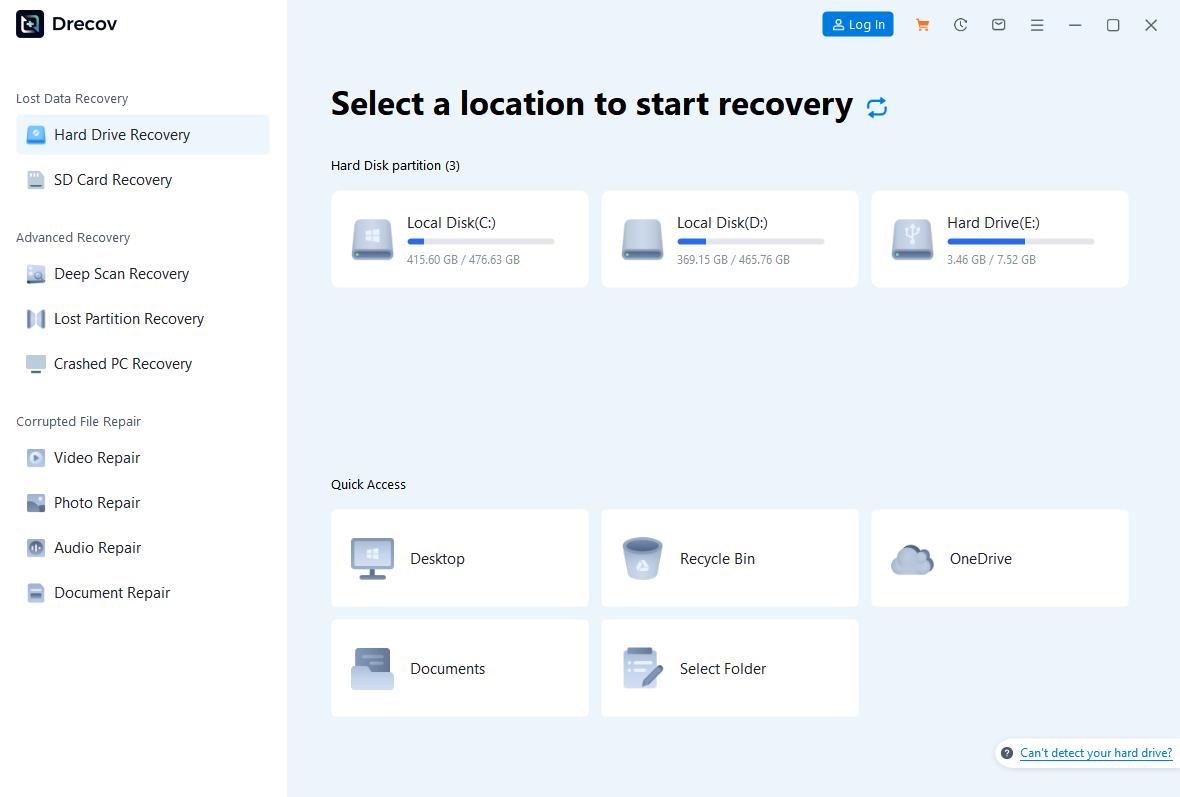
Step 2: Review Quick Scan
Run Quick Scan and browse the former folder. Search by a distinctive filename or extension, then compare result dates and sizes with any known copy. If the file appears, preview a representative supported item. A matching filename alone may identify an older or damaged version, so look at meaningful content before selecting many results.
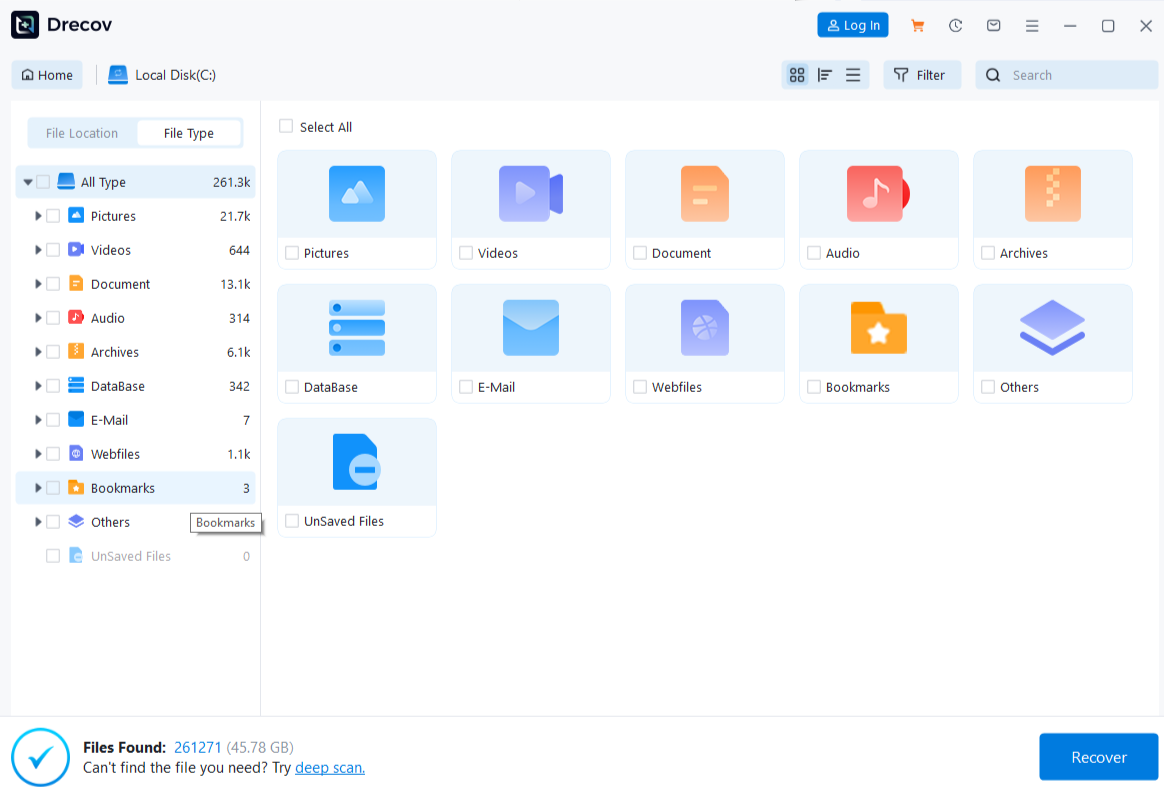
Step 3: Extend the search if the source is stable
When Quick Scan misses the target and the disk still reads normally, run Deep Scan. Use available type, name, path, and date filters to reduce a larger result list. Some results may lack original names or appear more than once. Preview a few candidates, but remember that a successful preview does not validate every page, frame, or linked asset.
Step 4: Recover elsewhere and open the output
Save selected files to the other healthy drive, never back to the source. If you do not find them in the selected folder, check the destination’s Drecov Folder or Recovery Folder when present. Open the recovered files and verify the specific information you needed. Only then return to Windows troubleshooting. The Drecov homepage lists its current modes, but a system-state problem with no missing files does not require a recovery scan.
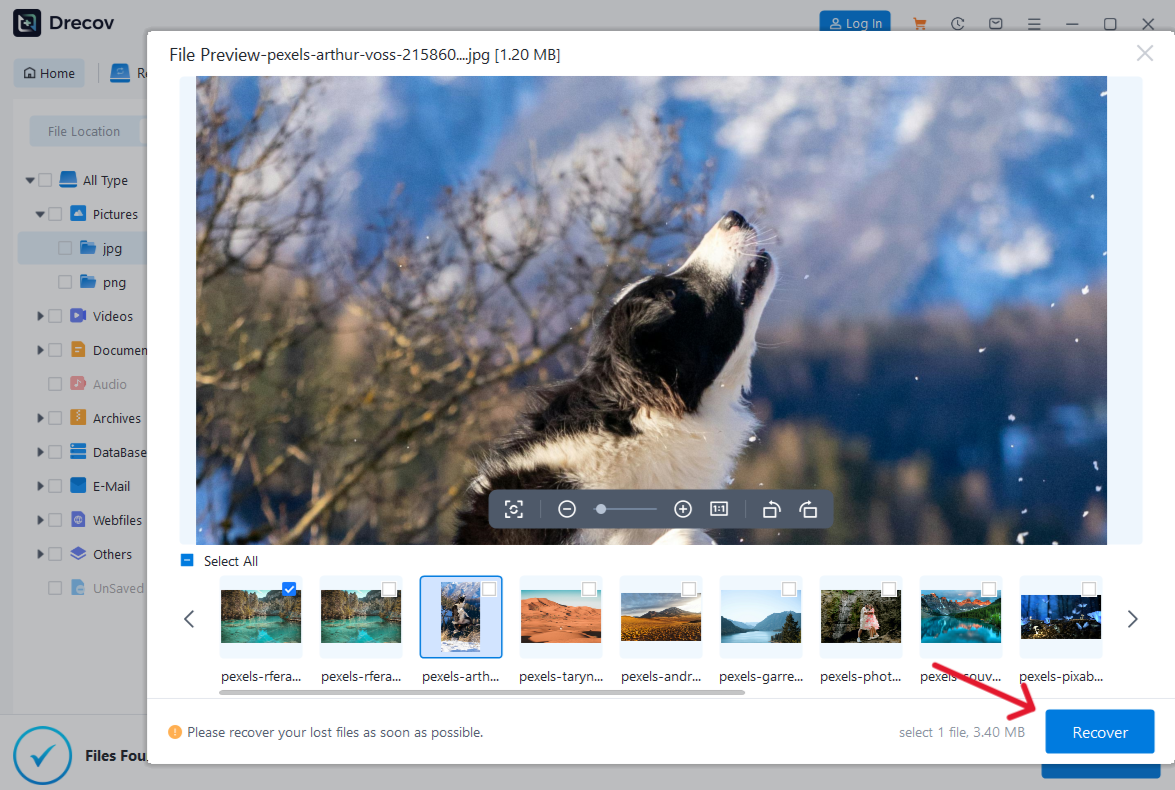
⚠ Warning: Install it on a drive different from the one where your data was lost to prevent overwriting.
FAQs
Is rstrui.exe a virus?
Rstrui.exe is the name of the Windows System Restore program. A name alone cannot authenticate every file claiming to be it. If an unexpected copy runs from an unusual folder or arrives as an email attachment, do not launch it. Use the built-in Windows entry point and a reputable security check.
Will rstrui recover a document deleted yesterday?
System Restore is not a personal-file backup. Check Recycle Bin, File History, cloud versions, and application backups. If the document was truly deleted from stable local storage, a separate file-recovery path may be relevant.
Why is there no restore point to choose?
The feature may not have been enabled, a relevant point may not have been created, or policy may limit it. Opening the wizard cannot invent an older point. Choose another documented Windows repair route after protecting your current files.
Can I undo a System Restore?
Windows may offer an undo option for a completed restore, but availability depends on how you started it and the current system state. Read the wizard’s choices rather than assuming undo will exist. Keep a separate backup before starting the first rollback.
Conclusion
Rstrui is a way to inspect and apply a Windows restore point when a recent system change caused trouble. Check the affected programs, save current work, and verify the original fault after Windows restarts. Do not use a restore point as a substitute for a file backup. If a personal file truly vanished from stable local storage, Drecov can search its original location and save selected results to another healthy drive. Verify those files separately; software recovery cannot make an unstable device safe.
⚠ Warning: Install it on a drive different from the one where your data was lost to prevent overwriting.