






You can often undo in File Explorer immediately after a mistaken move, rename, or deletion. Press Ctrl+Z once, then check both the old and new locations before doing anything else. If you have closed the window, restarted Windows, or performed several more actions, do not assume another Ctrl+Z will target the file you want. First establish what changed. That small pause can prevent a second mistake from replacing the only good copy.
What did the last File Explorer action actually change?
A file that seems to have vanished may still exist. It may have moved to a neighboring folder after a drag, changed its name, entered the Recycle Bin, or been replaced by a copy with the same name. These outcomes need different responses. Before pressing any shortcut, write down the file name, the folder where you last saw it, and what you were doing when it disappeared. If several files are involved, note whether they were selected as a group.
Open the original folder and sort by Date modified. Then check the destination folder you were working with. A renamed document might be sitting beside its older name; a moved document will normally appear at the destination instead. Search File Explorer for a distinctive part of the name, but remember that a search result only tells you where a current file is. It does not prove that it is the latest or most complete version.
If the action involved a synchronized Desktop or Documents folder, also check the account shown in OneDrive. A move within a synced folder can have a cloud-side effect; a local scan is not the first answer to a file that still exists in another account or online. Avoid dragging the first matching result back until you have compared its size and modified time with your expected copy.
Try one undo, then inspect the result
When Ctrl+Z is a sensible first move
Keep the relevant File Explorer window open if possible. With the window active, press Ctrl+Z once. Windows documents that shortcut as Undo. Check the source and destination immediately afterward. If the file returns to its original folder and opens normally, the task is complete. Do not keep pressing the shortcut merely because a second item remains missing: the next undo may reverse a different operation.
The result depends on the action history available to File Explorer. A rename may revert to the former name. A recent move may move the item back. Deletion may be reversed while the relevant action remains available, but permanent deletion and later operations require a separate recovery path. If you see an unexpected filename or a collision prompt, stop and inspect both versions before choosing Replace or Skip.
When Undo is no longer a safe guess
A reboot, a closed session, or many intervening file actions makes the last-action shortcut unreliable for your original intention. Even while the same window remains open, Ctrl+Z acts on its current undo sequence, not on a file you select as a target. If the prompt indicates that another item will move, cancel it. Likewise, Ctrl+Y is Redo, not a search tool; it can reapply an action you just reversed.
There is no reason to practice on the missing file’s folder. If you want to learn the shortcut, create an unrelated test file on another healthy location first. For the real incident, preserve the current source and destination as they stand. This matters especially when the file was on a nearly full disk or an SSD and may already have been deleted.
Follow the file’s likely path before scanning
Check the Recycle Bin for the original name and confirm its Original Location before restoring anything. A file deleted from a local Windows folder commonly appears there, but a file removed from some network locations or with a permanent-delete action may not. If the item is present, restore it only after checking whether a different file now occupies that original path. Use a safe alternative destination when a collision is possible. For the broader Recycle Bin workflow, see Recycle Bin recovery.
Next, check copies that already exist: a second local folder, an external backup, and the cloud account associated with the original location. Compare file size, date, and actual content rather than choosing the newest name blindly. If File History had been enabled before the mistake, right-click the parent folder and choose Restore previous versions. Open a suitable older version first. Microsoft’s File History instructions note that restoring directly can replace the current version; choose Restore to another location when you need to keep both.
For OneDrive files, inspect the online Recycle Bin or Version history in the correct account. Restoring a cloud version solves a different problem from undeleting local disk space. A useful check is to open the candidate copy and inspect the section or page you remember editing last. If those changes are absent, do not discard other copies. A folder may contain both a valid older version and a partly saved new one.
If an entire folder moved
If you accidentally moved an entire folder, look for its distinctive subfolders, not just the top-level name. Search may surface an old duplicate while hiding the fact that the active folder moved. Confirm the folder tree and sample two or three important files. A generic guide to file recovery is useful if this investigation establishes that the files are truly absent rather than misplaced.
When a local file is gone, recover without writing over it
If the file is absent from the destination, Recycle Bin, File History, and the relevant cloud account, treat the original storage as a possible recovery source. Stop adding files to it. Do not install software, extract an archive, or save replacement versions on the same partition. Deleted file space can be reused by ordinary activity. On an SSD, TRIM can further reduce the chance that a deleted file remains recoverable. Neither condition can be diagnosed from the file name alone.
Drecov is Windows data-recovery software for local PC storage and connected drives. In this case, its role is to look for an actually deleted file or folder on the original device, not to reverse File Explorer’s current undo stack. Quick Scan, Deep Scan, result filtering, and preview help you choose files before copying them to another healthy location. The program does not repair physical damage, reverse an overwrite, or retrieve a cloud-only file that was never stored locally.
⚠ Warning: Install it on a drive different from the one where your data was lost to prevent overwriting.
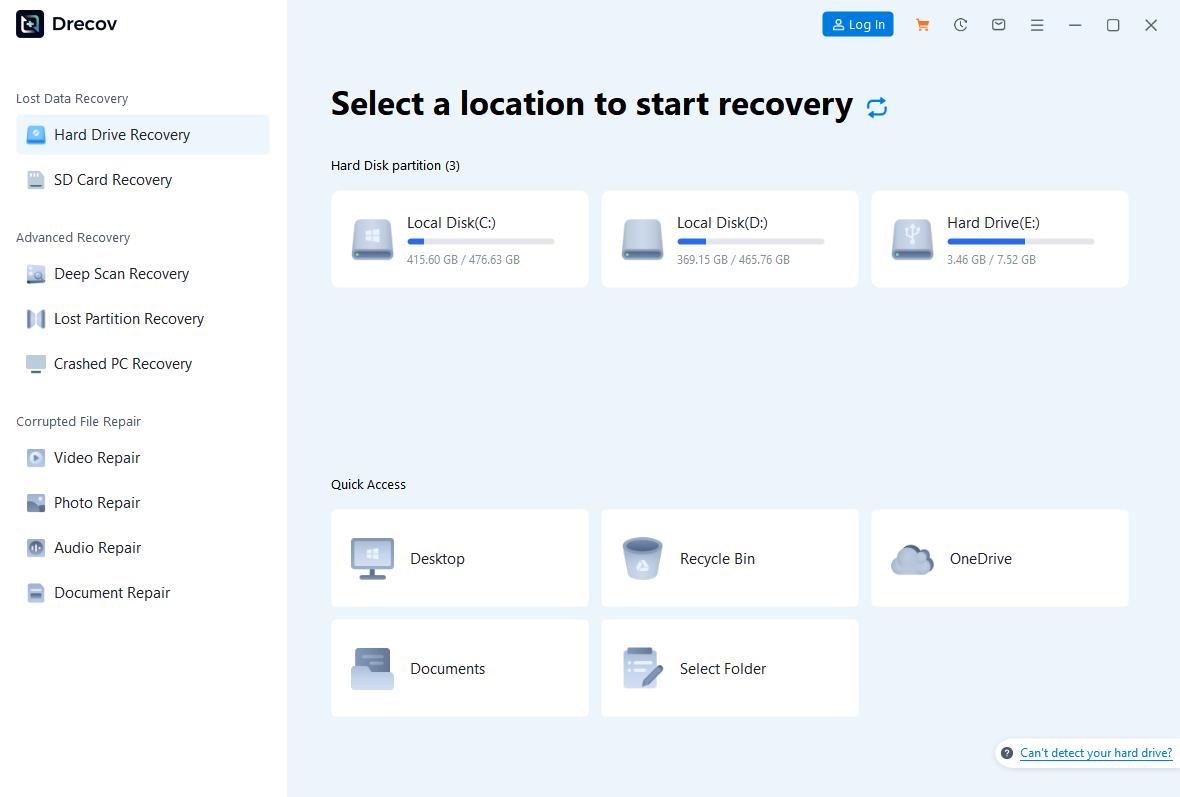
Step 1: Select the place where the missing file lived
Prepare a separate healthy drive for recovered output. Install and open Drecov without placing it on the affected partition. Select the original local partition or connected drive, based on where File Explorer showed the file before the mistake. If you are unsure whether it was on C: or a USB drive, check the old path or a shortcut’s properties first. Do not scan every device by default.
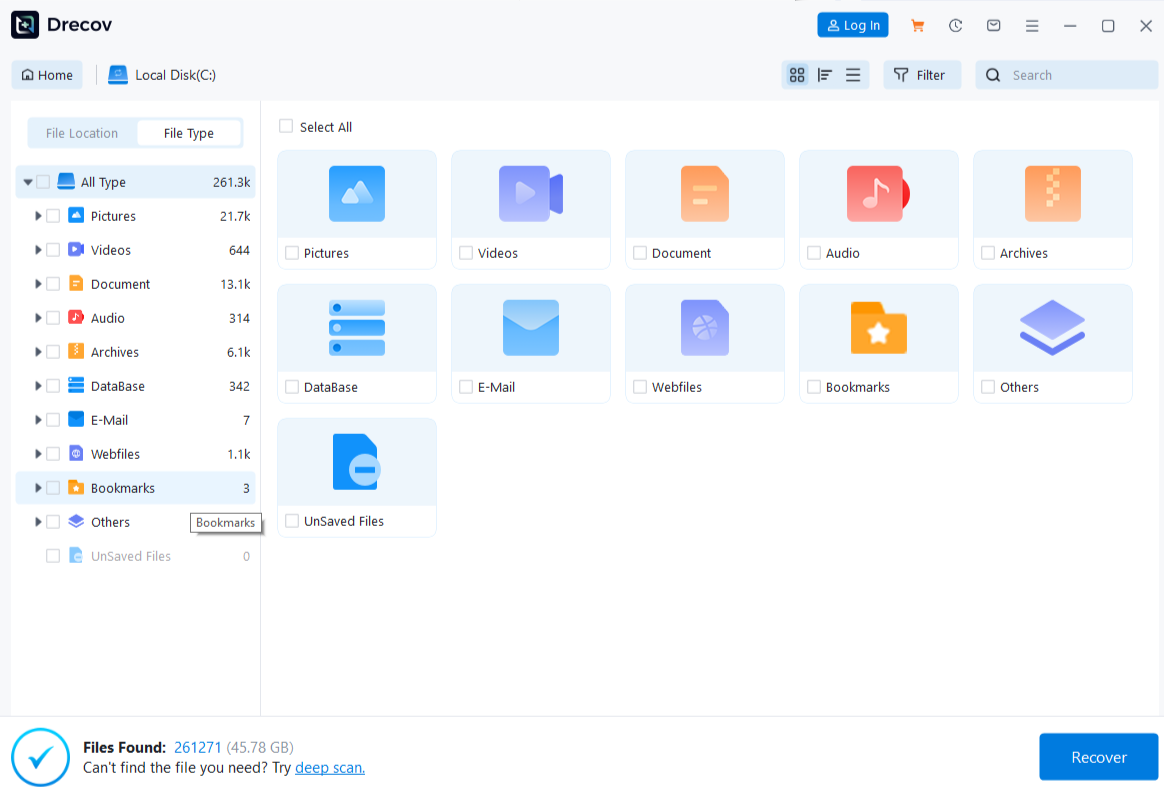
Step 2: Review a Quick Scan before expanding the search
Run Quick Scan. Look in the expected former path and search for the file name or type. If the folder had several items, inspect the group rather than selecting the first single-name match. When Quick Scan does not find the target and the device remains stable, use Deep Scan. Stop direct scanning if a drive repeatedly disconnects, clicks, or reports severe read errors; a disk image or professional service is safer than repeated attempts.
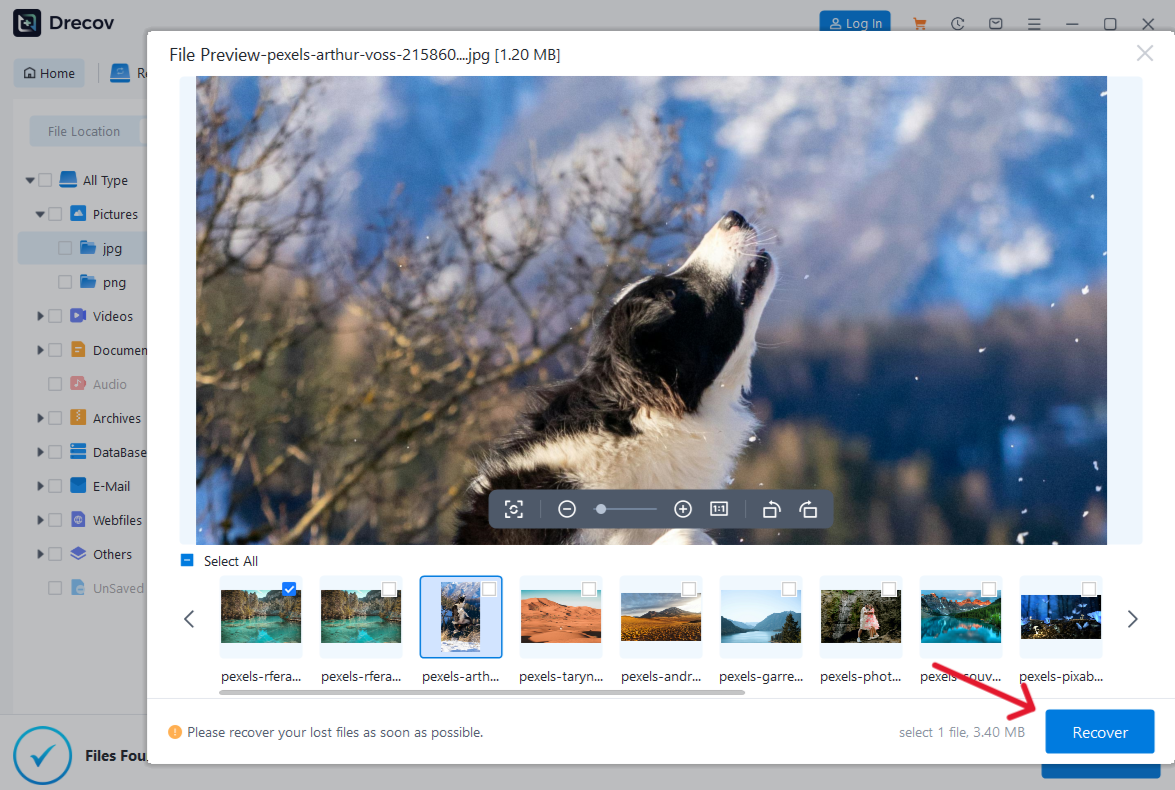
Step 3: Preview, recover elsewhere, and test
Preview representative files where preview is supported. A readable preview is encouraging, not proof that every page, frame, or linked asset is intact. Recover the selected candidates to the separate healthy drive, never back to the source. If output does not appear where expected, inspect the Drecov folder or Recovery folder associated with the chosen destination. Open several recovered files and verify the edits, pages, or images you actually need before cleaning up the original folder.
⚠ Warning: Install it on a drive different from the one where your data was lost to prevent overwriting.
Check the outcome before you continue working
The right verification depends on what disappeared. For a document, open it and inspect the final paragraph or last edit. With a photo, view the full-size image rather than a thumbnail. For a project folder, confirm that the main file and its linked assets sit together. Record the path of the version you decide to keep. When multiple copies exist, rename only the copy on a healthy destination so you do not disturb possible evidence on the source.
If the file was not deleted but overwritten during a Replace prompt, recovery scanning may not bring back the previous contents. Check File History, OneDrive Version history, or an application-specific backup instead. The article on overwritten file versions covers that separate branch. If the file merely moved, update shortcuts and application recent-file entries after confirming the new location. Do not rebuild a folder structure from recovered fragments when the intact folder is still available elsewhere.
For the future, keep File History or another versioned backup running on a separate destination. A backup is particularly useful because it can restore an earlier state even when File Explorer’s Undo history is gone. Test it by recovering one unimportant file to a new folder. That small rehearsal tells you far more than a green backup icon.
FAQs
Can I undo a file move after restarting Windows?
Do not rely on Ctrl+Z after a restart. Search the source and likely destination, then use a backup or version history if the file is absent. The safest next action is to identify the missing copy, not to reverse an unknown current action.
Why did Ctrl+Z make another file disappear?
Undo follows recent operations, not the file you have in mind. Check both folders before applying Redo. If you cannot tell which item moved, stop using shortcuts and compare paths, names, sizes, and modified times.
Does Undo recover a permanently deleted file?
Not reliably. Check backups first. If no intact copy exists and the file lived on local storage, minimize writes and consider a read-only recovery scan to a different drive.
What if File Explorer shows the right name but the wrong contents?
That is more like replacement or an older duplicate than a missing filename. Compare file sizes and versions. Recovering a prior version from backup is usually more promising than moving the current copy again.
Should I use recovery software on a disconnecting USB drive?
No repeated direct scans. Try one known-good connection only if safe, then stop if the drive remains unstable. Imaging or specialist help may protect the remaining readable data better.
Conclusion
Use one careful Undo only when the File Explorer action is still clear, then verify both locations. If the file was deleted, exhausted the Recycle Bin, and has no backup, Drecov can search the original stable Windows storage and save a recoverable copy to another drive. It cannot reverse an ordinary file move, repair a failing device, or recreate fully overwritten data. The practical finish line is an opened and checked file, not merely a familiar filename in a search result.
⚠ Warning: Install it on a drive different from the one where your data was lost to prevent overwriting.